
Addressing social determinants of health can significantly improve seniors' health outcomes and quality of life.
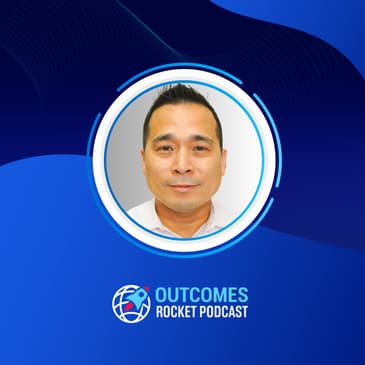
In this episode, Dr. John Kim, Senior Vice President of West Coast Markets at Alignment Healthcare, discusses the 2024 "Social Threats to Aging Well in America" survey findings. Dr. Kim shares how the survey identifies critical challenges seniors face, including aging in place, transportation access, and economic insecurity. He delves into the importance of addressing the social determinants of health and how Alignment Healthcare leverages insights to create innovative healthcare benefits and programs. Dr. Kim also talks about the role of healthcare organizations and broader societal efforts in supporting seniors to age with dignity and independence.
Tune in to uncover how healthcare innovations and community-focused solutions are reshaping the experience of aging!
Resources:
[00:00:02] Hello, everyone, and welcome back to another episode of the Outcomes Rocket. I'm so excited to have you join us again because today I have the opportunity to chat with Dr. John Kim. He is a Senior Vice President of West Coast Markets at Alignment Healthcare. We're going to be chatting about a survey that they do every year around social threats to aging well in America. Super insightful every single year.
[00:00:31] So I'm excited to have him here on the podcast to share more about what the survey is about, what they do at the organization. And so with that, Dr. Kim, thanks for joining us today.
[00:00:42] Oh, thank you for having me, Saul. Excited to be here.
[00:00:45] For sure. And hey, just to kick things off, I always love to just understand more what got you into healthcare and why Alignment Health?
[00:00:54] Yeah, sure. Well, as a kid, I've always wanted to go into medicine. And obviously, I started my career as a practicing physician. I started off in the hospital setting. And over time, I transitioned into part administration and still maintaining some clinical practice.
[00:01:12] That's great. And what attracted you to Alignment Healthcare?
[00:01:15] I have actually joined Alignment at the inception of Alignment Healthcare. Yeah. So originally, it was an idea that was in John Kayo and Don Furman and a couple others, Ken Kim's heads to put Alignment together. And I came along shortly after that.
[00:01:34] And it was really the idea of changing healthcare in the United States, making a difference in seniors' lives.
[00:01:43] Well, you guys are certainly doing it. Congratulations on the recent earnings report. The progress is visible and you guys are definitely making waves.
[00:01:51] Thank you. We're really excited about just really grateful for everything. Year over year, we've done well in our stars performance as well as growth. So we're really excited.
[00:02:02] Yeah, congratulations for sure.
[00:02:03] So let's shift to discussion of the report. Tell me about the 2024 social threats to aging well in America, 2024 report, and the key findings. What were you trying to understand?
[00:02:17] So this was actually the third year that we've done this survey. And the findings really were, I guess the key findings were aging in place came number one, 69% of our seniors actually. So that is a threat to their health.
[00:02:32] Two is lack of transportation and access to medical care, 64% of our senior population. And then number three was economic insecurity came in at 56%.
[00:02:45] I can tell you the next three were lack of support, mental health and loneliness came in the following three.
[00:02:51] I think what we're trying to really understand.
[00:02:54] I think what we're trying to really understand and learn is we've always, at alignment, we've always known that social threats affect our seniors' healthcare. And so really trying to understand what exactly it is. And so that we can create better benefits, product design, clinical programs to really support the seniors.
[00:03:15] That's great. So number one was aging in place.
[00:03:19] Right. Right.
[00:03:20] Like, tell me more about that. This was something that they wanted to do, or maybe you could unpack that one for us.
[00:03:26] Yeah. I think most people, as we get older, we want to continue to live independently, not rely on whether it's family members or anyone, really. You want to continue living your best life in your own residence. And that does become a threat.
[00:03:41] And seniors will say, well, living in my two-story home is a threat to me.
[00:03:47] Got it.
[00:03:48] If I have a fall and I live alone, I don't have anyone to call for help. Or some actually want to be in a safer environment, but they just don't have the means to move into different residence.
[00:03:59] And so it's really just trying to maintain the ability to stay in their residence, maintain independence.
[00:04:06] And it's little things. What we've learned is making the home a little safer, grab bars and things like that in the bathroom, maybe getting rid of some of the loose rugs help keep the seniors safe in their home.
[00:04:19] But yeah, that came in at number one. That was surprisingly, came in pretty high, 69%.
[00:04:25] Yeah. No, thanks for unpacking that one. That makes a lot of sense.
[00:04:29] So I appreciate you unpacking that one and certainly surprising. Anything else surprise you about the survey results?
[00:04:38] Yeah, I think all of it is something that doesn't surprise us, but it does just because of how high the response rate I think we've gotten from those.
[00:04:49] But then also just, we don't often hear about the challenges that come with it.
[00:04:54] So I think those things are surprising. But the survey responders, 67% of them actually say that they would use benefits that support their independent living if the health plan actually offered it.
[00:05:08] Making their home safer, personal safety alert systems, in-home healthcare visits.
[00:05:15] And again, so we take those learnings and we actually create products, benefits to that.
[00:05:21] Yeah. That's fantastic. Yeah. Things as simple as, like you said, a balance bar, right? That will prevent falls.
[00:05:28] Are you guys including that kind of benefit in the plan nowadays?
[00:05:33] So when we look at the social threats and we take a look at them, and so like access to care, transportation, food insecurity, we take all of those and actually look, you look at all of our products and the benefits.
[00:05:47] And sometimes you'll have people looking at the benefits and say, why in the world did you partner with Instacart?
[00:05:54] Well, it's because seniors have told us they don't have transportation.
[00:05:58] It's food instability. It's economic instability.
[00:06:01] And so it's really coming up.
[00:06:03] And I think we're really smart about how we come up with the product design, really.
[00:06:07] So we have home services that we'll offer.
[00:06:11] It's a limited number of hours, but we offer it in Meals on Wheels, all these different creative ideas that we've come up with really to focus on these threats.
[00:06:21] That's great.
[00:06:22] And overall, right, we honed in on some of the top things.
[00:06:26] What does the survey data reveal about the state of senior health in America?
[00:06:31] I would say we've probably got a long ways to go.
[00:06:35] It's, to me, as a physician, to hear that our seniors are failing or end up in the hospital or catastrophic events happen because of simple things like having to choose between having to pay for their copays for their medications or having a meal is pretty alarming.
[00:06:55] So I have a couple of patients that I'm also a PCP and I have a couple of patients that they've been healthy all their lives.
[00:07:03] And I have one where she literally outlived everyone in her family.
[00:07:08] She's 90 plus years old and lonely, right?
[00:07:11] Had a fall and had no one to reach out to.
[00:07:14] And she kicked and screamed and finally a neighbor heard her, but then she ended up in the hospital.
[00:07:19] So it's sad when you hear cases like that, when they're perfectly healthy or they may have chronic diseases.
[00:07:28] They're actually easy to manage, but it's all these other social threats that actually complicate these simple diseases.
[00:07:35] I think we have a long ways to go.
[00:07:36] I think organizations like ourselves and our competitors, we're constantly striving to improve healthcare.
[00:07:43] And I think where everyone is starting to realize how important addressing the social threats are.
[00:07:48] Yeah, for sure.
[00:07:49] Thanks for your comments there, John.
[00:07:51] You mentioned you practice as well.
[00:07:54] Are you surprised by what you saw in the survey compared to what you see in patients?
[00:08:00] No, not at all.
[00:08:01] Actually, my panel of patients are very similar to what I saw here in the survey.
[00:08:06] A lot of times I'll do home visits and open up just practice of mine to actually go and look in the fridge and see what they're eating and what they have.
[00:08:15] And these seniors are, they're on a fixed budget.
[00:08:18] And it's sad to see the state of where they are.
[00:08:23] So it doesn't surprise me at all.
[00:08:25] Yeah.
[00:08:25] No, that's great that you're still in the field, practicing, seeing it.
[00:08:30] I feel like that's where you get most of the insights.
[00:08:34] Your finger on the pulse to help with what you're doing at a bigger level.
[00:09:06] Absolutely.
[00:09:07] Can the survey change anything and the benefits you're going to offer coming up soon?
[00:09:12] Absolutely.
[00:09:13] We're always looking to tweak our benefits.
[00:09:16] And it's not just benefits.
[00:09:18] We're our clinical programs as well.
[00:09:20] It's all, you know, things like the survey really helps us to shape how we need to adjust for our seniors that we serve.
[00:09:28] And every year we're adjusting based off the feedback that we get.
[00:09:32] Really proud of that, that we are for thinking like that.
[00:09:34] That's great.
[00:09:35] Yeah.
[00:09:36] So that feedback is key.
[00:09:38] Keeping the member in the loop on this innovation is, I think, critical.
[00:09:43] So kudos to you and the team for doing that.
[00:09:45] If you look at this year compared to others, what would be your biggest hope?
[00:09:52] The target that this survey results accomplish?
[00:09:56] What would that look like for you?
[00:09:57] I think, one, our competitors, I think we lead the way in our space.
[00:10:02] And I think to have our competitors up their game is just great for everyone.
[00:10:07] But then also outside of the healthcare organizations, if we can get some awareness and spotlight on these issues, I think it just helps.
[00:10:16] I think that's what I would love to see is outside of the healthcare space, some recognition.
[00:10:23] People that really see that, wow, it's our parents, our grandparents.
[00:10:27] This is what they're dealing with.
[00:10:29] Yeah, for sure.
[00:10:30] And given that it's the social determinants of health, it's so much more than just what happens in the four walls of a hospital or a clinic.
[00:10:38] So I love that you went there with that.
[00:10:40] Thank you.
[00:10:41] Well, we're here at the end.
[00:10:43] These are a lot of fun, Dr. Kim.
[00:10:45] Just to be able to share the latest and greatest of what's happening in the field of medicine with all of our listeners.
[00:10:52] Are these survey results available to the public?
[00:10:55] Yes, they are.
[00:10:56] Actually, if you go onto our website, alignmenthealthplan.com or alignmenthealth, these reports are available.
[00:11:04] Amazing.
[00:11:05] So folks, make sure you check out the show notes.
[00:11:07] We'll link up the studies that alignment healthcare has done, including this year's 2024 results.
[00:11:14] So make sure you check those out.
[00:11:16] Stay ahead of the game.
[00:11:17] Any closing thoughts, Dr. Kim?
[00:11:19] I would just say I think we can all do better.
[00:11:22] I think we're all going in the right direction, but again, think about your own loved ones when you think about this survey and the results.
[00:11:30] And I think that is a good place to start when we want to make change.
[00:11:35] Outstanding.
[00:11:35] Dr. Kim, thank you very much for sharing the latest and greatest from Alignment Health and your survey.
[00:11:42] We certainly appreciate it.
[00:11:43] Thank you.
[00:11:44] Thank you for having me.