
This podcast is brought to you by Outcomes Rocket, your exclusive healthcare marketing agency. Learn how to accelerate your growth by going to outcomesrocket.com
Telehealth initiatives in schools are expanding access to mental health services, ensuring students receive the care they need.
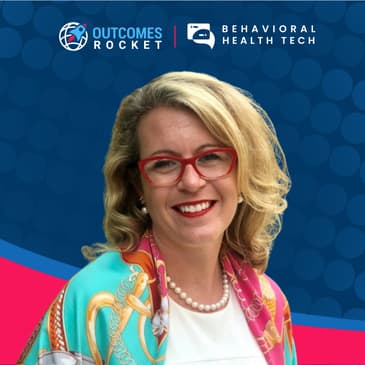
In this episode of the Expanding Access podcast by Behavioral Health Tech, Kacie Kelly, Chief Innovation Officer at Meadows Mental Health Policy Institute, explains how the Institute bridges policy and practice in mental health technology through innovative partnerships. She highlights significant advancements, including Medicare's decision to finance mobile applications and digital therapeutics, enabling clinician reimbursement. Kacie also discusses the collaborative care model, integrating mental health care into pediatric and primary care, and praises its sustainable financing. With increased funding and community involvement, she is optimistic about transformative changes in mental health care.
Tune in to gain valuable insights and be inspired by the innovative approaches in mental health care!
Resources:
- Connect with and follow Kacie Kelly on LinkedIn.
- Follow Meadows Mental Health Policy Institute on LinkedIn and discover their website.
- Fill out the Digital Behavioral Health Technology Company Policy Survey.
- Visit the Behavioral Health Tech website.
Fast Track Your Business Growth:
Outcomes Rocket is a full service marketing agency focused on helping healthcare organizations like yours maximize your impact and accelerate growth. Learn more at outcomesrocket.com
[00:00:01] This podcast is produced by Outcomes Rocket, your healthcare-exclusive digital marketing agency. Outcomes Rocket exists to help healthcare organizations like yours to maximize their impact and accelerate growth. Visit outcomesrocket.com or text us at 312-224-9945.
[00:00:25] Hey, everyone. Welcome back to another episode of the Expanding Access podcast. Recorded live here at the Behavioral Health Tech Conference in Arizona. I'm excited to be here with the amazing Kacie Kelly. Thank you. She is the Chief Innovation Officer at Meadows Mental Health Policy Institute.
[00:00:53] Kacie, first of all, thanks for joining us. And what brings you to the conference this year? Well, at the Meadows Institute, we are uniquely situated in the ecosystem because we operate at the intersection of policy and practice. And so in this venue, we are the connector between the policy world and the tech world. And there isn't a better, bigger place to be when it comes to behavioral health tech than this conference.
[00:01:19] I love it. I agree as well. And look, I love hearing about your role in innovation. Everything that you're doing, paving the way, helping things scale and work in the space that really needs it. Tell us a little bit about the innovative partnership models that you're working on and cultivating. So our philosophy and our perspective is that there are a lot of things that are out there right now that work for many people.
[00:01:43] And what we really need to do is to innovate to figure out how more people can access those high quality solutions. And technology is a big part of that. And so we have some exciting partnerships with organizations like Gray Matter and Hope Lab who are investing in technology companies where we're trying to bridge the gap between the policy world, the investor world, and the innovator world. We also have a strategic partnership with behavioral health tech.
[00:02:10] And we're also helping companies, individual companies, understand how the regulatory environment and the policy environment are really affecting their business models and their ability to expand into markets that, you know, they may not appreciate how big of a deal it is that certain policies may be limiting them from making money. Yeah, there's a lot of that going on. And so you're providing intelligence, connections, resources.
[00:02:39] We've heard that there's never been a better time to be in mental health policy at the state and federal levels than now. Tell us why that is and what's been changing. Why is it more promising today than it ever has been? Well, some of the work that we've been doing over the last two years is to bridge this gap. And I'm really proud of some of the progress we're starting to see. For example, last year at this conference, the newest government agency, they're kind of the cool kids on the block, ARPA-H.
[00:03:06] They're being designed as the DARPA for health care. They announced at this conference on one of our panels that they would be investing in mental health care. And they have around $4 billion to give out over the next five years. And so we are really excited about that movement and that priority. In addition to that, just this Friday, last Friday, Medicare finally, finally, we've been working for a number of years on this,
[00:03:32] finally announced that they are going to clear finance codes so that mobile applications and digital therapeutics can actually be used and get reimbursed by clinicians who are putting those technologies to use. That's amazing. There's so much going on. How do you stay on top of it all? We have an incredible team. We have an incredible team. Our whole team works at the federal level and at the state level doing policy work.
[00:03:59] In addition to that, we have teams that are basically providing consultation services in health care systems and school systems and justice systems to help those systems with implementing best practices. And that intelligence that we get on the ground really does feed our policy priorities and helps us understand what is actionable, what is actually going to fill gaps,
[00:04:23] as opposed to sometimes policies get created in a vacuum and they don't actually solve some of the challenges that we know exist out there related to workforce and related to measurement. So it's definitely more than a think tank. You're definitely boots on the ground making things happen. We are. We are. Our my boss does like to describe us as a think and a do tank.
[00:04:44] And, you know, I really do think that unique value that we have at the intersection of policy and practice does really help us to make sure the work that we're doing on Capitol Hill in D.C. as well as in Texas and Florida and Colorado and Michigan and many other states are really helping us to make sure that the recommendations that we're making are meaningful and actionable. Well, that's fantastic.
[00:05:11] We're really glad to have a partnership like yours in our government, in our states. So we're really grateful for the work that you do. How are you helping expand access to mental health and substance abuse care? Yeah. So there are a variety of ways.
[00:05:26] So in D.C. we've been working again for a couple of years and we're seeing movement to advance the collaborative care model, which is an integrated behavioral health model that allows pediatricians and primary care physicians to identify people who are at risk and actually get them care through a consulting psychiatrist. The reason we're so excited about this model is not because it's necessarily new, but because the financing is in place.
[00:05:54] And so it is sustainable, scalable and identifies people earlier in disease course so we can get them care before they are struggling. In addition to that, we're really excited about some work we've done in Texas over the past 10 years. In Texas, we have, of all of the policy priorities that we have pursued, 115 of 127 policy priorities have gotten approved. That's 91%. In Texas? In Texas. Amazing. Yeah.
[00:06:23] And at the federal level, just in the past year, 20 of our policy priorities we got pushed through in this last Congress, resulting in over $10 billion that's devoted to mental health care. So it's really exciting to see the money coming from both the government and the private sector. And then again, in Texas, where we've been working for the most time, we also have designed and funded the largest tele-mental health program in the country for kids.
[00:06:52] That has resulted in every school district in Texas being a part of a program where they can basically press an easy button when they see a kid who's struggling and get access to one of the 12 academic medical center psychiatry departments. And that's over 4.1 million students in Texas who have access to their programs. It's amazing. And so the dollars are there, the programs are getting implemented. Something like you guys put together in Texas, like how accessible is that to other states?
[00:07:22] So that's now what's happening. I think because we see Texas, because we've been working there for the longest time at this point, as really an ecosystem of innovation where we can bring in partners and bring in innovative models, incubate it. And then export it. And so a lot of times I describe my job as a bit of an importer-exporter.
[00:07:42] I'm constantly looking for innovative solutions that are data-driven that we can maybe bring to Texas and test or refine on a small scale and make sure they're working for all populations and in all settings so that then we can replicate those innovations in other places around the country. And we're doing that now in Florida and in Colorado, which is really exciting. Great to see the program scaling.
[00:08:07] What makes you most hopeful about the future of mental health care today than you've ever made? So I started talking about that a few minutes ago. I've been working in mental health policy and operations for 25 years. And there is more money from both the public sector and the private sector. We have more solutions than ever before that can be deployed. And we have more people raising their hands to be part of the solution and also raising their hands when they're struggling.
[00:08:36] And I have never seen that in my 25 years career. And so I really do think we're on the precipice of transformative change in the coming years. Well, you know, speaking with someone like you that's had so many years of experience in this space, to hear you say that, it brings hope to me. And I'm sure that for everyone watching and listening, they're feeling it as well. So thank you for sharing that. To wrap up today, can you share a closing thought and the best place the audience can learn more about you and the organization? Yeah.
[00:09:05] So I'm really, really excited. One of our partnership opportunities with Behavioral Health Tech this year is to release a very short survey that's going to be released tomorrow. And we're inviting all founders, senior level executives who are a member of this fantastic community to participate in the survey.
[00:09:24] Because we're interested in what you're struggling with, where markets that you are most interested in, and how we might be able to help you on the federal level with some of the policy changes that would help you expand your reach so that more people can access care. Well, I love it. That sounds like a great opportunity for folks out there to engage. Casey, this has just been an incredible time to learn from you and really just share your insights with our audience.
[00:09:49] Ladies and gentlemen, thanks for tuning in to another episode of the Expanding Access podcast. Casey Kelly, Chief Innovation Officer at Meadows Mental Health Policy Institute with us. Make sure you check out the show notes for all ways to get in touch with them. Take that survey and help take mental health, substance abuse, IDD care to the next level. Casey, thanks for being with us. Thank you for having me. Thank you.
[00:10:26] This podcast is produced by Outcomes Rocket, your healthcare exclusive digital marketing agency. Outcomes Rocket exists to help healthcare organizations like yours to maximize their impact and accelerate growth. Visit OutcomesRocket.com or text us at 312-224-9945.