
This podcast is brought to you by Outcomes Rocket, your exclusive healthcare marketing agency. Learn how to accelerate your growth by going to outcomesrocket.com
The key to improving the patient financial experience lies in personalized, transparent, and empathetic billing practices, moving beyond traditional, impersonal revenue cycle management.
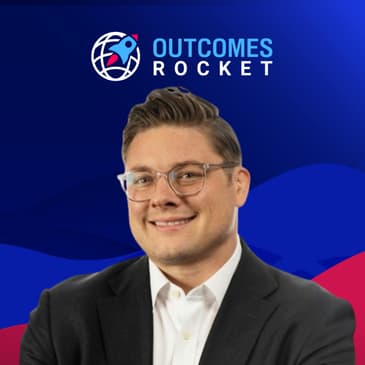
In this episode, Dugan Winkie, Head of Commercial Strategy for Cedar, discusses how his company is revolutionizing the patient financial experience. His company uses a B2B2C model, partnering with providers to interact directly with patients on all billing matters, offering solutions ranging from simple bill payments to complex affordability options. Dugan emphasizes how they differentiate themselves by creating a personalized experience that guides patients through the complexities of healthcare finance. He also explains that Cedar prioritizes data integration to accurately answer complex billing questions and offer a truly integrated patient experience.
Tune in and learn about the future of patient financial engagement and how to create a transparent, personalized, and empathetic experience with the patient billing process!
Resources:
- Connect and follow Dugan Winkie on LinkedIn.
- Learn more about Cedar on their LinkedIn and website.
- Read Cedar’s annual report here.
Fast Track Your Business Growth:
Outcomes Rocket is a full service marketing agency focused on helping healthcare organizations like yours maximize your impact and accelerate growth. Learn more at outcomesrocket.com
[00:00:01] This podcast is produced by Outcomes Rocket, your healthcare exclusive digital marketing agency. Outcomes Rocket exists to help healthcare organizations like yours to maximize their impact and accelerate growth. Visit outcomesrocket.com or text us at 312-224-9945.
[00:00:30] Hey everyone, thanks for joining us on the Outcomes Rocket. Today I have the privilege of hosting Dugan Winkie. He is the Head of Commercial Strategy at Cedar, leading go-to-market for new product innovation and strategic planning for the company. He spent the past 15 years in healthcare focused on provider growth strategy, operations, digital analytics, transformations.
[00:00:56] Prior to that, he did work with McKinsey & Company and just an incredible background. So Dugan, so grateful that you joined us. Yeah, thank you for having me. I'm excited to be here. Likewise, likewise. So look, to begin with, talk to us about what inspires your work in healthcare. Yeah, I think the short answer is healthcare is all I've known. It gets under your skin a little bit, just because the opportunity for innovation is so vast, right?
[00:01:26] But, you know, elusive at the same time. So I think my journey into healthcare started as, you know, a young 22-year-old at Epic, you know, getting screamed at by a radiologist because I added a few extra clips to their workflow. But for me, it really helped me understand healthcare from a variety of different lens. You know, the power that technology really can have, but simultaneously the impact that it really can institute, you know, operationally and clinically for that matter.
[00:01:55] You know, from there, I really wanted to learn a bit more around, you know, what keeps more senior leadership C-suite up at night. So I was able to really, you know, flex into a variety of different roles at McKinsey, focused on the provider market, you know, growth to cost to digital analytics. And like, ultimately, like it is fairly personal for me. So I've been a partner riding shotgun with my wife who's been navigating a chronic illness for about the past 15 years.
[00:02:24] So just being by her side is, you know, she's had $10,000 surprise MRI bills and coordination of benefit denials, complex preauthorization workflows. It just, it really helps keep me grounded on the inefficiencies and frustrations that millions of Americans have to go through as it relates to the patient financial experience. And, you know, Cedar is really, in my mind, a perfect fit to really help enact some of that innovation and change. I love it.
[00:02:54] Yeah. And I'm sorry to hear that what you're going through. And yeah, like to your point, it's so common and shouldn't be the case when it's so easy to get anything else done. And you can go to the car mechanic and, you know, get an accurate estimate and not be surprised at the end of the day. Right. Like if that's the golden path at the end of the day, we feel a lot of work. Yeah. Yeah. Seriously. So let's dive in the Cedar. What does the company do to add value to the healthcare ecosystem? You mentioned finance.
[00:03:25] So talk to us about that. Yeah. So our North Star is really the patient financial experience. So what that means is we are interacting directly with the patient for all things billing. And that could be an array of different solution. It could be as simple as you have a bill, you need to pay that bill and, you know, you leverage our platform to do so. But increasingly, like it's not it's not that simple. You know, at the end of the day, there's affordability concerns.
[00:03:54] There's friction and there's an array of different stakeholders that the average healthcare consumer really needs to navigate independently. So you call the health system. They say, I have this EOB that says one thing, a hospital bill that says another. The response is, you know, OK, call your payer.
[00:04:11] So there's a lot of this ping ponging between different parties right now that Cedar really wants to sit at the center of that ecosystem and help guide and be a bit of that financial Sherpa. Right. That is is helping not just reduce friction, answer questions, but ultimately help address some of the affordability concerns through more flexible payment options and, you know, enrollment coverage.
[00:04:39] So this all, you know, I would say started seven years ago with our flagship product Cedar Pay, which at that time, you know, the friction was was so overwhelming. You know, you needed to go to the doctor to get an activation code for your EHR to start, you know, a digital payment option, period. You know, there was there was no Apple Pay, Google Pay.
[00:05:01] And, you know, I think we have grown and innovated right as as the market has continued to to grow and adopt technology, which is a bit of what I'm looking forward to talking with you about, you know, some some of our more recent innovations. That's great. Yeah. And remind me, Dugan, who are your customers like? Who do you serve providers, payers, employers, the patients? Yeah, I would think of us as, you know, a B2B2C company.
[00:05:29] So our partners are generally providers. So it could be, you know, large multi-state IDNs to, you know, you know, smaller, you know, physician staffing agencies. But but generally like kind of firmly in the large enterprise market. But really like what differentiates our product is our ability to interact with consumers.
[00:05:50] You know, we are a consumer driven company that believes that what you receive, you know, about your billing experience, how you receive it and like when you receive it should really all be personalized based on, you know, your unique archetype. But, you know, at the end of the day, we will be white labeled, you know, into a provider's digital ecosystem. I don't really be driving all of those interactions. Very cool. Very cool.
[00:06:16] So then I guess, you know, you see this is a huge pain point. There's there's players on the RCM side, you know, doing things on collections. You guys are more focused on on that experience. Right. So help us understand what makes you guys different. Yeah. Yeah. So I would say the goal with Cedar has always been to create a transparent, personalized and empathetic billing experience.
[00:06:42] And that that is not the reality out there, you know, with status quo. If you know anything about revenue cycle management, it is there. There is a lot of regulation restrictions. You know, even the idea of like 120 day done cycle. You have 120 days to interact with the patient before they get sent to collections. Historically, that has been, you know, day 30, you get a statement. 60, you get a statement.
[00:07:11] 90 days, you get a statement. So we have we have really tried to disrupt, you know, a lot of that legacy architecture. And many times, like there's no reason that your done cycle needs to be 120 days. Right. Like if you have the patient who has a $50 bill and a patient that has a $5,000 bill, those are two very different patients that are thinking about this in a very different manner.
[00:07:37] Right. So if we can say, actually, give us 180 days to interact with this patient or, you know, that $50 payment should not be allowed to have a two to three year payment plan. But, you know, this patient with the $5,000 bill, like absolutely. Absolutely. Because a lot of I would say, you know, some of the misconceptions in the industry is that patients don't want to pay their bill.
[00:08:01] And what we find is that that's not actually true for the majority of individuals. Like there are real affordability concerns that we need to look at, you know, more holistically. I would say like the maybe to close it out, like the last thing that we're really focused on as it relates to differentiation is integrating, you know, generative AI into our platform.
[00:08:27] Right. And that could be through an AI bill summary when you are logging in. It could be, you know, this financial Sherpa that is guiding you through whether you should apply for Medicaid, whether you should sign up for an ACA marketplace. But like ultimately, like where we are starting is as a AI voice agent that can be this initial layer of triage when you call into a provider.
[00:08:52] So, you know, ultimately, like we want to help answer patients questions and dissolve, you know, some of those concerns, you know, autonomously and delegating or escalating to a live customer representative, you know, for those, you know, higher complexity needs. That's cool. Yeah. And there's a lot of talk around. There's been a lot of talk around agentic AI and, you know, the use of AI and agents to really improve this experience.
[00:09:21] What's your take on it? Is there huge promises? Is it is it a bubble? Yeah, I mean, probably a little bit of both or, you know, a smattering. I mean, I so first off, I think for us, here's how we think about, you know, our AI agent. Like it's it's going to be having an LLM driven, you know, voice agent is going to be fairly commoditized relatively rapidly.
[00:09:46] Right. But if you if you look at like the crux of what problem they're trying to seek or trying to solve, it's it's how do you effectively answer patients questions and have an enjoyable experience? So what what drives that? It's it's the data. Right. It's it's not just a chat GPT wrapper where you can get basic definition.
[00:10:09] And I think that that is what we view as like our competitive moat is we already have integrations with the providers. We can answer very detailed billing questions. We have integrations with payers. We can actually answer some of their payer oriented questions. We have integrations with HSA banks where they we can share their balance and actually process a payment.
[00:10:31] Right. So like that's, I think, where the magic in my mind is training our model so that, you know, we can solve a much higher complexity use case than, you know, a run of the mill, all encompassing, you know, AIA show. Totally. Yeah. Yeah. I mean, I'll tell you to date, my experience with AIA agents hasn't been great. But, you know, if the agents had the data like you're telling me, that would be interesting.
[00:11:01] Like they would actually be helpful versus like this bot that you just want to get rid of. So I think it's great that that that's key to have that integration of the data. Give me everything that I need so I could take care of this. So I'm not worried about it. Yeah. An interesting like proof point to kind of make make your cases. We typically do an AI assessment for net new prospects or clients where we'll ingest their call recordings and then, you know, categorize.
[00:11:31] Like what what do they actually call in about? What did they say was their problem? What was actually their problem? And like what degree of automation potential? Like, do we think and like shockingly, like over the majority of calls are I want an itemized statement. I don't understand what coinsurance is. I don't think my claim was processed properly. Like I'm confused. It's it's much more like education oriented than action oriented.
[00:11:59] And like we think at the end of the day, like if you can solve that education and have the answers for patients like that, that's going to be your North Star. Right. That that wins at the end of the day. With technology. With technology. Because you don't have enough people. Right. Like there's not enough people out there to do this job. And we've all had questions about a medical bill we've received. You know, if anybody hasn't, I want to meet them. I have questions.
[00:12:27] I like live and breathe this world. And we're in the business, right? You know? Yeah. So I love it. This is great. Very practical, useful. A lot of people are in need of this. As you've been building this, Dugan, like, you know, it's not easy to build new businesses. Tell us about a setback you've had and what you learned from it. Yeah. I might start with why we decided on this use case in the first place.
[00:12:54] And, you know, it was really fascinating because Cedar is a technology company, right? Like we have always been a SaaS, you know, technology company. But what we found is a lot of providers, you know, were coming to us and saying, hey, we've got this operational problem in our call center. Like we are looking for a partner to help us. And, you know, for us, like that kind of begs the question, like, what is status quo? Right? Like why is this so challenging?
[00:13:22] And we dug into a lot of these, you know, outsourced BPO, early out vendors and found that consumers or providers have been starved for innovation, right? For 20 plus years. Like that business model has not changed. The biggest innovation was going from onshore to offshore, right? Like the telephony systems are all like fairly standard. But nobody really looked at like, how can we disrupt this entirely? Right?
[00:13:50] And for us, I think it all comes down to economic incentives where our objective is to automate as many calls as we can and have a delightful consumer experience. Right? That's a win for the provider. That's a win for us as a technology company. A lot of the status quo vendors, you know, a win for them is like, you know, increasing over time the number of agents, right? That they are selling providers to satisfy their needs.
[00:14:19] So, you know, that is kind of the fundamental problem that started us down this pathway where we can help, you know, providers have a clear cost reduction and operational efficiency lever. But once we started building it, I think we had a, you know, a really big like build versus buy inflection point. You know, do we want to partner? You know, there's a lot of, you know, AI, voice agent point solutions out there. Or do we want to build it?
[00:14:46] And I think we decided to take a more conscious build based approach, going back to those data elements that we talked about prior. You know, but like that, that was a big one that we hit that on a, you know, on a fairly regular basis of, you know, how are we going to do this? And are we willing to sacrifice a little bit of time to market to ensure that we are building for sustainability over the long run? Yeah, no, for sure.
[00:15:10] It was a good, those are tough decisions to make, you know, but once you, once you put that anchor in the ground, you stay with it. And I think you guys made the right choice. So kudos there. You know, I love what you guys are doing. Dugan, I definitely am on your side here, like, and our entire audience is on your side because we need it. So for everyone listening, providers, payers, patients, employers, right? What, what, what closing thought would you give them?
[00:15:40] And maybe it's just for the providers, right? But your call, I'll leave that to you. What closing thought would you leave them with? And then where can they find out more? Yeah, I think the closing thought I would leave with is, you know, there, there are vendors and there are partners out there, right? And I think the majority of health systems are trying to stitch together an ecosystem of point solution vendors, right? I have my Medicaid vendor. I've got my statement vendor.
[00:16:05] I've got my, like, our goal is to really be a comprehensive platform with the North Star patient financial experience that get, that can provide a truly integrated experience, you know, for your patients. And at the end of the day, why, why does it matter? We're, we're going to help boost, you know, your overall ability to, you know, collect from patients. We're going to help, you know, ultimately drive efficiencies and cost reduction, you know, through harnessing generative.
[00:16:33] And we're, we're going to unlock additional sources of reimbursement and coverage for patients, right? So like, that's the trifecta, but you need to do it in a way that's like really integrated and seamless for the patient. I love it. Great, great, great summary and a very clear mission there. Where can people find out more? You can absolutely find out more by reaching out to me directly and also cedar.com. So outstanding Dugan. Thank you for that.
[00:17:00] And for everybody listening and watching, make sure you check out the show notes. We'll leave Dugan's LinkedIn profile there as well as a Cedar website. So you guys can get in touch. Now's the time to make a difference in this space. Explore what difference these types of technologies and thoughtful approach like Dugan's and Cedar's is making for all of us. So appreciate y'all tuning in and Dugan, thanks for being with us. Thank you, Saul.
[00:17:24] This podcast is produced by Outcomes Rocket, your healthcare exclusive digital marketing agency. Outcomes Rocket exists to help healthcare organizations like yours to maximize their impact and accelerate growth.
[00:17:51] Visit outcomesrocket.com or text us at 312-224-9945.