
This podcast is brought to you by Outcomes Rocket, your exclusive healthcare marketing agency. Learn how to accelerate your growth by going to outcomesrocket.com
The key to better healthcare is focusing on a provider-to-consumer model that prioritizes continuity of care with an actual medical practice rather than just a relationship with a website.
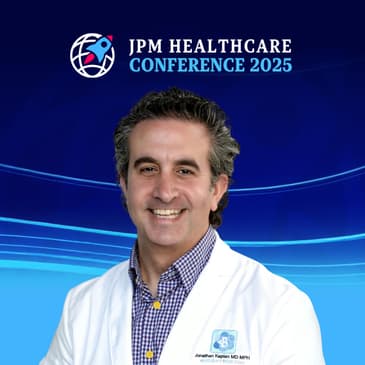
In this episode, Dr. Jonathan Kaplan, CEO of DrWell, discusses how his company is bridging the gap between direct-to-consumer convenience and the accountability of traditional healthcare. DrWell empowers medical practices with the tech stack needed for easy online sign-ups and subscription management, all while ensuring patients are connected to real doctors, not just independent contractors. Dr. Kaplan highlights the importance of asynchronous consultations, a new feature they are rolling out for providers in 32 states, using questionnaires as a starting point for a provider’s review. He also shares predictions for 2025, specifically for GLP-1 medications, predicting that despite current challenges with shortages and FDA regulations, compounding pharmacies will continue to play a vital role in the accessibility and cost reduction of these medications, and a market-focused approach may lead to price adjustments for brand-name drugs.
Tune in and learn how DrWell is shaping the future of accessible and accountable healthcare!
Resources:
- Connect and follow Dr. Jonathan Kaplan on LinkedIn and Instagram.
- Follow DrWell on LinkedIn and visit their website.
Fast Track Your Business Growth:
Outcomes Rocket is a full service marketing agency focused on helping healthcare organizations like yours maximize your impact and accelerate growth. Learn more at outcomesrocket.com
[00:00:01] This podcast is produced by Outcomes Rocket, your healthcare exclusive digital marketing agency. Outcomes Rocket exists to help healthcare organizations like yours to maximize their impact and accelerate growth. Visit outcomesrocket.com or text us at 312-224-9945.
[00:00:31] Hey everyone, welcome back to the Outcomes Rocket. I'm here in San Francisco. Actually at the Dr.Well corporate offices with Dr. Jonathan Kaplan as part of our JP Morgan Health Insights and Predictions series. So Dr. Kaplan, thanks for being with us today. Happy to be here. Yeah. So look, for everybody that may not be aware of you and what you do, tell them about you and tell them about Dr.Well. Yeah, I'm Jonathan Kaplan. I'm a board certified plastic surgeon based here in San
[00:00:57] Francisco, but I'm also the founder CEO of Dr.Well. And Dr.Well is a provider to consumer network. And if you think of Rho or HEMS, those are direct to consumer DTC platforms. And so it makes it very easy for a consumer to sign up for medication subscriptions. And that's great. So they've really included, made it easier for consumers and they've really improved the accessibility for these different medications. The problem is after the patient has signed up, their relationship is with a website,
[00:01:27] not with an actual provider. And that's what we do. We're a provider to consumers. So we provide all those same technological advances that make it easy for the consumer to sign up. But instead of them having a relationship with just with Dr.Well, they have a relationship with an actual medical practice. So we make it easy. The things that the provider can't do, they can't do all the technological, the tech stack that makes it easy for the consumer to sign up for medications. They don't have the ease of use of submitting the prescriptions. We take care of all of that technology, making it easy for the
[00:01:57] consumer to get access. And we run the subscriptions each month. But now the patient has access to a provider and actual doctor's office, not just an independent contractor that's collecting, you know, 50 bucks for a consultation. They actually have access to the actual medical practice with all of their staff. And so it's much better for continuity of care. I like to think of as DTC with continuity of care. That's what PTC is. I love that. And like you said, who wants a relationship with
[00:02:23] a website? Right, right. And this is medical care, you know, so there are complications that could come up and... Absolutely. And I know that like the rows and the hems out there will say, oh, well, we've got customer service available. You can text, you can email, you can call an 800 number. But the thing that they can never have that Dr. Well providers offer is accountability. Because if you are talking to an independent contractor at a web company, at a DTC company, they're getting a
[00:02:51] paycheck. They're never going to see you again, unfortunately. Whereas when we're connecting you with a healthcare provider, they've got malpractice insurance. They've got a practice, they've got a reputation, they've got the accountability that these DTC companies will never have. Yeah. Hey, listen, in my opinion, it's the way to go. And look, so right now we're here in this vibrant city at this vibrant conference. Talk to us about any insights that you want to share for 2025,
[00:03:18] and then we'll hit the predictions. All right. So yeah, our platform, Dr. Well, we are expanding to all so many more providers across the country. And I know I'm a plastic surgeon, but it's not just we're providing weight and wellness solutions for all of our providers. So that's, you know, anything that patients are looking for as far as weight and wellness, our providers can help them with. And that's what we're doing is we're just expanding our features, our functionality, making it easier for consumers, you know, with asynchronous consultations, but still having the follow-up with a provider. And that's kind of a new thing that we're bringing
[00:03:48] to our providers is that idea of an asynchronous consultation, because they don't really necessarily know what that is, but it is a legitimate way for consumers to get access to providers. In 32 states, the asynchronous consultation, meaning that they fill out a questionnaire, then the provider at a different time reviews that questionnaire, make sure that they're appropriate for that medication. We're implementing that technology for our providers that in 32 states, that's all the consultation you have to have, but we still
[00:04:15] provide that additional continuity of care, that ongoing service to the patient. So that's one of the things that we're offering to our providers starting out 2025. I think that's really great. And look, one of the topics that has come up, a lot of conversations around, you know, agentic AI and the digital workforce. You said asynchronous is part of that, a digital workforce where we have AI helping providers
[00:04:40] go bigger and more quality, or is it still the provider's going to get back to the whatever conversation was happening? Well, we definitely have some AI involved in our platform. No question about it as far as when their patient, a provider submitting a prescription to a compounding pharmacy through our platform. Our AI is making sure that that prescription is going to the correct compounding pharmacy that has a license in the state that the medication's going, or that has the lowest cost of goods. So yeah, we have AI, but not in this particular situation as far as asynchronous consultations.
[00:05:10] We are making it very easy for the, the patient can go to the drwell.com provider finder, they find their provider in their state, they fill out an asynchronous consultation right there, that is then directed to that particular provider where they review that, that contact questionnaire that's been completed by the patient. And then the office staff then sends a link to, to the patient to enroll through our internal messaging system. So it is all very HIPAA compliant. It's all self-contained.
[00:05:38] So even if the provider has their own EMR, we're, I like to call our patient documentation system. We're separate from EMR. I think EMRs are no fun. EMRs don't make you, don't generate any revenue. They're like, they're a big hassle. Yes, I think they're a necessary evil, but they're just not fun. As a company, I would not want to be producing EMRs. That just doesn't sound fun to everybody. Everybody dislikes your solution. Whereas with our patient documentation system, everything is
[00:06:03] self-contained and it's all generated to take care of patients, but also generate revenue, cash pay revenue outside of the insurance world, which is what a lot of providers are dying for. Now they want to stay independent. They can't afford to get paid a pittance from the insurance company, especially after fighting for that pittance to wait six months to get paid. We're a solution for all providers to think in that cash pay model because patients are going
[00:06:30] to want to pay cash out of pocket so they can get faster service and better customer service. Love it. Well, a lot of great and interesting things here, folks, to keep in mind. Most importantly, relationship with your provider, making sure that if you're a provider looking to provide these benefits to patients, there's an opportunity for cash pay options. And so ultimately, a lot of really great things unfolding here in this space with Dr. Well. Let's talk about what
[00:06:56] this year is looking like. You know, what in your mind, what are the predictions for 2020 as it relates to your space? Right. So Dr. Well is a provider to consumer platform that deals with weight and well. So it's not just GLP-1s. I mean, we're taking care of like, you know, hair loss, erectile dysfunction, skin care. So anything that compounding pharmacies offer, we can help connect to that medication through a provider. But let's focus on predictions for GLP-1s because I think that's really exciting.
[00:07:22] As far as tier zapatite, anybody that's following this space knows that tier zapatite is quasi off the shortage list, which means that compounding pharmacies aren't allowed to make it. But the FDA has given 60 to 90 days to 503A and 503B pharmacies to continue making tier zapatite. But this is what I see. So a few different scenarios that I want to play out for you. Either way, at the end of the day, tier zapatite will still be accessible and provided by compounding pharmacies. So it will still be a
[00:07:48] better accessibility to consumers and less expensive than the name brand drug. So these are some scenarios I see playing out. So if things continue the way they are in that 60 to 90 days the FDA is given, runs out and tier zapatite can no longer be produced in its current formulation because it's off the FDA shortage list, compounding pharmacies will come up with alternative formulations that are 10% off the traditional formulation and compounding pharmacies will still be able to offer that. The truth is these
[00:08:17] companies like Nova Nordisk and Eli Lilly, they want compounding pharmacies to continue to be able to make it. They really do. And even if they don't realize it, because if you really take away the ability for compounding pharmacies to offer these medications, then all of those hundreds of thousands or even millions of patients that are getting access to these medications through compounding pharmacies will then flood the market for the name brand drug. And they will then go on the shortage list again because they won't be able to keep up with that. The truth is they're really not already able to keep up with it. The facts on the street are there is a shortage even if the FDA commissioner
[00:08:47] doesn't want to accept that. And also before they even approved Zetbound for sleep apnea, there was already 136 million Americans that were considered candidates for these medications based on their current indications. So now that's even going to go up higher because of sleep apnea. So that's one scenario that they'll just change up the formulation. You'll still be able to get access. The other thing I see is that with this new administration coming in, I see the Trump White
[00:09:12] House being more market focused, market centric and letting the market play out. And so rather than taking the Bernie Sanders approach and just browbeating a company trying to say you should lower your prices, you know, that's not a very capitalistic way of thinking about it. They should let the market help these big pharma companies lower their prices. So what I see the Trump White House doing is allowing compounding pharmacies to continue making tears of appetite at a lower price,
[00:09:37] which is what they already are. And there's some precedent for this. Makena, M-A-K-E-N-A, was a preterm labor medication that was available from compounding pharmacies. Then it became commercially available. The FDA continued to let the compounding pharmacy make it because it was less expensive and more accessible. So I see the Trump White House making tears of appetite continue to allow it to be made by compounding pharmacies at a lower rate. And then more and more people will continue using compounding pharmacies. Then there will no longer be a shortage with the name brand
[00:10:06] drug because the insurance companies aren't paying for it. It's too expensive. Insurance companies are dropping it left and right in 2025. I just did a recent TikTok post on this of insurance companies dropping their medication. And we're hearing from patients whose copay is going from $25 to $775. That's a specific patient I saw that has Blue Cross Blue Shield federal health plan. So anyway, so that's sustainable. It's not sustainable. So the insurance companies don't want to pay for the name brand because it's too expensive. The patients don't want to pay for it because it's too expensive. So what is going to
[00:10:36] happen is compounding pharmacies will continue to make it a lower price. The name brand drug companies will have to lower their price and then insurance companies will start to cover it. But then if you start to have more insurance plans covering the medication at a lower price, more patients will start to flock to that because of course, if they don't have to pay out of pocket and they can have their insurance pay for it, that makes perfect sense. So that's going to have more people flooding towards it. So that's going to put it back on the FDA shortage list. So no matter what,
[00:11:01] this ends up on the FDA shortage list. And, and, and I think that Trump White House in their market centric mentality, I think they were going to let the market play out. That will help name brand drug prices come down. Compounding pharmacies will still fill their role and everybody will have access to GLP ones because it doesn't just start, stop with Ozempic, Mujara, Wegovia, and Zetbound. There's going to be new players coming out, maybe still from Eli Lilly, but new Ratatratata is the next one that's going to be
[00:11:29] coming out at probably the end of 2025 or early 26. But these medications are going to keep getting better and people are going to want to get access to them all the while on a parallel track. Let's improve the food supply in America. So people don't need these medications. I get that. But in the meantime, patients need the help with these medications. They're incredible. So those are my predictions is that in the end, Zetbound is going to ultimately be on the shortage list and the Trump White House is going to use their market leverage to lower the price of the name brand drug.
[00:11:58] Well, I love the predictions. Dr. Kaplan, what do you guys think? Make sure you leave notes below on this post because we want to start some great conversations around this very important topic. Again, ladies and gentlemen, thanks for joining us here at the JPM Health Insights and Predictions series here with Dr. Jonathan Kaplan, CEO of Dr. Well. Dr. Kaplan, thanks for being with us.
[00:12:20] This is a pleasure. This podcast is produced by Outcomes Rocket, your healthcare exclusive digital marketing agency. Outcomes Rocket exists to help healthcare organizations like yours
[00:12:44] to maximize their impact and accelerate growth. Visit outcomesrocket.com or text us at 312-224-9945.