
Cancer care is complex, emotional, and often difficult for patients to navigate alone.
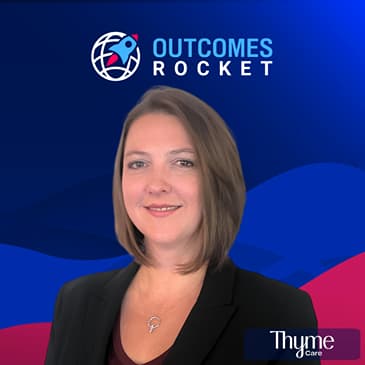
In this episode, Marcia Macphearson, Chief Operating Officer at ThymeCare, discusses how the company is working to transform cancer care through value-based care and a connected approach to the oncology ecosystem. She explains how ThymeCare brings together health plans, oncology practices, health systems, and multidisciplinary care teams to help patients navigate the financial, social, clinical, and emotional challenges of a cancer journey. Marcia also shares how building trust with patients and connecting the different parts of the healthcare ecosystem can help care teams respond quickly when patients need support. She explores the potential of AI to support clinicians by reducing administrative work, consolidating information, and giving care teams more time and insight to focus on individual patient needs.
Tune in to learn how coordinated, whole-person cancer care can close gaps, build trust, and improve outcomes!
Resources:
Connect with and follow Marcia Macphearson on LinkedIn.
Learn more about Thyme Companies.
[00:00:03] [SPEAKER_01] Hello, everyone, and welcome back to the Outcomes Rocket. Saul Marquez here with an outstanding guest today. Her name is Marcia Macphearson. She is the Chief Operating Officer at Thyme Care. They're up to some exciting work in value-based care for oncology, from the provider side to the payer side to employers.
[00:00:27] [SPEAKER_01] There's huge opportunities in this space for all of us, and they're at the tip of the spear. So, Marcia, with that, I want to welcome you to the podcast. Thanks for joining.
[00:00:37] [SPEAKER_00] Thank you, Saul. Really grateful to be here. Excited to have the conversation today.
[00:00:41] [SPEAKER_01] Likewise. I know there's a lot to talk about because you guys are up to a lot. I was just sharing with you a recent press release that I'm sure you'll want to chat about today. But before we get into that, tell me a little bit about you. What got you into healthcare and what keeps you in healthcare?
[00:01:00] [SPEAKER_00] Ah, well, I'd love to start there. I wish I could share with you, Saul, that it was my sole intention to always be in healthcare, and I was smart enough to architect my career in that way. I, like so many people, likely got luckier than I was smart enough to be good. But I had a generic tech degree coming out of college. I was a management information systems major. I'm not even sure if they have that major anymore, but at the time it was half business, half computer science, and I had no idea what I wanted to be when I grew up.
[00:01:29] [SPEAKER_00] And so I thought, oh, I'll be this middle road of business and tech. Those things seem interesting and important. And then went into consulting. And at the time when I started my career, I started with Accenture, and they needed people in their health tech practice. And, you know, as many people coming out of college, you have a pretty thin resume. My mother actually had spent her career in practice management. And so I had worked nights and weekends in her offices doing chart filing or data entry or just things that you have interns do.
[00:01:59] [SPEAKER_00] And so I had those things on my resume. And so Accenture at the time put me in their health tech practice. And I very naively raised my hand and said, like, hey, I don't want to be in health care. I want to be in communications and high tech. That looks like the super sexy industry that we should be in. I mean, like, that's very nice to hear. You're going to sit down and do work in the health care practice. Then you can raise your hand and ask to go somewhere else. But in the meantime, here's where we're going to point you.
[00:02:25] [SPEAKER_01] That's so funny. So you tried to escape. You tried to escape.
[00:02:30] [SPEAKER_00] I tried. I tried. But actually, after six months of doing work in the health tech practice at Accenture, I was very grateful. It was very clear that the industry was incredibly dynamic and interesting. And I came to very quickly understand that it's ubiquitous and it touches everyone's life in America and everywhere. And there were so many parts of the industry to get to know and understand. And there were really hard challenges to solve. And so I was hooked and they came back to me in six months.
[00:02:58] [SPEAKER_00] They were like, you've done very well. Would you like to move over to communications and high tech now? And I was like, absolutely not. I'm sticking where I'm at. So I would say it was somewhat frozen for me. I'm glad it worked out that way. And I've been in the entirety of my career.
[00:03:11] [SPEAKER_01] That is awesome. That is awesome. I love that story. Hey, and I'm glad they were true to their work, right? They came back with what you wanted or what you thought you wanted. And the story changed.
[00:03:22] [SPEAKER_00] Yeah, it did. It was a very good example of other people can sometimes choose for you better than you might choose for yourself.
[00:03:29] [SPEAKER_01] That's cool. Is your mom still around?
[00:03:32] [SPEAKER_00] Oh, yeah. She's incredibly active. She retired just a few years ago, but she had a really stellar career. I was super proud of her. Yeah, she ended her tenure as the CEO of one of the largest surgical groups down in the concern area. But she worked across the industry and lots of different practices over the course of her career. And I got to observe and learn a lot from that.
[00:03:51] [SPEAKER_01] Wow. Well, she definitely had an impact on you. And so I'm sure she's proud of the work that you're doing because you're making huge moves at thyme care. So talk to us about what you guys do there. You know, it's value-based care and oncology. But talk to us about why you guys are different. The recent news with the Series E investment. Fill us in.
[00:04:14] [SPEAKER_00] Yeah, I'm super grateful to be here at Thyme Care. I joined just a few months ago as the chief operating officer, but was very excited when I started to talk with Robin and Bobby, the co-founders, and Brad, who's the CEO here, the vision that they had originally architected Thyme Care around and what they were hoping to achieve.
[00:04:33] [SPEAKER_00] And it started very much at the intersection of really good work in the oncology care space and Robin and Bobby's experience in that part of the ecosystem and seeing that there was really important and critical actors in the oncology care journey, whether that be the oncologist themselves or the PCP that the patient had, as well as some of the specialists that get involved in the facilities and the clinics and the drugs that are all involved in managing a cancer journey.
[00:05:01] [SPEAKER_00] But noticing that that is very difficult to navigate as a cancer patient is a scary process. And there's a lot of financial, social, clinical, and kind of just emotional factors in that journey. And everyone is there to help and support, but they all do that in their way. Brad and Deepice are now CEO who's been with the organization for four plus years and who I stepped into the large shoes of. He was the COO and I've come in to kind of fill those shoes as he's ascended.
[00:05:31] [SPEAKER_00] He was a cancer survivor himself. And so he navigated that journey and he knows what the difficulty is of doing that. And so they've built a company around being there for the patient 24-7 and being there for whatever they need, but then getting them into the right part of the ecosystem. Because we partner with health plans, we partner with oncology practices, and then we have our own multidisciplinary care team that's run by an incredible physician named Dr. Brian Dorsey.
[00:05:57] [SPEAKER_00] But we can sit at that intersection and help navigate that person through the cancer journey. And I think that's really differentiated, and that is how you execute value-based care in a really effective way. You sit at the intersection, you work with all the interested parties, you connect the dots, and then you are there for the patient when and when they need it, where and when they need it. And that is what unlocks value. And so it was really emboldened by the core mission of Thyme Care that they've been working really hard and seeing incredible outcomes from over the last five years.
[00:06:27] [SPEAKER_00] They've scaled 9x in the last 18 months. They've done that profitably. That's a pretty rare combination. And it's that set of outcomes plus the vision of where we're going to take Thyme companies to be a multi-stakeholder across the oncology ecosystem that led to the Series E announcement we got to share yesterday and the faith and the support from our investors who want to continue to see us execute against the existing core business as well as the new innovations that we're going to bring to market.
[00:06:57] [SPEAKER_00] So really a very exciting time to be at Thyme Care.
[00:06:59] [SPEAKER_01] That's for sure. So great to understand how the pieces have moved. And that Thyme companies will continue to be an oncology-focused umbrella of companies.
[00:07:10] [SPEAKER_00] There's a lot of places in the oncology journey across the therapeutics as well as the execution and the administration of services for patients as well as clinical trials. There's an unlimited set of places that when you sit in the intersection like we do in this part of the market. You can unlock new opportunities and then access pulling different parts of the ecosystem together to create new value. And I think that's what's really exciting.
[00:07:37] [SPEAKER_01] That's awesome. So with all of this excitement, what would you say is changing for partners versus staying the same?
[00:07:44] [SPEAKER_00] For Thyme Care as partners?
[00:07:45] [SPEAKER_01] Yeah.
[00:07:46] [SPEAKER_00] Yeah, I think what's staying the same, I'll start there first, is the mission that we have to transform cancer care and to do that collaboratively with plan partners, with practices, oncology practices and health systems. That stays the same and is core to our mission. The 600, 700 people that we employ that are a part of our care team that work with patients every day and make sure they show up and execute for them and build trust, that will remain the same. And we're all very focused on that.
[00:08:14] [SPEAKER_00] What gets exciting for our partners and what we'll get to do next is bring new strategic initiatives around therapeutics and clinical trials and other areas to the forefront, connect that back into our core business to be a multiplier, but then serve more of our constituents in a broader way. And so we're doing that work in those new spaces under Thyme companies, but staying core to the mission and the bedrock of Thyme Care, which is serving those patients.
[00:08:42] [SPEAKER_00] And that trust and that position that we have with those patients is, I think, what is really important. I have a recent example that Dr. Brian Dorsey was sharing with us where we were working with a patient that was diabetic, but also then diagnosed with cancer. His partner, his life partner, was also connected with our care team. And they called and said, hey, I'm trying to get a hold of him, the patient, but he's acting strangely.
[00:09:10] [SPEAKER_00] I can't get him to properly self-medicate or keep his nutrition appropriate. And I'm really worried about him, but I'm not near him right now. Can you guys call and get connected with him? Because I know that he's connected with your care team. So our team called and got him on the phone, noticed that that patient was really struggling and not acting normally.
[00:09:32] [SPEAKER_00] And then we put a series of action plans in place pretty immediately that resulted in having an in-home wellness visit take place for this patient that afternoon. We found that he was a diabetic who was actually struggling from low blood sugar to a point where he had passed out on the floor. And because we had gotten that wellness check to come to his door, they called 911, brought the ambulance and addressed his low blood sugar.
[00:09:58] [SPEAKER_00] He called us back the next day, as does his life partner, who said, you saved this man's life. You saved his life because you were here for him. And you understood that he was a cancer patient but also had diabetes. And you could bring all that holistic patient care to the forefront for him. And because he was involved with you and trusted you to pick up a phone call, even when he was in a moment of need, you were able to act very quickly. And that's not something that's always common or available to every patient on a cancer journey.
[00:10:25] [SPEAKER_00] And so it's those kinds of things that are part of our mission that will stay true to what we do and not change. And then hopefully we'll have more of those services to bring to our patients and our partners as we go forward.
[00:10:34] [SPEAKER_01] And Marcia, that's such a beautiful story because it doesn't always end that way.
[00:10:39] [SPEAKER_00] It doesn't. No, it doesn't. It's really hard to bring that kind of orchestration to life. And so I can take no credit for it at this point because I've been here about 100 days now. But I'm really excited to hear those stories and be able to share them back, the great work that our clinical team is doing.
[00:10:56] [SPEAKER_01] Absolutely. And, you know, the thing that I like most about that story is not only the patient engagement, but actually the care team that includes your significant others, your family. Like they're in the loop. It's not often that the whole process is integrated. So I love it. And when the core business is risk and shared savings, we're not talking about SaaS here. We're talking about care delivery, bridging gaps.
[00:11:26] [SPEAKER_01] And this is how you bridge gaps.
[00:11:28] [SPEAKER_00] Yep, that's exactly right. And you have to bring the whole ecosystem together to do that. And we do that in collaboration with our oncology practices that are part of our Thyme Care Oncology Network, as well as with our plan partners. Because everybody has a role to play, but it's bridging that gap and connecting across the assets that are available. And then making sure that you build trust with the patient so that they will trust you when you say, hey, I have this for you and let me help you. And that's not easy to do.
[00:11:55] [SPEAKER_01] No, definitely not. Okay, so then there's a lot of change. There's a lot of tech. At the end of the day, it's about care delivery. But what's a trend that you would point to that is going to change health care as we know it?
[00:12:07] [SPEAKER_00] I thought about this a lot. It's a question that comes around a lot. And it's a little bit trite to answer, but I think it is the intersection of value-based care and the emerging AI technology. We've got some incredible work that we're doing here around both of those things. Obviously, value-based care is core to the DNA. It is how we were built and the economic model that we are structured on.
[00:12:28] [SPEAKER_00] But we talked about the promise of AI and what that is bringing to an organization like ours that is managing a multidisciplinary team and has upstream and downstream data connections with plan partners and with practices and with patients through our technology. You really need to power that in a very strategic way.
[00:12:48] [SPEAKER_00] And I'm excited about what our organization has built and will continue to build in that space and what those types of technologies can do to power a multidisciplinary team that needs to think in the round for a patient and then be at the moment fingertip ready with the most personalized next best action for any particular patient that we're working with.
[00:13:09] [SPEAKER_00] Then to collect all that rich data and turn that into insights and predictive models that can then provide us a better view of what we can be doing with our partners and with our patients. And so you'd be remiss if you didn't say, what's the most interesting trend in healthcare? And you didn't say AI. You tied it back well.
[00:13:28] [SPEAKER_01] I'll accept it. You're everything. It's really exciting. Yeah, yeah, for sure. I love it. You're the COO there. So like I'm sure at the top of your list is the setbacks that could potentially come with value-based care oncology operations. Anything that you're most excited about there that maybe AI can unlock for you guys?
[00:13:47] [SPEAKER_00] Yeah, it really is the ability for AI to support our clinicians in doing what they do so well and to create more headspace and more room for them to be at the coalface with our patients. And not spending as much time documenting in our system or collecting pieces of information from lots of different spaces. It is about enabling them to do what they do so well, which is to think about what is the right thing for this patient.
[00:14:17] [SPEAKER_00] I've gotten the benefit to sit in interdisciplinary rounds watching our palliative care docs talk about the type of pain medication and intersection of nutrition and the type of work that we need to do for a patient who is thinking about some of those types of palliative care needs. And they need a real strong body of evidence to be able to coordinate and navigate what that original patient need is.
[00:14:45] [SPEAKER_00] And to have that at their fingertips, to free their mind, to not be moving through a system, but rather be thinking about that patient and then bringing that to life and sharing it with their oncologist and making an action plan. That type of AI and large language model work that can unlock that is really exciting so that we have the right support for our clinicians and then they can do what they do best. And so it is the combination of that tech-enabled services layer that is really special here.
[00:15:13] [SPEAKER_01] That's awesome. I appreciate a better understanding that. That's great. Well, Marcia, we could go on forever. This is such a fascinating conversation, but we're here at the end. So maybe we do a part two, but for now, I want to thank you for joining us.
[00:15:29] [SPEAKER_01] And if folks want to learn more, whether they be regional plans tuning in or national plans like your partners or new ones, what's the best place they could get in touch with you and the company to learn more?
[00:15:44] [SPEAKER_00] Well, I think you could start if you want to just know more about us. You could start at thymecare.com. If you want to think about the broader work that we're doing as an oncology platform, you could go to thymecompanies.com. And if you wanted to connect with me personally, you could find me on LinkedIn. You can also find the companies on LinkedIn and all the social media platforms. And then I would encourage you to reach out.
[00:16:06] [SPEAKER_00] We're always interested in making connections and hearing more from audiences that are also in the healthcare ecosystem and have great ideas about what we can be doing to drive value or innovate. And so I would point you in those directions.
[00:16:18] [SPEAKER_01] Love it, Marcia. That's so great. Folks, there you have it. Marcia McPherson, Chief Operating Officer at Thyme Care, here to share a lot of the latest announcements, the innovation, and all the beautiful things they're doing in oncology care. So make sure you check them out. All links will be in the show notes. If something today resonated with you, forward it to a friend because ultimately that's how the good word gets out. Appreciate y'all tuning in. And Marcia, thank you so much for spending time with us.
[00:16:48] [SPEAKER_00] Thank you, Saul. Really appreciate what you do. Appreciate the time today.