
Healthcare payments are often discussed as a transparency problem, but the deeper issue is structural fragmentation across contracts, claims, remittances, and workflows.
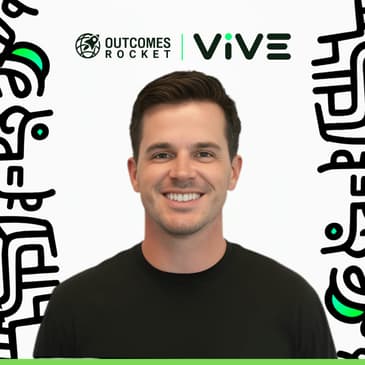
In this episode, Ted Ferrin, Senior Vice President of Payments Innovation at Zelis, explains how the acquisition of Rivet is bringing provider-facing payment intelligence into Zelis’s broader infrastructure. He discusses why achieving financial clarity between payers and providers has been so difficult due to fragmented systems and legacy technology. Ted highlights that true transparency goes beyond simply displaying data and requires meaningful, actionable insights. He also shares how tools like Claims Insights and Zap Edge embed intelligence into payment workflows to reduce rework, improve visibility, and create a smoother experience for providers, payers, and patients.
Tune in and learn how better payment intelligence could help turn transparency from a buzzword into real operational trust!
Resources:
[00:00:09] Hello everyone and welcome back to the Outcomes Rocket Podcast brought to you by Vive. I'm so excited to be recording an interview today with Ted Ferrin. He is the Senior Vice President of Payments Innovation at Zelis. He's focused on delivering increased revenue, claims analytics, and improved healthcare payment solutions for healthcare providers throughout the U.S.
[00:00:34] Before Zelis, Ted was co-founder and CEO of Rivet and he spent several years contributing to the business success for software companies like Canopy, Infrastructure, and Qualtrics. Just such a pleasure to have you on the podcast, Ted. Thanks for joining us. Yeah, you bet. Thanks for having me on, Saul. Of course. And hey, look, I want to start off the conversation just kind of recognizing some of the announcements that you guys made at Vive, in particular, the acquisition of Rivet,
[00:01:03] as well as the introduction of Zap Edge. So we'd love to learn more about the company, but also more about the announcements that you guys made. Yeah, it's obviously big news when you start a company and set off to try and build it into something valuable and impact the market and customers. You know, I guess somewhere in the recesses of your mind are like, all right, how will this end? Will we be acquired? Will we be successful enough to go public? Will we fail entirely?
[00:01:32] Absolutely. You know, and so there's many, many outcomes that happen to startups. And so I think the prospects of joining Zealous and the incredible scale they have, the incredible impact they have really across all healthcare stakeholders, payers, providers, patients, like they're in a very unique position to influence everybody was honestly kind of a dream. You know, in our, in our mind, it helped Rivet. I guess the way I think I've been phrasing it is that it makes Rivet immortal.
[00:02:01] We are going to be across hundreds of thousands of provider organizations versus in our previous model, more like limited to thousands. So just the scale is incredible. I think that was a big driving force that got us innovate and bring some really magical things together. That's awesome, man. Yeah. I love, I love that it worked out for you and the crew that way. And, and so now at Zealous, talk to us about the most important innovation the team is focused on and what problem it's designed to solve.
[00:02:30] Yeah. So as I mentioned, Zealous sits in a very interesting position. It's this very consequential intersection of healthcare. There's money, there's data, there's trust, patients, providers, payers, like everybody is figuring out how to be on the same page and to make healthcare billing and reimbursement work for everybody.
[00:02:49] And so one of the first things that we're working on, and we actually started this as partners long before Zealous acquired Rivet, Zealous licensed some of Rivet's products. One of them, namely we call claims insights and claims insights is like this great unifier between the provider and the payer and gives providers insights into their reimbursement and have payments been made or haven't they been made.
[00:03:11] What good and bad is happening within those payments. And it's, you know, really like this beautiful single pane of glass to understand your reimbursement with clarity, like you've never had it before. So that's one of the key things we're focused on, but that's, that's really the tip of the iceberg on what we want to bring, especially from a Rivet perspective to the provider market that Zealous serves.
[00:03:31] That's fantastic. Yeah, no, the opportunity is big and oftentimes these transactions, you know, very opaque that visibility is key. Why has shared financial clarity between providers and payers been so elusive? You know, that black box idea and what structural barriers have kept that insight and execution so disconnected?
[00:03:52] Yeah, all of them. Yeah, everything. You know, everything. You know, the industry in a lot of ways just wasn't really architected for shared clarity. I don't think that was intentional by any one party. It's, it's complex. Healthcare is not, you know, like putting consumer products on a shelf and seeing what they sell for and slashing the prices if they don't sell. And, you know, it's, it's a different animal. It's people's health. Sometimes it's elective procedures that you opt into. Other times it is, you know, burdens.
[00:04:22] And curses that someone was unlucky enough that their body, you know, is going through. And so how to price those, how to get people paid correctly for it. You can see how it leads to just a mess. So starting with things like payer contracts. And that was actually the founding premise of Rivet, you know, way back when, as we saw this opportunity to help providers understand what is in their payer contracts. Very unique to healthcare. The service provider, in this case, the actual healthcare provider, doesn't necessarily just set a price.
[00:04:52] They do sort of, that's their billed charge. But if they are treating somebody who has commercial insurance or really any form of insurance, ultimately that billed charge is worthless. It's gross revenue. It doesn't matter. It has no bearing on what the actual price of healthcare is. What does matter is what has the insurance company contracted with the provider to pay for that specific, you know, set of services on behalf of that member.
[00:05:19] Understandably, those payer contracts, there are so many, especially for the payers, there are so many permutations of them, like millions and millions and millions of, you know, this, think of this grid of the contracted rates that you're on the hook to pay.
[00:05:33] And it totally depends based on a million different factors that I didn't totally appreciate until we founded Rivet and got in the guts of it. But it's, it's, the layers just go so incredibly deep. So then, you know, those are some key pieces. But then I think there are certain siloed kind of payments pieces. You've got claims processing, remittances, reconciliation, even analytics are sort of supplied and built by different systems.
[00:05:58] And they contemplate different data. There are different data specs in the industry. So people cleanse the data in different ways. There's lots of legislation that's been layered on over decades and decades and decades of evolution there.
[00:06:11] So then all of a sudden, you've got a provider who's trying to navigate this stuff. And they build workarounds, you know, they do manual postings and spreadsheets and literal sticky notes. And you've got really large affiliation teams. And everyone's just trying to close the loop, right? And it all goes back on all these, these moving pieces. So the result isn't like intentional friction, it's just this structural fragmentation.
[00:06:34] And then of course, you've got denials, and some of which are fixable and preventable if the provider would sharpen up their billing processes. And meanwhile, you've got, you know, insurance companies that are trying to process all this stuff and get back to providers. And understandably, they're in a tricky position because they're trying to, you know, detect maybe on one extreme end, you've got fraud and on other ends, they're just trying to make sure everyone's kind of abiding by the rules. And otherwise, they, their financials can go off the rails pretty darn quickly. So it is however complex folks think healthcare is.
[00:07:03] Think healthcare is. Multiply it by whatever factor you deem appropriate, and you're, you're still probably undershooting it. So I think, again, full circle back to like, Rivet has been working on provider intelligence. We're really excited to have the opportunity to bring that into Zealous's scaled payments infrastructure, and really trying to address that fragmentation, and hopefully just really slash it and get providers and payers big time on the same page, ultimately, in a way that patients hopefully feel and see a lot more clarity.
[00:07:33] And their billing experiences.
[00:08:03] And literally, all three parties, you know, get frustrated by the lack of transparency. And in my view, a lot of it does stem back to things like those payer-provider contracts. They're tricky to manage. They're very difficult for payers to administrate. Obviously, patients aren't privy to those. And most patients don't really understand that dynamic exists. So, you know, you've got a patient, for example, who will ask a provider, well, what, shoot, what's this going to cost me? And the provider's like, I don't know, call your insurance company.
[00:08:31] You know, and then they call the insurance company. And then that, you know, that can be really tricky for the insurance company, because they don't exactly know what is the provider going to bill? What does the provider need to bill? Do you need this one service or this one code that might get billed for? Or do you need five? You know, and then it's not even as simple as giving you the prices or the contracted rates of each of those five services.
[00:08:53] Because understandably, some of those might be redundant in a certain specific episode of care. And so they get a discount, you know, that gets discounted in terms of what's going to be reimbursed to the provider. So there's just all these little hairy kind of inside baseball pieces that keep true transparency from happening.
[00:09:13] And so I think at the end of the day, what transparency requires clean, normalized structured data as real time of visibility as possible. Workflows that can actually deliver that normalized structured data visibly in real time to the right stakeholder at the right time, which is really tricky.
[00:09:33] And healthcare is operating on a lot of very old technology rails. Ultimately, like even alignment on definitions and financial logic across both sides of the transaction, I think it really takes all these. So if providers can see data, but still rely on manual processes to reconcile it or interpret it, that's not that's not really transparency. That's just sort of like reporting and still the stuff that keeps them up at night.
[00:09:57] I think transparency without that workflow integration, again, still is going to create some level of waste. So from our perspective, the gold standard is that true transparency would reduce rework. It would help a patient ask a question, get an answer. It would help a provider submit the right thing accurately the first time and insurance not sending back the infamous chase of resolving that denial or figuring out where you went wrong or, you know, rejecting a request for prior authorization or something like that.
[00:10:25] So we're really focused on our platforms like Zap Edge designed to be designed to move from this sort of like passive visibility to really embedding intelligence at the point of transaction. And again, back to the rivet trend, the rivet acquisition, that was a big driver is we can now fully naturally kind of organically embed really cool innovations like this claims insights right into the place where providers are seeing their payments and being able to reconcile the cash, the remit.
[00:10:55] And the, you know, the overall kind of insurance decision. Totally. Yeah, no, I see that. And I know like Zealous has been kind of for the most part payer side. So I think this gives Zealous that provider facing side. And if trust were truly designed into the payment process end to end, what would change for payers and providers in ways they'd actually feel day to day?
[00:11:19] Yeah, I mean, you call it. I think historically Zealous has certainly been focused or at least been thought of as a payer company, right? They're payers, they're clients. But I think what I it took me a moment to appreciate over the form of our partnership and kind of leading up to the acquisition. But Zealous is in such an awesome spot where they pay providers on behalf of payers. And they've been working really hard for years now to be building up really strong value proposition to the provider.
[00:11:47] And Rivet was solely focused on the provider. That was our sole, you know, sole paying customer. And so for us, a company that's been really focused and obsessed with how do we help providers be on a level paying field and really understand what's going on? You know, again, coming back to like real transparency in action. I think being able to catch Zealous at a moment where they're like, oh, we're investing big time in the value that providers feel like they get from us. We don't want to just drop off a payment and call it good.
[00:12:17] We want to help them. We want to help them ways that help the payer. We want to help them in ways that help themselves. Certainly, we want to help them in ways that help the patient. Even just this morning, you know, as I'm ramping up and learning more about Zealous operations and Zealous products, got a demo of Smart Shopper 365, this incredible platform that is for the members to shop for care, discover care. It's so cool to, you know, to just see, you know, impact like that. So at the end of the day, I think back to your question, I guess I digress.
[00:12:46] Very, very excited. No, it's interesting, though. I like the beggars. Yeah, you know, that we can add to the provider in that big emphasis for Zealous now. But I think, you know, trust shows up once operational relief has been captured for a provider. If they can get faster, more predictable cash flow, if they can have fewer errors that they have to or just issues that they have to call payers about, if they can reduce the administrative burden and staff burnout and all, you know, the stuff that leads to high turnover,
[00:13:16] which is very common in revenue cycle management positions. Like, all of that, even confidence that their payments align with those payer contracts that they've signed. Like, that is how you build trust. It's substance. It's real. You know, for payers, I think fewer disputes, less rework. It lowers administrative costs for them. I think stronger provider relationships. Like, those are things that all of a sudden, from their perspective, they trust the providers.
[00:13:42] And they're less like, oh, my gosh, I have to we have to waste our lives and so much expense on is there fraud? Is there waste? Is there abuse? Is there anything in the system? And instead, it can be substance. The providers are trying to get things right the first time and they've been armed to get things right the first time. Like, it just it's this flywheel that benefits every participant and every stakeholder in the health care financial experience.
[00:14:06] So I think just as as like shared impact as real substance emerges from what has historically just been a really messy sort of dysfunctional reimbursement landscape that everyone has to live in. Like, that's how you build trust, you know, not just talking about it, not talking about transparency, like bringing it to life for reals. That's awesome. Yeah. And I think there's a huge value unlock here if properly executed. So I'm excited for you guys in a big way.
[00:14:36] If people wanted to learn more about what you guys are up to at Zealous or about you, Ted, what's the best place they could reach out? I mean, certainly Zealous.com is the window into any one of our offerings. While this may be phasing and changing and evolving over time, rivethealth.com is also still a window into into Rivet specifically and the products that we offer.
[00:14:58] And then obviously through either of those channels, conversations can get escalated to get demos of our products to learn more about them on a, you know, on a personal note. Anyone can look me up on on LinkedIn and reach out and happy to happy to engage personally. And I know many folks at Rivet and Zealous would would feel the same. That's awesome. Well, Ted, thank you so much for joining us today. Folks, thank you all for joining us today on this episode of Outcomes Rocket brought to you by Vive. Today we hosted Ted Farron.
[00:15:27] He's the Senior Vice President of Payments Innovation at Zealous. Thanks, Ted. Thank you, Zah.