
Shifting towards a value-based care model focused on patient needs, healthcare organizations can improve outcomes, reduce costs, and enhance the overall patient experience.
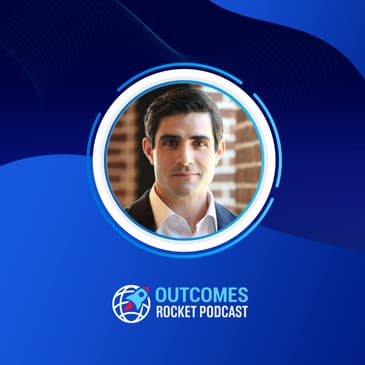
In this episode, John Petito, Chief Strategy Officer at TailorCare, advocates for a patient-centered approach to musculoskeletal healthcare through a specialty value-based care model. He discusses how TailorCare's model prioritizes patient engagement by spending significant time understanding individual needs and goals, leading to more effective treatment plans. John talks about how expert guidance and connecting patients with appropriate care options are ways to reduce unnecessary procedures and costs. He also comments that TailorCare's approach improves collaboration between patients, providers, and payers, leading to more efficient and effective care delivery.
Tune in to learn how a value-based care model can revolutionize musculoskeletal healthcare by prioritizing patient needs and fostering collaboration among patients, providers, and payers!
Resources:
[00:00:02] Hey everyone, welcome back to the Outcomes Rocket. So excited you joined us for another episode. Today I have the privilege of hosting the amazing John Petito. He currently serves as the Chief Strategy Officer at TailorCare, a specialty value-based care organization backed by Valtruis. In this role, he's responsible for corporate strategy, marketing and communications. He's a healthcare executive and advisor with nearly 20 years of marketing.
[00:00:32] He's been a part of the past 20 years of progressive experience. And over the course of his career, he's worked with payers, providers, and pharmacy benefit managers on developing and operationalizing a strategy. We all know that this area is an area that needs major innovation. And prior to TailorCare, John served as Corporate Vice President at ScanGroup. So excited to have him here on the podcast. John, thanks for joining.
[00:00:56] Saul, thanks for having me.
[00:00:57] Always a pleasure, my friend. And so look, before we dive into the content of the podcast, would love to really get to know you better. What is it that got you into healthcare and doing what you do?
[00:01:09] Where to begin? I got into healthcare, but I think it probably all traces back. I think I've talked about this with others. But back when I was in middle school, read a book about primary care doctors that worked in rural Maine and just loved the notion of connection,
[00:01:23] of helping people that really the humanistic aspect of it. Went to college, grew up, did a bunch of clinical internships, started off as pre-med, quickly realized one that I was not good with the sight of blood.
[00:01:36] And I think I could actually be cut out to be a doctor, but was fascinated by what I saw. Did not look or feel anything like what I read about when I was younger. I mean, I think so much of it because of the system, because of the incentives, because of the nature of specialization just felt so mechanical, felt really like it was focused on volume.
[00:01:57] And a lot of the time that I read about, you know, and the experience building that connection to truly know someone and then take care of them felt like it was absent.
[00:02:05] And so kind of led me down a different path that got me to where I am today, really thinking about sort of what are the underlying structures and incentives.
[00:02:13] And frankly, I think that's what we're focused on at TaylorCare is thinking about how we actually build a more rational, streamlined system to take care of patients that are experiencing musculoskeletal care issues.
[00:02:25] You know, I think what keeps me going at it 20 years in is really the ability to make impact against that.
[00:02:31] I think, frankly, health care and taking care of an aging population is one of the biggest societal problems facing our country today.
[00:02:40] I think fundamentally it comes down to doing real things for real people and improving and making a difference in their lives.
[00:02:47] Frankly, it's something selfishly that I think about.
[00:02:51] Can I build something that resembles the kind of care that I would want for myself or for my loved ones, my family?
[00:02:57] And lastly, I'd say as an aside, it's everything in health care, even the small problems, even the small challenges.
[00:03:03] So something as niche as musculoskeletal care is 400 plus billion dollars in annual spend.
[00:03:10] Even the small problems, not that MSK is, they're large.
[00:03:13] And so the ability to make impact at scale, but also doing something that you know is helping real people is very rewarding.
[00:03:21] Yeah, that's awesome, John.
[00:03:22] And it's definitely cool to hear your path and interesting to really dive into this MSK place because there's some big needs here.
[00:03:31] And so help us understand what TaylorCare is doing as an organization to add value to this part of the ecosystem.
[00:03:40] Yeah, TaylorCare is, so we are a specialty, as you said, a specialty value-based care organization.
[00:03:46] We partner with risk-bearing provider organizations.
[00:03:49] We partner with health plans.
[00:03:51] We partner with care delivery organizations.
[00:03:54] We take risk and we effectively help to build a better experience.
[00:03:59] What that looks like is at its root, bring specialty expertise to patients at the point in their care journey where you can actually influence it.
[00:04:08] And so we hire and have a team of licensed doctors of physical therapy who, once we've engaged a patient, will spend the requisite amount of time to understand what are the true needs they have, what are the clinical indicators that they're presenting, what are their goals around care, and what are their preferences.
[00:04:26] We couple that with a deep knowledge of the local network and the care delivery options they have.
[00:04:32] We work the patient to help them understand their options and try to put them on the most conservative care pathway that makes sense for them based on how they're presenting.
[00:04:42] Now, the patient could say no.
[00:04:44] It is a shared decision-making process, and so the patient is in charge.
[00:04:47] But the goal is to really help them understand what their options are, knowing that therapeutic care for MSK can be confusing.
[00:04:55] The number of different types of providers and the specialization is hard to know.
[00:04:59] And measurements around quality are, A, hard to come by in, you know, I'd say from a patient perspective.
[00:05:06] And B, how to make sense of them, especially in the context of your needs.
[00:05:09] And so that specialty expertise brought to the patient to help them make sense of what to do, we then stay with them, right?
[00:05:16] So we stay with them through the journey.
[00:05:18] We make sure it's working if we need to change sort of how they're thinking about the care that they're accessing.
[00:05:23] And the last thing I'd say is through that, we're connecting back through the system.
[00:05:27] So we are specialty value-based care.
[00:05:29] We are focused on MSK, but we try to connect back.
[00:05:32] So, for instance, a doctor, the PCP that they may be seeing will then send the information back to the PCP so that we're closing the loop and making sure that all the different parties that are involved in the care are aware of what's happening with the patient.
[00:05:44] Thanks, John.
[00:05:45] It's interesting for sure.
[00:05:47] And that specialty piece really helps hone in, understand the nuances of the care journey.
[00:05:53] Are you guys focused on any particular segment of the market?
[00:05:57] Like, for example, Medicare Advantage or any segments like that?
[00:06:03] Yeah, today we're focused.
[00:06:04] We largely serve the Medicare Advantage population.
[00:06:07] That being said, we are actively working to expand and support and serve commercial populations as well.
[00:06:14] And, you know, the nomenclature of commercial and Medicare Advantage in different segments, I mean, from a healthcare perspective, certainly we use this lingo and language, you know, day in, day out.
[00:06:26] I think I sometimes remind folks that Medicare, you know, was born in the 60s and 65 is an arbitrary, you know, sort of age that was defined at that point in time by government.
[00:06:38] So, you know, but from a patient perspective, you're probably no different when you're 64 and a half than you are when you're 65.
[00:06:45] And so we really focus on how do we serve patients that have need, knowing that, you know, certainly MSK issues and other lifestyle diseases, you know, they're progressive.
[00:06:56] And, you know, so why limit ourselves to serve a certain segment of the population when, frankly, we want to help the people that have the needs most?
[00:07:04] So anyways, from a business perspective, currently really focused on the MA population, but are actively expanding to serve more of a commercial younger population as well.
[00:07:13] Yeah, it makes a lot of sense. The risk bearing side on the MA population and then catching people upstream.
[00:07:20] And by the way, it's huge value add, not to mention just to patients, but to employers, right?
[00:07:26] To have a value based process, to be able to understand quality metrics and things like that, that to your point, John, aren't normally available to us as patients, right?
[00:07:37] We could probably check out some reviews, but we really don't have data to understand how people are performing, how surgeons are performing.
[00:07:45] No, you're absolutely right. I mean, I think that's where we're seeing a lot of the value.
[00:07:48] You know, I think about sort of how we sort of help the various players in the ecosystem, you know, from a patient perspective, the NPS that we're seeing sort of measurements of satisfaction experience are,
[00:08:00] you know, some of the highest I've ever seen, but certainly from a healthcare perspective are, I think we're averaging around a positive 94, which from a healthcare perspective, I mean, like really sort of shows that providing this kind of care,
[00:08:13] providing this kind of experience, helping people understand how to make sense of both what their conditions are, but where to go to get the best care has real value for the patients.
[00:08:23] For providers, you know, and think about like the orthopedic surgeons or PTs, the benefit is they're getting patients that they can truly help.
[00:08:30] You know, you're not getting folks showing up doing consults and they're not a good surgical candidate for whatever reason.
[00:08:36] And from their perspective, it frees up time to focus on the patients that are best tuned for the kind of care they can deliver.
[00:08:42] But it also means they don't have patients that come in and then they're told to go somewhere else and you're kind of ping-ponging around the system.
[00:08:48] I think overall it's better for both the patients and the providers.
[00:08:52] And from a payer perspective, I think it hits on a lot of different levers.
[00:08:56] I mean, one is there's a lot of spend, unnecessary spend from MSK of over-utilization of services when an alternate path or therapeutic option could have been tried.
[00:09:06] And frankly, it's just not because to your point, patients don't have access to that information.
[00:09:11] It means better, sort of more closely integrated with their networks and their provider partners.
[00:09:16] It means better member satisfaction, which is something that a lot of, especially in the Medicare Advantage population, a lot of plans are extraordinarily focused on right now.
[00:09:25] And it also, I think, you know, from a fundamental perspective is bringing together a bunch of different sort of players in the ecosystem together around the patient versus the patient going to those different parts and then being pushed to others.
[00:09:40] And so I think all around, it's a more rational kind of system that we're trying to build by, you know, stitching together the different parts of the healthcare ecosystem to help patients.
[00:09:50] That's awesome.
[00:09:51] Now, I appreciate that.
[00:09:52] We're seeing a lot of volumes go from hospital to ambulatory surgical center.
[00:09:58] Are you guys seeing that too, especially in the space that you're working in right now?
[00:10:02] Yeah, I mean, I think it's hard to sort of comment at large.
[00:10:06] I mean, I think that's been certainly a trend for a practice pattern perspective that's sort of been going on for some time.
[00:10:12] I think there's a lot of variation market to market.
[00:10:15] I also think as you look into the specific delivery systems, do they have the ASC capacity to handle the volume?
[00:10:22] And I think there's then even the individual sort of specialist or surgeon sort of preference for where to operate.
[00:10:28] So, I mean, I think I would say, yes, we have seen sort of that shift.
[00:10:32] You know, I think when we think about sort of appropriateness and quality, it's one of the metrics that's baked in is where is the site of care?
[00:10:39] But I will say, like historically, we've seen that that has been sort of a shift, especially in orthopedic care that has taken place over time at varying degrees and rates in different markets around the country.
[00:10:50] That's great.
[00:10:51] Thanks for that, John.
[00:10:51] And you mentioned this value-based care.
[00:10:55] Overall, healthcare, the healthcare environment, there's been a slowness to adopt.
[00:11:02] But we are seeing that change.
[00:11:04] Tell us how you guys are different or better than what's already out there that's helped you guys get traction in this space.
[00:11:11] Yeah, it's a great question.
[00:11:13] And it could go in a lot of different ways.
[00:11:15] You know, and I don't know if we've got time to explore all those ways.
[00:11:18] But I'll say, I think there are a lot of different ways that, you know, I'd say health plans and providers have tried to address specialty spend and specifically MSK.
[00:11:28] Think a lot about, we talk a lot about utilization management, prior authorization as a way to sort of control the type of care and the quality of care and the appropriateness of care.
[00:11:37] Digital physical therapy has, I think, gotten a lot of attention, you know, and I think continues to.
[00:11:43] Certainly a lot of funding has flown into the space in the last couple of years slash decade.
[00:11:48] Bundles, I think, you know, as you think about sort of surgical bundles for orthopedic care has been a big focus and a big movement towards that over the last decade.
[00:11:57] You know, some of the more historic sort of practices, I sort of struggle to say that, you know, sort of historic, but traditional types of care management, case management programs.
[00:12:06] I think all these are, you know, they have a role, they have a place.
[00:12:10] And I think they're good at sort of moving the ball down the field as far as improving our ability to control appropriateness and cost and quality of specialty care.
[00:12:17] But I think they all sort of, in a certain sense, have limitations, you know, as far as their ability to influence the total set of factors that drive medical cost and ultimately utilization.
[00:12:30] So I think about like UM, as an example, creates a lot of friction, you know, I think with providers, but also with patients.
[00:12:36] Now, it has a place in the sense that it does ultimately control for variability and helps to identify outliers and inappropriateness.
[00:12:45] But at the same time, it creates a lot of friction that can either delay care or put care off altogether.
[00:12:51] You know, physical therapy, digital physical therapy, I think is wonderful.
[00:12:55] I think it probably had a very large impact at helping patients with MSK issues during COVID.
[00:13:01] But as we've seen a regression towards the mean, so to speak, as we've moved past the pandemic, people are using more in-person care options than they did during the pandemic.
[00:13:11] And so we're sort of starting to see the where digital physical therapy and I would say telehealth in large sort of plays a role.
[00:13:17] And it does have a role.
[00:13:18] And it's great for some patients, but not all patients.
[00:13:22] Bundles and centers of excellence, you know, I think they're fantastic when a surgery is warranted in the appropriate course of care for a patient at getting the patient to the best provider.
[00:13:31] However, part of what we're focused on is, is a surgical option even the most appropriate option for the patient based on the evidence?
[00:13:38] And I think that's where bundles, they may not be able to go as far upstream to actually address that issue of appropriateness before you get to what's the best, highest quality provider.
[00:13:48] And care management, you know, I think historically, as I've sort of thought about it and looked at it, I think can be very good and very appropriate.
[00:13:54] But where I think some of the limitations historically have been is that you're providing effectively generalist knowledge.
[00:14:01] You know, you have some type of clinician of training that's for a specialty condition like MSK does really require some of that specialized knowledge.
[00:14:09] Where at TaylorCare, we're bringing licensed doctors of physical therapy and the specialized expertise and knowledge they have to the patient to help inform and drive some of that.
[00:14:19] And so, you know, my thinking and sort of the way I've sort of thought about this and we think about it as an organization is that all of those are great tools.
[00:14:28] They're great aspects or parts of the overall ability of the various healthcare organizations to effectively make sure we're getting patients the right care.
[00:14:37] But they all have limitations.
[00:14:39] And where our model is different and we sit on top.
[00:14:43] So we don't take delegation, you know, we don't require that we have to have network.
[00:14:47] We don't have certain providers that we send to necessarily for a payer.
[00:14:51] We work on top of and in conjunction with both the care delivery system that they've constructed, so the network, but also the benefits, the UM providers, if they've got a digital physical therapy vendor that they brought in.
[00:15:04] And we take all that into consideration as part of the toolkit or part of the ecosystem that we're helping the patient to navigate and then constructing that and getting that patient into the most appropriate.
[00:15:14] And so we're not only hitting on utilization, we're hitting on getting them to the highest quality.
[00:15:18] We're hitting on making sure that they've got the highest value provider as well based on their needs.
[00:15:24] And I think that's where taking the time, you know, on average around 30 to 45 minutes that our clinicians are spending with these patients.
[00:15:30] We're learning all the things that are required for them and then connecting them to those resources.
[00:15:36] I think that's sort of the big differentiator is actually taking the time to listen to the patient because we can.
[00:15:43] You know, just as an example, take the PCP average office visit time is anywhere between 15 and 17 minutes.
[00:15:49] Six minutes of that is on the principal concern.
[00:15:51] Hardly enough time for something as complex as MSK to really get down and understand what the patient needs.
[00:15:57] Oh, yeah. I mean, that I would say is probably the root of the problem.
[00:16:01] And I love the amount of time you guys spend on the particular patient just to dig in and understand specifically what's going on, what the needs are.
[00:16:11] Very thoughtful. And then understanding all the programs within this particular specialty.
[00:16:16] You're a perfect orchestrator of what's best for patient as well as the health system.
[00:16:21] So I love that, John. Thanks for sharing the how behind what you guys do.
[00:16:25] It's definitely different. You know, I can't imagine building a company like this in a very complicated health system has been easy.
[00:16:34] Can you talk to us about a setback or maybe a challenge that you guys have been faced with that you dealt with it and now you're better as a result of overcoming?
[00:16:42] Oh, gosh. Another one don't really have time for.
[00:16:47] But, you know, I'd say we've had all sorts of, you know, learnings as we launched the business and scaled it.
[00:16:55] And, you know, I think some of the biggest learnings have really around, you know, a couple different areas.
[00:16:59] I'd say one, the work we're doing and sort of your word orchestrating, you really do need to both understand but engage the care delivery network.
[00:17:07] So spending time before you launch the market to actually go and educate the provider, the network around what you're doing to build trust with them so that you can not only have them referring in, but also you can refer out.
[00:17:21] I think that's sort of the big learning is you cannot influence and change care delivery without being in the midst of it, engaging with it.
[00:17:29] And so huge learning there is you can't try to do this kind of work without engaging in the, frankly, the local market and the network that the patient is going to be in.
[00:17:38] You know, I think from a product and technology perspective, we build product and we've got data science and all sorts of assets that help us to find the right patients, but then also to manage the care and pass information.
[00:17:50] Really focus on building the things that are net new that actually like only you can build because it's totally unique.
[00:17:57] And I would say sort of specific to the model.
[00:17:59] There's a lot that's been built, a lot of investment, a lot of great tools that are on the market.
[00:18:03] And so sort of understanding what those are, not trying to recreate the wheel really helps you to go faster and focus on the things that matter most to your model.
[00:18:11] Another one I think that is sometimes overlooked is really just the value of human connection.
[00:18:16] And so for us really thinking about how do we empower our employees?
[00:18:20] How do we make sure that our patient facing staff, their experience is simple and good and that we've given them the tools and enablers to do their jobs that they can then ensure they are focused on the experience and the connection with the patient?
[00:18:33] Because I think ultimately trust with patients in the healthcare system is what enables you to do things that otherwise you can't drive change.
[00:18:41] So I think that's been a key learning.
[00:18:42] And lastly, I think from an organizational perspective is culture.
[00:18:47] It requires in-person time.
[00:18:49] It requires tending and feeding.
[00:18:51] You know, we are a remote first company.
[00:18:53] We've got employees across the country.
[00:18:56] And one thing that we have been hypervigilant and focused on is making sure that we are dedicating the time and the resources to bring our teams together in person to build the relationships that allow us to effectively operate as a remote workforce.
[00:19:09] That's great, John.
[00:19:11] A lot of learnings there.
[00:19:11] I would hit rewind on that one, folks.
[00:19:14] Some good stuff there.
[00:19:15] At its most simplest form, trust is key, whether it's with your provider networks, with patients, with employees.
[00:19:23] And ultimately, there's a lot of good stuff out there.
[00:19:26] So make sure what you're building is net new.
[00:19:28] Some great learnings there, John.
[00:19:30] Really appreciate you sharing those with us.
[00:19:32] And we're here at the end.
[00:19:34] So I can't thank you enough for being with us.
[00:19:36] This has been really an interesting conversation with you, kind of understanding your strengths, understanding TaylorCare.
[00:19:43] What closing thought would you leave our listeners with?
[00:19:46] And where's the best place they could reach out to you and the team at TaylorCare?
[00:19:50] Yeah.
[00:19:51] Closing thought, I think healthcare, my personal view, healthcare struggles not from cost, quality, access problems.
[00:19:59] I mean, I think we certainly have cost, quality, access problems.
[00:20:02] I think fundamentally it comes down to organizations and leaders in those organizations.
[00:20:07] And so I think my closing thought is for folks in leadership roles, especially when you're thinking about something like specialty value-based care.
[00:20:13] So what TaylorCare does, it is a relatively new concept.
[00:20:17] I think we are on the vanguard.
[00:20:18] I think we are seeing more interest.
[00:20:20] But at the same time, it's hard.
[00:20:22] And I think for folks in the position that are thinking about how do we actually help patients?
[00:20:26] How do we help our members?
[00:20:27] How do we influence specialty care?
[00:20:30] Sometimes it really requires a little bit of risk taking in the sense of I'm going to put myself out there and try something new, even though it hasn't been done before.
[00:20:38] And I think the results speak for themselves is there is a lot that you can do when you are willing to take and push to try something new.
[00:20:45] And I think we're kind of riding on the shoulders of the first wave of value-based care around primary care.
[00:20:49] And I think specialty sort of primary care is the next sort of frontier of where we are.
[00:20:53] And I think the kinds of leaders that are moving in this direction are the ones that we need more of in health care, because I think that really is what is going to help us to tackle the cost, quality, and access problems that we have.
[00:21:05] As far as finding me, connecting with me, following me, I'm not terribly active.
[00:21:09] And so I don't know that there's a tremendous amount to follow, but I suppose what there is to follow, you can find me on LinkedIn.
[00:21:14] I'm not really on other platforms and certainly can reach out to me on LinkedIn and TaylorCare, TaylorCare.com, all sorts of ways to connect with us and would gladly speak with anybody that's open and wants to learn more or learn more about our services.
[00:21:30] Outstanding.
[00:21:31] John, thank you so much.
[00:21:32] Folks, we're having these conversations that are moving the needle.
[00:21:36] Instead of trying to boil the ocean with value-based care, specialty-based care is how you move the needle.
[00:21:43] So MSK is an amazing area to do it.
[00:21:46] If you haven't thought about this or you've been thinking about it, I think TaylorCare is someone of an organization, and John, by the way, is somebody you should call to start exploring this.
[00:21:57] So thank you all for joining us.
[00:21:59] Again, this amazing episode with John Petito serving as the chief strategy officer of TaylorCare.
[00:22:06] Just an incredible, incredible opportunity to chat with him.
[00:22:09] John, thanks so much for joining us.
[00:22:12] That's all.
[00:22:12] Thanks for having me.