
Methodical analysis of business problems and a simple one-at-a-time small and quick improvement can drive outstanding outcomes.
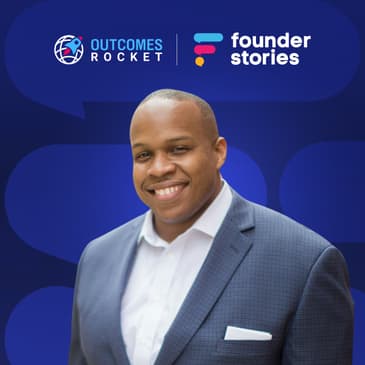
In this episode, Jarvis Gray, founder and CEO of The Quality Coaching Co, discusses his journey from industrial design in electronics to founding the Quality Coaching Company. He emphasizes the importance of setting goals, continuous learning, and networking, likening personal development to building a business. Jarvis advocates for rapid improvement events using a 21-day framework rather than lengthy projects while stressing the need to optimize processes before implementing technology. His approach to achieving healthcare excellence involves taking small, incremental steps, and he invites professionals to connect through his Excellence in Healthcare podcast or directly via his business.
Tune in to learn how rapid improvement events can transform healthcare processes!
Resources:
- Connect with and follow Jarvis Gray on LinkedIn.
- Follow the Quality Coaching Company on LinkedIn and visit their website.
- Reach out to Jarvis at +1 404 7371944.
- Listen to the Excellence in Healthcare Podcast.
[00:00:02] Hey everybody, welcome back to the Outcomes Rocket Founder Stories. Saul Marquez here and I've got the privilege of hosting an outstanding leader today. His name is Jarvis T. Gray. He's an entrepreneur, he's a podcaster, he's an author, he's a distinguished project manager, Lean Six Sigma master, Black Belt, and a visionary in healthcare quality and patient experience improvement. He's just an incredible person with his best
[00:00:32] background. He's got a master's in healthcare administration and is just doing incredible work with providers and players in the industry. I'm excited to have him here with us. Jarvis, such a pleasure to have you on.
[00:00:46] Well Saul, thank you very much man. The pleasure is all mine and I appreciate you just having a platform for healthcare leaders to plug in like this. Really appreciate it.
[00:00:54] Of course, of course. And hey, by the way guys, I also shared that Jarvis is a podcaster. I had a chance to be on his podcast,
[00:01:02] Jarvis. Jarvis, talk to us a little bit about you. Help us understand why entrepreneurship, why healthcare?
[00:01:09] Yeah, so the origin stories and Saul, let me say you absolutely rocked our podcast. So trust me, I'm feeling the pressure. I was like, I gotta come with it.
[00:01:18] Well, you got this down brother, you got this down.
[00:01:20] No, but yeah, so my very long story short, I'm an industrial engineer by background. And when I came out of the university, I started my career in electric utilities.
[00:01:31] So at the time I had no game plan, no vision that I'd ever end up in healthcare. Long story short, I had a promotional opportunity and within my electric utilities role, and I did not want it.
[00:01:45] And so the way I describe it is, it kind of feels like, you know, if you ask somebody to marry you and they say no, then the relationship gets really weird.
[00:01:53] So I left that role. I jumped into my first healthcare job and little did I know, Saul, that was it.
[00:01:59] It was really inspired by the leaders that I worked with, by the work that they were doing.
[00:02:04] And again, me being an engineer, working with some of the best doctors and nurses that I could ever envision working with.
[00:02:12] It was really inspired by everything they were doing to save lives and to impact communities and just figure with my skillset, with process improvement, project management strategy.
[00:02:23] Those were the things I wanted to do to contribute to the work they were doing to save lives.
[00:02:29] That's so great, Jarvis. I love that. You know, you sort of fell into it, fell in love quick and haven't looked back since.
[00:02:36] Haven't looked back. I remember after my first year in my first healthcare role, I went and set up a meeting with our VP of HR.
[00:02:44] And literally I was like, what, like, what does it take to have a career?
[00:02:48] And so this is kind of the beginning, maybe even the entrepreneur role is because the advice that she gave me, Saul, is that I need to look at myself like a business.
[00:02:57] And every year I need to be adding on different products and services.
[00:03:01] And for her being, you know, kind of a corporate career path, she meant, you know, get more education, get more certifications, get more networking.
[00:03:10] Right. But then as I started developing my skill sets, growing as a healthcare leader, my goal was to become a COO before I turned 35.
[00:03:20] Nice.
[00:03:21] And I literally had my first COO interview at the age of 35.
[00:03:25] Oh, my God.
[00:03:26] And while I was driving to that interview, I didn't want the job.
[00:03:29] Oh, wow.
[00:03:30] What I kind of realized as I was prepared for that interview, it was like, I think I could do more than just this executive position.
[00:03:36] And then I slowly started building out my business, the quality coaching company, based on everything that I learned up until that point career-wise.
[00:03:45] So I kept building myself like a business until I literally built the business.
[00:03:50] Holy smokes. I love that, man.
[00:03:52] So like you got these two junctures, right?
[00:03:54] Like going from electrical utilities to healthcare, hitting your goal.
[00:03:59] Like you're about to take a COO role.
[00:04:01] You're interviewing for it.
[00:04:02] And then you realize that's not what I want.
[00:04:05] You know, it's the power of goal setting.
[00:04:07] You set your intention.
[00:04:08] You make it happen.
[00:04:09] But then as an individual and as a leader, as a company leader, you have a chance to pivot and change your mind on stuff.
[00:04:16] That's totally cool.
[00:04:16] You mentioned building yourself like a company, adding products and services.
[00:04:21] What a great reminder to us all to be innovating ourselves.
[00:04:25] Yeah.
[00:04:26] And, you know, with her advice, the path that I did corporate career-wise was every year setting goals.
[00:04:32] So my birthday is in September.
[00:04:34] And with that, even to this day for my business, the start of my fiscal year for my business is in September, keeping to my goal setting rhythm.
[00:04:42] And so I would set goals around education, around, you know, professional certifications.
[00:04:47] Later in my career path, networking, which is so important now as a business owner, continuing to network and our ability to present and do live workshops and even great things like podcasts.
[00:04:59] But it was literally just setting the right goals.
[00:05:01] And I still give that advice to young leaders that I connect with who are still working full time.
[00:05:07] You got to build yourself every year.
[00:05:09] Add on more skills, more talents, more connections.
[00:05:12] And it'll pay off when it needs to.
[00:05:14] Not that I had an end point in mind, but I just knew I needed to keep that process going.
[00:05:19] And that's still what I lead with in my business today.
[00:05:22] So cool.
[00:05:22] I love that, man.
[00:05:24] So let's dig into the quality coaching company.
[00:05:27] The firm you started.
[00:05:29] What do you guys offer organizations, entrepreneurs, or, you know, who do you work with and what do you do for them?
[00:05:36] Yeah.
[00:05:37] So specifically, we specialize in Lean Six Sigma training, leadership development, and then healthcare operational improvement.
[00:05:44] So our goal is really to work with healthcare organizations and public health agencies to empower them around what we like to say is achieving excellence.
[00:05:54] So how do you align your people, your priorities, and your processes?
[00:05:58] Because when those three things come together, a lot of really good work gets done.
[00:06:03] You know, there's taking care of our patients and our customers, but then there's the business side of healthcare.
[00:06:10] So we've created our whole model around healthcare business excellence and really want to be that gap.
[00:06:15] We want to, you know, close that gap between the operations and then the medical delivery components for all of our clients.
[00:06:23] I think that's super valuable.
[00:06:25] I love having a tight, well-designed process.
[00:06:30] What do you find is a common misstep when it comes to process development in organizations?
[00:06:36] So clarity, I could probably list a bunch of them, but having clarity on the front end.
[00:06:42] Tell me more about that.
[00:06:43] Yeah.
[00:06:44] So a lot of times, a lot of leaders will just want to do something, but not really articulate what we want that thing to achieve or accomplish,
[00:06:52] or the actual result that we want at the end of that process, or the end of the care cycle, or whatever that process is.
[00:07:01] So unfortunately, I tell folks by the time they call me, I'm usually cleaning up the mess.
[00:07:06] Now, ideally, you'd call me when you're trying to develop the idea so we can ask more strategic questions about your real objectives, your real goals.
[00:07:15] But that's a lot of what I see is really helping teams get clear on exactly what they want a process to do or process to achieve.
[00:07:23] And then we can organize it and engineer it appropriately so that it gets there instead of taking 20 steps.
[00:07:29] What if it only took seven or five or three, right?
[00:07:32] So that's the first part.
[00:07:34] I would also say rushing to the answers without having enough information available.
[00:07:40] So based on information, a lot of our leaders are willing to take the chance to make decisions.
[00:07:46] But a lot of times I see that we can go a little bit further and analyze the process more or maybe get some more data before we make final conclusions and decisions.
[00:07:55] But then the total reverse of that can happen, too.
[00:07:58] So where we will overanalyze without making decisions.
[00:08:02] And so a lot of what I consult on nowadays is what I call rapid improvement events, where it's a very methodical, very systematic approach for problem solving.
[00:08:12] But it's done rapidly.
[00:08:14] So nowadays, instead of doing long Lean Six Sigma projects that can take months and months and months and months to complete,
[00:08:20] I do coach a lot of my clients up on rapid improvement events, which I have a standard 21 day framework from the time you bring us in to the time we hit that event.
[00:08:31] It can be about 21 days.
[00:08:33] And then the action items that come out of it can all be completed in less than three months.
[00:08:38] So finding the right balance is, I think, the next opportunity for quality improvement leaders like myself or health care leaders to really figure out.
[00:08:47] We still have to solve problems, but we don't have months and years to overanalyze or underanalyze.
[00:08:52] So we've got to find the right balance.
[00:08:54] That's awesome, man.
[00:08:54] You're speaking my language here, like rapid improvement events.
[00:08:59] Take me to that event.
[00:09:00] Give me a ticket, brother.
[00:09:01] Like, I want to be there.
[00:09:03] And so 21 days, crisp, clear.
[00:09:06] What are some of the problems that, you know, organizations are showing up with that this process helps them resolve?
[00:09:13] Yeah.
[00:09:13] So for rapid improvement events, we can honestly tackle everything from operational problems.
[00:09:19] So if we're trying to tackle long wait times in your clinic or long wait times in your ER, discharge times, getting people out of the facilities timely and effectively and safely.
[00:09:29] I recently, about a year ago, worked on a project with a client where we tackled some of their hospital acquired infections using the same methodology.
[00:10:06] So medical practices, right?
[00:10:08] And I facilitate the whole thing with my clients.
[00:10:10] But the conversations are so robust.
[00:10:12] One of the best examples, I got a team together.
[00:10:16] We did a two and a half day rapid improvement event.
[00:10:18] We came out with 113 solutions on how they wanted to solve the problem.
[00:10:24] And of course, you can't do them all.
[00:10:25] So now that becomes information they could take into their next strategic cycle.
[00:10:30] They can, you know, budget appropriately, plan and prioritize appropriately.
[00:10:34] But again, that's that focus around aligning people, priorities and processes is, you know, kind of taking approaches just like that.
[00:10:40] That's awesome, man.
[00:10:42] I love that.
[00:10:42] And what about, you know, this word keeps coming in my brain, technology.
[00:10:46] And a lot of people throw technology at a problem and think it's going to get better.
[00:10:52] What's your philosophy on technology as it relates to, you know, rapid improvement and process?
[00:10:58] And I'm saying this as an engineer and as a sci-fi geek and all of the things.
[00:11:03] I love technology, but a lot of our problems in health care, at least, they are manual processes.
[00:11:09] You just can't throw technology into a waiting room and think it's going to get better without figuring out the actual process that you need the technology to manage.
[00:11:20] So for as much as I love technology, the work that I leave with my clients is still going to require us to get together, to talk it out, to map out processes, to really get clear on what the current state looks like.
[00:11:33] And then technology should be part of the solution once that ideal process has been established.
[00:11:39] I love that.
[00:11:40] Thank you for that.
[00:11:41] How often is a process not in place?
[00:11:44] Like, how often are you seeing that people are just kind of going at it haphazardly?
[00:11:49] Like I said, when folks call me, I can pretty much assume, you know, I'm coming in to fix something.
[00:11:55] So, yeah.
[00:11:56] And it really just depends on the type of process.
[00:11:58] I will say for some of our most important processes, you know, things that require critical responses to and emergency responses, there are established processes.
[00:12:09] And these are experts.
[00:12:10] They will get in and they'll figure it out really quickly.
[00:12:12] But when we talk about process improvement, it's can the next person or the next nurse, the next doctor, the next care team, can they get in and figure it out as quickly to the same high level of quality and care and everything?
[00:12:26] So we want all of our processes to be reproducible or repeatable.
[00:12:30] So when Jarvis does it, it looks a certain way.
[00:12:32] But when Saul does it, it looks very similar.
[00:12:35] And so that's what we're talking about.
[00:12:36] And that's some of the big opportunities that all of us in health care can continue to drill down on and just make sure that it's standardized.
[00:12:45] Fantastic.
[00:12:46] Yeah, that standardization, remove variability from results, all are critical.
[00:12:51] And not just at the health care provider delivery, but also for all the entrepreneurs listening, making sure that one account manager is going to be able to deliver same quality work as another.
[00:13:03] Same with the sales process.
[00:13:05] And that's why I love this stuff so much, Jarvis.
[00:13:07] So I'm geeking out with you here.
[00:13:08] You're spot on.
[00:13:09] I mean, everything from the finance department and health care organization to the HR department.
[00:13:14] I am hearing a lot more HR opportunities starting to pop up.
[00:13:19] Strategic planning.
[00:13:20] One of the questions that I ask almost all of my clients, and I was just on a call with a prospect earlier today.
[00:13:25] Hey, tell me about your strategic planning process.
[00:13:28] What does it look like?
[00:13:29] When was the last time it was documented?
[00:13:31] When was the last time it was updated?
[00:13:33] Right.
[00:13:33] And, you know, cricket.
[00:13:35] So I expected they wouldn't have a solid answer.
[00:13:37] Out of all the years that I've been doing this all, I've asked that question quite often.
[00:13:42] And I've only had one organization show me their documented strategic planning process.
[00:13:47] That was a good thing.
[00:13:48] The bad thing is that the documented process they had was about eight years old and they didn't use it.
[00:13:53] So every component of a health care organization or even a public health organization can leverage process improvement, rapid improvement events at the minimum process mapping.
[00:14:04] So great.
[00:14:05] Guys, there's so much gold in this discussion.
[00:14:07] I'm like loving this.
[00:14:09] You know, internally at our business, Jarvis and everyone, we do SOPs for all the things that we have to do, standard operating procedures.
[00:14:17] And we say that SOP documentation is like showering.
[00:14:22] You have to do it daily.
[00:14:24] And if you don't, you're going to stink.
[00:14:27] I'm officially stealing that just so you know.
[00:14:30] I love that.
[00:14:31] That's exactly a great way to think about it.
[00:14:33] You're going to stink and your business is going to stink and your customers are going to smell it and your patients are going to smell it.
[00:14:38] And then you're going to need to do something about it.
[00:14:40] So it's awesome to have an expert like you, Jarvis, chat with you about something that we care about deeply.
[00:14:47] And I know the entrepreneurs and organizational leaders care about deeply.
[00:14:51] Hey, look, this is founder stories.
[00:14:53] So we wouldn't have a solid founder story without setbacks.
[00:14:57] Talk to us about a setback that you've had in your business and how that setback created opportunities for growth.
[00:15:03] Yeah. So funny enough, when I first kicked off my business, it was back in 2017.
[00:15:08] And I designed it from the beginning to be a virtual online coaching consulting type of a business model.
[00:15:17] But guess what?
[00:15:17] All my clients being healthcare, this was pre-pandemic and everything had to be live and in person and face to face.
[00:15:25] So it made business tough because I built my business while still working.
[00:15:29] So I couldn't travel as much as I literally I'm the guy sneaking out of meetings to run across town and, you know, do training events and so forth.
[00:15:38] So the biggest setback was me at the very beginning, just really trying to understand what's the best way to serve my clients, because I had a very specific model in mind.
[00:15:47] And then 2020 came and we got hit with this thing called the pandemic.
[00:15:52] And obviously the world went completely virtual.
[00:15:56] And since then, honestly, I've had some of my best business years.
[00:15:59] Once that last component of culturally accepting virtual meetings and virtual work, that has helped.
[00:16:06] But I can't say that it was super strategic.
[00:16:09] It was just me understanding the business model on how I wanted to serve as many as possible because I didn't want to create another full time job for myself.
[00:16:19] Totally.
[00:16:19] But it is kind of sticking to my guns and communicating the benefits of virtual learning, virtual consulting, all the virtual types of things.
[00:16:27] And I still do go on site to meet with clients when I need to.
[00:16:31] But just having a vision, kind of sticking with it, I had to hold on tight.
[00:16:35] It was a very interesting few years just to get off the ground.
[00:16:39] Yeah.
[00:16:39] And now that it's accepted, it does make a lot of my work and my contact points a lot better.
[00:16:44] That's so great, man.
[00:16:45] What a great story.
[00:16:46] And can you do the rapid execution events virtually too?
[00:16:49] Yeah, I can.
[00:16:50] I will say I don't prefer it.
[00:16:52] Are those designed in person?
[00:16:53] They produce better results in person, but I've done quite a few virtually for smaller teams or for teams who are completely virtual.
[00:17:00] Now the 21-day framework that I use to get all of my teams ready, we do that completely virtual.
[00:17:07] So then we all just come together for our targeted dates to be in person.
[00:17:12] Sure.
[00:17:12] I love it, man.
[00:17:13] So agile and flexible in the way that you make this happen.
[00:17:16] Do you guys have a challenge that you're looking to fix?
[00:17:20] Is your process currently broken?
[00:17:23] Or maybe you don't realize it, but the problem keeps rearing its head.
[00:17:26] And this rapid execution, this rapid-
[00:17:29] Improvement event.
[00:17:30] Improvement event model might be something you want to look at.
[00:17:34] It's friendly.
[00:17:35] It's entry.
[00:17:36] And I think, why not?
[00:17:38] You know, if you've been trying to fix it and you haven't been able to, now's the time to pick up the phone or reach out to Jarvis.
[00:17:44] We're going to give him a chance to get you all how to get in touch with him.
[00:17:47] Before we get there, Jarvis, last question I have for you.
[00:17:50] You see a lot of stuff out there.
[00:17:52] You work with a lot of leaders.
[00:17:54] What call to action and closing thought would you leave folks with?
[00:17:58] And on the tail end of that, plug your podcast and other ways that people could follow you and get in touch.
[00:18:05] Absolutely.
[00:18:05] And Saul, again, I just want to say thank you for this opportunity.
[00:18:09] And thank you, everyone, for checking out and tuning into this conversation.
[00:18:12] I would say parting words would be just keep this in mind when we talk about achieving excellence in health care, whether it's operational excellence or clinical care excellence.
[00:18:24] It doesn't have to be taking big breakthrough leaps all at one time.
[00:18:28] It can be small incremental steps.
[00:18:31] And so that's, again, one of the ways I coach it is one rapid improvement for one problem.
[00:18:37] Let's solve it quickly.
[00:18:38] Let's learn fast and let's adapt and move to the next one.
[00:18:42] And so that is a mindset that I think is worth holding on to because we feel the pressure coming from regulatory bodies and everything else, especially with this even being kind of a political year where, you know, funding and other circumstances change.
[00:18:57] Small incremental steps, like you said, is something we have to focus on every day, taking one step at a time.
[00:19:02] And when we do, a lot of things change by the end of a month, the end of a quarter, end of a year.
[00:19:07] Big improvements can happen.
[00:19:09] That's outstanding.
[00:19:10] Thank you, Jarvis.
[00:19:11] Love that.
[00:19:11] And if people want to get in touch with you and learn more about your podcast, about you, like tell us about your podcast.
[00:19:18] Well, so the fun part about the podcast is I actually kicked it off 2019, five years ago at this point.
[00:19:25] We did take a break during the pandemic.
[00:19:27] So, again, a lot of pivoting during the pandemic time.
[00:19:30] But we just restarted.
[00:19:31] And again, very fortunate to have you plug in and some other really impressive leaders.
[00:19:36] But it's now been rebranded, everyone.
[00:19:39] So you can check out the Excellence in Healthcare podcast.
[00:19:42] The goal really is to share insights and strategies, things that I coach and consult on with my clients and then get other experts like yourself to come on and just talk about what excellence means from your points of view, from different experts, different segments and slices.
[00:19:58] But the Excellence in Healthcare podcast, we drop new episodes every Tuesday for just general learning.
[00:20:04] I will say, please connect with me on LinkedIn or I am old school.
[00:20:08] You can just give me a call.
[00:20:10] My business cell is area code 404-737-1944.
[00:20:16] Outstanding.
[00:20:16] Jarvis, thank you so much.
[00:20:18] You really shared so much value on today's podcast.
[00:20:22] And for all the leaders listening and viewing us today, make sure you take advantage.
[00:20:27] Check out the show notes.
[00:20:28] Find all the ways to get in touch with Jarvis that he shared.
[00:20:31] Change happens incrementally.
[00:20:33] And if you take advantage of what we've discussed today, you're going to make progress.
[00:20:38] So, Jarvis, thanks for being with us.
[00:20:39] This has been truly valuable.
[00:20:41] That's my pleasure.
[00:20:42] Thank you so much, Saul.
[00:20:43] Anytime.
[00:20:43] Anytime.