
From a simple idea sparked by a friend's call for help to leading a 10,000-member organization, Heather Colicchio transformed the landscape of dental office management.
In this episode, Heather Colicchio discusses the founding and growth of the American Association of Dental Office Management, which supports dental office managers by providing essential business education and fostering a strong, supportive community. Recognizing a lack of resources for dental office managers after a friend's struggles with running a practice, Heather transitioned from being an entrepreneur with a chain of cafes to leading AADOM, now the largest organization of its kind with over 10,000 members, and she envisions the organization continuing to lead in education and professional development as the dental industry evolves toward integrated, care-convergent models.
Tune in as Heather Colicchio reveals how AADOM is shaping the future of dental office management with essential education, community, and leadership insights!
Resources:
- Connect with and follow Heather Colicchio on LinkedIn.
- Follow the American Association of Dental Office Management on LinkedIn, Instagram, and YouTube, and discover their website!
- Register for the AADOM annual conference here!
Watch the entire episode on YouTube and get more details at Think Oral Health.
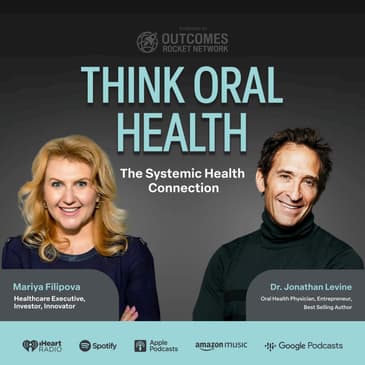
[00:00:04] Welcome to Think Oral, where we connect the interconnected between oral and physical health. I'm your host, Dr. Jonathan Levine. And I'm your host, Maria Filipova. Let's get at it.
[00:00:19] Hello, everyone, and welcome to another exciting edition of the Think Oral Health podcast, where myself and Dr. Jonathan Levine discover and highlight the connections between different disciplines and connect leaders, clinicians, and entrepreneurs together to showcase how we can deliver better care to patients at a lower cost.
[00:00:40] I'm super excited to be joined today by our conversation partner for this episode, Heather Colicchio. Heather is a founder and president of the American Association of Dental Office Managers.
[00:00:54] This is the largest professional organization of dental office managers and practice administrators in the country.
[00:01:01] ADOM has delivered multiple events resources for dental practice managers and will learn so much more about that organization.
[00:01:11] But the reason we're very excited to have Heather here today is to hear about her entrepreneurial journey, her vision for dentistry and the future of dental practice,
[00:01:23] and her ability to bring in business management, and her ability to bring in business management, leadership skills, professional development in service of dental care and dentistry.
[00:01:35] So welcome, Heather. And hello again, Jonathan.
[00:01:39] Oh, great to see you, Maria. And welcome, Heather is right. And if I can leave this off, Maria.
[00:01:46] Of course, always.
[00:01:47] I love to ask a question that starts with, how did you get to where you got to, Heather?
[00:01:55] What in your past brought you to the point where you started this organization called ADOM?
[00:02:01] And what drove you to compel you to go after it?
[00:02:04] Well, sure. Great question. And I'm happy to share my story.
[00:02:08] So ADOM is the American Association of Dental Office Management, which I started almost 20 years ago.
[00:02:15] Over our big 20th anniversary is next year. No dental background at all. Never worked in a dental practice.
[00:02:22] Didn't know anything except that I went to the dentist twice a year.
[00:02:25] I've been a serial entrepreneur. So at that time, I owned a chain of gourmet cafes in hospitals and medical centers.
[00:02:34] And great business. I loved it. Love what I did.
[00:02:37] And it was around that time that a good friend of mine from college, she called me up.
[00:02:42] She was a practicing dentist.
[00:02:44] She was in a group practice and had decided to go solo, as many dentists do.
[00:02:49] She also wanted to be an entrepreneur and own her own business.
[00:02:52] And I was very excited for her.
[00:02:54] But she called me one day just freaking out.
[00:02:57] I said, what's wrong?
[00:02:57] She said, Heather, in dental school, they teach us how to fill cavities, how to fix teeth.
[00:03:02] I don't know billing, coding, OSHA, HIPAA, software, all these things.
[00:03:07] And I said, well, that's wild.
[00:03:10] Like there's got to be someone who can help you with these things.
[00:03:14] And at that time, I was a member of the Specialty Coffee Association of America.
[00:03:18] That was my go-to resource as an entrepreneur in the gourmet coffee space.
[00:03:24] Went to their meetings, all that.
[00:03:26] And I said, there's got to be an organization in dentistry that can help you set up the front end of your business.
[00:03:32] Because always, all of us, our collective goal is patient care.
[00:03:38] But we can't lose sight of the fact that a dental practice is a business.
[00:03:41] It needs to run like a business.
[00:03:43] And in helping her look, I kept coming up empty-handed.
[00:03:46] And it was just blowing my mind that there's an association for the dentist, the hygienist, the assistant, the dentist by state, the dentist by specialty.
[00:03:57] All these associations within dentistry and nothing for the person who was keeping it all together, making the train go, making the business run.
[00:04:08] And it was shocking that there was no organization.
[00:04:12] It was more shocking that these skills were not being taught in any formal way.
[00:04:17] You're running a million-dollar, multi-million-dollar business.
[00:04:21] And for the most part, it was assistants who were chair-side and started answering the phone and then started opening mail and thinking, oh, my God, what a crazy way to run a business.
[00:04:32] So I went that year to the great New York dental meeting.
[00:04:36] My friend couldn't go.
[00:04:37] I said, I'll go.
[00:04:37] I'll find out what resources there are.
[00:04:39] And I'm in New Jersey, not far.
[00:04:42] And I said, I'll just ask the office managers who they belong to.
[00:04:46] So I was looking for people who had office manager on their tag.
[00:04:49] And I could find like almost none.
[00:04:52] So again, this is 20 years ago.
[00:04:54] Plenty of hygienists, some assistants, no managers.
[00:04:57] The very few I found, I said, who is your go-to association?
[00:05:02] And they all said, I don't think we have one, but if you find one, let me know.
[00:05:05] And give me their credit.
[00:05:07] So I started asking the vendors, who is the go-to association for the dental office manager, practice administrator?
[00:05:14] They said, I don't know if there is one, but if you find one, let us know.
[00:05:17] Because a lot of times, that's who we want to talk to.
[00:05:19] We don't necessarily want to talk to the doctor.
[00:05:22] That's the gatekeeper.
[00:05:23] They have decision-making influence.
[00:05:25] We want to talk to them.
[00:05:26] If you find us, let us know.
[00:05:28] So I went home that day.
[00:05:29] I remember I was on the ferry and I had a stack of cards.
[00:05:33] And I just remember thinking, all these people are looking for one another.
[00:05:36] And they don't know it.
[00:05:37] And they're all just in the same place and they don't know it.
[00:05:39] So I just casually did a round robin and called the people and gave them each other's numbers.
[00:05:44] And literally, that's how it started.
[00:05:46] And it grew.
[00:05:46] And then people started calling me saying, hey, can I get on your list?
[00:05:49] Can I get on your list?
[00:05:49] And yeah, that was the birth of Adon.
[00:05:52] This was a business.
[00:05:53] Because it sounded like a typical entrepreneur.
[00:05:57] You found a niche.
[00:05:58] You had your friend or somebody had a problem.
[00:06:01] No one was solving for it.
[00:06:03] And it became like, I want to be helpful.
[00:06:06] So when did you transition from, I want to be helpful to, I can make money doing this?
[00:06:12] So a couple of funny stories.
[00:06:14] I would get calls because my number was out there.
[00:06:17] And I get added to the list, which I always did.
[00:06:19] And this is really hard to believe.
[00:06:20] But 20 years ago, the internet is not what it was.
[00:06:23] Facebook didn't exist.
[00:06:25] So there really was no way to just say, hey, go over here.
[00:06:27] Like they were literally calling me.
[00:06:29] So I, two, three actually pivotal points that I can tell you.
[00:06:36] One was, I was at one of my cafes and I got a call and they said, it's Heather there.
[00:06:40] And I got on the phone and they said, this is blah, blah, blah from Oropharma.
[00:06:45] And we're holding a reimbursement clinic in Las Vegas for how to best be reimbursed for
[00:06:50] arresting for root planes or carries or something.
[00:06:54] And we want you to be there.
[00:06:55] I had no idea what they were saying.
[00:06:56] I'm like, I don't even understand what you're saying to me.
[00:06:59] I'm not the person you want there.
[00:07:00] I'm not an office manager.
[00:07:01] And they said, no, but we know a lot of office managers and we'll fly you out all expenses
[00:07:04] paid just to come and hear what we have to say and tell the people, you know.
[00:07:08] So that kind of was my first clue.
[00:07:10] Okay.
[00:07:10] There may be something here.
[00:07:11] People are starting to seek me out because of this network I've built.
[00:07:15] Then I had to test it because I'm an entrepreneur.
[00:07:17] You're always thinking like, what's a cool business?
[00:07:20] We have a viable test, we have a viable product.
[00:07:22] And you're like, let's just, you don't want it.
[00:07:23] Like your brain can't help it.
[00:07:24] Right.
[00:07:25] So it's just the way the brain goes.
[00:07:26] So I actually created a fax.
[00:07:29] Let me test this.
[00:07:30] And here's the benefits of membership in ADOM, which ADOM didn't exist.
[00:07:35] But I made up these benefits, bought a fax list, did a fax blast and just said, if you
[00:07:41] want to join, put your credit card number.
[00:07:42] And I feel like I'll deal with it after.
[00:07:44] Like make it as you go along.
[00:07:45] So I said, the fax company sent the fax blast.
[00:07:49] I went out to dinner with my husband.
[00:07:52] We come home and there's just thermal fax paper, like all over the living room floor.
[00:07:57] Right.
[00:07:57] And I'm like, oh my God, it's just like a sea of paper.
[00:07:59] I'm like, I'm so excited.
[00:08:00] They don't want to do this.
[00:08:01] And I picked one up and it says, do not fax.
[00:08:04] Do not fax.
[00:08:05] We're going to sue you.
[00:08:06] We have sued you.
[00:08:07] Don't fax us.
[00:08:08] So I didn't know it was illegal to like hold fax people, which apparently it's illegal.
[00:08:12] And that was very disheartening.
[00:08:14] But I will tell you that for every nine that I picked up that said, don't fax, we're going
[00:08:20] to sue you.
[00:08:20] I would pick up one that said, oh my God, how do I join?
[00:08:23] Oh my God, where have you been?
[00:08:24] Oh my God, I really need help.
[00:08:26] And it was for that kind of 10% that I said, there's enough here that this is viable.
[00:08:32] Like these, these professionals really weren't.
[00:08:35] These people really need help.
[00:08:36] They really need education.
[00:08:37] They really need each other.
[00:08:38] They need to do it.
[00:08:39] They need to do it.
[00:08:39] So that was one of the tests.
[00:08:41] And then the last one was, I got a call from a very large dental company.
[00:08:45] This was so early days.
[00:08:47] They said, we'd like to meet with you.
[00:08:48] We're going to be, I think it was the ADA in Philly.
[00:08:51] Can you come out?
[00:08:52] And I just remember being so tired.
[00:08:54] I still was running like five cafes.
[00:08:57] I had an infant, a toddler.
[00:08:59] And I was just like, do I really need one more thing on my plate?
[00:09:01] I'm so tired, but I was also so intrigued.
[00:09:02] So I'm like, okay, I'll meet you.
[00:09:04] And I thought I was just meeting this one woman who called me
[00:09:07] like at the hotel where she was staying.
[00:09:09] So I thought we were casual.
[00:09:11] I go up to whatever floor and I open the door and it's like a boardroom with like 10 people
[00:09:16] at it.
[00:09:16] And I sit at the end of the table.
[00:09:19] I'm so far out of my league.
[00:09:20] I don't even know what I'm doing here.
[00:09:21] And they started talking to me and they said, you've done something we've been trying to
[00:09:26] do for years.
[00:09:27] We've been trying to connect office managers and we have just not found the secret formula
[00:09:31] and you have found it.
[00:09:32] How can we support you?
[00:09:34] And those three things all kind of happened around the same time.
[00:09:37] That's when I said, okay, this needs some energy behind it.
[00:09:40] So I started to bring more energy.
[00:09:41] And then when it got untenable to do everything, I sold the coffee business and just threw myself
[00:09:46] into ATOM.
[00:09:47] Amazing.
[00:09:48] This is such a great entrepreneurial story where you saw the need.
[00:09:52] You saw the problem in the marketplace, the gap.
[00:09:56] Dentistry has been such a fragmented industry.
[00:10:00] And the concept of educating your people, training, SOPs, protocol systems, process doesn't exist.
[00:10:09] And so the notion of HR department, a training department, all of the capabilities built that
[00:10:16] these office managers need didn't exist.
[00:10:21] So with that in mind, today, we're 22 years later, 2024.
[00:10:27] The burning yearning question I got next is, what are the services that ADOM provides based
[00:10:34] on your analysis over the decades of the big needs of the new dental practice, the dental
[00:10:42] practice of today?
[00:10:44] And how do you fill those needs?
[00:10:46] So my passion was always to provide the business education that these managers never received
[00:10:51] to run the business.
[00:10:53] As entrepreneurs, we think like business people.
[00:10:55] So it's been my mission at ADOM to provide business education.
[00:10:58] So we will provide education on anything and everything they need, processing insurance,
[00:11:04] software training, phone skills, you name it.
[00:11:07] And we have training for it.
[00:11:09] And it's really amazing.
[00:11:12] It's the best training out there.
[00:11:14] What was not one of my intentions though is community.
[00:11:18] So a community has been built at ADOM completely organically by our members.
[00:11:25] Our members were so happy to have found one another because if you think about a dental
[00:11:31] practice, there's the dentist and then there could be several dentists in the practice.
[00:11:36] It could be several hygienists, several assistants who they can turn to and say, hey, I need help
[00:11:40] with this.
[00:11:40] Hey, how do you do this?
[00:11:41] In a typical dental practice, there is no one the manager can turn to and say, I don't know
[00:11:46] how to do this.
[00:11:48] And they don't want to necessarily tell the doctor because they don't want the doctor to
[00:11:52] think or know.
[00:11:53] They don't know how to do something.
[00:11:54] So where do you go?
[00:11:55] So we have the formal education, but what started to happen was through our forum, this community
[00:12:02] of like-minded supportive managers just took hold and has grown.
[00:12:08] So we have 10,000 members now across the country, some international members.
[00:12:13] And I think if any member were to say, what's the value of ADOM?
[00:12:16] Their number one value would be community.
[00:12:19] Again, which was not something that was an intention.
[00:12:21] So we have a forum, we have a private Facebook page that is busy all day long because if
[00:12:27] I have a question, I will go on and I know I will get an answer within the hour.
[00:12:31] I'll get many answers within the hour.
[00:12:33] And sometimes it's just, hey, I'm having a bad day.
[00:12:36] Someone will just say, hey, I'm having a bad day.
[00:12:37] And someone else will say, got you.
[00:12:38] Like, we got you.
[00:12:39] Like, we got this.
[00:12:41] So yeah, that is-
[00:12:43] Yeah, it's fascinating to, I will probably echo this, the powerful magic of the community
[00:12:48] that your members have created because I had the chance to attend your last conference,
[00:12:54] the big annual ADOM event.
[00:12:57] This year it was in Vegas.
[00:12:59] And I have to say, out of all the brilliance and the knowledge that was there, there was
[00:13:05] this palpable sense of people knowing each other as humans first.
[00:13:10] And I can't, like, everybody who meets each other is like, how are you?
[00:13:14] How are your kids?
[00:13:15] How can I help you with this?
[00:13:18] How are you transitioning?
[00:13:19] Can I please help you?
[00:13:20] Who's taking care of the practice?
[00:13:22] So these conversations around life and having a career while also being able to have a fulfilling
[00:13:29] life was very much core to what I saw.
[00:13:33] Yeah.
[00:13:34] So congratulations on that community that you've been-
[00:13:36] I wish I could take the credit.
[00:13:38] Like I said, that was totally organic.
[00:13:40] We just provided the platform.
[00:13:42] And they call themselves the ADOM tribe.
[00:13:44] And it really is like a tribe.
[00:13:46] It's a tribe of professionals.
[00:13:47] But at the end of the day, it's a tribe.
[00:13:49] And that really is-
[00:13:51] How many members do you have that ADOM have at the moment?
[00:13:54] We have roughly 10,000 now.
[00:13:57] And like you said, Maria, we meet annually at our big conference, which will be next year
[00:14:01] in Texas.
[00:14:02] But register now because it will sell out.
[00:14:04] But we also have local communities.
[00:14:07] So DPLNs, their dental professional learning networks.
[00:14:10] Think of like a chapter.
[00:14:11] So we have these national chapter mini associations because we would have this big meeting.
[00:14:16] We started virtually.
[00:14:18] And then we had our big annual.
[00:14:19] And the members said, well, how do we take the energy and education from the annual and
[00:14:23] make it last all year long?
[00:14:24] And that's how our chapter system was built.
[00:14:27] So we have, I think, like 40 chapters across the country who meet very regularly and those
[00:14:31] grow.
[00:14:32] And again, that was never something I planned.
[00:14:34] That was something the members just took hold and ran with.
[00:14:37] Can we just pause and acknowledge a little bit two things?
[00:14:41] Number one, the power of that community that is 10,000 strong nationwide.
[00:14:47] And you call them gatekeepers.
[00:14:50] These are decision makers who have real oversight and insight into the day-to-day operations
[00:14:58] of a dental practice.
[00:14:59] And so we'd love to maybe talk a little bit about how we as a community could mobilize in
[00:15:07] that strength of 10,000 office managers, at least in two ways.
[00:15:12] Number one, I see, even when I was at the conference, I see a lot of companies seeking out input and
[00:15:19] feedback from your members.
[00:15:21] Maybe not as often as they could be.
[00:15:23] But if I'm a, we have a lot of listeners in our podcast who are entrepreneurs, who have a
[00:15:28] startup who are trying to sell into dental practices.
[00:15:31] And if you're not asking the dental office managers for feedback as you're developing
[00:15:36] your product, you're probably not doing it right.
[00:15:39] And secondarily, all of these members or office managers are integral part of the future of
[00:15:46] dentistry.
[00:15:47] And so I would love to get your thoughts on what that might look like and the power of
[00:15:50] the 10,000 members strong there.
[00:15:52] I'll give you one example.
[00:15:54] We've been getting a lot of positive engagement on an article I just wrote on Forbes around care
[00:16:00] convergence.
[00:16:01] And if the future of dentistry is convergent, meaning we converge different disciplines and
[00:16:07] specialties together, then what is the role of the dental office manager in that care
[00:16:13] convergent future?
[00:16:15] And so I laid in a couple of threads there.
[00:16:19] Feel free to pick whichever one you want.
[00:16:22] Tell us a little bit more about your members.
[00:16:24] Yeah.
[00:16:25] What I can tell you about Adon members is they are the best of the best.
[00:16:29] So our members are not the quote manager who goes in and punches a clock and watches the
[00:16:35] clock until it's five o'clock.
[00:16:36] Those are not our members.
[00:16:37] And if that is you, we don't want you as our member.
[00:16:40] Our members are the cream of the crop.
[00:16:43] Dental office managers, practice administrators.
[00:16:45] Now we have CFOs, regional directors.
[00:16:46] So it really represents the best in dental practice management.
[00:16:50] In fact, a few years ago, we actually changed our name from American Association of Dental
[00:16:54] Office Managers to American Association of Dental Office Management just to catch all the different
[00:16:59] titles that were starting to come into the organization.
[00:17:01] They are, I said gatekeepers, which they are, but they are also, as you said, the decision
[00:17:07] makers.
[00:17:08] And we pull them and we ask them, especially before a big conference, do you have
[00:17:13] decision-making power?
[00:17:14] Do you have a credit card on you?
[00:17:15] Do you meet with the doctor and give your recommendations?
[00:17:18] Yes and yes.
[00:17:20] And I have seen, and they're eager, like our group is eager to learn more.
[00:17:24] That's what I love about them.
[00:17:25] They're so passionate.
[00:17:27] They want to see the practice grow.
[00:17:29] It's like they run their practice as if it were their very own, which is to this day,
[00:17:34] 20 years later, I'm amazed at the energy and the passion they have.
[00:17:37] Absolutely.
[00:17:37] Absolutely.
[00:17:38] Any company, any, let's say non-clinical company in dentistry, in my opinion, should be talking
[00:17:44] to ADOM members.
[00:17:46] They are vocal and they know what they're doing and they will tell you what you need to know.
[00:17:50] And I have seen many companies use ADOM to say, hey, we have an idea.
[00:17:55] We have a product idea.
[00:17:56] How do we do a beta with your members?
[00:18:00] I've actually seen two products I can think of.
[00:18:03] Well, one's a product, one's a service off the top of my head where they first came to
[00:18:06] ADOM and said, again, how do you know if it's a business?
[00:18:09] This was their testing ground.
[00:18:11] Like this was their proving ground.
[00:18:12] How do we know if it's a business?
[00:18:13] And they would gauge the reaction that they got from our members.
[00:18:16] And in both cases, they were viable businesses.
[00:18:18] And in both cases, they used ADOM members as KOLs to refine.
[00:18:22] And you have to go with your customers, Sarah.
[00:18:25] Yeah.
[00:18:25] Jonathan, jump in here because I feel like there's a conversation here to be said,
[00:18:29] to be had not only between office management, office managers and vendors trying to sell in,
[00:18:37] but also the management part of a practice and the clinical part of the practice, right?
[00:18:43] If the management of the practice is efficient, then clinicians could actually focus,
[00:18:47] dentists and hygienists could focus on the practice of dentistry and all the patient.
[00:18:53] And anything from scheduling to front office, to registering, to procurement, all of that,
[00:18:59] if that's all taken care of, and if it's smooth, the clinical side obviously runs better too.
[00:19:05] So how is currently that dynamic?
[00:19:08] I know you're smiling because that's one of your favorite topics.
[00:19:11] How is that dynamic working out in your practice versus what we're seeing in the rest of the
[00:19:16] dental profession probably?
[00:19:18] Yeah.
[00:19:19] Look, at the end of the day, what Heather's organization is representing is where the rubber
[00:19:23] hits the road.
[00:19:24] It is what the patient faces when they walk in the door, when they make a phone call,
[00:19:31] when they are even treated on the operational side.
[00:19:34] And it really comes down to the culture that gets built in these practices.
[00:19:40] And it's no different than any other business, right?
[00:19:43] The most important thing in business, as we know, all businesses, all service business,
[00:19:47] all product business is the people and the culture that you built, which comes down to the leadership
[00:19:53] and the leadership style.
[00:19:54] The challenge that office managers have is that the owner of the business, and let's just
[00:20:01] talk about the dentist owner or dentist owners, depending on their personality style, but really
[00:20:07] their leadership style, will determine the fate of that practice unless they're willing to
[00:20:13] change, learn, and grow.
[00:20:15] So we can talk about that.
[00:20:18] But what I'm really curious about to ask Heather is that how do you train or work with and educate
[00:20:26] and bring to light these important issues to the office managers?
[00:20:32] The sharing of the issues that they face, which culture is a very big one, and then everything
[00:20:39] that drops from that.
[00:20:41] How do the office managers learn from each other outside of Facebook page and all that?
[00:20:48] Yeah.
[00:20:49] So that's what I was interested in on the service side.
[00:20:52] Okay.
[00:20:52] So we also bring in formal education.
[00:20:54] So we have a whole learning management system that our members can access where the education
[00:21:00] is vetted.
[00:21:01] It's dental professionals.
[00:21:02] It's, you know, it's from the industry.
[00:21:05] It's not peer-to-peer.
[00:21:06] So as a member, they have access to all of that.
[00:21:09] And those are CE or ADD approved.
[00:21:11] I mean, it's very formal education, very formal training.
[00:21:14] Are you then to access those educational materials?
[00:21:18] Members, office managers need to be a member.
[00:21:20] And they're typically members as individuals?
[00:21:23] Or the practices like, let's say, the JBL practice in New York becomes a member and the
[00:21:28] staff and employees in that practice then get access to your membership.
[00:21:33] How does that work for those listeners?
[00:21:35] Yes, we have both.
[00:21:36] We have the individual membership, which is there's just one person in the practice
[00:21:40] that you want to have membership.
[00:21:41] And then we have a practice membership where you add members of your team, front office members
[00:21:47] of your team.
[00:21:47] So we have both opportunities for growth.
[00:21:50] But the education, like I said, the formal side of our education, it's outstanding.
[00:21:55] It really, it's the best authorities in dentistry.
[00:21:58] Our members are very excited for CE.
[00:22:01] We have a fellowship program, mastership program, and a diplomat program that they can all achieve.
[00:22:07] We do a cap and gown ceremony.
[00:22:09] And a big part of earning those designations is earning your CE.
[00:22:14] So we're very big on formal continuing education.
[00:22:17] So I hope I didn't give the impression that we did not do that.
[00:22:20] We do that very well.
[00:22:22] That's what I want.
[00:22:22] I figured you did.
[00:22:24] And you're creating this educational environment.
[00:22:26] I'm just wondering for you to put it out there.
[00:22:28] What exactly do you stand for?
[00:22:30] So yes, that's what we do.
[00:22:32] And we don't want to put out also just education, practice management education, just out into
[00:22:36] the dental community as a service.
[00:22:37] So there is education you do need to be a member to access.
[00:22:40] But I'd say weekly or several times a week we're doing, we will bring in a speaker or
[00:22:46] an authority to do a live cast.
[00:22:49] We'll go live on Facebook or live on LinkedIn.
[00:22:51] We also have a podcast.
[00:22:52] So we're putting our practice management education into the dental community, not us.
[00:22:57] We're bringing in the authorities.
[00:22:58] A lot of it is gated.
[00:22:59] A lot of it is not.
[00:23:01] So if you were to search our YouTube page or Instagram, whatever, you'll see every week
[00:23:05] we're putting it out to the community, regardless of whether you are a member or not.
[00:23:10] Yeah, amazing.
[00:23:11] Absolutely amazing.
[00:23:12] There's such a need, having lived in the industry for three and a half decades, there's
[00:23:17] such a need in dental practices for upgrading the education of the staff.
[00:23:22] What you said earlier, traditionally the assistant becomes more of reception and then might even
[00:23:30] grow into the so-called office manager position, which by the way, I hate all these terms in
[00:23:36] dentistry because a person's called the front desk, an inanimate object.
[00:23:41] An office manager doesn't really cover them, but all of the capability, skill set and the
[00:23:46] roles, responsibility of people.
[00:23:49] But thank God things are getting organized in dentistry in the last 10 years.
[00:23:53] And there's a new trend that we know about called the dental service organizations.
[00:23:59] So let's go there.
[00:24:00] There's a new trend in dentistry.
[00:24:02] There's a new business model.
[00:24:04] There's an organized approach to dentistry that has hit the fragmented industry.
[00:24:08] How are you working with these DSOs?
[00:24:11] I'm sure you're very busy, but tell us a little bit about that.
[00:24:15] That's a great question.
[00:24:16] So thank you, Dr. Levine.
[00:24:18] So we started as solo individual practices, the advent of DSOs.
[00:24:25] So it was like these two extremes.
[00:24:26] We have not had success working with the DSOs.
[00:24:29] And I will tell you why.
[00:24:30] It's not for our lack of trying.
[00:24:32] It's because I think a lot of the very large DSOs, they feel like they have their own culture
[00:24:38] and their own way of doing things and their own SOPs and their own kind of closed community,
[00:24:44] so to speak.
[00:24:45] Where we're finding a lot of growth, though, is this sort of mid-level market where we
[00:24:50] actually have managers who have gone from one practice to five to 10 to 15, somewhere at 20.
[00:24:56] There's no playbook.
[00:24:57] Like the big guys, they have it all locked up.
[00:24:59] They have their playbooks.
[00:25:00] They have their eating down.
[00:25:01] Here's to what our culture is.
[00:25:02] It's the managers who are having to adapt and say, we've grown.
[00:25:07] Now I've gone from managing one practice to managing 10.
[00:25:09] No playbook for that.
[00:25:10] So we're trying to get ahead of that and getting some of our best members all together who have
[00:25:16] successfully navigated that and bringing the educators who have the systems in place
[00:25:20] for that and hoping to roll something out next year for that mid-level.
[00:25:23] Yeah, which is so great.
[00:25:25] Because the educational side, as you go, let's just say, to one practice to two practice,
[00:25:30] and now you're starting to duplicate things.
[00:25:33] And you never built the systems or the processes that allows you to scale efficiently and effectively.
[00:25:40] People need to get brought on board.
[00:25:44] What's your training?
[00:25:45] A lot of dental offices don't really have great onboarding.
[00:25:48] They don't have HR departments, of course, because you might be a single practice or two or three.
[00:25:53] So, so necessary.
[00:25:56] Incredibly so.
[00:25:57] Well, yeah, and it's not just duplicating as part of it, but then there's just new challenges
[00:26:02] like managing multi-locations.
[00:26:05] What does that even look like?
[00:26:07] What does communication look like?
[00:26:08] Managing real estate from multiple locations.
[00:26:10] What does that look like?
[00:26:11] Real estate.
[00:26:11] It just, there's, we actually at the annual conference had a roundtable and we just threw
[00:26:15] it out there.
[00:26:16] We said, hey, if you're managing multi-location, come and let's share best practices.
[00:26:19] And we had about 50 or 60 attendees.
[00:26:20] And I was just saying, I didn't even think about that.
[00:26:24] I didn't even think about that.
[00:26:24] So that is on my hot list to get something more formal for those members in the next year.
[00:26:30] It's absolutely right.
[00:26:31] If you're entrepreneurial as the dentist and the dentist leader, you're going to look
[00:26:36] to grow.
[00:26:37] And as you look to grow, you bring in new technologies.
[00:26:39] So you need to develop new skills.
[00:26:41] You go from just one practice to practice.
[00:26:43] You got to get on the cloud.
[00:26:45] And if you got to get on the cloud, you're going to change out your practice management
[00:26:47] system.
[00:26:48] You're going to change out a practice management system.
[00:26:50] All of a sudden you're looking at a different software, different training.
[00:26:53] So on and on.
[00:26:54] And I know this personally, because as Maria knows, I don't have enough projects and I'm
[00:27:00] excited to do a new family project.
[00:27:02] And I'm very involved with this concept of practice of the future with both Henry Schein
[00:27:08] CareQuest, Steve Thorne from Pacific, and really excited about the health conference coming
[00:27:14] up next weekend that Maria Filipova, my podcast co-host, brought oral health to the stage of
[00:27:21] health, HLTH.
[00:27:23] Only about 14,000 to 15,000 people come to this conference.
[00:27:27] So it's the largest in the country.
[00:27:30] But Heather, like you did early in your career, you saw an opportunity, you saw a gap and you
[00:27:35] said, I'm going to do something about it.
[00:27:37] And that similar type of take action, not just talk about it, I think is the difference between
[00:27:44] the entrepreneurs that really look to grow something versus the people who just end up,
[00:27:50] unfortunately, not going after it because it's exciting.
[00:27:53] So for you, Maria, what do you think?
[00:27:56] Let's look for a little bit.
[00:27:57] Yeah, Jonathan, I know you're going down the path of health, HLTH, but let's also go down
[00:28:01] the path of health, overall health, right?
[00:28:04] You got there.
[00:28:05] I just want to say thank you, Maria.
[00:28:06] Thank you.
[00:28:06] And congratulations for making dentistry a field at the Health Awards.
[00:28:10] That is, yeah.
[00:28:11] Thank you for leading the way there.
[00:28:14] It takes a big deal.
[00:28:16] It takes a village.
[00:28:18] I'm glad that it's happening.
[00:28:19] And I'm glad that we are having the conversation at the right place with all the right people
[00:28:24] around the table.
[00:28:25] Would love to have you at health next year, Heather.
[00:28:28] I know we're going to miss you this year.
[00:28:30] But could we, I know, Jonathan, you were trying to probably land us somewhere around health and
[00:28:37] the changing role or the evolving role of dentists and the dental team in the overall health conversation.
[00:28:44] And so as we think about office managers, what is the role of the office manager in that
[00:28:51] broader evolved view of dentistry?
[00:28:54] There's a lot to be said.
[00:28:57] Jonathan was spot on.
[00:28:58] We don't need to have a job description that says front desk, right?
[00:29:03] What we do is we need people who could do care coordination, patient experience, who could connect
[00:29:11] overall health to the procedures that are happening in the dental office.
[00:29:16] So in that context, Heather, tell us a little bit about what your vision for the future of the
[00:29:22] office management capabilities and responsibilities would look like.
[00:29:26] Absolutely.
[00:29:26] I think for sure, dental office managers and practice administrators will play a pivotal part in that.
[00:29:33] And when I started in dentistry, I heard that a lot, the oral systemic health.
[00:29:39] And it was a big deal and it made perfect sense.
[00:29:41] And then it got to me, it got quiet for a while.
[00:29:44] So I'm happy to see the conversation happening again in such an exciting way.
[00:29:47] And in a way where we're in a position where we can actually do things to make that happen in real life.
[00:29:54] You know what Dr. Levine said earlier about you want the front office running smoothly so that the
[00:30:02] clinicians can practice the dentistry.
[00:30:04] And that was our gospel is, doctor, don't do the payroll.
[00:30:08] Like you need to be chair side.
[00:30:09] So I think in one regard, just having a front office team that manages efficiently, like you said, Maria, frees up the clinical staff to do the procedures.
[00:30:19] And there's a lot of value in that.
[00:30:21] I think looking even a step ahead, looking at the technology that will be needed for this convergence, the managers will be on the forefront of that because that's their jam.
[00:30:31] It's how do I, like you said, schedule the care?
[00:30:34] How do I communicate with other practices?
[00:30:36] And our members are so hungry for new technology, very technology driven.
[00:30:41] So what does that look like?
[00:30:43] And I think you can't, you almost can't converge the care unless you have the managers on board and talking to one another.
[00:30:51] Yeah.
[00:30:51] Can we just repeat this?
[00:30:52] You cannot achieve care convergence or medical dental integration unless you loop in the office.
[00:30:58] Well, it's two sides of the same coin.
[00:31:00] If you're going to have a successful delivery of care for the patient, you need to have clinical excellence and you need to have operational excellence.
[00:31:07] That's right.
[00:31:08] Which, Heather, it comes down to building, we like to call it, and it exists in a number of these top companies in this country, the dynamic duo, right?
[00:31:18] People have their superpowers.
[00:31:21] Dan Sullivan calls it unique ability.
[00:31:23] However you want to call it, people have their strength.
[00:31:30] They need to have right on the hip the operationally excellent person who's going to make the trades run on time.
[00:31:36] To execute.
[00:31:37] Absolutely.
[00:31:37] And so that, to your point, that dynamic duo has to live.
[00:31:41] And to be able to organize these professionals, depending on the level of the practice, one dental practice, 10 employees, 15 employees, 20 employees, 30 employees, however big it is, one office, 10 offices, 20 plus.
[00:31:56] This holds true.
[00:31:57] The DSOs that are buying these practices, you know where the trend is going today?
[00:32:02] They got to be invisible DSOs most of the time.
[00:32:05] You have to allow the clinician to do what the clinician knows what to do.
[00:32:09] He needs to set the guidelines and the protocols and the standards of care.
[00:32:14] But on the operational side, he needs to have that fantastic counterpart to help on all of those verticals of growing a successful business.
[00:32:23] Finance, operations, marketing, HR, all of it, man.
[00:32:27] And so it's so exciting that ADOM is now evolving into this future.
[00:32:33] And I'm not surprised personally that you're hitting the sweet spot where I was going with the DSOs.
[00:32:40] It does make complete sense because the industry, as we know, is moving swiftly to the direction.
[00:32:48] So I have another yearning-burning question, which is the young dentists.
[00:32:53] They're coming out of dental schools, but talk about the ones.
[00:32:56] They're hitting their 30s.
[00:32:58] They're opening the dental practices.
[00:33:00] Who are you enjoying working with from the office manager standpoint, the feedback you're getting from the office managers and working in these dental practices?
[00:33:10] Where are the practices where there's the big growth potential, the opportunity for continuous improvement for the office managers and the whole team?
[00:33:19] Where are you seeing that sweet spot for ADOM to focus?
[00:33:23] I see where I see the most energy is probably a dentist, male or female, who's probably in their 40s, let's say, who's been out of dental school long enough to be established and worked through the difficult years.
[00:33:36] Not someone who's on the other end who's looking to phase out and has been maybe resistance technology.
[00:33:42] I think there are enough incredibly smart dentists, and I shouldn't put an age to it.
[00:33:47] So let's say who have been out of dental school for maybe a decade, where they're not so naive that they're going to tackle the world.
[00:33:53] And they've hit the bumps, the school hard knocks a little bit, and they're not jaded enough that they just are ready to go play golf.
[00:33:59] There is this segment in the middle who are so driven and so open-minded.
[00:34:06] And that's something that I love about dentistry that I never expected is just the technology, the opportunity, the space for growth.
[00:34:14] It's like anything you can do in the world, you can filter through dentistry in some way.
[00:34:19] So I don't know if that answers your question, but I'd say that would be a sweet spot of kind of dentists who I feel like with the right manager can just really change the world, literally.
[00:34:30] And to your point, it does have to be a dynamic duo because I don't care if you're the best dentist in the world.
[00:34:35] I don't care if you're the best practice administrator in the world.
[00:34:37] If you don't have a counterpart that you can play off of, when you put those two things together, it's exponential.
[00:34:43] Do you see a need on the dynamic duo side?
[00:34:46] Okay, you work with the practice managers, the office managers, the administrator, whatever title we use them, we get to them.
[00:34:53] And that title is going to evolve.
[00:34:55] Do you see also the other side of that coin on the dentist side for the dentist to really understand culture building, leadership style, building the leadership team of the practice?
[00:35:08] How do you think about maybe handling some of these hot buttons that I'm sure you're hearing from the office managers as they talk?
[00:35:16] There's that common thread of, well, I want to do that, but he's never going to let me do that or she's not going to be on board on that.
[00:35:23] How do you think about helping that other side of the coin get to a higher level of the skill set requisite of building successful growing practice?
[00:35:33] I think the best we can do is just lead by example.
[00:35:36] So we can share case studies where the dentists empowered the manager or allow the manager to be a leader and then show the effect it had on the practice.
[00:35:46] That's really the best way to teach that is where it has actually happened.
[00:35:50] And I think for dentists, as an association, we don't have a lot of sway over the dentist.
[00:35:55] We'd like to, but we don't.
[00:35:57] I think anytime we can get a dentist realizing this is a business.
[00:36:02] Yes, it's your practice.
[00:36:03] Yes, you're taking people out of pain.
[00:36:04] Yes, you're creating beautiful smiles.
[00:36:06] This is a business and you need a business leader within the business.
[00:36:10] So we'll go and share that message wherever we're welcome.
[00:36:13] And I think once the dentist realized that, it does change the mindset enough that they're then willing to hand over some power, let's say, to a manager to focus on.
[00:36:24] It doesn't take a year of bad performance, financial performance in the practice for the dentist to realize.
[00:36:30] Or a bad patient outcome for the dentist to realize.
[00:36:35] Yeah, that have actually hit rock bottom.
[00:36:37] And that's when they realize, oh, something needs to change here.
[00:36:40] And that's when they find us sometimes.
[00:36:41] So, yeah.
[00:36:42] And Heather, I'm wondering that when you have these big meetings, Las Vegas and Dallas or Texas, maybe there's an opportunity where the dentist joins the office manager, where the dynamic duo actually come together.
[00:36:54] Are you asking to be a member of ADOM, Jonathan?
[00:36:57] Is that what your name is?
[00:36:58] Are you?
[00:36:59] And do I hear you?
[00:37:00] No, but Maria knows me.
[00:37:02] I'm all about elevating the profession.
[00:37:04] That's right.
[00:37:05] I really am as a teacher, professor, professor at NYU also.
[00:37:08] I'm all about that.
[00:37:09] And we're not dentists.
[00:37:11] We're all physicians.
[00:37:12] Everything's connected.
[00:37:13] We know that.
[00:37:14] And that's why Maria and I started this podcast.
[00:37:17] And so with that in mind, I'm saying to myself, these office managers are learning so much.
[00:37:21] What can happen?
[00:37:22] They come back from something like this and they hit persistence.
[00:37:25] And there could be that opportunity or have another meeting in the mid-year where the dentist can participate and see the office managers.
[00:37:33] And the dentist starts to say, oh, my God, when I finally took my ego out of the room and I let the office manager do my work go.
[00:37:39] I do.
[00:37:40] Absolutely.
[00:37:40] And I think a lot of our members and especially the members who get to go to conference and get to do things, their dentists are already invested.
[00:37:47] Like their dentists already get it.
[00:37:48] That's why the manager there in the first place.
[00:37:50] Beautiful.
[00:37:52] And I have seen a step beyond where the managers have brought their dentists to our meetings.
[00:37:57] And it is a game changer.
[00:37:59] If for nothing else, the dentist or oral physician says, I had no idea how much you do.
[00:38:04] And it's just like a whole other level of appreciation and like sincere recognition of how important that person is in the practice.
[00:38:13] Because until they really see the 30 different hats an office manager wears and any one of those hats is essentially a full-time job, I think it's hard for them to appreciate is the word really.
[00:38:26] And recognize really how important that position is within the practice.
[00:38:29] So, yeah, we encourage if you're if you would like to bring your dentist, we highly encourage it.
[00:38:33] And I would even say split up, take different courses, compare notes.
[00:38:37] But the more, the better in any situation, the more education, the more people getting education better.
[00:38:44] It's great.
[00:38:46] Clinicians and business experts hand in hand.
[00:38:49] Delivering care is where we want to land in that future.
[00:38:53] And it's I know we're looking at the time.
[00:38:56] So I'm going to try and wrap us up with one last question, which is my favorite question and goes to probably all of us.
[00:39:02] And I'll let Heather as our guest start first.
[00:39:04] But having laid out the foundation and the ecosystem in which we're working, right?
[00:39:10] We have office managers.
[00:39:12] We have clinicians.
[00:39:13] We have educators who, by the way, 20 years after you started your organization, dental education is still not fully caught up where business fundamentals are default in the curriculum, right?
[00:39:28] There's a couple of programs that are advanced that are incorporating them, but the vast majority of dental education still focuses predominantly on the clinical side.
[00:39:37] And so as you think about all these stakeholders in the ecosystem and as we're advancing in that journey towards integrated convergent care, what is your call to action?
[00:39:51] How can our listeners get involved and be part of it and advance that journey?
[00:39:57] And you could pick any or all the stakeholders that I called out because that's what we do.
[00:40:02] We like to have some of those frank conversations and invite people to jump in and be part of that movement.
[00:40:07] So what can our listeners do to advance that conversation?
[00:40:11] I would say is to anyone listening, if you have an office manager or you know a dental office manager, have them join ADOM.
[00:40:19] And as Care Convergence moves forward, ADOM will be delivering the education, delivering the information.
[00:40:25] Whatever that looks like, we'll be at the forefront of it with you.
[00:40:28] So if you have or know a dental office manager, have them join ADOM and then you can rest assured we'll be sharing whatever education or evolution is happening within medical world healthcare.
[00:40:43] Okay.
[00:40:45] Easy, actionable.
[00:40:46] We'll get the links in the episode description for all our listeners.
[00:40:50] Jonathan, what do you think?
[00:40:51] This is what I think, Maria.
[00:40:53] I think that ADOM is an amazing organization.
[00:40:57] And having scaling my practice of 35 years, 923 fifth, I'm going to make sure that the person who I have running the practices is going to get introduced to Heather.
[00:41:12] I've become a member of ADOM.
[00:41:15] I've heard so much about ADOM, but I've never really understood it at this level.
[00:41:19] So all I could say is it's fantastic you started.
[00:41:22] There was tremendous need in the marketplace.
[00:41:24] There's tremendous need.
[00:41:26] We're in a golden age of dentistry right now because of all of the new technology and the research and the science that's happening.
[00:41:34] So that the connectivity of the disciplines is going to happen.
[00:41:39] The notion that nutrition and all of these concepts that for people to be healthier and to live longer is hitting medicine and it's hitting dentistry.
[00:41:49] And this longevity concept will merge together.
[00:41:53] So there is wonderful convergence happening on many different levels from the clinical side and from the business model side.
[00:42:00] And here you are on the educational side in an area that is so necessary.
[00:42:05] So thank you for everything you do because the profession has really needed this.
[00:42:10] That's for sure.
[00:42:11] And you'll continue to grow.
[00:42:13] Yes.
[00:42:13] Amazing.
[00:42:14] And I'll probably echo the invitation we gave to the entrepreneurs in the audience who are developing solutions to reach out to the members of ADOM or frankly to the office managers in their network and ask for feedback.
[00:42:30] We talked a little bit about care convergence.
[00:42:34] The operating model of care convergence starts with the office managers, starts with open-minded physicians, oral health physicians like Dr. Levine, and starts with daring entrepreneurs who are building the solutions and the tech to make those connections seamless and easy.
[00:42:52] And so very excited to have the conversation.
[00:42:56] I'm very excited to continue the conversation.
[00:42:58] And Heather, and I know you will be open to sharing your information, contact information with our listeners so they could get involved.
[00:43:06] With that, thank you for joining us.
[00:43:09] As usual, what a fantastic conversation.
[00:43:11] Thank you so much for having me.
[00:43:13] And we'll be in touch.
[00:43:14] Thanks everyone for joining us.
[00:43:19] Thanks for listening to the Think Oral podcast.
[00:43:22] For the show notes and resources from today's podcast, visit us at www.outcomesrocket.health.com.
[00:43:33] Or start a conversation with us on social media.
[00:43:36] Until then, keep smiling.
[00:43:38] And connecting care.