
AI is transforming healthcare, but in behavioral health, how do we make sure technology doesn't come at the expense of human connection?
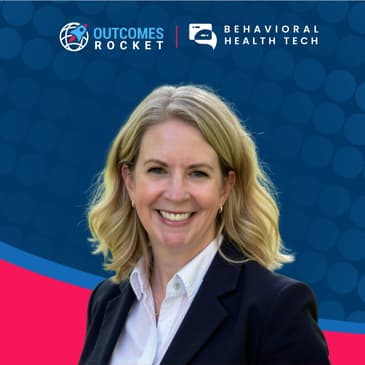
In this episode, Rebecca Ragland, Clinical Global Account Executive at Multi-Health Systems, explores how scientifically validated assessments and emerging technologies can improve behavioral healthcare while preserving the human element. She discusses the growing role of AI in clinical workflows and why clinicians must remain central to decision-making, particularly as technology advances faster than organizations can adapt. Rebecca also explains how trusted, structured data can serve as a guardrail for responsible innovation, helping organizations improve consistency and expand access without sacrificing human judgment and connection.
Tune in for a thought-provoking conversation on how AI and technology can expand access to behavioral healthcare while keeping human connection, clinical judgment, and trust at the center.
Resources:
[00:00:01] Welcome to Expanding Access, a podcast by Behavioral Health Tech, where we explore the cutting edge of mental health, substance use, and autism and IDD care. Each episode features insightful conversations with industry leaders who are driving real change through technology and innovation. Whether you're a provider, payer, or just passionate about expanding access to behavioral health care, you won't want to miss these stories. Let's dive in.
[00:00:30] Hello, everyone. I'm Solomay Tibibu, your host of the Expanding Access podcast, and I can't wait to speak with Rebecca today, covering all things assessments and more. Thank you so much for joining us, Rebecca, with so much to talk about. But I would love to get started by just introducing you and really understanding. I mean, your background is amazing.
[00:00:52] You spent 17 years as a school psychologist, just on the front lines with kids and families, and then moving into this system and tech role, really, at MHS. Please tell our audience a little bit about you and your evolution into this role. Yes, thanks for having me. I'm really excited to have this conversation. And yeah, just as a little background, I am now a global account executive in the clinical space at MHS. But yes, I'm actually still a school psychologist.
[00:01:22] So 20 years as a school psychologist, I spent 17 of those years in education and absolutely loved and appreciated that time in that space. Directly, like you said, on the front lines, I feel like in a lot of ways.
[00:01:38] I think my evolution just kind of came to sort of a natural place where I wanted to continue this work and especially in systems level change, which maybe is a little bit different in the pace in public education. And start to expand my experiences and my learnings in the health tech space using, hopefully, the experiences I've had. But it was just sort of a natural evolution.
[00:02:06] And then being in a, you know, with a company who their focus is such on fairness and equity and assessments, it just seemed really like a natural fit. So yeah, today I work with global healthcare organizations who are looking to integrate those assessments that we know well and I know well from using for 17 years directly into their workflows for their clinicians.
[00:02:33] So it's just a natural evolution because I get to still do this really incredible work with our partners and be a part of what's supporting ultimately patients and families and communities. So that's just a little bit about my background. Amazing. That is so wonderful to hear. You've got, like I said, such an amazing experience.
[00:02:56] And with that, I'm guessing you probably have a story or two that can capture what you're seeing in just the evolution of behavioral health right now, specifically around perhaps where the intersection of tech and human care has really made a meaningful difference in your space.
[00:03:14] Yeah, so I think it's really important to me with this transition to, I just feel very strongly about the human element of our work. And I feel like every day in this space, I'm learning something new. I mean, I would say even in the last six months, I don't know if you feel the same because you're in this, in these discussions. But technology and innovation, you know, everything's moving so quickly.
[00:03:42] And there's so many incredible innovators out there that it just blows me away. I feel like, though at this point, we're not just digitizing things. We're really thinking about, okay, how can technology support people accessing care? How do we support our clinicians to have better quality data and use their time in that human, that deeply human space?
[00:04:08] Because I really, I feel like all of my work, that drives it, right? And all of my conversations and the partners that I work with, that drives it. And I do have a story that really resonated with me earlier this year, was visiting with one of our partners at a site visit.
[00:04:24] And they've done all of this incredible work to integrate assessment technology, really standardize and work on those workflows for a really long wait list so that individuals can move through the wait list. But they still recognize the need for the human component. And they had a gentleman that was in his 70s.
[00:04:50] You know, he had waited years to be able to access something that was going to help him understand something more about himself that he had long wondered about. But technology moved so fast, he didn't know how to access it and really how to have a human validate what he has been experiencing for who knows how long.
[00:05:14] And in his 70s, having that support to just be able to log on and not that you can't do that, but you know how to go through that system, it's intimidating. And this partner organization has done some incredible work to really release some of that admin burden and that clinical, you know, kind of the things that they don't need to be doing to really work with this gentleman.
[00:05:41] So ultimately, being able to redirect and use technology to free up that human time and help our clinicians with that judgment piece, that trust, and they can then make some really good care decisions. That's just really stuck with me. And we just can't lose that. I feel really strongly about that. Totally. I'm a huge proponent of finding the right balance between tech and human touch.
[00:06:10] I mean, even since the very beginning days of BHT, we've talked a lot about that. And it's more important than ever with AI. And so I'm definitely going to be asking you more about that. But Rebecca, we've got, you know, in addition to providers that you work with, we also have a lot of payers in the audience.
[00:06:27] And just curious about your experience with their experience and understanding or misunderstanding what's happening during an assessment when it comes to ADHD, autism, and how NHS is supporting payers through standardization. You know, just such a good, timely question with everything happening in this space.
[00:06:53] One of the things that resonates with me is how complex an assessment really can be as far as making sure that you have really good data to support the clinical decisions being made. And whether that's the assessment or what happens next, the care and treatment plan, the follow-up.
[00:07:15] And I don't think this is necessarily everyone, but I think there is this misunderstanding about how comprehensive this work can be. Doesn't mean it always has to be, but I think the comprehensive nature of an assessment and having the science and good data that drives that,
[00:07:36] I think that's sometimes a missing piece where we want to stamp something really quickly, but that doesn't ultimately support the patient that needs, you know, who's coming for a reason for an assessment. So I am always encouraged when I hear that more and more people want to hear more. Like, how does this work? And how does this look? And we want good quality data.
[00:08:03] There is a time and a place for other pieces of an assessment, but we need to have data to support the decisions we're making. So I don't know if that directly relates to the payer conversation, but I think it does relate to everything that's changing in technology, is having that fundamental data piece that tells us that this is something I can trust, the work that's being done at both the assessment and the treatment and follow-up stages.
[00:08:32] I suspect what piece is also important for caregivers and families. Can we say a little bit more about that and any additional insight your team has been able to provide caregivers? Yeah, it's interesting because even at BHT last year in November when we were at the conference, our team spoke with a lot of parents or caregivers or grandparents.
[00:08:56] And I think everybody's looking for a greater understanding of what's going on, how can I provide support? I think everybody's looking for that quality data. And so that really resonated with our team, that we had individuals come up and say, how do I get a good quality assessment? Because I've been dismissed or I've been pushed from provider to provider.
[00:09:24] So I think everyone's looking for that because it's not just about, like I said, stamping a diagnosis. It's really about having a better understanding of myself and what my strengths are. How do I build on that? Where areas that I maybe need more support? And then as a caregiver, how do I do that for the people that I care about and I love? So, you know, everywhere we go as a team, we hear this and we have these conversations.
[00:09:53] And it's really, again, from my school psychology background, I appreciate having these conversations. I think what our team does specifically is we want to work with those organizations who say, yes, this matters. This quality, scientifically validated data matters. And it doesn't mean that that's it. That's all we need. It means it's part of that bigger holistic picture of strengths and needs for an individual. Thank you for that. I guess I should pause.
[00:10:23] And for those who aren't familiar, can you share what is MHS? So at MHS, we've been developing behavioral health assessments for over 40 years. So we also work in the public safety space, the gifted, and obviously the clinical space I'm in and in talent. So our goal at MHS is really to support individuals to do well, right, to have this knowledge and this understanding for themselves.
[00:10:52] So in the clinical space, and I say clinical, that would also be education. Our focus is behavioral health, some mental health assessments and things like that. So, yeah, that's what we've been doing for over 40 years. And we have an incredible R&D scientists that work on what's happening in this space, what's evolving, what's changing. And so it's really exciting to be a part of that. Fantastic. Yes, MHS has been really an innovator and pioneer in this space for a long time.
[00:11:21] And so, of course, speaking of that, I have to ask your perspective on what you're seeing in AI as it relates to our conversation for assessments in autism and beyond. And yeah, where do you see the conversation shifting? Well, I'm going to first say I am no expert in AI. I just feel like we're all learning so quickly, and I don't know if you feel the same way, but I feel like last year there was a lot of discussion about what's coming.
[00:11:51] And it's going to happen fast. And I would say now I'm a little bit like, boy, that's true, especially the last six or so months. There's so much innovation. There's so much more of a move from the buzz to, like, this is the practical implicate. This is what's happening right now. And I am seeing it and the work I do show up in many different ways with especially the partner organizations that I work with.
[00:12:16] So, obviously, AI scribes in my own life that's happening in visits, workflow supports, tools to reduce admin burden, all of these things. Like, there's some incredibly smart innovators out there doing this work. And it's a lot. I think what I'm finding interesting, and I don't think this would be any different than probably what you see, but people are reacting so differently. And I think that's been an interesting sort of balance.
[00:12:47] So, some are full-on embracing it. They know what it can do. They have this vision. It's solving problems. It's exciting. And then others are so cautious and genuinely almost uncomfortable about how quickly things are moving. And I feel like it's day-to-day. I feel both. And I don't know if it's maybe the news cycle or, you know, what happens every day. And I see this in my own life.
[00:13:14] Even outside of behavioral health, my daughter is a recent college graduate. And she has this whole thing about don't use AI. Don't use, you know, they're going to know it's not going to be your voice. But she can't get into, she can't be seen at a human level without AI. So, all of these companies are using AI. So, it's this really interesting dynamic happening right now that AI is already so deeply embedded.
[00:13:43] And we're trying to figure out where that balance is. So, I think behavioral health is no different. There's a similar tension. And I just go back to what I said at the beginning. Like, where do we need the human? We cannot lose the human touch, especially in behavioral health. So, how can AI support all of these things to help make our work efficient, surface data faster?
[00:14:09] But how do we come in as humans and build the trust and understand context and understand nuance and ultimately help the individual we're working with feel safe, feel heard, and have that be meaningful? That's what I have every day. I can relate to the, like, moment by moment, the opportunities and risks with AI. So relatable. Is that something you hear? Is that kind of push-pull or?
[00:14:39] Totally. And just catching up to what's already happening. Fair. Both of those pieces, very relatable across mental health addiction, autism, IDD, and beyond. Absolutely. Well, Rebecca, I have so many more questions I'd love to ask you.
[00:14:52] But if I could, just one more so critical is where do you see scientifically validated assessments and especially structured data play a role in helping organizations navigate some of these AI risks and balancing the human element, the objectivity, and moving forward? Yeah. Yeah. I mean, I think we know the risks.
[00:15:19] I mean, I think they're pretty well established in that privacy and in that space. I do want to say before I kind of get into the assessments, I sometimes wonder about the decision-making risk. If we release so much to AI and we become, it's easy to become over-reliant. And I feel like I can speak to that after 17 years in a system that you do become over-reliant on certain assessments or certain processes.
[00:15:46] And so I can understand where that decision-making risk comes in. So I just feel strongly that the clinicians have to stay close to that decision-making process. So with that, I think the more that we can trust the data and that we have that validated assessment, that structured data, I think that really contributes to the guardrail conversation and the building of trust.
[00:16:11] And, you know, if we know that the data is trusted and it's powering those tools, then I think then we can say, okay, we can build that consistency across an ADHD pathway, a mental health pathway, an addiction pathway. And then that, in turn, enables innovation so that innovation can be responsibly done. You know, we know that that's happening.
[00:16:36] And I do actually was thinking about a story for this and that we work with a partner and we've published some case studies and things like that with our partner in the UK, Seacon. But it really stands out to me because they were able to scale and see thousands of people that have been on a wait list. And by embedding clinically validated assessments, in addition to the other parts of their assessment process, they embedded that into their workflow.
[00:17:05] They then could have more confidence in what their system was producing. And so then they're taking the science that their clinicians were already using, they already trusted, they were already relying on, and they could use it in a way that supports, you know, more of that consistency in the front end decision making. Who needs support right away? Who needs to go to assessment? Who needs community support?
[00:17:30] And then better back end, if you will, outcomes where, okay, the clinician can be very much involved where they need to be involved. So we know it works, but, you know, having good validated assessment that's trusted and it's within a system, I think is one way to look at how do we reduce the risk on not only privacy and things like that, but over reliance from a clinical standpoint. Right. There's so many applications. Wonderful. Thank you, Rebecca.
[00:18:00] Where can folks learn more about MHS if they'd like to? Yes, well, you can obviously go to MHS.com. We also have a healthcare solutions landing page. If you go to MHS.com, you can learn more about our assessments, learn more about the work that we're doing in the integration space. I'm on LinkedIn. I'm always happy to connect. We'll be at Behavioral Health, our team, our whole team, the conference here just in a few weeks. I think it's in September. Sure.
[00:18:27] And I do want to say having the conversations, these are extremely valuable to us. We're clinicians on our team and really helps us kind of stay close to that pulse of what's happening in this space. So I'm happy to engage with anyone further. Amazing. Thank you so much. It's been such a pleasure getting to know your team and just the depth of experience you all have and really encourage folks to learn more.
[00:18:53] And of course, as Rebecca said, we're equally excited for the Behavioral Health Tech Conference in Nashville this year. So make sure to bring your boots. We have a conference-wide honky-tonk line dance. So get ready and excited to see you all there. Thanks so much, Rebecca. Thank you. Thanks for tuning in to Expanding Access. We hope you're feeling inspired by today's discussion.
[00:19:21] If you've enjoyed the episode, subscribe and share it with your network. For more content and opportunities to get involved in transforming care, visit behavioralhealthtech.com. Until next time, let's keep pushing boundaries and expanding access together. We'll see you next time.