
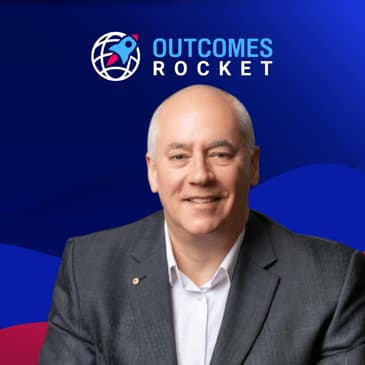
Transformational medtech innovation needs more than a great idea. It needs the right engineering, clinical evidence, reimbursement strategy, and commercialization support to reach patients.
In this episode, Peter Lewis, Executive Vice President of Business Development at Hydrix, joins Saul Marquez at the MedTech Innovator Radar Forum to discuss what it takes to bring complex, safety-critical medical devices to market. Peter shares Hydrix’s evolution from its origins in Australia to becoming a global medical product development company supporting cardiac, surgical robotics, imaging, neurostimulation, and other advanced technologies. He highlights why clinician-led innovation is especially powerful, what distinguishes today’s most promising medtech startups, and why AI, reimbursement, and human clinical evidence are now essential pillars for growth.
Tune in to learn what medtech innovators need to consider early if they want to build solutions that truly change care.
Resources:
-
Connect with and follow Peter Lewis on LinkedIn or reach out via email.
-
Explore the Hydrix website here!
[00:00:02] Hello, everyone, and welcome back to the Outcomes Rocket podcast. I'm excited to be recording an episode here at the Medtech Innovator Radar Forum with the outstanding Peter Lewis. He is the Executive Vice President of Business Development at Hydrix in both the U.S. and Europe. Peter, thanks for joining me. Absolute pleasure. Thank you, Saul. Yeah. So tell me your story, Peter. Tell me about you and tell me about Hydrix.
[00:00:27] Well, I'm an engineer. I'm training electronic engineering, but went to the dark side early on with a business degree. So these days I talk about engineering rather than actually sort of do it. So my whole career has been industrial sales, marketing, in technology, strategy, and that sort of thing. Hydrix is a medical product development company. It's set up in 2002. Actually, it's been out of HP originally. Oh, really? Yeah.
[00:00:49] Yeah. Well, HP used to do all their calculators in Melbourne, Australia, and they sacked everybody, moved it all to India, then brought back a couple of the original Hydrix founders as consultants, and we sort of grew from there. Interesting. Got into medical devices about 2010. So we're now about 60, 70 engineers and designers, electronic software, mechanical, and so on. And we design complex, often class-free, safety-critical medical devices right around the world. Australian-based. I have a funny American accent, but most of our business is from North America and from Europe. That's why I'm here.
[00:01:19] That's pretty cool, man. Well, it seems like you guys have done a lot in the space, and you're very involved. Spin out from HP. Before we recorded, you were kind of telling me the evolution of the company. Yeah. And so what brings you to MedTech Innovator? Well, we love working with people who want to change the world. Our internal vision is improving a billion lives.
[00:01:41] And so the innovators are where really finding people who are driven, see a problem often as a surgeon, entrepreneur, clinician, entrepreneur, got a great idea to actually transform the state of care, the care process. So MedTech Innovator is where we find a lot of these innovators have got a great idea who have developed something or other, but they really need that high-quality, FDA-level engineering design, commercialization, exactly where we fit in perfectly. So this is a great place for us to be. That's great. It is a great place.
[00:02:09] And cross-functional stakeholders, experts across different areas, whether it be engineering and building a product to FDA approvals and reimbursements to legal, regulatory. It's all here under the roof these next few days. What's been an insight that's risen to the top? I know you're here as a judge, but tell us what's been something that you've seen either from the pitches or from your one-on-ones that rises to the top as interesting. Well, I think there's two things.
[00:02:37] I think, first of all, a number of people have been clinicians, have been very successful clinicians, urologists, surgeons, that sort of thing, who so believe in innovation, they actually left their day job as a surgeon or a clinician, actually moving full-time into the product, which really, they're the sort of companies you want to deal with. They're passionate about it. They really want to change the world. Secondly, there's some of the transformational innovations. I've been to a lot of these sort of events, incremental innovation. Here at MedTech Innovator, a lot of those innovations really are transformational. They're going to change the industry.
[00:03:05] The other thing is that a lot of them already got cash, so they're not definitely people for cash. They're looking for networks, introductions, and so on. That's a nice choice to sort of seek expert opinion. Yeah, yeah, yeah. It's a big difference, and the people that come here are curated, right? Totally. They're chosen to be here. But just have the battle. The judges are chosen too, right? Right. Aren't they really? Yeah, so yeah. Yeah, it's a good setup.
[00:03:28] What's been a trend that you see in the space that you work in that you feel it's important for people to be thinking about today? Well, I think there's a couple. First of all, AI. Fundamentally, if your development doesn't have some degree of AI to help triage that early stage diagnosis, then you're probably dead in the water. That's absolutely essential. Secondly is reimbursement. If you haven't got reimbursement, you're probably not going to get, or reimbursement pathway, you're probably not going to get investment. And thirdly, of course, is the clinicals.
[00:03:57] Increasingly, investors, I'm finding, are saying, happy to invest, but I need to see clinicals. You know, not animals, but humans as well too. So that sort of wholly triumvirative connected pillars are really important for any company that actually wants to get going and get growth in the market. Yeah, that's great. You know, this lay of the land is something that we can't ignore, and you've got to make sure that you really have clear line of sight on each of these factors.
[00:04:21] Well, look, for people looking to make a difference in their development, if they want to reach out to you or your company, what's the best place they could do that? The easiest thing to drop me a line, email, I guess, peter.lewis, L-E-W-I-S, peter.lewis at hydrix, H-Y-D-R-I-X, hydrix.com. That's probably best. Or LinkedIn, you'll find me on LinkedIn, peterlewis.am, and I'm very happy to have a conversation. Love conversations. Happy to give guidance.
[00:04:47] My whole career has been working with startups, so whether we work with them or not, I'm still happy to provide advice, guidance, and introductions. That's brilliant, Peter. Well, we really appreciate you jumping on the podcast today. And for everybody out there listening and watching us, make sure you check out the show notes. We're here with Peter Lewis, Executive Vice President of Business Development at Hydrix. The show notes are going to have all the ways to get in touch with him and his firm, so make sure you do that and share the episode with a friend if something resonated. Thank you all for tuning in, and Peter, thanks for being with us. Thank you so much. Appreciate it, man.
[00:05:17] Appreciate it. Take care. Thank you all.