
Leveraging technology to optimize workflows and scale home-based care efficiently is crucial for success in modern healthcare.
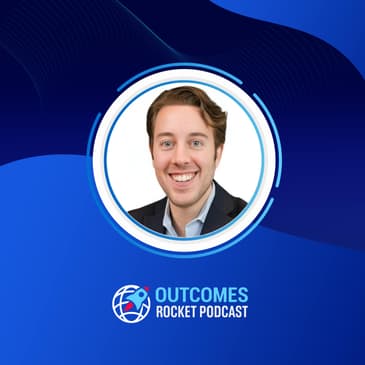
In this episode, Dr. Gregory Goodman Medical Director at Maribel Health, delves into the transformative impact of home-based care in the healthcare ecosystem. He and his team at Maribel Health, focus on making the home the center of healthcare, offering expertise and tools to large healthcare organizations to deliver exceptional care at home. Throughout this interview, Greg discusses the strategic partnership approach Maribel takes, emphasizing long-term commitment and sustainability. He also highlights the importance of technology in optimizing workflows, scaling home-based care efficiently, and building deep connections with patients and families in their home environment.
Tune in and learn how home-centered care is revolutionizing healthcare delivery!
Resources:
[00:00:02] Hey everybody, welcome back to the Outcomes Rocket. I'm so excited to have an amazing friend and an
[00:00:10] excellent healthcare leader, Dr. Gregory Goodman on the podcast. He is a medical director at Maribel
[00:00:18] Health, an associate physician at Brigham and Women's Home Hospital Program and instructor in
[00:00:25] medicine at Harvard Medical School. He's a recognized physician leader in hospital at home
[00:00:31] and has performed hundreds of home hospitalizations. Dr. Goodman was awarded the 2022
[00:00:38] hospital at home physician of the year by the hospital at home users group. His clinical focus
[00:00:44] is on building innovative home based care models, and I'm so pumped to have him here on the
[00:00:49] podcast. Greg, welcome to the Outcomes Rocket. Dr. Gregory Goodman So absolute pleasure, thrilled
[00:00:54] and honored to be on your show and thank you so much for having me. Dr. Gregory Goodman
[00:00:58] It's my pleasure and I just got to say for the listeners and to you Greg, kudos because back
[00:01:05] in the early 2000s when I was deciding to kick off the podcast, I went to your website and for
[00:01:12] those that don't know, Dr. Goodman has a podcast as well and I was just like, man,
[00:01:17] who is this Dr. Goodman? Like you had all these awesome people on there and I actually
[00:01:22] aspired to be like Greg and his podcast. So you were an early inspiration for me and I'm excited
[00:01:30] that we're here chatting about the very amazing work at Maribel. So Greg, before we start, just
[00:01:34] tell us about what got you into the business of healthcare and we want to know more about that.
[00:01:39] Dr. Gregory Goodman So thank you so much. Since I was pretty young, I think in elementary
[00:01:44] school I wanted to be a doctor. So in high school I was shadowing a neurosurgeon during the
[00:01:49] summers. I do anything but neurosurgery now. I'm a general internist, but it was the early
[00:01:56] exposures to healthcare, serving people, seeing the value of being able to be a part
[00:02:03] of somebody's life in a really unique way. And right after med school, I had the opportunity
[00:02:08] to join a venture-backed startup called Remedy Partners thinking about new payment models with
[00:02:13] bundle payments. I then went back and finished my training at kind of a small community site
[00:02:20] and then joined academics. So very different path in terms of my journey and felt really
[00:02:26] fortunate as I was thinking about what I wanted to do with my life. I had read David Levine's
[00:02:31] first randomized control study, sharing the incredible work with the first 20 patients
[00:02:38] in terms of hospital at home and was just incredibly inspired by the impact he was having.
[00:02:44] And for the last six and a half years have practiced at Mass General Brigham.
[00:02:48] I was the first full-time home hospital doc, so all in, and then joined Maribel,
[00:02:55] which I'll share more about where our mission is to make home as the center of the healthcare
[00:03:00] system. And so personally, it's really meaningful. My grandfather was a house call
[00:03:05] doctor in South Africa and actually tragically passed away making a house call at 34. And so
[00:03:12] to me, I get to share his legacy every day. I make a house call every day. I help the health
[00:03:17] system build care in the home. It's honoring him and it's really incredible work. And he
[00:03:22] was doing this 60 or 70 years ago. So we're getting back to the basics of just providing
[00:03:27] excellent care to patients and supporting big healthcare systems to do that.
[00:03:32] I love it, Greg. And when you first shared that story about your grandfather with me,
[00:03:36] we were in Boston together a couple of months ago. I was like, it really touched my heart to
[00:03:42] hear that you're doing what you're doing in honor of him and getting back to the basics.
[00:03:47] And I think it really connects well with what you guys are up to at Maribel Health. So
[00:03:51] why don't you talk to us about what you're doing there and how you're adding value to
[00:03:55] the healthcare ecosystem? Yeah, thank you. So Maribel Health was started by Dr. Adam
[00:04:01] Graf and Ron Paulus. So physician-led, and I was the first hire. And what I thought was unique
[00:04:07] about Maribel was that Adam has a very deep home-based background, was the former
[00:04:15] chief medical officer of Biota. Ron is a former CEO of a large healthcare system mission.
[00:04:22] And so what I thought was really unique about Maribel, where our mission is to make the home
[00:04:27] the center of the healthcare system, is that deep expertise across the continuum,
[00:04:32] all the way from the very acute facility-based care into the home and into the community.
[00:04:39] And so our goal is to provide expertise and tools to large healthcare organizations.
[00:04:46] They could be healthcare systems, they could be home care agencies,
[00:04:50] and supporting them on that journey, providing a partner both knowledge and tools and
[00:04:56] technology to help them deliver home and community care. We've spent a lot of time
[00:05:02] in the acute care space, supporting large organizations like Mercy to build
[00:05:07] the first hospital home in St. Louis, but are also working with Biota, which is one of our
[00:05:12] investor partners, in thinking about how do we design care for the community with a focus
[00:05:17] on palliative care? And so I think what's unique about Maribel is we are deep in terms
[00:05:24] of being operators, being clinicians, being technologists, and we uniquely partner.
[00:05:29] So it's not a one-size-solution fits all, but really figuring out how do we add value?
[00:05:35] Where are you in that advanced care journey? And how do we support you
[00:05:38] and your community to get care at home? I think that's great. And there's a lot of
[00:05:43] clamor around this topic and how do we make it happen? And the entrance of
[00:05:49] large consumer companies making a play at also doing this type of work. How is what you guys
[00:05:56] do at Maribel different or unique compared to what's out there? Yeah, I think what's most
[00:06:01] unique is the way in which we form our partnerships. So because we have deep
[00:06:06] experience in large health systems, because we have experience in home-based care
[00:06:11] organizations, most of our team or many of our team are clinicians. So I think we're rooted
[00:06:18] in that unique perspective of actually knowing how to deliver the care. And it's really hard,
[00:06:24] right? It's not let's set up a program and let's get going. It's designing a model,
[00:06:30] understanding your population, understanding your community, doing that deep analysis,
[00:06:36] and figuring out what is the best strategy to get going. And I think that's what we're
[00:06:40] different about. We're not just a purely venture-backed tech company that's trying
[00:06:45] that has a single RPM solution. We really think about how do we connect expert knowledge
[00:06:52] and tools to appropriately build capacity for your hospital as well as serve your community?
[00:06:59] And so I think we partner with our health systems and home care agencies in a way
[00:07:05] that's sustainable over time. We want to build many year and potentially decade relationships.
[00:07:11] And so it's really thoughtful and intentional with how we partner in the effort that we put in
[00:07:17] on the ground and to make sure that it's a success for the health system, for the home care
[00:07:22] agency, and for the patient most importantly, right? Providing an absolutely exceptional
[00:07:28] experience and thinking outside the box to do that. I love that, Greg. And what does
[00:07:32] a win look like? You get one of these programs into place. Is it uniform? Does every
[00:07:38] organization think about this differently? Share more about that. Yeah, so maybe I'll give you an
[00:07:44] example of a program I've been intimately involved with. So Mercy is a large healthcare
[00:07:49] organization with their headquarters based in St. Louis. At the mid, there are kind of corporate
[00:07:54] layers called a ministry. At their ministry layer, they made a bold move in terms of their
[00:07:59] 2025 strategy to say home is the default side of care, which is incredibly bold, right? From
[00:08:06] a senior leadership perspective. And so then we worked backwards and said, okay,
[00:08:12] how can we support you on that journey? Hospital at home from a capacity perspective,
[00:08:18] their hospitals are overfilled, the EDs are congested. So that seemed to be a significant
[00:08:23] problem that we could support them on. And so we spent time about nine months designing
[00:08:30] the program hand in hand, right? So our kind of executive team with their team
[00:08:36] in the trenches thinking about how do we design a model that's sustainable, scalable,
[00:08:41] that serves their community, not only in the St. Louis market, but also throughout their
[00:08:46] ministry. And so we launched our first hospital at home program in late September of last year.
[00:08:53] We spent a lot of time, right? It's a whole new model of care, educating, providing
[00:08:57] knowledge transfer, building systems, helping to build the capabilities to do this.
[00:09:03] We're very excited with where we are. We're already in the top 2% of hospitals in terms of
[00:09:10] volume, in terms of hospital at home, and we're expanding to sites. And so I think our keys
[00:09:14] to success are partnering and understanding the organization, building those relationships.
[00:09:21] It's back to the basics and then making sure that we ensure that the care is absolutely
[00:09:25] exceptional for the patients and supporting the clinicians on this new journey. Being a
[00:09:31] home hospitalist is very different, right? It's not something that you're trained to do
[00:09:36] during your traditional internal medicine training. And so how do you gain those skills
[00:09:41] to support this new model of care as a leader in the space?
[00:09:45] That's fascinating. Appreciate that example really brought it home for me and I know
[00:09:49] probably for the audience too, Dr. Goodman. So as people are thinking about doing this,
[00:09:54] health system leaders are considering it or maybe they tried and got burned. What's one of those
[00:09:59] biggest setbacks that you see out there? And maybe give us a framework that we could think about
[00:10:05] it in. I think the hardest thing is that for a lot of health systems, they have a number of
[00:10:10] priorities, right? Because they're thinking about their system in general, the focus has
[00:10:15] mainly been on bricks and mortar and facility care. And so I think as a lot of healthcare
[00:10:21] system leaders think about it, a partner is a great option, right? Because our team wakes up,
[00:10:27] sleeps, breathes and thinks about how do we advance care in the home, which is very unique
[00:10:33] and different. How do you mobilize a workforce? How do you support the current technologies?
[00:10:39] How do you engineer those solutions to support each of those kind of components? And so I think
[00:10:46] our approach is to do an assessment, more of the strategic advisory services to understand
[00:10:52] where are you today? What's the current state? Where do you want to go? And then how do we
[00:10:57] fill in those gaps, right? And that's our approach with each of these organizations.
[00:11:02] Everybody's got different goals. Our goal is to partner with organizations to support them on
[00:11:08] building a sustainable solution for them in their system. So we want to be a long-term partner.
[00:11:14] I really can't stress that's like a huge differentiator. I fly out to St. Louis
[00:11:19] probably twice a month and train and coach our physicians and providers.
[00:11:24] It's a full commitment. We're all in on supporting them. It's not provide strategic
[00:11:29] guidance, support them on implementation and good luck with the customer success.
[00:11:34] We are all in, in terms of that framework. Well, that expertise is key. You guys have it.
[00:11:40] The partnership is critical. What about technology? What role does technology have here
[00:11:45] in making all of this happen? Yeah, I think technology is absolutely critical.
[00:11:50] The way I like to think about our company is we're a team of experts and consultants with a
[00:11:55] world-class engineering team. And so the way we're thinking about technology is how do we
[00:12:01] fill in the gaps for what exists today? So a lot of systems use Epic. So how do we
[00:12:06] leverage Epic to its greatest capabilities? How do we build the framework within Epic to support
[00:12:12] clinical documentation? Epic was built as an EMR for a lot of facilities, right? Not a mobile
[00:12:19] workforce platform. And so I think what we're thinking about is how do we make clinicians
[00:12:26] more efficient and optimize workflows and hard wire technology? And so our technology platform
[00:12:33] over time is going to be modular. So plug and play, maybe you have an RPM solution that you want
[00:12:38] to use. You have an EMR. What are those gaps? Right? It could be logistics. It could be
[00:12:43] workforce management. It could be visit planning. So our platform is designed to support you
[00:12:49] and help you in terms of thinking geographically, right? Because you have a nurse here,
[00:12:54] you have a paramedic here, you have a doctor here. How do we deliver the right care at the
[00:12:58] right time at the right location, utilizing those resources in a way that's most efficient?
[00:13:05] And so we've been really intentional with not just coming out with a platform. We're
[00:13:10] co-building and co-designing our platform with Mercy as well as thinking about how do we
[00:13:16] support many of our partners in terms of using tech to scale these models.
[00:13:21] That's great, Greg. And we all know we don't need another point solution.
[00:13:26] So I think it's great to hear about the intentionality that you guys are taking
[00:13:30] with the technology piece. So very excited to hear about the model, the way you guys work.
[00:13:36] For everybody listening, thinking about a program like this or just wanting to learn
[00:13:41] more and getting ahead of the game, what closing thought would you leave us with?
[00:13:45] And what's the best place that the listeners could get in touch with you and the Maribel
[00:13:49] team? So in terms of closing thoughts, go big and go home. We need both of you.
[00:13:55] We need bold healthcare leaders that want to make a difference. From a patient perspective,
[00:14:00] it's incredibly meaningful to sit on their couch, meet their pets, do a kitchen walkthrough.
[00:14:06] That's the secret sauce to this model, whether it's on the acute care side or providing
[00:14:11] longitudinal care to patients and families. It's that deep bonding connection. It's what
[00:14:16] is most meaningful, I think, in the reason why I continue to do what I do and I'm so
[00:14:21] proud of it. It's incredible, right? Once you've made a house call and had that
[00:14:25] honor of being a guest in somebody's home, there's just so much we can do.
[00:14:30] In terms of connecting, would be thrilled and happy to have conversations with healthcare
[00:14:34] leaders about where they are in the journey and how Maribel can support. You can reach
[00:14:39] out on LinkedIn or directly through the website or via email and Sol, super honored to be
[00:14:46] a guest on your show. I look up to you and what you've built over the years and it's
[00:14:51] just fun to watch. The work that you're doing is incredible to support healthcare,
[00:14:56] to advance and make sure that others get to hear about what's out there so they can make
[00:15:01] great decisions and support patients. It's really exciting.
[00:15:04] Yeah. Thank you, Greg. Really appreciate that. Kudos to you and the work that the
[00:15:08] Maribel team are up to. I can't thank you enough for being with us. Folks,
[00:15:13] in the show notes, you're going to find all the ways to get in touch with Dr. Goodman
[00:15:17] and the Maribel team. So don't shy away from that. Go big and go home. I love that call
[00:15:23] to action that Greg left us with. And with that, just a big thanks to you,
[00:15:27] Dr. Goodman for being with us. Thanks all.