
Addressing social isolation and loneliness is crucial for improving overall health outcomes.
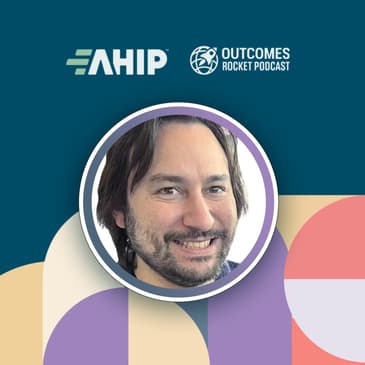
In this episode of the AHIP 2024 series, Tom Carlough, Chief Technology Officer at Wider Circle, discusses the significance of building trust and community in healthcare, particularly focusing on health equity and social isolation. He explains how Wider Circle uses in-person community groups to foster social connections and trust, which helps in collecting essential health information and encouraging health practices like home visits. Tom shares insights from a recent study showing significant improvements in health outcomes through their approach, emphasizing the importance of addressing loneliness and social isolation as fundamental health needs. He also highlights the new CMS regulations mandating health equity, urging healthcare plans to prioritize trust-building and personalized community support, and underscores that social proof and peer pressure within community groups can encourage individuals to prioritize their health.
Tune in and learn how community and trust can transform healthcare and promote health equity!
Resources:
[00:00:02] Hey everybody, welcome back to the Outcomes Rocket, recording live at AHIP 2024 in Las Vegas, here at the amazing Wynn Hotel.
[00:00:11] I have the privilege of hosting Tom Carlough today, he is the Chief Technology Officer at Wider Circle. Tom, thanks for joining us.
[00:00:21] Yeah, absolutely. Great to be here. I mean, actually, the Wynn is like unreal, and AHIP has been pretty cool.
[00:00:27] Like, I think people are taking things like a lot more seriously. They're talking about health equity, they're talking about developing trust, talking about using technology and more importantly, like community to actually do that.
[00:00:36] It's almost like going back to the roots of humanity. Sometimes I feel like when I'm up on stage talking about like what we're doing, I feel like if this was like 1950s, people would be like, what do you mean?
[00:00:46] Of course people are ready to get there, you know?
[00:00:48] Interesting. Yeah, that's interesting. It's sort of like getting back to our roots is what we need to do.
[00:00:54] Yeah. You just finished a talk. Yeah. So why don't we start there and then help the listeners and viewers get to know you a little bit better?
[00:01:02] Sure, sure. So the talk was actually on SEOH about how to like actually provide a scalable solution to do all the things that really health plans and provider organizations need to do, which is like create momentum in the community, create trust, and ensure that you can collect the right amount of information to be able to help the people who need the most help.
[00:01:20] And that is becoming more critical than ever because CMS has put out new regulations on providing health equity and ensuring that we're meeting the needs of the members of the community that are the most disadvantaged.
[00:01:31] And really over the last, you know, 50, 70 years of CMS creating, you know, Medicare and Medicaid and other opportunities for healthcare to become bigger for our population, this is like the year that it has become important.
[00:01:45] And like, I'm not going to go through the regulations. People can read that on their own. It would not make for a great podcast.
[00:01:50] It would be pretty dry. But I mean, the whole crux of it and the whole crux of the conversation we had today was the fact that people are not going to provide the right information to be able to create the most, the services that would help if they don't have trust.
[00:02:05] And I'll use an example. I always think like how many people wake up in the morning and want to go whitewater rafting, right?
[00:02:11] Like a small percentage of people wake up and they say to themselves, like today I'm going to go whitewater rafting, right?
[00:02:15] I could say I've never felt that way.
[00:02:17] No, yeah, same, same.
[00:02:18] Everyone in my life.
[00:02:19] I'll take it a little bit further.
[00:02:21] A good friend of mine could call and say, do you want to go whitewater rafting?
[00:02:25] And the answer is still going to be no, right?
[00:02:27] So this is the way I explain trust, right?
[00:02:30] Now, if a group of my friends called and said they were going whitewater rafting, this is real.
[00:02:37] This is authentic.
[00:02:37] It's happening.
[00:02:39] I can go or not go.
[00:02:41] There's a chance.
[00:02:42] Maybe more open to it.
[00:02:43] There's a chance, right?
[00:02:44] And so that's a whole concept of like whitewater rafting, creating peer groups, creating kind of social proof and pressure is having individuals in your local community, like authenticity.
[00:02:53] Like you can touch this person.
[00:02:55] This person is across from you.
[00:02:56] It's not a digital experience.
[00:02:57] We are trying to be in person live as often as possible.
[00:03:01] And the whole point is that creates the type of social pressure and social proof to be able to get the right things done.
[00:03:07] Very different from how a lot of other organizations try to do this, which is, you know, call center approach, right?
[00:03:12] Directly from one place anywhere in the world, directly to that member.
[00:03:17] Imagining somebody calls and says like, hey, Mr., you know, whatever, you need to get a colonoscopy.
[00:03:22] It's like, you know, who is this?
[00:03:24] Like, how do you know I need that?
[00:03:26] And why are you calling me?
[00:03:27] There's nothing.
[00:03:28] There's no moment we've shared together.
[00:03:30] I don't understand why you're calling me.
[00:03:32] Of course, it's something I need.
[00:03:33] I kind of, I don't need to be informed about it as much as I need to prioritize it in my life.
[00:03:37] And that's where the social pressure from a community group comes in.
[00:03:41] You know, you've got somebody attending because they like the people there, because they develop trust with the individuals who are in that group.
[00:03:48] So when the conversation comes up about going to the doctor, you're having a conversation with your peers who you trust and who you can relate to.
[00:03:56] Very different from the asymmetric conversations that can occur from a health plan or a provider directly to you, which is more like we are the authority on your health.
[00:04:05] We are telling you you need this versus I'm somebody who cares about you and I think you should do this.
[00:04:11] Yeah.
[00:04:12] And so I'm just wondering, fascinating, by the way, and taking us back to our human roots, like we started the podcast today.
[00:04:20] Where did this come from is the first question.
[00:04:22] And then secondly, how do you form these groups?
[00:04:24] So where did it come from?
[00:04:26] Love to have been here in 2015 when it started.
[00:04:28] That was Darren Boxbaum and Moshe Pinto.
[00:04:31] They created it after having gone through business school at Stanford, but mostly because both of them were affected by this personally.
[00:04:37] They both had parents who were aging, parents who developed loneliness, and especially in Moshe's case, his mother being somewhat on her own and really at risk because she didn't have people to help her support herself.
[00:04:51] And we all kind of have those stories.
[00:04:53] My grandparents, Italian-American upbringing, spent a lot of my formative driving years driving people to the doctors.
[00:05:00] And that was free, right?
[00:05:01] It was a service you provide as a grandson, right?
[00:05:05] It's just something that comes along with having a community that you automatically have trust and appreciation for.
[00:05:11] So, you know, I think the decision at the time to build a company around that premise was everybody deserves that.
[00:05:16] And this is why we're talking like going back to the 50s, 40s, 30s, whatever.
[00:05:20] It was implicit in having a family that you were going to create that type of support.
[00:05:25] Now, it's far more likely that families move away from each other, that maybe your parents move down to Florida and your kids move here and there and people are busier and you need people in your community that you can relate with and support.
[00:05:39] And so that's kind of the beginning of it.
[00:05:41] What I would say is, and I think you had Moshe on this a couple of years ago, is I think at the time we were probably in two states.
[00:05:48] I think we were in probably California and Michigan at the time.
[00:05:51] We're now in 15.
[00:05:52] Congratulations.
[00:05:52] I always love hearing these success stories.
[00:05:55] Yeah, yeah.
[00:05:55] I mean, it's funny because it's like it just has to be true is that this has to work because people are just better together.
[00:06:02] We're over 60,000 enrolled people across the U.S. right now.
[00:06:06] And we're starting to see some like really big results.
[00:06:08] I mean, we just finished the study with a national de-SNP payer, 10,000 members.
[00:06:13] We saw benefits in lower acute care, greater adherence to primary care navigation.
[00:06:18] And one of the best ones was like home visits.
[00:06:20] It's like home visits couldn't be any more of a like absolute like essential for health plans.
[00:06:25] Like because it's literally like a clinician going to the home, having those like real conversations, not about like I have a scratchy throat or like I'm feeling ill, but rather like what do you need to do to be successful in your health for the next year?
[00:06:38] That's the whole premise of it.
[00:06:40] And we did a great control study.
[00:06:42] Us as the treatment group, 10,000 members against a control really well matched.
[00:06:46] They had 120,000 people for us to match against.
[00:06:49] So really we got statistical significance.
[00:06:51] 64% of the members we worked with got a home visit versus 43%.
[00:06:56] Fantastic.
[00:06:57] How do you set the agenda for these groups to discuss?
[00:07:01] In the beginning, we set it based on things we believe will create trust.
[00:07:05] So like actually if you had come to our presentation today, we started with this really cool thing and people should actually try this.
[00:07:11] Sit down with somebody who like, yeah, maybe you have trust with, maybe you don't and take out a piece of paper, each person and draw each other.
[00:07:18] It's like, it's pretty intimate.
[00:07:20] It's like in that moment, you jump a couple levels in terms of I know this person.
[00:07:25] Plus it's funny because like people aren't good at drawing and you set like 60 seconds.
[00:07:30] So like, you know, it's going to come out poorly.
[00:07:31] Now like, is my nose going to be larger than I want it to be?
[00:07:34] Probably because people are going to see that.
[00:07:36] So that's the beginning.
[00:07:37] Like when we're onboarding, when we get people together in the beginning, it's entirely about like wanting people to leave feeling that they met someone, feeling that they found a community.
[00:07:47] After that, we don't really set the agenda so much as we provide logistics.
[00:07:51] We want people to get together.
[00:07:52] We want them to come together, socialize.
[00:07:54] We want them to become more active and engaged.
[00:07:56] That tends to float more boats.
[00:07:58] If you're out of your house, you've got more opportunity to say yes to things that are out of your house.
[00:08:03] So that's a big premise of the program.
[00:08:04] But on the monthly basis, we have these larger chapter meetings.
[00:08:08] Some of them are in virtual for individuals who have an inability to emulate or just prefer to do that.
[00:08:14] And, you know, for Breast Cancer Awareness Month, we'll have a conversation about that.
[00:08:18] And we'll invite members to provide their own stories.
[00:08:21] You know, it's not, we're not going to go in and like provide didactic education about mammograms.
[00:08:25] We've got lived experience in that room.
[00:08:27] Yeah. That's fantastic.
[00:08:28] Thanks for sharing that.
[00:08:29] Such a fascinating approach.
[00:08:31] I understand why it works.
[00:08:33] We all understand why it works.
[00:08:35] It's family, right?
[00:08:36] It's sort of widening that circle, right?
[00:08:39] Wider circle.
[00:08:39] Yeah, exactly.
[00:08:39] I get the name now.
[00:08:41] So, Tom, tell me, with the meeting, not everybody was able to come, right?
[00:08:45] So our viewers and our listeners, they're relying on us for insights.
[00:08:49] So what's one insight that you've gotten from the conference that you'd like to share with everyone?
[00:08:53] Oh, I think I kind of started saying in the beginning.
[00:08:56] So health equity, it's serious business now.
[00:08:58] I mean, like it was a moral imperative forever, right?
[00:09:02] Like, you know, you want to put out the houses that are on fire instead of putting new paint on the houses that look like they're in disrepair, right?
[00:09:10] So this is like everybody in healthcare should have felt this at all times.
[00:09:13] Emergency department, you triage the people who are in the worst possible case, right?
[00:09:16] Basically, what happened this year with the final rule from CMS is they put some teeth into it.
[00:09:21] Now, if you want to be seen as a high star plan, if you want to get that high revenue and those bonuses, you have to take this seriously.
[00:09:28] So starting this year, you need to collect that information so that you can actually ascertain the populations that are at disadvantages.
[00:09:36] And immediately thereafter, you have to start to develop programs that actually build trust and make sure that the sensitive information can be collected and that the services can be deployed disproportionately so that the advantages can be created in the areas that they're required so that you can start to use that fire hose on the houses that are actually in need of it the most.
[00:09:55] So that's it.
[00:09:57] I mean, it's...
[00:09:57] I get that.
[00:09:58] Yeah.
[00:09:58] Health equity is on most of these signs.
[00:10:00] And I think that's a great thing.
[00:10:02] That's awesome.
[00:10:02] No, I appreciate you honing on that.
[00:10:04] It is a reality.
[00:10:05] It is getting backed by CMS with teeth.
[00:10:09] Yeah.
[00:10:09] Penalties if organizations are not following through.
[00:10:12] So definitely something to keep top of mind.
[00:10:14] Just to close us out, Tom, first of all, thanks for doing this.
[00:10:17] It's been a ton of fun.
[00:10:19] Yeah, it's a good time.
[00:10:20] And it's great to be with leaders like you that are at the forefront of this innovation to make health equity possible.
[00:10:25] What call to action would you leave folks with?
[00:10:27] And where's the best place for them to reach out to you?
[00:10:29] In reverse order.
[00:10:30] Yeah.
[00:10:31] Go ahead and go to our website.
[00:10:32] But we're also really accessible in terms of the leaders in this organization.
[00:10:37] Most of us joined wider circle sometimes in antagonism of our careers.
[00:10:43] This was something so important to do that some of us who are heading to other higher, loftier purposes perhaps found this as the right place to be.
[00:10:51] So the first thing is we want to talk about this.
[00:10:54] So you can find us on LinkedIn.
[00:10:56] You can reach out directly.
[00:10:57] If you want to understand things at a deep level, go directly to anybody you find that has that wider circle name on their LinkedIn.
[00:11:03] The website will have a ton of information about people who are interested in utilizing wider circle within your plans and provider networks.
[00:11:10] We're also really interested in other ways of building community and finding value.
[00:11:15] So healthcare is the biggest area.
[00:11:17] We want to focus there because we believe that you can't do anything if you're not healthy.
[00:11:20] But happy to have conversations about how this could be used in other areas as well.
[00:11:24] And then the call to action, I think, is this isn't being perceived as an essential aspect of health right now.
[00:11:31] It's loneliness, social isolation, companionship.
[00:11:35] And I think that's still a mistake.
[00:11:36] We tend to think of Maslow needs as being at the very bottom of the pyramid.
[00:11:41] Do you have food?
[00:11:43] Do you have water?
[00:11:44] And then you start to think about security.
[00:11:45] And it's at the very top.
[00:11:47] You've got artistry.
[00:11:48] So you can't be a full person unless every level of that pyramid is satisfied.
[00:11:52] I personally think the ability to be social, the ability to have conversations like we're having right now, helps us flesh out our thoughts.
[00:11:59] And so just the inability to have somebody who you can ask a dumb question of or be exposed in front of is a big problem.
[00:12:06] And it actually leads to a lot of the issues that we have in society and most importantly in healthcare.
[00:12:12] So that's my call to action perhaps is, you know, make sure you have somebody for that for yourself.
[00:12:16] Yeah, it's awesome.
[00:12:18] It's such a great call out and definitely something to think about for all of us, Tom.
[00:12:21] So I thank you so much for joining us today on our AHIP Insights series.
[00:12:26] Awesome.
[00:12:27] And for everybody at home or at work listening or watching us, I want to thank you for tuning in.
[00:12:32] Make sure you check out the show notes below so that you get all the ways to connect with Tom and his team at Wider Circle.
[00:12:39] Thanks for joining us, everyone.
[00:12:40] And Tom, thanks for being with us.
[00:12:41] Of course.
[00:12:42] Thank you all.
[00:12:43] Bye-bye.
[00:12:43] Take care.