
A holistic approach to healthcare involves engaging members in preventive care rather than waiting for them to become sick.
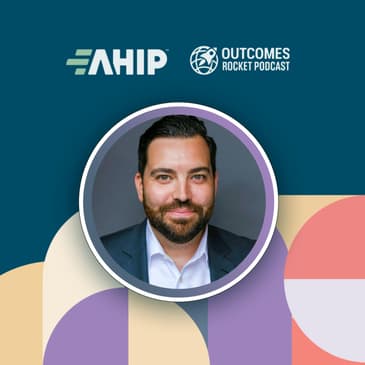
In this episode of the AHIP 2024 series, Nicholas Kraft, Chief Growth Officer at CDPHP, discusses the health plan's dedication to innovation and quality in healthcare. CDPHP, a physician-led nonprofit serving 400,000 members in New York's Capital District, prioritizes community care, challenges high healthcare costs, and promotes collaboration among leaders to improve healthcare access and affordability. Nicholas highlights the potential of fee-for-service 2.0, emphasizing the need for openness and trust among providers, payers, and members, advocating a holistic approach that prioritizes preventive care and early member engagement. He also urges listeners to join their mission to enable patients to spend more time with their families.
Tune in and learn how innovative strategies are shaping the future of healthcare!
Resources:
[00:00:02] Hey everybody, and welcome back to the Outcomes Rocket, AHIP Insights 2024. I'm so excited to be joined with Nick Kraft, Chief Growth Officer at CDPHP, that's Capital District Physicians Health Plan. I'm so excited to have you here. It's stunning us, Nick.
[00:00:19] Yeah, after us all. It's a pleasure. I'm glad that we got to make this happen.
[00:00:23] Yeah, same. And one of the things we're covering here at AHIP is innovation, and that includes plans that are being innovative and getting results with that innovation.
[00:00:31] Yeah.
[00:00:32] And you're one of them.
[00:00:33] Yeah, absolutely. No, really proud. And we represent about 400,000 members in the Capital District of New York, and we're physician-led and physician-run health plan.
[00:00:43] And I think that our commitment to quality and doing the right thing really shines through.
[00:00:48] And we just got off a really exciting Medicare Advantage year. We're the third fastest Medicare Advantage plan in the country. So our growth rate has been tremendous. And I think that's been really fun.
[00:00:58] And then our retention rate, on top of the growth, it's a 98.3, the second highest in the country now. I will say, Saul, that I must have failed statistics because the number one plan is also 98.3.
[00:01:11] So there's something there, I think. So we're right there, though. And I think what we're really proud of is we just got awarded our J.D. Power Associates number one health plan in New York State.
[00:01:24] That's the seventh year out of eight years that we've gotten that award. And what's really exciting is this year we had the number one NPS in the entire country.
[00:01:33] We had the number one ease of doing business score. And we had the number one most trusted health plan in the entire country.
[00:01:42] And so this little fun health plan in upstate New York in the Capital District is really punching above its weight.
[00:01:50] And that commitment to our members is really shining through, whether it's through growth, retention or some of these accolades.
[00:01:57] But it's 1,200 people that are committed to our community that are really making that difference and really supporting our members.
[00:02:04] And we're incredibly proud. I'm incredibly proud to be here representing CDPHP and all the incredible stuff that we're doing here at the conference.
[00:02:11] Now, that's incredible. Folks, numbers don't lie. Those stats are real.
[00:02:17] And big kudos to you and the team for the work that you've done. I want to recognize that.
[00:02:22] Yeah, no, I really appreciate that. And we have an amazing group of people that are thinking deeply about our product, about our Medicare members, about our clinical outcomes.
[00:02:32] We work so closely with our physician community. CDPHP is an integrated model.
[00:02:37] So we're affiliated with the largest non-for-profit primary care practice in upstate New York.
[00:02:43] They're a multi-specialty practice as well.
[00:02:45] But that commitment to those members and to CCP, community care physicians, is another way that we're differentiating ourselves.
[00:02:53] And so if you were to close your eyes in a room and went through each health plan, right, it would all sound the same, except when you got to CDPHP.
[00:03:03] And if your eyes were open or shut, you would know that we're different.
[00:03:07] And I think that is something that we're going to continue to refine and continue to accentuate.
[00:03:13] That difference and that difference of what does a nonprofit, what does a community-driven plan really mean for our members?
[00:03:20] That's beautiful. That's beautiful.
[00:03:21] And I have to ask you, Nick, have you always been in this space?
[00:03:24] And if not, what got you into it?
[00:03:27] Yeah. So I have been in health care.
[00:03:29] It's funny, my family has been in health care. My dad's actually at this conference today.
[00:03:34] Oh, is he really?
[00:03:35] Yeah. So people bump into it like, I know your dad. I know you.
[00:03:38] Or they'll see our names together, our name tags, right? We're wearing name tags.
[00:03:42] They'll see Kraft and they'll be like, Peter, are you guys related? Like, what's going on here?
[00:03:46] So it's been fun to share this experience and to be in health care for my entire career.
[00:03:51] And I've done both. I've been on the nonprofit side, the for-profit side.
[00:03:56] And I really believe in that nonprofit side and local health care. Health care is local, right?
[00:04:02] When you are needing care, when you are seeing your doctor, it's local.
[00:04:06] When you're in your community, it's local.
[00:04:08] When you're needing social services or support services, it's local.
[00:04:12] That's a key value proposition.
[00:04:13] And so I'm doing some of the most fulfilling work in my career because of what CVPHP is about and what we're doing in this community.
[00:04:21] And so it's been a lifelong mission to get to this point.
[00:04:24] And I'm so excited that I get to be doing this work and making an impact.
[00:04:27] You're making a huge impact.
[00:04:29] And I could feel the culture that you guys built through our discussion here, through the numbers.
[00:04:36] Yeah.
[00:04:37] Tell me a little bit more about the insights from the conference.
[00:04:42] I know a lot of folks at home or at work didn't get to make it to this conference.
[00:04:47] Let's share some insights with them.
[00:04:49] What rose to the top for you as something valuable they need to know?
[00:04:52] I think we're at an inflection point in health care, right?
[00:04:55] And we're really focused in on how do we make health care more affordable, easier to use, and make sure that everyone has access to quality of care.
[00:05:03] And I felt that when we were in these halls.
[00:05:06] But at the same time, it's really critical that we don't pat ourselves on the back, that we know that we need to disrupt, that we need to change, and that the status quo can continue.
[00:05:16] And so I think that everyone here, we've got to put a stake in the ground and say that today on our commercial plans, our employer groups, their second highest line item outside of payroll is medical expense, is health care cost.
[00:05:31] And we have got to find a way to bend that cost curve, get outcomes improved.
[00:05:36] And so I think it's great to come together with thought leaders and have people here all thinking about that as well.
[00:05:44] Because those problems aren't just here in Las Vegas.
[00:05:49] They're not in New York where our plan is, or in California or Texas.
[00:05:52] We're all grappling with this as Americans of how do we start to bend that cost curve?
[00:05:58] How do we make health care more affordable?
[00:06:00] How do we get more quality?
[00:06:02] Because people are unsatisfied with it.
[00:06:04] And we've got to change.
[00:06:05] And we've got to realize that sometimes we have to disrupt ourselves as well.
[00:06:08] Yeah, it's spot on.
[00:06:10] And what do you think is something that can be done to start the disruption?
[00:06:15] Yeah, no, definitely.
[00:06:16] And I think what we have to really start to look at is there's things that are like bumper stickers, right?
[00:06:21] Value-based care, bumper sticker, right?
[00:06:23] Meeting members where they are, bumper sticker.
[00:06:25] And so what I really think we have to start to really get after is changing the incentives and the alignments truly, right?
[00:06:33] And working with how do we take a more holistic approach with our members, getting into preventive care rather than waiting for them to get into sick care.
[00:06:40] So it's critical that we start to engage with our members who are healthy, who are emerging risks, just as much as we're engaging with our sick members or comorbid members.
[00:06:49] And so for us, working deeply with our population health teams and our providers around those solutions and get out of the way and allow them to do that work.
[00:06:59] The most important decision maker for our members is their physician.
[00:07:03] And if they don't have a physician or they don't see the value of that physician, we've got to find ways to get them involved.
[00:07:10] And that could be virtually.
[00:07:11] It could be in person.
[00:07:12] But people need to see their primary care doctor.
[00:07:15] We need to go into a more preventative position.
[00:07:18] We can't wait for everyone to be sick.
[00:07:20] And so that means that we have to change that incentive and the alignment.
[00:07:23] We've got to get away from fee-for-service.
[00:07:26] We've got to get away from that status quo and be open to what does that mean?
[00:07:31] And I mentioned that.
[00:07:31] That might mean us disrupting ourselves sometimes.
[00:07:34] And that's okay, too.
[00:07:35] But we've got to do it.
[00:07:36] We've got to change the way that health care is being delivered in this country.
[00:07:39] Great examples.
[00:07:40] And thanks for unpacking that for us a little bit.
[00:07:42] One thing that I heard, I love your idea of bumper stickers.
[00:07:46] That's what they are.
[00:07:47] And a friend of mine, Martin, called it fee-for-service 2.0 because we all get that reaction from the idea of value-based care.
[00:07:56] But if we think about fee-for-service 2.0, a more well-thought-out fee-for-service, that could work.
[00:08:02] What do you think?
[00:08:02] Absolutely.
[00:08:03] I think that we have got to understand what our current limitations are, how we can make change in the current structure,
[00:08:10] and then start to move away from that top revenue position and about shared margin.
[00:08:16] And so if we can start to have that conversation about margin, about sharing that margin, about having a shared interest in the outcomes of our members,
[00:08:25] rather than waiting for them to hit the hospital in heads and beds, right?
[00:08:29] You've heard that.
[00:08:30] Fee-for-service, heads and beds and stuff like that.
[00:08:33] And really start to change that.
[00:08:34] I think that what Martin was talking about with fee-for-service 2.0 really begins to change rapidly.
[00:08:40] But there's got to be an openness and a trust there.
[00:08:43] And I think that there's more trust that's needed amongst the provider community, the payers, the members.
[00:08:50] And that's a really critical piece.
[00:08:52] I think that's something that's differentiated with CDPHP, is we have that trust within our provider community because we're physician-owned and led.
[00:08:59] And so we have that head start and we want to be innovative.
[00:09:02] We want to be disruptive.
[00:09:03] And we want to keep doing that work and move forward with what the future needs to look like for healthcare and really bending that cost curve.
[00:09:10] That's fantastic.
[00:09:11] Embedded in your answer was a call to action, but I want to give you a chance, if you wanted to touch on anything else,
[00:09:17] that you share that one last thing with our listeners and viewers.
[00:09:20] Yeah, I think for us across the entire industry, right, we've got to look internally.
[00:09:26] We've got to be able to say that the way that this trajectory is headed, it's unsustainable.
[00:09:32] And we have to really deeply think about solutions that are collaborative, that are across the entire payer, provider, member ecosystem to support our members for better outcomes.
[00:09:44] Because in the end, our members just want to have more quality time with their families.
[00:09:48] And we've got to support that for them.
[00:09:49] And we often talk about what's our mission.
[00:09:52] It's so that our members can have more Sunday dinners.
[00:09:54] And I think that's what we need to strive for is really thinking deeply about what those members need to have that quality time with their loved ones.
[00:10:02] That's awesome.
[00:10:03] Well said.
[00:10:04] I don't know anybody out there that doesn't want more Sunday dinners with their family.
[00:10:08] I know I do.
[00:10:10] Thank you for making it so simple to understand.
[00:10:13] I've really enjoyed this time together.
[00:10:15] If people want to learn more about you and the team, where can they reach out?
[00:10:19] Yeah.
[00:10:21] CVPHP.com.
[00:10:21] Take a look at us.
[00:10:22] We're doing incredible things out there.
[00:10:24] Of course, we're on all the social media pages, LinkedIn, Instagram, Facebook.
[00:10:29] We're putting out a lot of content about all the work that we're doing.
[00:10:32] And then myself, I'm on LinkedIn.
[00:10:33] And I would love to connect with you.
[00:10:34] That's awesome.
[00:10:35] Yeah.
[00:10:35] Thank you so much for being with us today.
[00:10:37] Pleasure.
[00:10:37] Yeah.
[00:10:38] It's been fun.
[00:10:39] Yeah.
[00:10:39] Folks, remember, all the things that we discussed with Nick, you could find them in our show notes, links to their social media, links to their plan.
[00:10:48] Learn more.
[00:10:49] It's the age of collaboration.
[00:10:50] And now is the time.
[00:10:52] Thanks for joining us, everyone.
[00:10:53] And stay tuned for the next insights from AHIP 2024.
[00:10:57] Nick, thank you.
[00:10:58] Pleasure.
[00:10:58] Thanks so much.
[00:10:59] Thanks, everyone.