
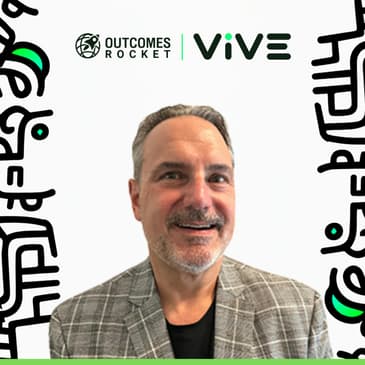
Elligint Health provides a toolset outside of the electronic medical record to help organizations perform value-based care arrangements.
In this episode, Chris Caramanico, CEO of Elligint Health, discusses how his organization is helping drive change in healthcare delivery. He shares insights into how their solution creates proactive workflows to affect patient outcomes, emphasizing the importance of data-driven decision-making and patient activation. Chris also shares that their platform provides analytics, care management tools, and communication solutions to improve patient outcomes and drive efficiency. Finally, he touches on emerging trends in healthcare technology, particularly the role of AI and interoperability, and how Elligint Health is addressing these needs.
Tune in and learn how Elligint Health is transforming healthcare with its integrated approach to value-based care, analytics, and patient activation!
Resources:
[00:00:01] This podcast is produced by Outcomes Rocket, your healthcare-exclusive digital marketing agency. Outcomes Rocket exists to help healthcare organizations like yours to maximize their impact and accelerate growth. Visit outcomesrocket.com or text us at 312-224-9945.
[00:00:35] Hey everyone, welcome back to The Beat Podcast, recorded here at the Vive event in Nashville, Tennessee. Today I have the privilege of hosting Chris Caramanico. He is the CEO at Elligint Health. They combined HealthEC and Virtual Health to make this extraordinary company. And today we're going to learn more about him and the work that they do in the value-based care space. Chris, welcome to the podcast.
[00:01:05] Hey, thanks Saul. Super, super happy to be here and excited. It's been a great Vive show so far, so really, really excited for day two. Any highlights from day one? I think the Vive's interesting because you bring together payers, providers, self-insured employers in a unique setting. So for a healthcare software vendor like us, it gives us perspective from three angles of healthcare, which I think is just really super useful as you're thinking about how do you advance the business, where do you take the business, and who are you working for?
[00:01:35] That's awesome. Yeah, yeah. There's nothing like, I was at a cocktail hour last night, and nothing like being together with these different perspectives because you could make some real big advances, whether it be deals or insights. Yeah, no question. If COVID taught us anything, right, the human touch is not over. And we still need to see people, talk to people, get their face inflections, and understand who they are and what they're all about. Amen to that. Amen to that, Chris. So let's get into it. How's your organization helping drive change in healthcare delivery?
[00:02:05] So at Eligent Health, we started with a common vision for our employees, our investor base, and our clients. And the general thought process was that we need a tool set outside of the electronic medical record that can help people perform in a value-based care arrangement. And those tool sets are things like analytics to analyze what's happening in the plan, care management to intercede or intervene with patients where and when they need them, and then communication tools to reach out and get that patient involved in their care.
[00:02:34] And so at Eligent Health, we brought together a top-performing data analytics business, a top-performing care management business, and we're continuing down that journey. So super exciting, but we felt the need in the marketplace, and that's why we rushed to fill it. Yeah, it's a huge need, and we need solutions like yours because you need technology to scale these programs, no doubt. So talk to us about how your solution creates proactive, prospective workflows to really affect patient outcomes. Right.
[00:03:03] So first off, we have a labor shortage in healthcare, right? And the labor shortage is not going to get solved anytime soon. And so in most industries, when you have a labor shortage, you need to apply some level of technology in order to maximize the labor that you do have and make things more efficient. And healthcare is no different. We're sometimes a little slower to get there, but we're getting there pretty quickly. So as you think about Eligent Health, what we look at is, if I can take all the various data sources that are out there, electronic medical record data,
[00:03:32] discharge data, HIE data, payer claims data, pharmacy benefit manager data, and we can pull that data together, and we can wash that through an analytics engine, we can then prospectively look at where there are going to be problems and where there are going to be issues with individual patients. And that makes it super easy to then categorize those and put those into work lists so that people can start to intervene or intercede in their settings of care. And it could be simple things, Saul.
[00:04:01] It could be, hey, you haven't had a wellness visit. Why don't you come on in and see us? Or it could be something more complex, like you're a diabetic and you need to have multiple A1Cs a year, and we notice that you're missing one. Let's go get you scheduled in a testing site. So that's what we're doing. I love it. Yeah, getting those critical moments of where attention is needed and delivering on it. Are you seeing a lot of these programs mainly in the Medicare population? Our team believes that value-based care is not going away anytime soon.
[00:04:30] In fact, it's going to continue to expand. So that is the underlying piece. It's easier to start in the Medicare-Medicaid space because you have a controlling or governing entity that can dictate that. But let's face it, self-insured employers are asking themselves the exact same questions, right? CFOs are sitting around saying, this is the one uncontrollable expense on my P&L that I can't address. So I need to get more value for the healthcare dollars that we're spending.
[00:04:54] I talked with a provider payer yesterday, and they've got an exclusive arrangement with a local manufacturing business that's a subset of a very large Fortune 50 business. And they did that because the local manufacturing business said, we need better care, and we need better profitable care for our patients. We need them. We need our teammates at work. We don't need them at home. We don't need them sick. And when they do get sick, we need them to return to work as quickly as possible, and we need to do it at a cost-effective price.
[00:05:22] So I think the trends that we're seeing here are going to become pervasive throughout all of healthcare as the payers, and I don't mean insurance payers, but the general payers of healthcare, whether it's government, insurance, or self-insured employers, are all going to demand more for a better price. Really appreciate that perspective. And so let's talk about emerging trends in tech, right? That's a big reason why a lot of people come to Vive, to understand them. But the perspectives that you guys have are valuable.
[00:05:49] So share with us what you think, Chris, is going to change healthcare within the next five years. Well, I would suggest that, Saul, out of the dozens of podcasts you're going to do this week, AI is probably going to be a top two or top one dimension for everybody. And I think AI is extremely important. We've all used ChatDBT, and we've all used some of these devices. But I think the fundamental piece to making AI work well is understanding the data and having the data correct.
[00:06:17] And I think in our healthcare ecosystem today, we still struggle with getting the data correct, the data to the right place at the right time. So before I can apply a large language model or before I can do any of the fancy AI things that I want to do, I've got to make sure that underlying data is correct. And so I think that, to me, is the gating piece for AI. And once we start to figure out exactly how to get our data sets normalized, standardized,
[00:06:43] then it becomes really advantageous to start to overlay AI models on it. Thank you for that. So a huge topic in the industry is around the CMS 0057F ruling regarding prior auth and interoperability. Tell us about the ruling and how's your solution addressing this need? So we feel, obviously, new administration, things could change. But we feel like, from CMS's perspective, there's no signal that ruling is going to get turned around.
[00:07:11] We think that talking with folks that are on the inside, we think that interoperability is going to demand, healthcare is going to demand interoperability, and it probably makes most sense to start with the payers. And that ruling is going to go a long way to doing that, leveraging the FHIR standard. Our integration tool set is already FHIR enabled. And so we're out of the box, ready to meet that rule. And in our partner ecosystem, we're also scrutinizing our partners to make sure that they're also
[00:07:38] ready so that when we bring a solution to a client, that solution is baked and ready to go out of the box. So we think it's important. We don't think it's going away. The final mandate may move six months or a year, but at the end of the day, we think interoperability is going to happen. Yeah. And so the ruling is essentially requiring people to have the FHIR standard in place? Well, it's leveraging the FHIR standard to interoperate with payers. Understood. Thank you for that. No, and sounds like you guys are well positioned to help folks be compliant with that rule.
[00:08:08] So that's great to know. If you had to summarize or like really hone in on something, Chris, what are the biggest pain points your organization's helping solve your clients? It's transparency. And I think it's what Christine would effectively say is next best action, right? So we've got a patient. We understand the data sets we're on that patient. And what's the next best action that we should be doing to encourage that patient and move that patient along a healthier path? And then I think the last piece, and as an industry, we struggle with this, is what I
[00:08:37] affectionately call our last mile of healthcare, right? And so that is we have the data. The provider is now equipped with the data. I now got to, I have to get communication from that provider directly to that patient. What's the best and most efficient way to do that? So I think as an industry, that's going to be the next hill to climb as to how we can activate the patient, not engage the patient. To me, engagement is I send you a text until you need to go pick up your medications, right? Walgreens CVS does that all the time. I'm not really activated.
[00:09:06] I'm just notified. We think the next generation is going to be activation where that patient takes a proactive role in their care. And we think that last mile solved is something that we're spending a lot of time working on. And incidentally, on top of that, we mentioned we have a healthcare labor shortage. Getting that patient more activated in their own care helps solve part of that labor shortage.
[00:09:32] I really like that, this distinction between engagement and activation. Are you all activating or are you just engaging? Something to think about. And Chris, appreciate you serving that up for us as a thought exercise. Look, care management, it's been around for a while. So why should, how can we differentiate from other care management solutions what your firm does? Yeah, just as every technology solution that we use today started years and years ago in some other technology solution.
[00:10:01] And those technology solutions advance because they become easier to use, they become more efficient, they become more scalable, and they become time-saving issues. And I think our solution in the care management space is no different, right? So 25 years ago, when payers built or companies built care management solutions, they built it on, let's just try to do the right thing and make sure it's there. Now, with our solution, we're looking at how do we drive efficiencies? So how can one care manager or one care manager or leader take care of more patients, address more patients?
[00:10:30] How do we make them more efficient? All those things we're using and leveraging modern technology to do. So just as many of us have been in the sales and business game for years, you started your career maybe with ACT as your CRM system and went to Goldmine or something like that, and then went to Salesforce. And now there's HubSpot and Dynamics and all these other different things. They all basically do the same thing. But you could argue that you're way more efficient with some of these newer technologies by being
[00:10:57] able to combine different data sets and proactively work forth. And our care management solution is no different. We see that in our clients. We see that our clients are getting more efficient and more precise. That's fantastic. A huge opportunity for us to make a difference in this space. And with technologies like Eligent Health, the possibilities are huge. Chris, who is your end customer? Just as folks listen and think, can I work with them? Who is your end customer? Yeah, so two primary markets.
[00:11:26] So first off, anybody that's in a value-based care arrangement, we'd love to talk to you. We think we've got some insights there, both in our advisory services and our software technology and the proof that we've got with clients. So value-based care arrangements are where we want to live. The second piece is the payer space. We do a lot of work with a lot of both regional payers and Blue's plans and have been very successful with those folks. And so as they get forced into more value-based care arrangements, we see those two aligning
[00:11:55] together where whether you're a payer or a provider, you still need the same tool sets and you still need the same view of that patient just from a different perspective. Love it. Thanks for sharing that, Chris. Thanks. And what closing thought would you leave us with and what's the best place folks can reach out to learn more? Yeah, so EligentHealth.com is certainly the standard right to reach out. We're at booth 631. So if you're on the show floor and you're thinking about coming by, we'd love to chat with you. We've got our delivery team here.
[00:12:25] We've got our sales team here. We've got our technology team here. So there's plenty of folks to talk to. If you've got a specific question around any of those areas, we can address it. I think the closing thought is I've never been more excited to be in healthcare after 30 years of doing this and starting with paper charting, moving to documentation and moving to all the different areas and managing visible light and managing images and all those kinds of things that I've done throughout my career. I've never been more bullish on the transformation that's possible in our industry.
[00:12:54] We're going to now finally apply technology, the care provider's job easier to help make the patient more understanding of what they need to do. To live a healthier lifestyle and to manage the disease if they should have one. So I'm bullish about it. I'm bullish about where we are. I'm super excited to be with Eligent Health and be leading our charge forward. That's awesome, Chris. I really appreciate your enthusiasm and your just positive outlook. I actually feel the same way around the value-based care efforts.
[00:13:24] They're finally happening. And so thanks to technology platforms like yours. So folks, in the show notes, you're going to find all the ways to get in touch with Chris and his company, Eligent Health. So make sure you take action, dig in, find out more, make sure you activate. Don't just engage. I love what you left us with there, Chris. And again, folks, Chris Caramanico, CEO of Eligent Health with us here at Vive on the Beat. Thank you all for tuning in. And Chris, thanks for being with us. Alrighty.
[00:13:53] Have a great day. You too. This podcast is produced by Outcomes Rocket, your healthcare exclusive digital marketing agency. Outcomes Rocket exists to help healthcare organizations like yours to maximize their impact and accelerate growth.
[00:14:22] Visit outcomesrocket.com or text us at 312-224-9945. Thank you.