
Many founders transition from other industries, seeking to improve healthcare, but often underestimate its complexities.
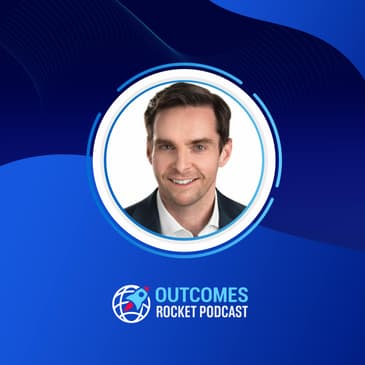
In this episode, Jordan Harmon, former Vice President, Chief Innovation Officer, and Commercialization Officer at the Hospital for Special Surgery in New York, discusses his journey as an entrepreneur and his passion for advancing the healthcare industry, highlighting the high failure rates of startups, emphasizing the necessity of a clear strategy for success. He shares insights on the importance of understanding the complexities of healthcare, such as HIPAA regulations and the need for resilience, and discusses the significance of diving deep into the healthcare landscape. Host Saul Marquez adds to the conversation by stressing the need for a clear mission and strategy, understanding market challenges, and the value of mentorship. Reflecting on his own career pivot and the impact of faith and data on his success, Jordan stresses innovation, economic considerations, and patient outcomes, encouraging listeners to collaborate and drive healthcare forward.
Tune in and learn how to navigate the healthcare industry and make a meaningful impact!
Resources:
[00:00:02] [SPEAKER_01]: Hey, everybody. Welcome back to the Outcomes Rocket. So glad you tuned back in. Today, I have the privilege of hosting Jordan Harmon on the podcast. If the name sounds familiar, that's because he has been on our podcast in the past. He is the former Vice President, Chief Innovation Officer, and Commercialization Officer at the Hospital for Special Surgery in New York.
[00:00:27] [SPEAKER_01]: And today he's joining me. He and I, I saw a couple of his posts around this recent Walmart shutdown of their healthcare business. And he put out an interesting post around startups in the healthcare space and why so many fail and even at large corporations, why they fail at the same rate. And I thought this would be a great podcast. He was game for expanding on that. And so I'm excited to be with him here. Jordan, thanks for being with us.
[00:00:57] [SPEAKER_00]: Yeah, thanks for having me back, Saul. It's, I think the first time I've been back on a podcast. So thanks. Thanks for having me.
[00:01:03] [SPEAKER_01]: Of course. And look, you're taking your career to the next level. You're going on to what you believe will be a bigger impact and one that is fulfilling for you. Do you want to share anything about what's next for you?
[00:01:16] [SPEAKER_00]: Yeah, no, I think for me, like one of the most interesting things in healthcare is trying to push the industry forward. Whether you're doing that inside sort of a corporate environment, a health system environment with inside a company. And I think there's certainly opportunities to do that even outside of those particular structures.
[00:01:33] [SPEAKER_00]: So I'm excited about doing that and working with places, founders, so on and so forth. They're trying to push the mission forward. Because as I mentioned before to you offline, I think mission is certainly really important and having a clear strategy on how to get there is critical.
[00:01:48] [SPEAKER_00]: So I'm looking forward to that, the next step and working with a lot of people trying to change healthcare for the better.
[00:01:53] [SPEAKER_01]: Yeah, Jordan, you're going to crush it, man. I'm excited for you. And folks, Jordan and I were chatting before we got in and it's that transition. It's that mindset, the importance of having a tough mindset as an entrepreneur and being open to really follow your dreams and that mission.
[00:02:10] [SPEAKER_01]: It's not the easiest choice. And so definitely want to commend Jordan for making it. You guys all know I made the choice back in July when I went all in on the outcomes rocket, and it's been rewarding. So definitely excited to hear. And many of you are founders and health leaders.
[00:02:26] [SPEAKER_01]: And today we're going to be talking about this topic of success in healthcare. And the three things that Jordan mentioned in his post that I wanted to bring up are mission, but no strategy, a misunderstanding of healthcare complexity and execution. So let's talk about that first one, Jordan, mission, but no strategy.
[00:02:49] [SPEAKER_00]: Yeah. Yeah. So I think there's two sides of this coin. So sometimes you see founders, organizations really dive into something and we could use Walmart as an example, but there's plenty of other examples as well, where you think you have this clear mission of we're going to treat a specific population.
[00:03:07] [SPEAKER_00]: We're going to go after an area of healthcare that we think is underdeveloped or under resourced, and we're going to be able to address it and do it better than the ones that came before us.
[00:03:17] [SPEAKER_00]: The challenge is saying that is not enough. I think you've seen it in those larger examples, because you have to have a clear strategy on how to execute on those things. And I think that was the third point, but I think there's a lot of reasons to do things based on mission, but remembering that the economics are real, the regulatory and the compliance in healthcare are real.
[00:03:42] [SPEAKER_00]: And having a plan and strategy around that is, is really important. So that's what I mean by mission, but no strategy.
[00:03:50] [SPEAKER_01]: Totally. And look, that mission can motivate you, but there are those market blockers, those market challenges, the realities.
[00:04:00] [SPEAKER_01]: Yeah.
[00:04:00] [SPEAKER_01]: And you mentioned several of them, right? No, go ahead, Jordan.
[00:04:03] [SPEAKER_00]: I was going to say some of those realities are, we talk, you probably do the same, but you talk to many founders or folks that are coming from other industries who, who see they're fed up with something that they're doing in corporate finance or whatever.
[00:04:16] [SPEAKER_00]: And they come over to healthcare and they say, look, this really needs to be fixed.
[00:04:20] [SPEAKER_00]: I had a father, a son, a daughter, whomever go through healthcare and they, and it was abysmal.
[00:04:25] [SPEAKER_00]: And I believe I can fix it. That's the first step. That's certainly the first step that we want to harness, but it's not everything because you need to dive in and understand.
[00:04:35] [SPEAKER_00]: And having spoken to probably a hundred plus founders in the past year or two, the reality is you've got to dive in and understand the complexities around things like just stuff that we know, but HIPAA, the regulatory environment.
[00:04:48] [SPEAKER_00]: If you're going after devices, like what's going on with the FDA, how do you get to a clearance, 5, 10 K, de novo, so on and so forth, whatever the area that you're trying to go after in, you've got to really make sure that you understand what the pathway is.
[00:05:02] [SPEAKER_01]: Yeah. I think of these, the strategy oftentimes leads to the second one is misunderstanding of healthcare complexity, whether it's the sales process, the sales cycle length.
[00:05:16] [SPEAKER_01]: Oftentimes people don't realize it's a lot longer in healthcare. Unpack that one for us.
[00:05:23] [SPEAKER_00]: I was sitting, thinking about this one as we were getting on, I think it was fortunate to sit in a room maybe a week ago with a fortune 50 CEO of a healthcare company with 10 to 15 other executives.
[00:05:39] [SPEAKER_00]: And one of the questions that we circled around and that I asked them was, you have a lot of really smart, interesting, passionate people in healthcare.
[00:05:49] [SPEAKER_00]: And many of them are getting, are somewhat burnt out, right? Like they're, they've tried three different companies.
[00:05:56] [SPEAKER_00]: I actually spoke to a founder the other day who said, Jordan, I don't know what my next thing is going to be, but I'm going to go do something in finance or whatever, because healthcare is so complex and so burdensome.
[00:06:07] [SPEAKER_00]: Like, I don't know if I have the patience to go solve another problem in healthcare.
[00:06:11] [SPEAKER_00]: And I was thinking that's such a shame because that person is who we need here.
[00:06:17] [SPEAKER_00]: Like we need people who have the resiliency and the, and try to overcome those things.
[00:06:21] [SPEAKER_00]: But the reality and the challenges are real around burnout.
[00:06:25] [SPEAKER_00]: If you've been in the industry for a long time and you said, okay, value quote, value-based care is the next thing or, and we're going to solve for access issues or we're going to solve for reimbursement issues.
[00:06:36] [SPEAKER_00]: And the regulatory environment doesn't really change.
[00:06:39] [SPEAKER_00]: And so you're up against the same challenges, but having that resiliency, I think in healthcare is more critical than most other places.
[00:06:46] [SPEAKER_00]: And so I think you have to come in with this understanding of the complexity of healthcare.
[00:06:51] [SPEAKER_00]: If you do that, you'll do yourself a favor and you'll have a much longer runway because you won't be burnt out after that first year or two years of, of trying to just, you know, overcome the things that are just inherent in the industry.
[00:07:04] [SPEAKER_01]: Yeah.
[00:07:05] [SPEAKER_01]: Yeah.
[00:07:05] [SPEAKER_01]: And I think that's well said.
[00:07:06] [SPEAKER_01]: And then also that runway is also dollars runway too, right?
[00:07:11] [SPEAKER_01]: Cause you need the capital.
[00:07:12] [SPEAKER_01]: So you likely need more money than you think you do.
[00:07:15] [SPEAKER_01]: What do you think of that?
[00:07:16] [SPEAKER_00]: Yeah.
[00:07:16] [SPEAKER_00]: I think that's a hundred percent right.
[00:07:17] [SPEAKER_00]: I think there's a balance, right.
[00:07:19] [SPEAKER_00]: And like over-raising and then you're in another situation.
[00:07:22] [SPEAKER_00]: But I think, yes, I think it's critical to be realistic.
[00:07:25] [SPEAKER_00]: Look at yourself in the mirror and the problem that you're trying to solve.
[00:07:28] [SPEAKER_00]: I think we've spoken to many founders who are learning on the fly and that's okay.
[00:07:34] [SPEAKER_00]: But I think there's, you critically have to understand it quickly because if you don't, like that capital will be gone tomorrow and you're not going to have the runway to, to, to be here in the long run.
[00:07:45] [SPEAKER_00]: And so I think we need more, we need more resilient founders.
[00:07:50] [SPEAKER_00]: We need more resilient.
[00:07:51] [SPEAKER_00]: It doesn't have to be founders.
[00:07:52] [SPEAKER_00]: It could be anybody in the industry, but working on innovative solutions.
[00:07:55] [SPEAKER_00]: Totally.
[00:07:57] [SPEAKER_01]: Totally.
[00:07:58] [SPEAKER_01]: And actually, man, a big part of why we're in business is this complexity, right?
[00:08:05] [SPEAKER_01]: Like we, we have found that it's that 10 year mark, 97% of businesses fail at that 10 year mark.
[00:08:15] [SPEAKER_01]: And the number one reason for that failure is lack of product demand.
[00:08:23] [SPEAKER_01]: And that lack of product demand happens because, Hey, it's hard to get that awareness, right?
[00:08:28] [SPEAKER_01]: How many people do you have knocking on your door?
[00:08:30] [SPEAKER_01]: Yeah.
[00:08:31] [SPEAKER_00]: Yeah.
[00:08:31] [SPEAKER_00]: I think that's the other issue is that this is a hard thing to say or a question.
[00:08:34] [SPEAKER_00]: Like how do you solve for something that's truly unique anymore?
[00:08:39] [SPEAKER_00]: Because there's been so many things that have come out in the last 10, 15, 20 years.
[00:08:43] [SPEAKER_00]: But I still think like that opportunity still exists.
[00:08:47] [SPEAKER_00]: There's new problems every day.
[00:08:49] [SPEAKER_00]: I think those that are looking ahead and trying to solve for those rather than create another
[00:08:55] [SPEAKER_00]: point solution that, that the industry doesn't need.
[00:08:58] [SPEAKER_00]: There's 20 different point solutions for pick your service.
[00:09:02] [SPEAKER_00]: And you're trying to sell into a employer or a health plan.
[00:09:07] [SPEAKER_00]: And it's hard to distinguish the advantages from one to another.
[00:09:13] [SPEAKER_00]: And you're going to take the path of least resistance.
[00:09:16] [SPEAKER_00]: So why change it if things are mostly good and there's not really a clear upside to making
[00:09:21] [SPEAKER_00]: a move.
[00:09:22] [SPEAKER_00]: So I think like back to this point of like, this isn't like a new stat, but 90% of startups
[00:09:28] [SPEAKER_00]: fail.
[00:09:28] [SPEAKER_00]: Like why?
[00:09:28] [SPEAKER_00]: Because I think, especially in healthcare, like at least the ones I've seen, like there's,
[00:09:32] [SPEAKER_00]: they're marginally improving something.
[00:09:34] [SPEAKER_00]: They're very narrow, which is sometimes good in the way that you address a problem.
[00:09:39] [SPEAKER_00]: But, but if you're trying to solve a problem that, that doesn't need a solution because
[00:09:44] [SPEAKER_00]: there are 50 out there, the chances of you making it beyond that 10 year mark are pretty
[00:09:48] [SPEAKER_00]: slim.
[00:09:49] [SPEAKER_00]: And you've got to, we've got to really think about how to execute and be differentiated in
[00:09:53] [SPEAKER_00]: the market and do it that much better and be realistic about whether you can do that
[00:09:58] [SPEAKER_00]: or not.
[00:09:58] [SPEAKER_01]: Yeah.
[00:09:58] [SPEAKER_01]: Well said Jordan.
[00:09:59] [SPEAKER_01]: And it's an old quote, but a really good one, Darwin.
[00:10:03] [SPEAKER_01]: When it's not the strongest that survive, it's the most adaptable that survive.
[00:10:08] [SPEAKER_01]: And Hey, I'll share with you, Jordan and everybody listening.
[00:10:11] [SPEAKER_01]: Like we, our business started as a podcast production company and it was that one thing
[00:10:16] [SPEAKER_01]: that not everybody wants to buy.
[00:10:18] [SPEAKER_01]: Like that's the bottom line, dude.
[00:10:20] [SPEAKER_01]: Not everybody wants a podcast.
[00:10:21] [SPEAKER_01]: They're great for marketing, but not everybody wants one.
[00:10:24] [SPEAKER_01]: And I had a wake up call and that's where we pivoted and became through the relationships,
[00:10:31] [SPEAKER_01]: through paying for know-how and through every way we could diversified our business to be
[00:10:37] [SPEAKER_01]: a full service marketing agency.
[00:10:39] [SPEAKER_01]: So now we offer paid media.
[00:10:41] [SPEAKER_01]: We offer public relations.
[00:10:42] [SPEAKER_01]: We offer.
[00:10:43] [SPEAKER_01]: So like, I'm sure.
[00:10:44] [SPEAKER_01]: And you know, this came from a mentor of mine.
[00:10:46] [SPEAKER_01]: He said, dude, you have to sell people stuff they want to buy.
[00:10:52] [SPEAKER_01]: Not everybody wants your damn podcast.
[00:10:55] [SPEAKER_01]: And it was a hard message to receive, but I was like, holy smokes.
[00:10:59] [SPEAKER_01]: You're right.
[00:11:00] [SPEAKER_00]: Yeah.
[00:11:00] [SPEAKER_01]: You're right.
[00:11:01] [SPEAKER_00]: Yes.
[00:11:01] [SPEAKER_00]: And you're selling to people who, where you're solving a problem for them.
[00:11:05] [SPEAKER_00]: There's a need, there's a problem and somebody needs Saul.
[00:11:08] [SPEAKER_00]: And by the way, we should do a whole podcast just on you.
[00:11:11] [SPEAKER_00]: Reverse podcast.
[00:11:12] [SPEAKER_00]: Because some of the stuff we were talking about and starting a business and going out on your
[00:11:15] [SPEAKER_00]: own, like you've done it and you just recently did it.
[00:11:18] [SPEAKER_00]: And like, how hard was that?
[00:11:20] [SPEAKER_00]: Because I see founders do it all the time.
[00:11:22] [SPEAKER_00]: I think people transition from corporate environments where you have this like steady
[00:11:27] [SPEAKER_00]: state.
[00:11:27] [SPEAKER_00]: You're very secure.
[00:11:29] [SPEAKER_00]: Like you've got your 401k, you've got money in the bank, and there's not really this
[00:11:34] [SPEAKER_00]: tolerance for risk, but, but you're going to go change something dramatically in life and
[00:11:39] [SPEAKER_00]: start something new or capitalize on something that you already started.
[00:11:42] [SPEAKER_00]: What was that like for you?
[00:11:43] [SPEAKER_00]: I can only imagine how resilient you have to be to do that.
[00:11:47] [SPEAKER_01]: Yeah, man.
[00:11:48] [SPEAKER_01]: No, I appreciate you asking.
[00:11:50] [SPEAKER_01]: For me, it was scary, man.
[00:11:52] [SPEAKER_01]: I, it was scary to make the job 17 years in corporate healthcare.
[00:11:57] [SPEAKER_01]: A steady paycheck was up the ladder and why change?
[00:12:01] [SPEAKER_01]: They call it the golden handcuffs for a reason, but I knew there was something inside of me
[00:12:06] [SPEAKER_01]: that said, you could, you could do more.
[00:12:09] [SPEAKER_01]: And a big driver for me was like, do more, have more impact, but do it in a more, in a
[00:12:15] [SPEAKER_01]: way that's more satisfying.
[00:12:17] [SPEAKER_01]: Because to be honest with you, I, when I got to that BP level, man, it was a grind.
[00:12:24] [SPEAKER_01]: I didn't enjoy it as much and I wasn't happy.
[00:12:27] [SPEAKER_01]: I was not happy doing what I was doing.
[00:12:31] [SPEAKER_01]: And it got to the point where it's a combination of faith and data.
[00:12:38] [SPEAKER_01]: So we, we were lucky that we had this podcast and we grew it to a production company and
[00:12:45] [SPEAKER_01]: we were able to have some sort of a base there.
[00:12:48] [SPEAKER_01]: It wasn't enough, but it was a base and proof.
[00:12:53] [SPEAKER_01]: I was talking to a guy yesterday, Jordan, that he reached out.
[00:12:57] [SPEAKER_01]: He wanted some, he wanted to chat about business.
[00:12:59] [SPEAKER_01]: He was making the same jump actually.
[00:13:02] [SPEAKER_01]: And he's like, well, I got a couple of contracts, but I'm really trying to work on this.
[00:13:06] [SPEAKER_01]: And I was like, dude, don't make stuff up.
[00:13:08] [SPEAKER_01]: Like you have customers paying you money for stuff, right?
[00:13:11] [SPEAKER_01]: That means you're offering value.
[00:13:13] [SPEAKER_01]: So focus there and grow that.
[00:13:15] [SPEAKER_01]: And then find the ancillary things that could potentially replace that.
[00:13:19] [SPEAKER_01]: But if you have, even if it's a mini flywheel, that mini flywheel creates confidence.
[00:13:26] [SPEAKER_01]: And that created the confidence and the data, to be honest with you, to justify to my wife
[00:13:32] [SPEAKER_01]: that we were making the jump.
[00:13:34] [SPEAKER_01]: And so anyway, that's the biggest justification of all.
[00:13:36] [SPEAKER_01]: So, oh my God.
[00:13:38] [SPEAKER_01]: Yeah.
[00:13:38] [SPEAKER_01]: She's, she's the biggest boat I needed to make the jump.
[00:13:42] [SPEAKER_01]: And then we did it, man.
[00:13:43] [SPEAKER_01]: So in ups and downs, as I shared with you pre-call, by the way guys, Jordan and I had a
[00:13:47] [SPEAKER_01]: really great discussion before the podcast.
[00:13:50] [SPEAKER_01]: And it's about these struggles, right?
[00:13:53] [SPEAKER_01]: And it's the tough decisions that if you just make those tough decisions, but again, let's
[00:13:58] [SPEAKER_01]: not forget Jordan's advice.
[00:14:00] [SPEAKER_01]: His advice around mission, but no strategy.
[00:14:03] [SPEAKER_01]: Um, you got to have that mission, that vision, but what strategy do you have?
[00:14:08] [SPEAKER_01]: What data do you have to show you that you're going to be successful in the steps?
[00:14:12] [SPEAKER_01]: And the, and the last thing that I'll share and then ship it back to you, Jordan masterfully
[00:14:17] [SPEAKER_01]: switched is really around this very important thing of mentors and, and having your board
[00:14:23] [SPEAKER_01]: of directors.
[00:14:24] [SPEAKER_01]: Our customers are successful entrepreneurs and they have become some of my best mentors.
[00:14:29] [SPEAKER_01]: And I work to help them be successful every day.
[00:14:33] [SPEAKER_01]: But what's cool is because we do a good job for them.
[00:14:35] [SPEAKER_01]: They want to reciprocate and they're teaching me.
[00:14:38] [SPEAKER_01]: They're all running multiple million dollar businesses and by helping them succeed, they
[00:14:44] [SPEAKER_01]: want to add value to me and my business.
[00:14:47] [SPEAKER_01]: And I'm able to grow at scale and set the foundation.
[00:14:50] [SPEAKER_01]: So the mentors are key.
[00:14:52] [SPEAKER_00]: That's great.
[00:14:53] [SPEAKER_00]: That's awesome.
[00:14:54] [SPEAKER_00]: And yeah, it sounds like for me, like mentorship is something that it's an active pursuit to
[00:14:59] [SPEAKER_00]: do it, but also to be mentored.
[00:15:02] [SPEAKER_00]: Because I think you want to be the, it sounds like you are, but you want to be the kind of
[00:15:06] [SPEAKER_00]: person that also attracts mentors and constantly learning.
[00:15:10] [SPEAKER_00]: I think that's another big lesson for me is I'm not, and I'm still figuring this out, but
[00:15:14] [SPEAKER_00]: how do you continue to learn, lead and learn at the same time and be humble about it?
[00:15:19] [SPEAKER_00]: I speak as you do to a lot of people who are within healthcare leading stuff, but also
[00:15:24] [SPEAKER_00]: just like generally people that you want to be around.
[00:15:27] [SPEAKER_00]: But every once in a while you find somebody who is maybe in it for the wrong reasons or
[00:15:33] [SPEAKER_00]: more guarded or doesn't want to talk about these kinds of things.
[00:15:36] [SPEAKER_00]: And I think the more that we do, the more reality it will bring around these kinds of
[00:15:41] [SPEAKER_00]: things for founders.
[00:15:42] [SPEAKER_00]: And they'll be a little bit more ready to enter.
[00:15:44] [SPEAKER_00]: Well, hopefully.
[00:15:45] [SPEAKER_00]: And I think that's a mission here is make sure that people understand that mission with strategy
[00:15:50] [SPEAKER_00]: is critical.
[00:15:51] [SPEAKER_00]: Execution is critical.
[00:15:52] [SPEAKER_00]: Understanding complexity is critical.
[00:15:54] [SPEAKER_00]: Healthcare is differentiated.
[00:15:56] [SPEAKER_00]: If you're going to do something and jump into something, do it.
[00:15:59] [SPEAKER_00]: But as Saul mentioned, make sure that you have that plan, or at least you have some nugget
[00:16:03] [SPEAKER_00]: of that it's going to work before you do it all together and get your wife on board.
[00:16:08] [SPEAKER_00]: I think that's the other big lesson I took away from your point there.
[00:16:11] [SPEAKER_00]: Not that we needed that as a lesson.
[00:16:13] [SPEAKER_00]: I think we all realize that's the example, but yeah, no, exactly.
[00:16:18] [SPEAKER_00]: And I think those are really critical.
[00:16:20] [SPEAKER_01]: Yeah.
[00:16:21] [SPEAKER_01]: No, Jordan, I love it, man.
[00:16:22] [SPEAKER_01]: And look, you have seen a lot of what has worked and what hasn't.
[00:16:27] [SPEAKER_01]: And through, what, it's been 10 years?
[00:16:29] [SPEAKER_01]: Yeah.
[00:16:30] [SPEAKER_01]: You were in HSS.
[00:16:31] [SPEAKER_01]: Yeah.
[00:16:32] [SPEAKER_01]: Yeah.
[00:16:32] [SPEAKER_01]: So there's trends, right?
[00:16:34] [SPEAKER_01]: And there's things that work.
[00:16:35] [SPEAKER_01]: In that framework that you shared, I saw it.
[00:16:37] [SPEAKER_01]: It was like the tip of the iceberg.
[00:16:39] [SPEAKER_01]: Your post resonated with me.
[00:16:41] [SPEAKER_01]: And I wanted to highlight it.
[00:16:42] [SPEAKER_01]: I wanted to highlight it today because it's important to have these conversations.
[00:16:46] [SPEAKER_01]: And folks, if you want to work with someone or really hear from someone that has seen what has worked and what hasn't.
[00:16:55] [SPEAKER_01]: So give me the street cred, Jordan.
[00:16:57] [SPEAKER_01]: Where did it start?
[00:16:58] [SPEAKER_01]: Where you were?
[00:16:59] [SPEAKER_01]: Where did it finish?
[00:17:00] [SPEAKER_01]: Talk to us about that.
[00:17:01] [SPEAKER_00]: Yeah.
[00:17:02] [SPEAKER_00]: I think, you know, for me, like we can talk about the numbers.
[00:17:05] [SPEAKER_00]: And I think, you know, one of the things we were talking pre-call was it's very difficult to innovate in healthcare.
[00:17:11] [SPEAKER_00]: Health systems are one place to do it.
[00:17:16] [SPEAKER_00]: But there's nobody needs to be told.
[00:17:18] [SPEAKER_00]: Like you can read any article in the industry and understand that like margins are under pressure.
[00:17:23] [SPEAKER_00]: Whether they're better this year or last year, the general trend is more pressure than less.
[00:17:28] [SPEAKER_00]: And so then the question becomes like, how much will the industry change over the next decade around investing in things that are really and truly innovative?
[00:17:37] [SPEAKER_00]: And where do you place that capital?
[00:17:39] [SPEAKER_00]: Where do you place that bet if you are a executive at a health system or executive at a medical device company, for example?
[00:17:45] [SPEAKER_00]: Like where are you placing those bets?
[00:17:47] [SPEAKER_00]: And from the conversations that I've had and continue to have is there's certainly a reserved thinking around let's be sure if we're going to place these place this capital in an innovative space.
[00:18:00] [SPEAKER_00]: Like it's really got a return back.
[00:18:03] [SPEAKER_00]: I think for a very long time and to the point that we talked about earlier, there's been placement of capital and initiatives in places where maybe there hasn't been a return.
[00:18:13] [SPEAKER_00]: And that's really unsustainable no matter what industry you are in.
[00:18:17] [SPEAKER_00]: And the return can be in, it can definitely be in like the form of economics, but it also can be in the form of patient outcomes.
[00:18:24] [SPEAKER_00]: And I think as long as we have both of those, certainly there'll be room to invest more and more.
[00:18:29] [SPEAKER_00]: And I think like that's what I've seen over the last couple of years is that the tightening has gone up and we certainly need to look more at the economics and more at the outcomes.
[00:18:37] [SPEAKER_00]: And if you do that and you invest in those particular places, like it's going to be much more sustainable.
[00:18:43] [SPEAKER_01]: Yeah, totally agree with you.
[00:18:44] [SPEAKER_01]: Jordan, so back to the question of tell us a little bit about the stacks.
[00:18:48] [SPEAKER_00]: Yep.
[00:18:49] [SPEAKER_00]: As we mentioned before, I think one of the things in healthcare is to innovate in healthcare is certainly hard, but when you do it, it's super rewarding from seeing those outcomes and seeing how it affects like patient care.
[00:19:01] [SPEAKER_00]: But it also affects your organization.
[00:19:04] [SPEAKER_00]: So during the time that I've been at HSS, I've done a number of things, but in the innovation space, we specifically have taken organizations from A to Z.
[00:19:13] [SPEAKER_00]: And we've grown the portfolio from something like $6 million in equity to over $27 million in equity and had like a three and a half, around 3x return.
[00:19:24] [SPEAKER_00]: And I think that's super, that's upper quartile of any venture capital firm benchmark, given the venture space and the vintage years that we looked at.
[00:19:35] [SPEAKER_00]: And we've also, we made cash investments into a number of those companies to really help propel them forward and created strategic relationships with them that aligned with both our mission, vision and values, but also helped grow those products into things that we use today.
[00:19:50] [SPEAKER_00]: So very proud of the work that we did at HSS and changing the industry.
[00:19:55] [SPEAKER_00]: And I'll give a shout out to my former Lou Shapiro, who really also moved the mission forward of pushing on innovation and driving a lot of these partnerships and having no fear where I think many in healthcare are fearful of that.
[00:20:08] [SPEAKER_00]: I think we changed the landscape for the better at HSS.
[00:20:13] [SPEAKER_01]: Love that, Jordan.
[00:20:14] [SPEAKER_01]: That, listen, that is phenomenal work.
[00:20:17] [SPEAKER_01]: Success leaves clues.
[00:20:18] [SPEAKER_01]: You have seen them.
[00:20:20] [SPEAKER_01]: And folks, definitely take note of Jordan here.
[00:20:24] [SPEAKER_01]: Are you looking to scale?
[00:20:25] [SPEAKER_01]: Are you looking to find out what health systems want?
[00:20:30] [SPEAKER_01]: Talk to him.
[00:20:31] [SPEAKER_01]: We'll have Jordan leave his information.
[00:20:34] [SPEAKER_01]: We'll leave it in the show notes.
[00:20:35] [SPEAKER_01]: Jordan, what's a closing thought you want to leave people with?
[00:20:38] [SPEAKER_01]: And obviously everybody will be able to get in touch with you through the input we leave here.
[00:20:43] [SPEAKER_00]: Yeah.
[00:20:43] [SPEAKER_00]: Well, I think the closing thought is like with all the success and with all the achievements, I think I'm still very much focused on doing, having people in healthcare do the right thing at the same time making economic returns that make it realistic.
[00:20:56] [SPEAKER_00]: And I've talked a lot about that online and in other places, but there's certainly the opportunity.
[00:21:03] [SPEAKER_00]: And there's a number of examples of leaders who are actually driving that exact topic forward in health plans, in health systems, in corporate environments.
[00:21:13] [SPEAKER_00]: And would love to see people do that and work very closely with people to do that because I think there's so much more opportunity in healthcare right now to do that.
[00:21:23] [SPEAKER_01]: Amazing, Jordan.
[00:21:24] [SPEAKER_01]: Look, I appreciate that.
[00:21:25] [SPEAKER_01]: The opportunity is there, everyone.
[00:21:27] [SPEAKER_01]: Be resilient.
[00:21:28] [SPEAKER_01]: We need more resilience in this space, as Jordan shared.
[00:21:31] [SPEAKER_01]: And Jordan, such a pleasure to have you back on the podcast.
[00:21:34] [SPEAKER_00]: Thanks, Saul.
[00:21:34] [SPEAKER_00]: Next time we'll do a full reverse podcast with you.
[00:21:38] [SPEAKER_00]: We'd love to.
[00:21:40] [SPEAKER_01]: Let's do it, man.
[00:21:41] [SPEAKER_01]: I'm game.
[00:21:41] [SPEAKER_01]: All right.
[00:21:42] [SPEAKER_00]: All right, my man.
[00:21:43] [SPEAKER_00]: Great to see you.
[00:21:44] [SPEAKER_00]: Thanks for having me.
[00:21:44] [SPEAKER_01]: Take care.