
The U.S. spends around 20% of its GDP on healthcare, yet still faces issues like low life expectancy and high obesity rates.
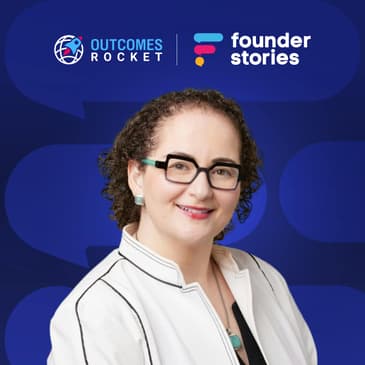
In this episode, Elina Onitskansky, founder and CEO of Ilant Health, discusses the urgent need to address issues such as obesity and cardiometabolic diseases. She highlights the staggering impact of obesity on the U.S. healthcare system, noting its connection to health inequities and conditions like diabetes and heart disease. Elina explains Ilant Health’s innovative value-based care model, which uses personalized treatments driven by proprietary analytics tools like Ilant Rapid Returns and Metabolism Matters. She also shares how her team works with Medicaid, Medicare, and commercial insurance plans to provide targeted care while emphasizing the importance of blending technology and human support to improve patient outcomes in a cost-effective way.
Tune in and learn how personalized, data-driven approaches can reshape healthcare and combat the obesity epidemic!
Resources:
[00:00:02] [SPEAKER_00]: Hey everyone, welcome back to the Outcomes Rocket, founder stories. I'm so excited to have Elina Onitskansky on the podcast today. She is the CEO of Ilant Health. She's an experienced healthcare executive committed to enhancing access, affordability, and equity in healthcare.
[00:00:24] [SPEAKER_00]: She's very focused on value-based center of excellence for obesity and cardiometabolic health. They've been recognized as a top vendor in the space. She's held a lot of different roles across different companies, including chief growth officer at Help at Home, as well as served at McKinsey. Welcome to the podcast, Elina. So grateful you could join us.
[00:00:48] [SPEAKER_01]: Thanks, Saul. Happy to be here.
[00:00:50] [SPEAKER_00]: Yeah, and look, guys, I keep up with stuff on LinkedIn, and Elina's one of those people that she's just so thoughtful in the stuff she puts out there. And so I discovered her just through my feed and the work that she's doing. So I'm excited to have her here to talk about the work that she and her company are up to. So Elina, before we dive into Ilant, tell us a little bit about you. What is it that got you into the business of healthcare, and why do you do what you do?
[00:01:16] [SPEAKER_01]: Yeah, look, I think I got into healthcare partially because I think it's one of those areas we have to solve, right? I think if we don't solve, and look, what solve means can vary. But if we do not address sort of the quality, the access, the financial cost of healthcare, it's hard to imagine anything else in the country working, right?
[00:01:38] [SPEAKER_01]: Like healthcare is now about 20% of GDP, maybe a little bit lower. We still do not have great life expectancy, we have health inequity issues. I mean, 50% of the country has obesity, nearly 70% has overweight or obesity that affects health, that affects life expectancy, that affects productivity, that affects our ability to like literally sustain our armed forces.
[00:02:04] [SPEAKER_01]: And I think there's so many areas that healthcare touches. So for me, I jokingly say I felt like it was an area that was ripe for innovation, because it is so still messed up. It's incredibly impactful on a national, local, personal level. And it just felt like a space that like so needed innovation was going to have so many areas to contribute. So that's how I ended up in the wacky world of healthcare.
[00:02:30] [SPEAKER_00]: I love it.
[00:03:02] [SPEAKER_01]: Yeah, so we're a center of excellence that provides obesity and cardiometabolic health services in a value-based model. And so our big focus is around personalizing and de-averaging care. So we talk about right member, right treatment, right level of support to drive clinical and financial outcomes. And we do that through a combination of proprietary tools.
[00:03:28] [SPEAKER_01]: We have a clinical and financial outcomes. We have a clinical and financial outcomes that identifies individuals with obesity that have highest clinical and financial value from treatment for proactive engagement.
[00:03:40] [SPEAKER_01]: We have a clinical and financial outcomes. We have a clinical and financial outcomes that basically identifies the right solution for each individual at a deeply personalized level. So we're not talking about what's your BMI, great, here's what you get and don't get. It's, hey, tell me about your overall medical health, your mental health, your prior experiences with treatment, your nutrition and physical activity habits, your social determinants of health, your family history.
[00:04:09] [SPEAKER_01]: How do we take all of that in and financial support?
[00:04:15] [SPEAKER_01]: How do we take all of that in and financial support?
[00:04:24] [SPEAKER_01]: And technology-based support. So every member on our program gets help with, from an obesity medicine physician, a registered dietitian, a mental health clinician. We have a peer navigator that provides care concierge support.
[00:04:38] [SPEAKER_01]: And we wrap that in and financial support. And we wrap that in and financial support. And we wrap that all in a member portal that really focuses on giving people the resources to be successful and helping them build better habits.
[00:04:48] [SPEAKER_01]: So taken together, our real focus is how do you drive member satisfaction? So high NPS, high engagement, high adherence. How do you drive clinical outcomes, right? Get people, reduce the prevalence of diabetes, get people's high blood pressure down into the normal range.
[00:05:06] [SPEAKER_01]: And then also how do you drive financial value from that, right? Obesity contributes to so many conditions that are so costly, right? Find me an employer health plan that doesn't have one of at least diabetes, cardiovascular disease, and musculoskeletal issues, to name a few, as top cost centers.
[00:05:25] [SPEAKER_01]: Let's go and address sort of the causes of that, bring the cost down and really transform value in the system. So that's what we do.
[00:05:34] [SPEAKER_00]: I love it. I love it. And so there's an engine that helps you really identify where the biggest risks are, those members that could benefit most from treatment.
[00:05:48] [SPEAKER_00]: You match those members with treatment, and then you help them stay engaged through the treatment journey for the best outcomes. Did I get that right?
[00:05:57] [SPEAKER_01]: Exactly right.
[00:05:59] [SPEAKER_00]: Okay, cool. So then you're working with health plans. Are you guys mainly focused on sort of ACO work, Medicare Advantage, Medicare, Medicaid? Where are you focused?
[00:06:11] [SPEAKER_01]: It's a health equity issue. So we deeply believe while a lot of focus on treatment has been in the commercial space, we're actually also really committed to Medicaid and Medicare.
[00:06:21] [SPEAKER_01]: So we do self-funded commercial, we do commercial fully insured, we do Medicaid and we do Medicare.
[00:06:27] [SPEAKER_01]: I will say based on the market feedback right now, most of our business is in either Medicaid or commercial.
[00:06:34] [SPEAKER_01]: I've actually been interested that Medicare has been one of the last areas to really think about obesity and cardiometabolic health.
[00:06:42] [SPEAKER_01]: But I hope that changes because obviously many cardiometabolic diseases are progressive.
[00:06:48] [SPEAKER_01]: So frankly, the older you get, the more that you have that disease.
[00:06:52] [SPEAKER_01]: But I don't know that we've seen the focus from MAPD on this area that we've seen in the commercial space or even in the Medicaid space.
[00:07:02] [SPEAKER_00]: Fascinating.
[00:07:03] [SPEAKER_00]: So self-funded insurance, employers, and I guess commercial is where you're seeing most traction.
[00:07:09] [SPEAKER_01]: So we see a lot in self-funded employers.
[00:07:11] [SPEAKER_01]: We're also actually seeing a lot of interest in Medicaid, which I'm excited to see.
[00:07:16] [SPEAKER_00]: Oh, and Medicaid too?
[00:07:17] [SPEAKER_01]: Yeah, because look, obesity very much is a health equity issue.
[00:07:21] [SPEAKER_01]: If you pick anything where there is health inequity, there is more obesity, right?
[00:07:24] [SPEAKER_01]: So rural, lower socioeconomic, black and brown, like basically pick any sort of area that we said,
[00:07:32] [SPEAKER_01]: gosh, there's health inequity in that category.
[00:07:34] [SPEAKER_01]: You see more obesity there.
[00:07:37] [SPEAKER_00]: Fascinating.
[00:07:38] [SPEAKER_00]: And are you guys partnering with any ACOs or networks and things like that?
[00:07:42] [SPEAKER_00]: Because it seems really cool what you guys are doing, the tech.
[00:07:45] [SPEAKER_01]: Yeah.
[00:07:46] [SPEAKER_01]: So we haven't partnered with ACOs yet.
[00:07:48] [SPEAKER_01]: That may be just from my end, like knowing how to engage those folks.
[00:07:52] [SPEAKER_01]: We've largely focused on health plan side and on employers.
[00:07:56] [SPEAKER_01]: I think maybe partially it's also because ACOs do tend to be more Medicare focused.
[00:08:01] [SPEAKER_01]: And as I mentioned, I think that's a little behind others in terms of their focus in this area.
[00:08:06] [SPEAKER_00]: Makes a lot of sense.
[00:08:08] [SPEAKER_00]: Yeah, it makes a lot of sense.
[00:08:09] [SPEAKER_00]: Well, very interesting, Alina.
[00:08:12] [SPEAKER_00]: And so when you think about what you guys do differently in the marketplace, your unique selling proposition here in this space, what would you highlight?
[00:08:22] [SPEAKER_00]: I mean, you did a beautiful job of the algorithm and I think the metabolism matters thing you called out.
[00:08:29] [SPEAKER_00]: But what is it that you would say is the thing that most allows you to stand out as a performer in this space?
[00:08:36] [SPEAKER_01]: Yeah, so I would say it's probably two things.
[00:08:39] [SPEAKER_01]: And both, it really comes from our focus on personalization.
[00:08:43] [SPEAKER_01]: So I think I mentioned 50% of the country has obesity, 70% has obesity or overweight.
[00:08:49] [SPEAKER_01]: And yet most solutions out there basically say the solution to obesity is X, right?
[00:08:55] [SPEAKER_01]: And in the current world, it's like, I like to group people in two camps, GLP ones for all or GLP ones for none.
[00:09:02] [SPEAKER_01]: So either you're like, my girl in life is like to get as many people on GLPs or like GLPs are like the worst thing ever.
[00:09:11] [SPEAKER_01]: And we should just do like other things.
[00:09:13] [SPEAKER_01]: And I'm being a little bit facetious, obviously.
[00:09:16] [SPEAKER_01]: But I do think there's just this very strong approach that there's a solution.
[00:09:21] [SPEAKER_01]: And I deeply believe in personalization of care.
[00:09:24] [SPEAKER_01]: And by the way, personalization, not just should you get a GLP or another anti-obesity medication or bariatric surgery or focus on intensive behavioral therapy, but personalization and how we support people, right?
[00:09:37] [SPEAKER_01]: I think there's food as medicine I'm excited about because I do think we need better access to care.
[00:09:43] [SPEAKER_01]: But a lot of food as medicine, I think, can very easily transition into judgmental.
[00:09:48] [SPEAKER_01]: These are good foods.
[00:09:49] [SPEAKER_01]: These are bad foods.
[00:09:50] [SPEAKER_01]: Going back to a more like diet-based judgment culture, we're actually really focused on how do we help you from where you are?
[00:09:59] [SPEAKER_01]: Do you have family foods that you like to eat?
[00:10:02] [SPEAKER_01]: Like, how do we adjust to you?
[00:10:03] [SPEAKER_01]: To me, like the really crux of what we do is personalization.
[00:10:08] [SPEAKER_01]: It's meeting people where they are in terms of their health, in terms of their prior experience, in terms of their culture, in terms of their preferences, and really helping them be successful.
[00:10:19] [SPEAKER_01]: And then the question is, like, how do you do that at scale and in a financially compelling way?
[00:10:25] [SPEAKER_01]: And so from that real differentiator around personalization, then the second piece that really differentiates us is all the technology and, like, analytics we've built in order to enable us to basically scale personalized care.
[00:10:40] [SPEAKER_01]: So that's, I think, what's really different because I think right now there's so much excitement in this space.
[00:10:46] [SPEAKER_01]: It lets run in and do something and not let's be really thoughtful around right member, right treatment, right support in a very personalized way.
[00:10:55] [SPEAKER_01]: And ultimately, the only way to drive value is to drive that personalization to then enable outcomes and value.
[00:11:04] [SPEAKER_00]: That's really interesting.
[00:11:05] [SPEAKER_00]: So what is the best way to personalize?
[00:11:09] [SPEAKER_00]: You're seeing a lot of technology out there, the use of Gen.
[00:11:14] [SPEAKER_00]: AI, coaches.
[00:11:15] [SPEAKER_00]: What do you think the best way to do it is?
[00:11:18] [SPEAKER_01]: Yeah, so to me, it's analytics, right?
[00:11:20] [SPEAKER_01]: So I know people are very excited about chatbots.
[00:11:23] [SPEAKER_01]: Maybe other people get more emotional support from chatbots.
[00:11:27] [SPEAKER_01]: And I think chatbots are great if you're like, should I eat the donut and you're confused?
[00:11:31] [SPEAKER_01]: Like, the chatbot can be like, no, donut bad, have apple.
[00:11:35] [SPEAKER_01]: But the reality is very few people are confused if the donut's bad or the apple's bad.
[00:11:40] [SPEAKER_01]: Like, again, I'm being facetious.
[00:11:43] [SPEAKER_01]: Yes.
[00:11:43] [SPEAKER_01]: Like, sometimes people don't realize that the yogurt parfait actually is with sweetened yogurt.
[00:11:49] [SPEAKER_01]: Fine.
[00:11:49] [SPEAKER_01]: Like, I'll give all that.
[00:11:50] [SPEAKER_01]: But ultimately, what we're talking about is often like helping people understand what's going on with their bodies, right?
[00:11:57] [SPEAKER_01]: So what is actually going to work for them?
[00:12:00] [SPEAKER_01]: And then also helping them make decisions.
[00:12:02] [SPEAKER_01]: Like, should I get up at six in the morning and go do my strength training workout?
[00:12:09] [SPEAKER_01]: Like, I personally don't know that a chatbot is going to get me there.
[00:12:12] [SPEAKER_01]: And so I think to me, what we need to do is really focus on technology that enables that personalization,
[00:12:19] [SPEAKER_01]: that can analyze, you know, who are going to be the responders and non-responders on treatment?
[00:12:24] [SPEAKER_01]: Who's going to do really well on Kissimmee versus Wigobi, et cetera?
[00:12:28] [SPEAKER_01]: And then combine that technology with the human touch needed to get people,
[00:12:34] [SPEAKER_01]: A, to believe that a solution will work for them,
[00:12:37] [SPEAKER_01]: and B, to help make some of those changes alongside that sort of more medical solution.
[00:12:42] [SPEAKER_01]: So that's how we think about you want to integrate technology.
[00:12:46] [SPEAKER_01]: But I would say similar to my like GLP once for all, GLP once for none,
[00:12:50] [SPEAKER_01]: I don't think that Gen AI is going to take the place of humans.
[00:12:54] [SPEAKER_01]: I do think we can use AI to make humans more efficient and give them more time to support other people.
[00:13:02] [SPEAKER_01]: So we think about how do we save time for our doctors so they can spend more time with our members?
[00:13:08] [SPEAKER_01]: How do we enable our peer coaches to really identify the things that are most meaningful to that person?
[00:13:15] [SPEAKER_01]: That's where technology is really good.
[00:13:17] [SPEAKER_01]: But I actually believe that last mile is a human.
[00:13:19] [SPEAKER_01]: Unless a robot starts poking me at 6 a.m. telling me to get out of bed.
[00:13:23] [SPEAKER_01]: Like barring that, I think a human is the one where you're like,
[00:13:26] [SPEAKER_01]: hey, yeah, let's buddy up and go together.
[00:13:29] [SPEAKER_01]: So that's how I think about the combo of technology and human support.
[00:13:32] [SPEAKER_00]: Love it.
[00:13:33] [SPEAKER_00]: I like your approach, Alina, on taking a look at the data, the analytics to really inform where points of intervention or messaging or programs would be most successful.
[00:13:45] [SPEAKER_00]: Like where can I invest time, effort, programs, money to maximize my success, right?
[00:13:53] [SPEAKER_01]: Yeah.
[00:13:53] [SPEAKER_01]: And again, that has to be on a super individualized level, right?
[00:13:56] [SPEAKER_01]: So we want to personalize the treatment we use.
[00:13:58] [SPEAKER_01]: But even when do you check in with someone?
[00:14:00] [SPEAKER_01]: Like I might be someone who's, hey, I'm super good on my own.
[00:14:04] [SPEAKER_01]: Just check in with me.
[00:14:05] [SPEAKER_01]: Occasionally someone else may need more support.
[00:14:07] [SPEAKER_01]: Hey, someone else may find Thanksgiving really challenging.
[00:14:10] [SPEAKER_01]: Like how do you think about using data both to get people on right treatment,
[00:14:15] [SPEAKER_01]: but also really understand like when they need that sort of higher level of touch, higher level of support?
[00:14:22] [SPEAKER_00]: Yeah.
[00:14:23] [SPEAKER_00]: Yeah.
[00:14:23] [SPEAKER_00]: Yeah.
[00:14:23] [SPEAKER_00]: And is it surveys?
[00:14:25] [SPEAKER_00]: Is it like just baked into the flow to understand those things?
[00:14:29] [SPEAKER_01]: Yeah.
[00:14:30] [SPEAKER_01]: So I would say understanding members, we do basically have folks sort of tracking, right?
[00:14:35] [SPEAKER_01]: So we're tracking weight, we're tracking activity, we're tracking sort of experience.
[00:14:40] [SPEAKER_01]: And certainly sometimes people tell us when they need help.
[00:14:43] [SPEAKER_01]: That's great.
[00:14:43] [SPEAKER_01]: But sometimes people don't tell you.
[00:14:45] [SPEAKER_01]: But what you can do is as you study the data, you can see that certain things predict that in the next month,
[00:14:51] [SPEAKER_01]: someone maybe engages less or they struggle a little bit more.
[00:14:55] [SPEAKER_01]: And then those become really powerful sort of data points to say, gosh, next time someone has X pattern,
[00:15:02] [SPEAKER_01]: I know I want to engage ahead of an issue, right?
[00:15:05] [SPEAKER_01]: To make them more successful.
[00:15:07] [SPEAKER_00]: Yeah.
[00:15:08] [SPEAKER_00]: I love it.
[00:15:08] [SPEAKER_00]: Thanks for that, Alina.
[00:15:10] [SPEAKER_00]: All right.
[00:15:10] [SPEAKER_00]: You guys have, I want to highlight some of the work you guys have done prepping for our time together.
[00:15:14] [SPEAKER_00]: I looked at your site.
[00:15:16] [SPEAKER_00]: You guys have done quite a bit of research around obesity and you've got the financial costs of obesity treatment,
[00:15:24] [SPEAKER_00]: the obesity medical impact, obesity exclusive insights.
[00:15:28] [SPEAKER_00]: Tell us about all this work you're doing.
[00:15:31] [SPEAKER_01]: Yeah.
[00:15:31] [SPEAKER_01]: So I would say this really relates to this concept of driving value and personalizing care.
[00:15:36] [SPEAKER_01]: What I say to everyone is like every element of our model, like everything we do from what does our care team look like,
[00:15:43] [SPEAKER_01]: to how are we targeting individuals, to how are we matching them to treatment, to like literally how are we supporting them?
[00:15:50] [SPEAKER_01]: What check-ins do we require?
[00:15:52] [SPEAKER_01]: Every element of our program is based in evidence.
[00:15:55] [SPEAKER_01]: So what has worked in the past?
[00:15:57] [SPEAKER_01]: What has driven outcomes?
[00:15:59] [SPEAKER_01]: What do we know makes people more successful?
[00:16:02] [SPEAKER_01]: And so we've really focused on diving deep around all of those dimensions so that we really are bringing value to our members and to our customers.
[00:16:12] [SPEAKER_00]: That's awesome.
[00:16:13] [SPEAKER_00]: Folks, I'm going to link up in the site, Elant Health's white papers.
[00:16:18] [SPEAKER_00]: I think you're going to want to check those out.
[00:16:20] [SPEAKER_00]: Lots of cool information there.
[00:16:22] [SPEAKER_00]: A very thoughtful approach to the model that Alina and her team have built here.
[00:16:26] [SPEAKER_00]: Okay.
[00:16:27] [SPEAKER_00]: So make sure you check those out in the show notes.
[00:16:28] [SPEAKER_00]: We learn a lot more from our mistakes and setbacks than our successes.
[00:16:34] [SPEAKER_00]: Tell us about one of the setbacks you guys have had and a key learning that's come out of that.
[00:16:40] [SPEAKER_01]: So we're in what would be termed B2C, right?
[00:16:42] [SPEAKER_01]: So we sell to businesses and then we engage employees or members within that.
[00:16:48] [SPEAKER_01]: And look, I think the nature of B2B business is it's like a zero or one, right?
[00:16:53] [SPEAKER_01]: So like you do a bunch of sales and it either doesn't work or it does work.
[00:16:59] [SPEAKER_01]: And it's a very like bimodal distribution.
[00:17:02] [SPEAKER_01]: And so I think early on we would get very focused on the nearest term deal, right?
[00:17:08] [SPEAKER_01]: Oh my gosh, like this one opportunity and you put all your eggs in one basket.
[00:17:12] [SPEAKER_01]: And I would say one of the things I've learned is in the B2B2C world, that's too bimodal.
[00:17:18] [SPEAKER_01]: So yeah, when you get to the end stage of a negotiation, focus there, but don't lose sight
[00:17:23] [SPEAKER_01]: of everything else progressing because there's opportunity costs to everything.
[00:17:28] [SPEAKER_01]: And in a world where things are so bimodal, you want to be pushing hard on the things
[00:17:33] [SPEAKER_01]: that are most viable, but you also want to be progressing your other opportunities.
[00:17:37] [SPEAKER_00]: Well said.
[00:17:38] [SPEAKER_00]: Well said.
[00:17:38] [SPEAKER_00]: I love that.
[00:17:42] [SPEAKER_00]: Definitely highlight that it could be complex to run an organization, take care of the revenue,
[00:17:48] [SPEAKER_00]: take care of the team and make sure that everything's flowing smoothly quarter over quarter.
[00:17:53] [SPEAKER_00]: So I love that.
[00:17:54] [SPEAKER_00]: That's a really great insight, Alina.
[00:17:56] [SPEAKER_00]: Okay.
[00:17:56] [SPEAKER_00]: We're here.
[00:17:57] [SPEAKER_00]: We're at the end.
[00:17:57] [SPEAKER_00]: I wish we had more time.
[00:17:59] [SPEAKER_00]: I knew our interview would be great.
[00:18:01] [SPEAKER_00]: So you have not let down expectations.
[00:18:04] [SPEAKER_00]: So I thank you for that.
[00:18:05] [SPEAKER_01]: Good to hear.
[00:18:05] [SPEAKER_01]: Good to hear.
[00:18:07] [SPEAKER_01]: Although you tell me if I had.
[00:18:10] [SPEAKER_01]: I just wouldn't have said anything.
[00:18:12] [SPEAKER_01]: Okay.
[00:18:13] [SPEAKER_01]: I'm sorry.
[00:18:14] [SPEAKER_01]: I spent this time together.
[00:18:15] [SPEAKER_01]: It could have gone better.
[00:18:17] [SPEAKER_00]: Well, Alina, I don't know about today, but no, I'm just kidding.
[00:18:20] [SPEAKER_01]: Okay.
[00:18:20] [SPEAKER_01]: Fair enough.
[00:18:22] [SPEAKER_00]: No, it's been great.
[00:18:23] [SPEAKER_00]: Really appreciate what you do and what your team does on this very big problem.
[00:18:29] [SPEAKER_00]: Why don't you leave us with the closing thought?
[00:18:31] [SPEAKER_00]: And then the best place where our listeners and viewers can learn more.
[00:18:35] [SPEAKER_01]: I would say, look, closing thought is it is hard to imagine a part of healthcare or a part
[00:18:43] [SPEAKER_01]: of life that obesity doesn't touch.
[00:18:46] [SPEAKER_01]: So it touches cardiometabolic conditions.
[00:18:48] [SPEAKER_01]: It touches mechanical conditions.
[00:18:50] [SPEAKER_01]: It's comorbid with mental health.
[00:18:52] [SPEAKER_01]: It affects the way people feel, right?
[00:18:55] [SPEAKER_01]: It affects, frankly, people's income, their productivity.
[00:18:59] [SPEAKER_01]: And so I really deeply believe that if we don't solve what is now the obesity epidemic
[00:19:06] [SPEAKER_01]: in a evidence-based and compassionate way, there's going to be so many other areas that
[00:19:12] [SPEAKER_01]: struggle, right?
[00:19:13] [SPEAKER_01]: Maternal health, right?
[00:19:14] [SPEAKER_01]: Like obesity affects maternal health.
[00:19:17] [SPEAKER_01]: Like it's hard to pick a topic that we focused on in healthcare that isn't affected by this
[00:19:22] [SPEAKER_01]: issue.
[00:19:23] [SPEAKER_01]: And so I think we're very early actually in the journey around obesity treatment and
[00:19:28] [SPEAKER_01]: cardiometabolic health.
[00:19:29] [SPEAKER_01]: And I hope that we continue to get real engagement on this topic.
[00:19:34] [SPEAKER_01]: And I would say to learn more on how we think many organizations should approach it, I invite
[00:19:40] [SPEAKER_01]: you to come to our website, come read our white papers, understand what we think.
[00:19:44] [SPEAKER_01]: It really takes to drive outcomes and experience in this space.
[00:19:49] [SPEAKER_00]: Amazing.
[00:19:50] [SPEAKER_00]: Alina, thank you so much for that, folks.
[00:19:52] [SPEAKER_00]: As a reminder, it's elanthealth.com.
[00:19:56] [SPEAKER_00]: We'll leave it in the show notes for you to check out.
[00:19:59] [SPEAKER_00]: And we'll include a link to the white papers as well there.
[00:20:02] [SPEAKER_00]: Appreciate everybody tuning in to this interview with Alina Onitskansky, the CEO of Elant Health.
[00:20:11] [SPEAKER_00]: Alina, thank you so much for joining us.
[00:20:13] [SPEAKER_00]: This has been a lot of fun.
[00:20:14] [SPEAKER_01]: Thank you.
[00:20:15] [SPEAKER_01]: Enjoy the conversation.
[00:20:17] [SPEAKER_00]: Likewise.
[00:20:17] Likewise.
[00:20:18] Likewise.
[00:20:18] Likewise.