
Most people don’t know that there’s a 70% chance you do not have a job if you have a disability or are visually impaired.
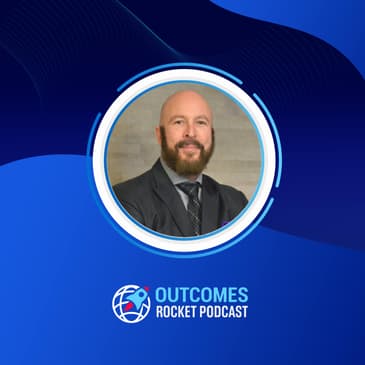
In this episode, Jimm Cobb, Vice President for New Business Development at Chicago Lighthouse for the Blind, sheds light on their impactful work in supporting the blind, visually impaired, veterans, and those with disabilities. Chicago Lighthouse offers a range of social work programs, including early childhood support, a K-12 school, and a unique factory where visually impaired or blind individuals craft designer clocks. In this conversation, Jimm shares some insights regarding the limitations of AI in comparison to the irreplaceable human touch, as Chicago Lighthouse's visually impaired staff are doing an excellent job in contact centers, proving that people are crucial in this work. He also emphasizes the organization's mission-driven approach and invites engagement through LighthouseEnterprises.org for those interested in their healthcare administrative services.
Tune in to discover how the Chicago Lighthouse for the Blind combines mission-driven goals with innovative solutions in the healthcare ecosystem!
Resources:
[00:00:01] This podcast is produced by Outcomes Rocket, your healthcare exclusive digital marketing agency. Outcomes Rocket exists to help healthcare organizations like yours to maximize their impact and accelerate growth. Visit outcomesrocket.com or text us at 312-224-9945.
[00:00:30] Hi, everybody. Welcome back to the Outcomes Rocket at Becker's Health and IT RCM. Today, I'm joined by Jimm Cobb with Chicago Lighthouse for the Blind. Jim, welcome to the podcast. Thank you very much for having me. I appreciate it. Absolutely. You know, it's such a pleasure to have been with you today and yesterday during the conference. I learned a lot about what you guys do and it's impactful work. Can you share with the listeners and viewers what you guys do and how you add value to the healthcare ecosystem?
[00:00:58] Of course. We are Chicago Lighthouse for the Blind, Visually Impaired, Veterans, and People with Disability Communities. We offer 40 social work programs for the community starting from birth to three years old. So if someone has a child that's born blind, we will actually send social workers in the house for the first three years of the child's life to help the parents navigate the hurdles of having a child with a disability. We have a K-12 school on site. We also have a factory on site.
[00:01:27] And about 90% of the population, the staff of the factory are visually impaired or blind and they make clocks. For the federal government, you can also find the clocks on Amazon and in Target. And they're designer clocks. So you can send an image of anything you want, as long as it's public view, not anything. And we will actually put that on the clock and send it back to you. And to help with these programs, we offer contact center solutions.
[00:01:51] So we have about 500 to 600 employees right now that answer phone calls for about 12 different agencies and 12 different healthcare agencies and three government agencies. We're in Delaware and also here in Chicago, but we service all over the United States. And we can do anything that anybody can do over the phone. And the nice thing about it is people don't know this, but if you're disabled or have a disability, it's a 70% chance you do not have any job. So that's the unemployment rate for people with a disability, specifically blind and visually impaired.
[00:02:21] And we really target that community and hire as much as possible. About 30% of our staff in the contact centers are blind, visually impaired, veteran, or people with disabilities. That's amazing. And I was just floored by this mission-driven business. The work that you guys do supported by healthcare administrative services to reach the goal is just fantastic. At the conference, we've covered a lot of different topics.
[00:02:46] What would you say is one insight that you've learned that surprised you that the audience could learn from? Right. One thing that surprised me is how far AI has come and has not gone. Because it's rudimentary sometimes, but if it's trying to get too sophisticated, it just doesn't work very well yet. And one thing, AI can never replace the human touch. And that's what we really rely on because we know people really want to speak to a live individual.
[00:03:14] And that's what we bank on because we employ people from the community that are disabled or have disabilities. And the nice thing about it is that individuals that work for us who are visually impaired or blind, they actually work faster than people who are sighted. Is that right? Because I know a sense is enhanced and they actually have an earpiece in one ear listening to the computer speak to them. And then the other year, they're talking to the client. Wow. And it's just amazing to see that the work that they do. That's incredible.
[00:03:42] Look, I'm sure that the viewers and listeners of today's program are probably wondering a lot of things. And they want to know how to engage with you guys and learn about the fabulous programs you put together. Where can they find out more and how can they get in touch with you? The division I work for inside the Chicago Lighthouse is called Lighthouse Enterprises. So if they go to lighthouseenterprises.org, we are a nonprofit. They can go in there and connect with me. My phone number is on there. And we can do anything over the phone. So we can do patient scheduling.
[00:04:11] We do referral processing, redetermination of insurance, insurance verification. Literally anything you can do on the phone, we can do. And that's why we are reaching out to hospitals and healthcare centers. And we're not trying to take over their call center or contact center. We are there to augment and help the staffing that they have. So we usually take overflow. So if your wait times are long, more than a minute. Patients for them, it's like 10 minutes. We will handle all those calls and we guarantee we'll answer it on the first couple of rings. Outstanding.
[00:04:39] Well, there's a great promise for any health systems looking to just get better help with these telephone and administrative tasks. Jim, can't thank you enough. Really appreciate you being on with us. Thank you very much, Saul. Cheers. Take care. Bye-bye. This podcast is produced by Outcomes Rocket, your healthcare exclusive digital marketing agency.
[00:05:09] Outcomes Rocket exists to help healthcare organizations like yours to maximize their impact and accelerate growth. Visit outcomesrocket.com or text us at 312-224-9945. Thank you.