
There is a paradigm of controlling the electronic health record and allowing people to make appropriate changes.
In this thought-provoking episode, Janice Reese delves into the challenges of connecting data and systems, the impact of cybersecurity on innovation, and the potential of cloud technology and AI in shaping the future of healthcare delivery. She shares insights on healthcare innovation, emphasizing data security, and discussing industry news, standards, and strategies for a proactive, preventative, and value-based care system.
Join the discussion and learn how to navigate the complex landscape of healthcare innovation while maintaining a strong focus on data security!
Resources:
[00:00:00] Welcome to the Chalk Talk Jim podcast where we explore insights into healthcare that help
[00:00:08] uncover new opportunities for growth and success.
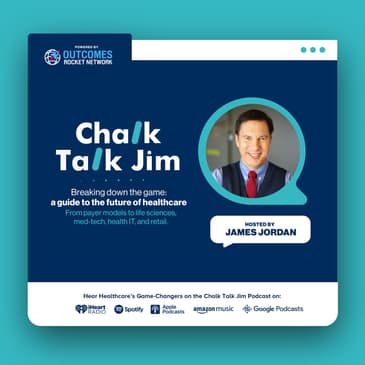
[00:00:11] I'm your host, Jim Jordan.
[00:00:19] In this week's episode of Chalk Talk Jim, we're joined by Janice Reese.
[00:00:23] She's a visionary in the world of healthcare technology and cybersecurity.
[00:00:27] Her career spans from the early days of Adobe's PDF standardization to her current
[00:00:32] roles consultant at the intersection of healthcare, data and cybersecurity.
[00:00:38] Janice has been at the forefront of digital transformation working with industry standards
[00:00:42] and navigating complex landscapes of healthcare innovation.
[00:00:46] In our conversation we dive deep into the challenges and opportunities that arise when
[00:00:50] connecting data and systems in the healthcare ecosystem.
[00:00:54] We also explore the delicate balance between interoperability and cybersecurity, the
[00:00:59] impact of recent industry news on the healthcare sector and the potential of cloud technology
[00:01:05] and AI in shaping the future of healthcare.
[00:01:08] Janice also shares her insights on fostering a proactive and preventative and value based
[00:01:13] healthcare system.
[00:01:15] So Janice, tell me in the audience a little bit more about yourself.
[00:01:18] Janice Reese Sure, I started in technology in the
[00:01:21] early days of my career at the very beginning working with Adobe and helping Adobe standardize
[00:01:27] acrobat and PDF.
[00:01:28] It was at the beginning of death top publishing, which was significant then as that evolved,
[00:01:33] Adobe came up with a format originally just to be able to share designs on different types
[00:01:38] of computers.
[00:01:39] But then it evolved into a significant enterprise and business opportunity with third party
[00:01:43] technology, which I led a team around both business development and the ability
[00:01:48] to work with those third parties in solving a lot of business problems in the enterprise.
[00:01:53] So that kind of got me curious about everything happening in technology and industry and also
[00:01:59] how industry is so interconnected because you understood a lot of that at the beginning
[00:02:03] stages of that whole timeline and saw some of the opportunities that could evolve into
[00:02:09] healthcare because I happened to live in headquarters in Nashville, Tennessee.
[00:02:14] And also underlying cybersecurity, governance and privacy because if you're going to
[00:02:19] start to connect data and systems, you've got to be aware of that at the very foundation.
[00:02:23] And so my career has been built around working with industry standards, understanding
[00:02:28] digital transformation and how do you bring all of that together in a very growing
[00:02:32] digital aspect of our industry and our world and how we communicate.
[00:02:37] So really part of healthcare reform was with the high tech act, putting investment
[00:02:41] in but also standardizing the various a lot of the standards that ISO had using
[00:02:46] another industry, start bringing them in and customizing them for healthcare.
[00:02:50] Is that when you started moving into healthcare activities?
[00:02:53] Yeah, I got into healthcare, wrote a white paper for Adobe back in the early 2000s
[00:02:59] because of the opportunity I saw to combine Adobe and Microsoft, especially around
[00:03:03] PDF and forms and the interaction of data and information.
[00:03:07] And what you realized in those days is I was privy to setting up a lot
[00:03:11] of executive briefings working with large enterprise companies.
[00:03:14] And I was just astounded at the data and how silo the data was and also
[00:03:20] obviously acquisitions and a lot of things that were there where they had a lot
[00:03:24] of stuff, but it wasn't connected in a way that was meaningful.
[00:03:27] And you had to start small in order to be able to bring silos of business
[00:03:31] units together and solve a specific problem.
[00:03:34] And so acrobat forms, data, all of that really started to evolve in those
[00:03:39] early days.
[00:03:40] So your consulting practice today focuses on what sort of things?
[00:03:44] It really focuses on the intersection of what I mentioned,
[00:03:47] inner security, cybersecurity, healthcare and data.
[00:03:50] And how do you drive that together in a way that's meaningful?
[00:03:53] There's a lot of technology solutions out in the industry to try
[00:03:56] to solve healthcare problems.
[00:03:58] But a lot of them are not focused on how do you protect security
[00:04:01] in the cloud, specifically the PHI?
[00:04:03] How do you look at what's happening with fire, the industry standard
[00:04:08] around sharing data relative to healthcare?
[00:04:10] Some of the agreements, the TEFCA agreement on trusted enterprise
[00:04:14] framework for common agreement to be able to have some standard ways
[00:04:18] that you can start to have governance around data.
[00:04:20] All of those things are impactful and important if we're going to drive
[00:04:23] proactive care, preventative care and value based care for the health system.
[00:04:27] I think we have two policies, I think that are strong policies,
[00:04:32] but arguably your mutually exclusive one is about cybersecurity
[00:04:35] and increasing the penalties.
[00:04:37] And the other one is about interoperability and increasing
[00:04:39] the penalties not being interoperable.
[00:04:41] How do you manage that contradiction?
[00:04:43] I think you have to understand what I mentioned earlier, the legacy systems
[00:04:47] that exist inside of the infrastructures and then the gateway
[00:04:51] and the ways that you need to start to connect that from the ecosystem
[00:04:54] to bring the care coordination of information together for both
[00:04:58] the benefit of the consumer, but also the benefit of the healthcare ecosystem.
[00:05:01] And it minimizes if you have it right in a way that you start
[00:05:05] to manage that from a security governance and privacy perspective.
[00:05:08] You start to have a more organized framework and you also start to have
[00:05:12] a more trusted way that you start to managing that as a part of the ecosystem.
[00:05:16] It's definitely still messy in regards to the way we have things today,
[00:05:21] but I think there's so much potential to get there in a way that
[00:05:25] there's more standardization of how we handle that data
[00:05:27] and how we protect it in ways that are meaningful.
[00:05:30] So where do you see cloud technology fitting into the future?
[00:05:34] On one hand, hospitals like the legacy systems
[00:05:37] because if you're the chief information officer, they're all enclosed.
[00:05:41] You trust that there's some boundary around them,
[00:05:44] whether that trust is real or just perceived.
[00:05:47] And then you have the cloud based systems, which can be, I think, deployed
[00:05:51] easier and also more upgradeable, right?
[00:05:54] Because they're being leveraged across the cloud.
[00:05:56] Where do you see that continuum today when you work with organizations?
[00:06:00] I think it's still growing to your point in getting organizations,
[00:06:04] especially in healthcare, to be comfortable with the aspects of the benefits of the cloud.
[00:06:08] And I think it's also an educational kind of a cloud journey
[00:06:12] with one of the cloud partners I work with that wraps cloud security
[00:06:15] around that infrastructure and allows that to be managed in a way that is automated
[00:06:19] because it's hard to maintain that individually,
[00:06:22] especially with the transition of having the right skill sets,
[00:06:25] the right individuals within the organization knowing that.
[00:06:28] And so if you have some assistance and help from experts that understand
[00:06:32] that and can package that securely for you in a way that can be managed
[00:06:36] to automate some of the vulnerabilities and aspects of our current threat landscape,
[00:06:40] I think that's where it's really valuable.
[00:06:42] And it's valuable for health tech companies that want to sell into health plans
[00:06:47] and other organizations because I think given recent industry news,
[00:06:50] third parties and things that are not distributed in a way
[00:06:54] that can have alternative ways that they can have communication
[00:06:57] and payments and claims happen, cause a ripple in the industry
[00:07:01] and cause a choke point of not being able to do what you need to do.
[00:07:05] And so having more of that foundation of being things together,
[00:07:09] I think is the ideal, but you've got to have somebody that understands
[00:07:12] cloud security because there's too many different things that are easy to be lost,
[00:07:16] even if you're a large organization and you think you've got the best security in the world.
[00:07:20] So you said recent news.
[00:07:21] Can you share with the audience some of those details?
[00:07:23] I think it's been in the news since around the middle of February.
[00:07:26] There was a large organization that was hacked
[00:07:28] that actually processes claims across the industry.
[00:07:31] And that was a significant infrastructure kind of wake up call for the health care
[00:07:36] industry and one understanding that there was that significant aspect
[00:07:40] that then drop payment capabilities for small and community providers, hospitals.
[00:07:46] The whole system was connected in that particular environment.
[00:07:49] And so having an industry become more aware at the top level
[00:07:54] with different things that we're doing.
[00:07:55] I'm a part of the Health Sector Coordinating Council.
[00:07:57] So we work closely with the Health and Human Services Group and government
[00:08:01] to try to help minimize situations around that ecosystem.
[00:08:05] And I think that was just a wake up call for the industry.
[00:08:07] It's still an ongoing discussion and conversation about what happened,
[00:08:11] when and how much information is out there in relationship to that ecosystem.
[00:08:16] But it's complex to figure out because it is an ecosystem.
[00:08:19] And there were a number of individual providers and systems
[00:08:24] and players across that ecosystem that have been affected.
[00:08:27] And it's hard to get that data really organized for the parent organization
[00:08:31] of that situation to be able to then communicate to the industry.
[00:08:35] So you work with both tech and health care people.
[00:08:37] What is it that the tech people know that the health care
[00:08:41] people don't really know yet about this whole topic?
[00:08:44] I think it depends on the tech side of things.
[00:08:46] Some tech people are much more aligned with some of the infrastructure
[00:08:50] of cybersecurity and the risk than you've got some other,
[00:08:53] I would call health tech startups that are not necessarily as well aligned
[00:08:57] and aren't aware of the ramifications of connecting into those third party systems.
[00:09:02] And I think the larger organizations that connect into a lot of third party companies,
[00:09:07] especially if they're new and growing,
[00:09:09] are going to be much more aware of their cybersecurity posture
[00:09:12] and their internet response and aspects of how they've got their organization set up.
[00:09:17] Because it's not necessarily a matter of if but when.
[00:09:21] And so you want to make sure if you've got a third party group of vendors
[00:09:25] that you're communicating with, that you understand their posture.
[00:09:29] You know what they're doing, but you also know who to communicate with
[00:09:31] in case there's an incident and you've got a firm gap on how to bring that together
[00:09:37] and understand how it affects your existing ecosystem
[00:09:40] and internal and external as far as consumers or patients.
[00:09:44] Are you familiar with the concept of a real time health care system?
[00:09:48] Is that a term that might be highly specialized
[00:09:51] but I'll explain it.
[00:09:52] It's the concept that hospital systems and physician offices in general are in a vacuum, right?
[00:09:59] They don't have data on things that happen outside of the acute setting.
[00:10:03] And if you talk about the preventable data, it's all outside of the acute setting.
[00:10:07] So you want to be able to hook up my Amazon Alexa.
[00:10:11] You want to be able to put on my watch and bring all this information in.
[00:10:16] But yet to the people inside the health system, that information is helpful.
[00:10:20] But from a cyber perspective, every unique connection is an opportunity for penetration.
[00:10:26] And it's also equipment that's outside of the health care system.
[00:10:30] It seems to me that when you look at the the apples and the Googles
[00:10:34] and the Microsofts and all the Amazons and all these big companies,
[00:10:37] they've figured out how to have that longitudinal connection
[00:10:41] and also have this cybersecurity.
[00:10:43] What is it that hospitals, executives and physician office executives
[00:10:47] need to start thinking about?
[00:10:48] I think they definitely need to think about that particular data.
[00:10:51] There's an update to HIPAA that actually now includes the data
[00:10:54] from those different types of devices and information.
[00:10:58] And to your point, it's very relative to the system.
[00:11:00] It's part of why I think the whole fire ecosystem is coming together.
[00:11:03] But they have to understand the ability of being able to protect that data.
[00:11:09] And I think there are organizations out there.
[00:11:11] There's another group called Heal Security that is actually an innovation arm
[00:11:15] of Health 2047 in connection with the American Medical Association
[00:11:19] that has created an intelligence platform that is cybersecurity monitoring
[00:11:24] in real time. So it goes along with what you're talking about
[00:11:27] in real time health care.
[00:11:28] If we want to have a real time health care ecosystem,
[00:11:30] we also need to have a real time cybersecurity monitoring model
[00:11:35] that allows us to know what's happening when and you get a lot of devices
[00:11:39] that you have to think about when you think about all those IOT devices
[00:11:42] that you are connected to hospitals are still struggling with a lot of legacy
[00:11:47] systems. And I think that's where they could use a little more help
[00:11:50] and minimizing some of the risk associated with that.
[00:11:53] And then better streamlining how to utilize some of this fire
[00:11:56] capability and ecosystem.
[00:11:58] You can de-identify specific data with technology and tools
[00:12:02] and allows that to be more fluid in reference to some of the types of things.
[00:12:06] Some of the work we're doing in the Business Payments Coalition
[00:12:09] actually starts to work with an industry standard that then allows you to have
[00:12:13] both the data of the information and the claim together in a way
[00:12:16] that would be meaningful for the health care system, but also protected
[00:12:19] securely, which is why it's not transmitted today.
[00:12:22] Lots of opportunities to make that real time,
[00:12:26] but it also has to be real time on the monitoring side for cyber threat
[00:12:29] at the same time that it's real time on the data side for the system
[00:12:33] in order to minimize what we're dealing with our connected society.
[00:12:37] The electronic health record, what I think tech companies have figured out how to do
[00:12:41] is balance them controlling the records with also allowing us
[00:12:46] to be able to make changes to incorrect records.
[00:12:48] I don't know if you said you'd listen to a couple of my podcasts.
[00:12:51] I don't know if you listen to Chris Jones of that gets match right care
[00:12:55] is trying to be able to have people take control of their own personal record.
[00:13:01] Obviously, you can't delete things that hospitals put in,
[00:13:04] but the whole point of making sure of the accuracy of the record to go into the system.
[00:13:08] And I just changed doctors myself in the past year and continue
[00:13:12] to bring all my records on every visit, what's the two years ago,
[00:13:16] because they haven't got it into their medical record yet,
[00:13:19] or they attach it as a fax or something like that that's not actionable.
[00:13:24] And so I think that the other piece of this is there's a paradigm out there
[00:13:28] I think about controlling that electronic health record
[00:13:31] and letting people have access to it to be able to make appropriate changes.
[00:13:36] I know my wife has something in a record that has nothing to do with her
[00:13:39] that she's been trying to get out for five years, and it's just a bizarre process.
[00:13:44] In other industries, what are examples
[00:13:46] in other industries of being able to make those changes so easily?
[00:13:50] You have GDPR in reference to European industry,
[00:13:53] which requires you to be able to as an organization take information
[00:13:57] from a consumer and either delete their record or do aspects of different things.
[00:14:03] And I personally, my husband's had the same thing.
[00:14:05] He's got something in medical record.
[00:14:06] It doesn't have anything to do with him.
[00:14:08] So I think it's harder.
[00:14:09] But I think the new opportunities for the patient access
[00:14:13] and their companies like Vantt that have the really nice capabilities
[00:14:16] of how they're trying to be in the middle of the ecosystem
[00:14:19] to help facilitate that ability of fulfilling that OCR requirement
[00:14:23] of patient access and data in a secure way,
[00:14:27] in a way that allows you to combine that information.
[00:14:30] But again, I was at my dentist's office trying to get records from another dentist
[00:14:34] and my dentist hadn't done it yet.
[00:14:35] And I said, oh, I said, I need to talk to OCR.
[00:14:39] And she said, who is that?
[00:14:40] I said, office of civil rights because we do now as patients have rights
[00:14:44] to be able to request our records.
[00:14:46] And it is a requirement from those providers
[00:14:48] that they need to give us access to that information.
[00:14:51] I have a battle every time I get my teeth cleaned
[00:14:54] where they want to take my blood pressure with that two dollar wrist
[00:14:58] blood pressure cuff that always registers 10 to 15 points higher
[00:15:01] than my doctor and at home.
[00:15:03] And they're like, we should tap to do it.
[00:15:05] And I said, no, you don't.
[00:15:06] And I don't want you to do it
[00:15:08] because that will someday end up in my electronic health record
[00:15:11] and it's wrong.
[00:15:13] And you're not qualified as the person who's cleaning my teeth to do it.
[00:15:17] It's just not something that's there.
[00:15:19] So when you look at your career, can you give us a time
[00:15:23] when you've had to adapt and change your strategy quickly
[00:15:26] as you've evolved from your beginning of your career to today?
[00:15:29] Oh, yeah.
[00:15:30] I've definitely had that more than a few times, I would say,
[00:15:33] during the course of my career.
[00:15:35] I think part of it has always been
[00:15:38] I've been on the cutting edge of technology.
[00:15:40] And so sometimes being on the cutting edge of technology
[00:15:43] and change means that you're in a more volatile timeline
[00:15:46] or situation because you may work for an organization
[00:15:50] that then has certain aspects of things that happen
[00:15:53] that are outside your control.
[00:15:54] But all of a sudden, you really built up what you really want to do
[00:15:57] and help bring forward with that particular organization.
[00:16:01] But circumstances are like, wait a minute, no, we've got to cut back.
[00:16:05] We've got to eliminate what the role that you've been providing
[00:16:07] and the information of what you've done.
[00:16:10] And I think that's been hard.
[00:16:11] And that's part of why I started my consulting business early on
[00:16:15] when that happened to me with Adobe.
[00:16:17] Adobe hired some executives that didn't understand their business
[00:16:20] back in the late 90s, early 2000s.
[00:16:23] And I wrote some white papers and ended up being able to come back
[00:16:26] as a consultant with Adobe and build up a whole professional services
[00:16:31] capability with my career from that time period.
[00:16:34] But I wasn't able to stay directly with Adobe
[00:16:37] because of the fact that they had hired wrong executives
[00:16:40] needed to restructure.
[00:16:41] And one of the roles I had was one of those restructure roles.
[00:16:43] And I've had that happen like I said more than a couple times in my career.
[00:16:47] But I've always turned it into something more exciting
[00:16:49] and something that seemed to be more than I was meant to do
[00:16:52] in reference to bringing a group of people together
[00:16:55] in order to drive some significant change.
[00:16:58] So I've had a similar experience
[00:17:00] and I had done a period of time in and nonprofit and profit venture
[00:17:05] and obviously consulting any more business models
[00:17:07] and more things in that period of time
[00:17:09] than you could if you work for one company forever.
[00:17:12] And what strikes me is how people are focused on their business models
[00:17:16] not really looking out as to what could change it
[00:17:19] and the timing of the various changes.
[00:17:21] And yet you appreciate when you're inside a company, the pragmatic
[00:17:23] we only have so much money and this project's not there.
[00:17:26] But I think that one of the things you recognize,
[00:17:29] particularly in health care, it startups in the medical side is
[00:17:33] there has to be supporting infrastructure from the other pieces.
[00:17:36] People will have a program component that they'll put in
[00:17:39] and they'll either not recognize that the other software isn't quite installed
[00:17:44] in the industry to support that or the bigger guys that are already there.
[00:17:48] They're only a very small piece of that
[00:17:50] and they can replicate what they're offering in a couple of minutes
[00:17:53] and it doesn't make sense to invest in that startup.
[00:17:56] So how do you keep current?
[00:17:58] You were talking a lot of standards.
[00:17:59] How do you keep current on all the rapid changes that are going on in this space?
[00:18:03] I guess I have rapid curiosity, so I read a lot
[00:18:06] and follow a lot of different podcasts like yourself and other industry players
[00:18:10] in regards to articles, but I also participate on industry standards groups.
[00:18:14] So I work with the HL7 group and some of the fire initiatives.
[00:18:18] This lays on right now as far as a volunteer
[00:18:21] and trying to bring together the business payments coalition
[00:18:24] and some things that are happening with fire and some of the stuff
[00:18:27] happening with HIEs specifically working with my hand
[00:18:30] and their interoperability institute in a way that kind of brings
[00:18:33] that together from a workforce education.
[00:18:35] Can you explain HIEs for the audience?
[00:18:38] Yeah, their health information exchanges
[00:18:40] that were put in place right around 2010, funded initially by some money
[00:18:44] with the federal government really didn't do a lot over a period of time.
[00:18:49] Some did more than others, but I think we're at a pinnacle point
[00:18:52] given the ecosystem and industry standards and the TEFCA,
[00:18:56] the Trusted Exchange Framework Common Agreement
[00:18:59] and what's out there that HIEs are starting to bring things together.
[00:19:03] They were definitely more became more aware of what they had
[00:19:07] and didn't have during COVID because public health data,
[00:19:10] obviously, is a big foundation of the opportunities with HIEs
[00:19:14] and some states are much more proactive in how they've developed them than others.
[00:19:18] And I would have to say my hand, which is the Michigan Health Information Network
[00:19:22] and Tim Pletcher and Angie Bass there,
[00:19:25] they not only have created something very unique in my hand,
[00:19:28] but they also have a nonprofit called Velatora that works with other states
[00:19:33] and helps other states figure out different things of how they can maximize connectivity,
[00:19:38] how they can bring benefit to the community.
[00:19:40] Some of the issues around consent when allowing a consumer to opt in, opt out
[00:19:44] of certain data that's continuing to grow in areas of beneficial capabilities,
[00:19:49] but also in starting to put the right infrastructure.
[00:19:51] So if we do have another significant incident like we had in 2020 with COVID,
[00:19:56] we have more ability to understand what's happening in public health,
[00:20:00] interact with the different agencies and community,
[00:20:02] figure out how to do a better job with Medicaid and maternal care.
[00:20:06] There's so much benefit that could happen as we start to bring that together.
[00:20:09] It just needs this standard and all these things that are laying out.
[00:20:13] So it's interesting because I used to teach a health systems course
[00:20:18] at Carnegie Mellon University and so I would flowchart out a bunch of stuff.
[00:20:21] And what you realize is public health.
[00:20:24] Oh, sorry.
[00:20:24] General public health in general is very loosely connected.
[00:20:28] It's connected, but it actually has no formal rules.
[00:20:32] You would think what I was seeking at the time
[00:20:35] was looking from the World Health Organization to go into New York state,
[00:20:39] go into the nice clean connections and it isn't.
[00:20:42] But I would say that during COVID, it really is.
[00:20:46] It was a revolution of what the government did with the data.
[00:20:50] I can literally pick one of my local hospitals
[00:20:53] and probably look at 11 diseases right now today that are coming in,
[00:20:58] coming out and you could not even do that before COVID.
[00:21:01] And I think I actually think the government deserves kudos for that.
[00:21:04] I thought they did a very nice job.
[00:21:06] No, I think they did.
[00:21:07] And the Cloud Security Partner that I work with, Cloudticity,
[00:21:10] they actually stood up a whole COVID capability in New York state
[00:21:13] within a two week period in working with buyer data
[00:21:17] and putting the protection around the cloud to make sure all of this data
[00:21:20] could be secure and obviously it was being attacked significantly during that time.
[00:21:25] But it's a case study and exactly that value in the data,
[00:21:29] capabilities on ROI and how that could be positioned in the community
[00:21:34] in a way that made a big impact in New York in regards to some of the things I saw.
[00:21:39] Yeah, this and I'll nerd out on that.
[00:21:41] There's a whole history of New York and public health
[00:21:43] and states rights and public rights, but I won't go into that.
[00:21:46] You were talking about some people that you follow.
[00:21:48] Can you people love to hear the names so that they can follow them to?
[00:21:51] Who do you recommend people follow specifically?
[00:21:54] Oh, gosh, there's a recent lady.
[00:21:56] I had everything else turned off.
[00:21:58] There's a recent lady in Nashville that I've been following
[00:22:00] that has a significant background in threat intelligence.
[00:22:03] Her name is Elizabeth Stevens and she's written a cyber security manifesto.
[00:22:09] So she's got some interesting thoughts on cyber risk monitoring
[00:22:12] in real time and some of the things happening in threat intelligence.
[00:22:16] Her background has been with Microsoft previously and some of the work that she's done.
[00:22:21] Gosh, look at my list thinking of everybody off the top of my head.
[00:22:25] I think if you just let it I've actually enjoyed
[00:22:28] I've seen some wonderful articles from AT&T and cyber security to another group
[00:22:32] that I personally at Hill Security.
[00:22:34] I cannot forget that Charles Unger is a CEO of Hill Security.
[00:22:38] He basically takes his intelligence platform that he's created in real time
[00:22:43] and does a monthly summary and does a weekly summary of some of the things
[00:22:47] happening across all specific areas.
[00:22:49] He does focus more focused on health care indirectly,
[00:22:52] but also some of the bigger CBEs or other aspects of the vulnerabilities
[00:22:57] that have been identified.
[00:22:58] When I talk to some of my cyber security friends,
[00:23:01] we end up having a conversation of what we think the role of AI
[00:23:05] can do to help or hurt cyber security.
[00:23:08] What are your thoughts on that topic?
[00:23:10] I definitely think it can be used for good.
[00:23:12] And I've seen it in some of the opportunities of using AI to look at
[00:23:16] the network, understand how to go out and pick some of the aspects of vulnerabilities.
[00:23:21] Other things that I think we'll continue to find out how to bring together
[00:23:25] with certain tools and technologies.
[00:23:26] But on the opposite end, we're also obviously seeing more as tech
[00:23:31] aspects of using it in a way, especially with social data that is
[00:23:36] applied together to try to entice individuals that are part of an
[00:23:40] infrastructure of an enterprise to click on something.
[00:23:43] Now, I think that's actually going to be one of the biggest opportunities
[00:23:46] because I think that's when you look at how most of these breaks happen,
[00:23:50] a large majority of them come through exactly that situation, I think.
[00:23:54] Yeah, no, exactly that.
[00:23:55] So I think that's the bigger concern of how it's going to be used in a forestly.
[00:23:59] I think there's lots of opportunities to use it for good.
[00:24:02] But you've got the common individual of the person and the people
[00:24:06] around the world within everything that have to be a little bit more
[00:24:09] trained in being aware and people are so visible in what they post on social media.
[00:24:14] And I think they're getting AI is helping them get better at it too.
[00:24:18] I've had a couple come through my email system that are quite shocking.
[00:24:23] And I have a website that focuses on business models of health care
[00:24:27] called HealthCare Data.Center.
[00:24:29] And I finally took down the ability of people to make comments
[00:24:34] because that's where the Chinese and the Russians and the North Koreans were go.
[00:24:38] I was spending a ton of money just on cybersecurity.
[00:24:41] And it's not that I'm not now, but that was one of the vulnerabilities.
[00:24:44] It was pretty significant.
[00:24:45] I think we're learning so much.
[00:24:47] But you look out in the next five or 10 years.
[00:24:50] What do you see as the biggest opportunity in health care?
[00:24:54] I think the biggest opportunity is to effectively get control of the data
[00:24:58] on behalf of the patient and the consumer and connect it into the ecosystem.
[00:25:04] In a way that's going to be meaningful to be more proactive in how do you manage
[00:25:08] and handle your health?
[00:25:10] I think on the flip side, the cyber landscape that we're in
[00:25:14] and the continued volatility of our geopolitical world.
[00:25:18] And this year with the upcoming election,
[00:25:20] I think we just have to be a lot more aware and resilient of what we see
[00:25:26] and question sometimes information both on health and other aspects of things
[00:25:30] because I think there's just going to be a push to try to continue to divide society
[00:25:35] as we have.
[00:25:37] And I think we just have to be aware of that.
[00:25:39] And that's a good and bad of the benefit of the ecosystem and digital transformation.
[00:25:44] But I think we often hear people talk about the cost of health literacy,
[00:25:48] but it seems to me that there's a significant cost of cybersecurity literacy.
[00:25:53] Do you do any training or is that something that started to occur in your practice?
[00:25:57] Yeah, we do training and I actually have been partnering with a couple of individuals.
[00:26:01] I'm part of the WESIS Women in Cybersecurity Global Initiative.
[00:26:05] And so we work closely with the founders out of Tennessee Tech.
[00:26:10] And so they currently have a program that we're working with in Tennessee,
[00:26:14] which brings a remote vehicle to a school and then has the ability
[00:26:19] for kids to go through it and have some training.
[00:26:21] And so we want to do more of that.
[00:26:23] And then there are a couple of individuals that want to start to create
[00:26:26] TikTok or some other kind of basic videos where the community might see them
[00:26:31] in regards to some just basic cyber hygiene, basic things that you need to think about
[00:26:35] and be aware of.
[00:26:36] I imagine that we're going to have to start including this
[00:26:39] in our curriculums that we probably don't do that very well today.
[00:26:44] I think it definitely needs to be all the way started at kindergarten
[00:26:47] just to be aware of certain parameters of information.
[00:26:50] I'm also a proponent to not have as much social media with kids
[00:26:53] until after they get to a certain age in regards to how they interact
[00:26:57] because I also have a beach volleyball complex in my front yard
[00:27:00] and run professional and junior tournaments for kids.
[00:27:05] And I think it's much better to keep kids active and outside
[00:27:09] and involved with each other as opposed to being on social media
[00:27:13] until they get bit older and have a little bit more maturity
[00:27:16] and how to handle some of the things that they see
[00:27:18] or some of the things that are posted.
[00:27:21] I one of the conversations I would have with my daughters when they were younger
[00:27:25] is when I was their age and they said that goes on your permanent record.
[00:27:29] It really wasn't true, but today it really is.
[00:27:32] And you can envision we just had our first granddaughter.
[00:27:35] You can envision that in her life
[00:27:38] everything will be so open that she could get denied a service,
[00:27:42] a job or something from something in her digital footprint.
[00:27:46] Yeah.
[00:27:47] And I think it's definitely something some parents are concerned about.
[00:27:50] They are asking grandparents as an example not to post as much
[00:27:54] on social media for a lot of things so they don't have a tax that come out
[00:27:57] and utilizing some of that.
[00:27:59] But I just think, yeah, it would be better.
[00:28:02] And the other thing I tell some of the young kids out here,
[00:28:05] I said the front page of the newspaper, the breaking news on the TV.
[00:28:09] I said, whatever you post has the possibility
[00:28:13] to put you in that position.
[00:28:15] Just think a few times before you push out in some anger
[00:28:19] or start to put something out there that you wish you might not have said.
[00:28:23] I read an article on it was a woman who was bullied in high school
[00:28:28] and she had graduated from college and started her job.
[00:28:31] So she had some reflection and she was talking about when her parents were younger,
[00:28:35] if someone was being bullied, they could come home to their safe environment.
[00:28:39] But when you're in social media and you have that access 24 seven,
[00:28:43] it doesn't stop when you get home.
[00:28:45] And that was a really interesting reflection I thought she had.
[00:28:48] What else would you like to share with our audience?
[00:28:51] I think that it gosh, I think it's about right now
[00:28:55] we're trying to simplify communication
[00:28:59] to the patients to the consumers so that they can actually grasp
[00:29:03] and understand aspects of what's happening in their day to day
[00:29:06] environment and their health to be more proactive.
[00:29:09] And I think people want to take charge of their health.
[00:29:12] The young people I see out here have Apple watches and are tracking their steps
[00:29:16] while they're playing volleyball, they're watching their diet and food
[00:29:19] and trying to be more aware of their own environment
[00:29:23] and on social media from a mental health and business perspective.
[00:29:27] And we have 10 acres in the woods that have we're surrounded by woods.
[00:29:31] We play world music and fun things and have people get out and play
[00:29:36] beach volleyball because you learn more playing with somebody
[00:29:39] side by side than you do working with them.
[00:29:41] So I would advise companies to take their teams out to play sometimes
[00:29:46] to build rapport.
[00:29:48] I had that experience working with technology companies like Adobe
[00:29:52] when Adobe acquired all this CEO and founder took us six or eight months
[00:29:57] before the acquisition took place, took us to a place in Texas
[00:30:00] where we had to do some trust falling the whole idea of team building.
[00:30:05] And I think we need more of that as we try to bring this digital
[00:30:08] transformation of ecosystem together because it requires
[00:30:11] understanding what other groups of the company do, what other parts
[00:30:15] of the ecosystem are providing.
[00:30:18] So you have a better understanding of why they need the information
[00:30:21] where it matters and then how does that really help both the consumer
[00:30:24] as well as the system be more effective in the amount of fraud
[00:30:28] and abuse and the amount of waste that we have in the money
[00:30:31] that we spend because we can be a lot more effective with our
[00:30:34] investments, both in people and time.
[00:30:36] So where can our guests find you?
[00:30:38] They can find me on LinkedIn, Janice Reese or LinkedIn is
[00:30:42] slash network PDF and they can also find me on Instagram
[00:30:46] with my national beat.
[00:30:48] We have a great visual aspect of that and welcome to email me
[00:30:52] at Janice at networdpdf.com.
[00:30:54] Perfect.
[00:30:54] Thank you for being yesterday.
[00:30:56] Appreciate it.
[00:30:57] Thank you.
[00:31:00] Thanks for tuning into the Chalk Talk Gym podcast for resources,
[00:31:05] show notes and ways to get in touch.
[00:31:07] Visit us at chalktalkgym.com.