
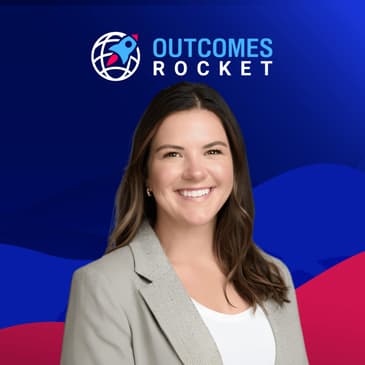
Most medtech startups fail before market. The ones that succeed? They plan for it from day one.
In this episode, Amanda Helgeson, Business Development Manager at Forj Medical, discusses her work at the CDMO, which helps medtech startups navigate the critical transition from development to manufacturing. She notes that standout companies at Medtech Innovator pair meaningful clinical innovation with the passion and persistence needed to reach the market. Forj differentiates itself by integrating design and manufacturing early, helping companies avoid costly downstream issues. Her core message is to take a holistic, long-term approach, aligning product design, regulatory pathways, and reimbursement strategies from the outset while staying flexible to adapt.
Tune in to learn how a holistic, future-focused approach can turn promising ideas into scalable medical devices!
Resources:
-
Connect with and follow Amanda Helgeson on LinkedIn.
[00:00:03] Hello everyone and welcome back to the Outcomes Rocket podcast. I'm excited to be here at Medtech's Innovator Radar Forum with the amazing Amanda Helgeson. She is the Business Development Manager at Forj. Amanda, welcome to the podcast. Thanks for having me. Yes, tell me a little bit about you and tell me a little bit about Forj. Yeah, for sure. So I'm a biomedical engineer by education, started my career at a startup company. So similar to a lot of the folks here, I wasn't quite the CEO or co-founder.
[00:00:33] or anything like that, but from the early days of part of that company. And I think that's where my love of innovation and startup companies really grew. And now I am with a company called Forge Medical. We're a CDMO, so contract development, manufacturing organization, and work with a lot of different companies. But a good chunk of our portfolio is working with Medtech startup companies. Again, a lot of similar technologies and like the companies pitching here at Radar Forum.
[00:01:01] Sure. That's awesome. It sounds like you're in the manufacturing and design space. And so it's a huge need here at this event. What have you seen? Are you here as a judge? Yes. Okay. So as a judge or on one-on-ones that you've had, what have you seen that stood out to the top for you? It's been interesting.
[00:01:20] I would say all of the innovation going on. And I know that's what we expect when we come here. And then all the passion behind it. I think the folks that are pitching here, they really have created something from nothing and found a need, a clinical need, and developed something or at least an idea to this point. Yeah.
[00:01:38] And now they're trying to do the right things and take the right steps to make it come to fruition and make it happen. And I think Medtech Innovator has really shown up in a great way to this community in a sense of highlighting the companies that have the most potential to make it to market.
[00:01:55] I'm not sure what the statistic is, but many Medtech startup companies die. And so these companies are doing everything they can because they believe in their technology to take it to the next level and start to march toward market. And so I think it's been really cool to see not just innovation, but also passion that all the founders and CEOs and team members of this company's app.
[00:02:17] It definitely takes that. It takes a lot of energy, a lot of passion, a lot of belief in what you're doing, but that'll only get you so far. So as you mentioned, many die, but it's great partners that help you get across that line. Talk to us about the CDMO space and common misconceptions out there about working with companies like yours.
[00:02:37] Yeah, I would say so. The CDMOs play an interesting part of the market in that there are a lot of design firms and a lot of small companies themselves that want to do a lot of the cool innovative work, but maybe don't have the idea themselves or want to run their business a little differently.
[00:02:54] And so they're your early stage. They're in the trenches with you. And then you have contract manufacturers who most of the time are like, come to the table when you're ready to go commercial or when you have no less than a million bucks or five million bucks in revenue a year. And then we can talk. The CDMO space, especially at Forge, is the in-between of we want to be in the trenches with you for development because we can see line of sight to all the manufacturing challenges that we've had to deal with previous customers
[00:03:22] or customers that come to us and we see these pitfalls. And so being able to design and develop with the end goal in mind is the secret sauce, I think, to a CDMO. Yeah, yeah. Design, develop with the end in mind. Essentially, being able to have the experience of developing manufacturing across all these different companies allows you to see the pitfalls, ultimately making it a differentiator working with you guys.
[00:03:48] For sure. And it's really that bridge from development to manufacturing and it not really being two discrete activities. It's the overlap, right? So designing with manufacturing in mind. And then when you're manufacturing, thinking about what you're going to do next. And maybe there's opportunity for improvements to go back to the design phase for next gen or even make just design tweaks along the way to improve your quality, reduce costs, and ultimately bringing a better device to your rich jobs.
[00:04:16] That's great. So tell me a little bit more about Forge. Are you guys focused on a specific therapy? Is there something that you do better than anything else? Yeah, that's a good question. So Forge actually is a merge between two companies, Minitronics Medical and Interconcorp merged back in October. Oh, okay. Congratulations. Thank you. Two companies that are 100% medical device and primarily focus on Class 2 and Class 3 electromechanical devices.
[00:04:42] Minitronics really grew up as an engineering organization and then formed into a manufacturing organization when demand and needs of our customers evolved. And Intercon is the opposite. They have really been a foundational contract manufacturer in the space and have started leaning into the DFM aspect or DFX aspect of manufacturing, which is design for manufacturing or design for excellence.
[00:05:06] So, again, bridging the gap between the development and the manufacturing. And I would say, again, hitting that point home of what we do well is making that gap smaller and smaller so that when a company says go, we want to get to market, we can help them develop quickly and move into manufacturing just as quickly. That's great. Well, that's critical. I really appreciate you jumping on the podcast, Amanda. This is a really important topic for a lot of the companies here, but also a lot of the companies out there listening to us.
[00:05:35] What would you leave our listeners and viewers with as something to think about that they should keep in mind as they develop their technologies? Yeah, that's a really good question. And I think it's, again, just experience of not just Forge being in the business for 30 years and developing and manufacturing 200 plus devices that are FDA, PMA, 510K, DeNovo, CD marked.
[00:06:00] But also just being a part of MTI, you're able to see the different companies and how they approach things. And there are a lot of boxes tick, I would say, as you're going through this. And sometimes sitting on the other side of the table as a judge, it's easy to say this, but sometimes it's just that feeling that the company gets it and that their future for fate. And so similar to the way I say, like designing and developing with manufacturing in mind, keep that in mind for every aspect.
[00:06:28] So you're not going to design a clinical trial until you know your regulatory pathway and you know your reimbursement strategy. And so it's a holistic view of what do we want the end goal to be and fact tracking and creating your roadmap with the end in mind and not saying you can't change it along the way. Because let's say you think you're only going to get reimbursement of a thousand bucks. And so you're designing this device with that thousand dollar target in mind.
[00:06:53] And then you get along and you're like, you can't have the functionality that we want for only a thousand dollars worth of reimbursement. So what do we want to do? We want to pivot and do we want to try to go get additional reimbursement or find other ways to get this funded and go back to the drawing board? Or do we need to tweak our business model or do something like that? So, again, having that insight in mind and working your way back and then creating a plan and following that plan and adjusting as needed and rolling with punches.
[00:07:22] But I think trying to figure out what that long term view looks like. That's great insight. That's great advice for all of you that weren't able to make it to this. It doesn't mean you can't make it next year. Well, that's why we're doing these podcasts with leaders like Amanda from Forge. So if people wanted to get in touch with you or the company, Amanda, where can they reach out? For sure. The best spot is probably ForgeMedical.com. So it's F-O-R-J Medical.com. Or you can reach out to myself on LinkedIn. I'm in Amanda Helgeson.
[00:07:52] And we'd be happy to chat and hear more about what you're working on. That's awesome. Thank you, Amanda. And for everybody out there, make sure you check out the show notes for ways you could get in touch with Amanda Helgeson, Business Development Manager at Forge Medical. And if something today resonated with you or you found that something today could be useful by one of your friends, hit share, hit like on this podcast to make sure that they also get a chance to benefit from the content. Thank you all for tuning in. And Amanda, appreciate you being on. Thanks. Thanks.