
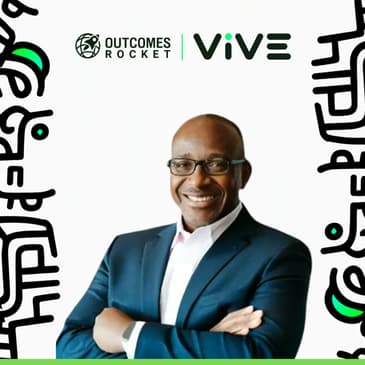
Employers should treat obesity as a chronic condition and support holistic programs that manage costs and provide ongoing GLP-1 support.
In this episode, Dr. Stanley Crittenden, Chief Medical Officer at Quantum Health, discusses how his organization is driving change in healthcare delivery through navigation, technology, and a human-centric approach. He shares insights into Quantum Health's commitment to improving the member experience and clinical outcomes by addressing the complexities of healthcare and integrating AI technologies into their navigation approach. Dr. Crittenden also highlights the importance of pharmacy management, particularly in the rising cost of specialty medications and GLP-1s, and how Quantum Health is helping employers manage these challenges while prioritizing member well-being.
Tune in to learn how Quantum Health is transforming healthcare through navigation, technology, and a focus on the whole person!
Resources:
[00:00:01] This podcast is produced by Outcomes Rocket, your healthcare-exclusive digital marketing agency. Outcomes Rocket exists to help healthcare organizations like yours to maximize their impact and accelerate growth. Visit outcomesrocket.com or text us at 312-224-9945.
[00:00:25] Hey, everyone. Welcome back to the Beat Podcast, recorded live at Vive. From Nashville, Tennessee. I am so excited to be here with the outstanding Dr. Stanley Crittenden.
[00:00:48] He is the Chief Medical Officer at Quantum Health. He's got an unwavering focus on clinical excellence and is deeply passionate about doing his part in improving the healthcare system for all. Dr. Crittenden, thanks for joining us. Thanks for having me, Saul. It's a true pleasure. It's a true pleasure. Look, why don't we start off by sharing a little bit more about yourself and what got you to healthcare and also Quantum Health. Yes. Thanks, Saul. So, I am the Chief Medical Officer at Quantum Health.
[00:01:17] At Quantum, I'm responsible for leading our clinical strategy and clinical programs. That includes utilization management, case management, pharmacy, health and wellness, as well as our clinical quality programs. By way of background, I'm a board-certified nephrologist and internal medicine doctor. So, I'm a kidney doctor. I spent the first part of my career in full-time clinical practice at Boston Medical Center. And so, if the audit says anything about New England healthcare, Boston Medical Center is a safety net hospital for the six-state New England region.
[00:01:47] And so, I took care of a lot of indigent black and brown populations. And that's actually what initially got me interested in the managed care space. As a clinician, day in and day out, I took care of some of the sickest patients around us. And they, as what I, as a physician, sometimes would have a hard time navigating the ecosystem. Getting a test approved, rebounds, readmissions into the hospital. All these things were quite complex.
[00:02:14] And as a clinician, trained as a doc, the science and medicine was easy. But some of the pieces around it weren't. So, that's what got me initially interested in managed care. I got a wonderful opportunity to join the clinical team at Humana. Humana is a large health plan based in Louisville. I spent three and a half years there leading initiatives around the enterprise as it relates to case management, utilization management. And after that, I spent some time at Anthem, specifically their diversified business group at the time.
[00:02:44] They've since rebranded to CareLon Solutions within their Elevance portfolio. But I was in the CareMorne Aspire division. And I was our national director leading some of our complex specialty care management programs, specifically around kidney disease. And so, as you can imagine, folks with kidney disease oftentimes have underlying type BDs and heart failure. So, got to lead wonderful case management teams. Prior to joining Quantum, I also spent some time here in the great city of Nashville at Rubicon Founders.
[00:03:13] Launched the first portfolio company of that fund. It's an Adam Bola-run fund called Evergreen Nephrology. Very unique, innovative value-based care provider whose main focus was to transform fee-for-service clinical nephrology practices into full-on value-based care practices. And so, got to lead their clinical team and form their initial clinical strategy, including building on our initial tech platform and all of our clinical model pieces.
[00:03:40] As well as build and grow the business from zero providers to about 700 at the time I left. Nice. And so, really excited about joining Quantum. Joined Quantum this past summer. So, it's been about eight months. Really exciting time to be at Navigation, especially at Quantum. As you guys know, Quantum is one of the kind of original inventors, if you will, of Navigation. And so, being on the cutting edge of Quantum and helping us expand even into newer great horizons has just been really exciting so far.
[00:04:09] And Quantum is uniquely and purposely built to really just take on the hard stuff. And we sit in this really unique spot in the navigation space between the providers, between the members and the employers. And again, our main goal is just to be able to assimilate and put together all those really hard pieces to form a great member experience and improve the clinical and financial outcomes. Well, it's important work. We all need it.
[00:04:33] And your experience and your background has certainly prepared you for what you're doing today. And really focused on the organization here for a sec, Dr. Crittenden, how are you guys helping to drive change in healthcare delivery? Yeah. So, as you know, healthcare delivery is quite complex. And healthcare is even more complex every day. And in some ways, as a clinician especially, you know, I say all the time to my teams, we're living in the golden ages of healthcare.
[00:05:02] There's so much new innovation. There's so much new technology. All of these things are meant to help our members and our patients live longer, live better lives, healthier lives. But sometimes, you know, trying to see through that complexity can be hard. And so, at Quantum, we've spent a lot of time here recently really thinking about the growth of AI. And we're integrating AI technologies into our navigation approach. And, again, Quantum, we believe that navigation by virtue of what it is is a human-centered experience.
[00:05:30] But we recognize that technology, especially AI, will play an important part in helping us set kind of the new standard or new benchmarks for things like member engagement, operational efficiency, and even just employer or client value. And so, we are using really interesting technologies like our real-time intercept technology. But we're actually supercharging that with predictive analytics. We're using large journey models, really helping us to understand the full, entire longitudinal patient journey.
[00:05:58] And then we're also using other generative AI tools like we call it Warrior Assist. It's where our members have access to a real-time co-pilot to help with things like benefits eligibility and just helping to drive kind of member-centric recommendations at the time of interaction so that our members are getting the latest and greatest. And our warriors can really just kind of take a step back and really focus on the health care while the technology behind can help them be more simplified and streamlined. But, again, health care is about people taking care of people.
[00:06:28] And so, the technology is there as an adjuvant. I just want to spend a couple seconds talking about our predictive capabilities. At Quantum, we have been using our tried-and-true real-time intercept technology for a while. But, again, supercharging it with predictive analytics helps us really get out front of a patient or a member before they have any events. And so, generally speaking, we're able to intervene and predict members even 120 days before the first claim would have even come in.
[00:06:53] And so, now I can have my care management teams, my utilization management teams, really driving toward optimal clinical outcomes, whether it be shifting to site of service, making sure the member stays in network, making sure that provider is a high-quality provider that actually can deliver them the care outcomes they need. Just all really exciting times.
[00:07:41] The end customer. The end customer. The warriors, as you call them. It's great to see this technology at work. Around pharmacy management, there's still a lot of challenges in health care, as you know. How is Quantum Health helping employers manage the rising cost of specialty medications and high-cost drugs? Yeah. So, pharmacy is one of those things that comes up a lot with our employers. And we recognize that it's one of the most important pain points that our employers are experiencing.
[00:08:09] And I would say not all our employers are patients and members, too. And so, just if we take a step back and just think about kind of this golden age of health care that I let in with, every year, 50, 60 new specialty drugs being approved. Oftentimes, these specialty drugs come at a price. But again, as a physician, I'm really excited because this gives us more tools and tools in our toolbox that I've never had before. And so, we can cure diseases that were once really complex and debilitating quite easily.
[00:08:38] And so, just a few stats, though. Again, just owing to the fact that these drugs are expensive. We see in the industry sometimes 8% to 10% pharmacy trend increase. And that's specifically within the specialty pharmacy space. So, most of that trend is 60-plus percent in the specialty space. And so, a lot of employers and employees alike haven't really planned for this. And so, it begs the question, like, how do we do this better?
[00:09:05] And so, at Quantum, our clinical teams are really laser-focused on making sure to replicate that whole person, human-centric navigation model on down to the pharmacy space. And so, last year, we launched our premier pharmacy product suite. And that is essentially a center of excellence type concept.
[00:09:26] But it includes pharmacists, PharmD-trained pharmacists who are analyzing clinical records, clinical information, making sure our members are getting the right care at the right time. Again, being cost-conscious. Oftentimes, again, you know, the provider will prescribe the medication, but the member doesn't sometimes have the wherewithal to think through, what are my options? Or there are different choices. And so, this team really focuses on identifying kind of the latest and greatest best trends.
[00:09:53] But then we use a few kind of tried-and-true techniques that have really helped us drive and leverage a lot of value in the pharmacy space. And I'll talk about a couple of those right now. And so, utilization management, again, kind of bread and butter. But we want to make sure we have clinicians, experts in-house, our nurses, our pharmacists reviewing to make sure that the member is getting the right drug, the right dose, the right time, the right place.
[00:10:18] But then if we take that a step further to our site of care program, now the team really says, okay, we recognize that specialty drugs are almost always exclusively administered in the hospital or clinic setting. But we really analyze the literature and make sure we help our members move to more appropriate sites of care. And oftentimes, those sites of care are cheaper and more efficacious for the members.
[00:10:43] And so, if we can get a medication that would be typically an injectable that's given in the hospital to be able to have it done at an ambulatory center or even at home, that makes a big difference in terms of cost but also quality for the member.
[00:11:24] So, I'll give an example. The employer's there. The cost of that, clearly, in terms of his time. He can be more productive at home. So, those are the kind of interventions that that team will do. And that's how we are helping our members and our employers really kind of dig through some of those really challenging kind of pharmacy-type issues that are going on now. But, again, we recognize that the pharmacy space is moving fast. But this is to the benefit of our members. But we want to make sure they have all the latest and greatest tools to be able to manage that. No, that's super great. Thanks for that, Dr. Crittenden.
[00:11:51] And, look, we can't have a navigation discussion without talking about GLP-1s. And so, we got to touch on that. GLP-1s, they're transforming obesity treatment and weight management. What key challenges are employers facing with the growing demand for these drugs? Speaking of that golden age, so GLP-1s, again, a tool that I didn't have in my toolbox up until about five or six years ago. Again, you know, as a physician, this is exciting.
[00:12:17] Our members now can and our patients can look forward to having treatments that are truly life and game-changing. So, just a quick little kind of note on GLP-1s just to kind of make sure everyone knows what they are. GLP-1s are glucagon-like peptide. That's what it stands for. And these are drugs that were initially developed for the management of diabetes, but they've clearly become kind of the rapid go-to for weight loss and obesity. And this was a kind of byproduct of the drugs in the studies, if that makes sense. But GLP-1s work at the level of the pancreas.
[00:12:47] And so, I'm going to get a little bit nerdy and wonky here. But they cause the pancreas to release more insulin, which then helps control blood sugar levels. So, that's why they're being used for diabetes and initially developed. But some of the other side effects or positive effects of these drugs is that they also slow how your stomach empties. And so, people have a sense of being full a lot longer. And therefore, that appetite suppression causes people to eat less. And then you get weight loss.
[00:13:17] And so, it's been pretty powerful in that some of these drugs are, you know, people are losing 10, 20 percent of their body mass on GLP-1s. Clearly, obesity is a rising issue in this country. Something like 40, 45 percent of Americans are obese based on BMI standards. And the AMA, the World Health Organization, the CDC all now recognize obesity as a complex and chronic condition. And having a new tool in our toolbox to manage that, I think, is really important.
[00:13:46] But at the same time, if you think about the cost, so Wigovi, one of the more popular GLP-1s, it's about $16,000 a year. And if you think about that from a patient or member perspective, but also plan or employer perspective, those costs can become pretty intense pretty quickly, despite the fact that the members want and or need these drugs. So, a lot of our employers are coming to us to say, you know, this is a problem. Help us kind of understand this.
[00:14:14] And this is where I like to talk about navigation being really key because it helps us really take a step back and look at the whole person. And I do know, based on a recent survey from last year, it's interesting and this caught mine. I repeat it a lot. A survey of 1,500 employees, I think this survey was done by Business Growth and Health, but don't quote me on that. But 20 percent of patients said that they would change their jobs if their job didn't offer GLP-1 coverage.
[00:14:41] And then another 67 percent said they would stay in a job that they didn't like or were not happy with just to continue GLP-1 coverage if they didn't have it. So, clearly. People want it. People want it. It's on their minds. So, it's on their employers' minds, too. Totally. And, you know, for me, it's people want it. People need it. But I also think we need to recognize that this is a complex and chronic issue. And it's not just kind of the fad that we thought it used to be.
[00:15:08] And so, having a navigation partner like a quantum, and this is what we're working on here. We're working on, you know, taking those earnings from pure, like, medical navigation and applying it to the pharmacy navigation space, knowing that members need ongoing holistic support. They need people to help take on the hard stuff. You know, what is it like to say, oh, I need a GLP-1, but what else is going on in my life? Do I need health coaching as well? Diet and exercise? Other lifestyle pieces. Do I need to be connected with my PCP at the same time?
[00:15:37] And it's not just about the pill or the drug or the injection. It's about the pill plus how does it fit into your entire kind of life. And we want to make sure that members are on it. But if they're on it, they're on it responsibly and not using it as a fad crash diet, so to speak, but using it to really get those true protective effects and benefits that will come with long-term weight loss, like protection from diabetes, heart failure, heart disease.
[00:16:03] And so that is how we are managing the GLP-1 issue. Again, exciting time for us. Great drug. But we have to be really responsible in how we think about holistic and comprehensive solutions. Thank you so much for that. And look, at this point, you mentioned earlier that obesity is classified as a chronic disease. What do you think are the next steps for employers in addressing this growing health care challenge with their benefit plans? Yeah, good question. Again, we get asked this question a lot by our employers.
[00:16:32] And I tell them pretty simply, obesity is a chronic problem. Your employees, our members, want to be treated. They want to get better. And because we know members need and want these drugs, we have to take a kind of holistic, broad approach. And this is where, you know, if you think about an effective kind of pharmacy management solution, you obviously want to try to control inappropriate utilization.
[00:16:57] But at the same time, you want to make sure that members who are utilizing appropriately will actually stay on the drug, stay on the treatment, manage the side effects, but also get the concurrent care holistically alongside of that drug. And so having a well-informed program that's designed not only in just the benefit, like do you approve or deny said drug, but then once the member is on the drug, once the patient gets it, managing their complications to make sure they stay on it.
[00:17:25] So with GLP-1s, for example, we know there's a lot of nausea. So coaching them through that, working through the diet, exercise, lifestyle changes pieces, really, really important because that is how you really start to change your trajectory. And then having like a navigation platform where I can see all the data points, whether it be their weights, their other claims, it really puts it together so we can now manage the whole person. And that's what it takes for treating obesity. It's really a whole person complex chronic disease. Love that. Thank you, doctor. I appreciate that.
[00:17:53] And look, we're here at the end of the episode. I'd love for you to just share a closing thought and where you would like the listeners to get in touch with you and the company to learn more. Oh, thank you. So you can visit us at quantum-health.com. We are always open and ready to talk. I am a true believer in the power of navigation. It is an essential part of the ecosystem.
[00:18:20] As a clinician and a physician, I tell people all the time, even doctors have a hard time navigating. And that's where, again, at Quantum, you know, being that kind of focal center of contact for members and employers and providers really sets us apart. So reach out to us, www.quantumhealth.com. And we look forward to hearing from you. Outstanding. Thank you, Dr. Crittenden. We'll leave the contact information in the show notes as well as a short summary of our entire discussion.
[00:18:48] So you could get what you need from there and get in touch. Ladies and gentlemen, Dr. Stanley Crittenden, Chief Medical Officer at Quantum Health with us here at Vive on the Beat Podcast. And Dr. Crittenden, thanks for joining us. Thanks, all.
[00:19:14] This podcast is produced by Outcomes Rocket, your healthcare-exclusive digital marketing agency. Outcomes Rocket exists to help healthcare organizations like yours to maximize their impact and accelerate growth. Visit outcomesrocket.com or text us at 312-224-9945.