
Focusing on whole-person health and addressing social determinants is critical for achieving equitable and accessible healthcare for all.
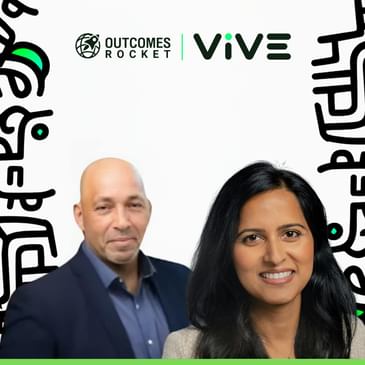
In this episode, Adam Mariano, President and GM of Healthcare at LexisNexis Risk Solutions, and Sushma Akunuru, Senior Vice President and CIO at Independence Blue Cross, discuss how their organizations are driving change in healthcare. Adam emphasizes the role of data ecosystems and identity management in improving care access and efficiency, while Sushma highlights Independence Blue Cross’s commitment to whole-person health and digital transformation. They explore the impact of technology on health disparities, stressing the need for partnerships and a balanced approach to digitalization. Adam warns of privacy risks from uncontrolled digitalization, and Sushma underscores the importance of modernization for better service and accessibility.
Tune in and learn why these leaders believe that focusing on social determinants of health and addressing health literacy is key to improving healthcare outcomes!
Resources:
-
Connect with and follow Adam Mariano on LinkedIn.
-
Learn more about LexisNexis Risk Solutions on their LinkedIn, Instagram, and website.
-
Follow and connect with Sushma Akunuru on LinkedIn.
-
Discover more about Independence Blue Cross on their LinkedIn, Instagram, and website.
-
Learn more about this video’s sponsor, UST Health, on their website.
[00:00:01] This podcast is produced by Outcomes Rocket, your healthcare exclusive digital marketing agency. Outcomes Rocket exists to help healthcare organizations like yours to maximize their impact and accelerate growth. Visit outcomesrocket.com or text us at 312-224-9945.
[00:00:35] Hello everyone and welcome back to an episode of the Beat Podcast recorded live at Vive in Nashville, Tennessee. I just want to highlight this podcast was brought to you by UST. UST offers health tech solutions that enhance trust, connectivity, personalization and efficiency. Learn more about UST at ust.health.
[00:00:59] So I've got two amazing guests for you today. First, I want to introduce you to Adam Mariano. He is president and GM of healthcare at LexisNexis Risk Solutions. And we also have Sushma Akunuru. She is the senior vice president and CIO at Independence Blue Cross. I'm so excited to have them both here on the podcast. Welcome. Thank you. Thank you. Great to be here.
[00:01:27] Yeah, so great to be with you guys here at Vive. How's the conference going for you? It's been fun. It's a lot to take in, honestly, but that's what you should expect in sessions like these. But there's a lot of thought-provoking conversations that we're going to have to digest that after we go back. Yeah. I think it's been interesting to see where the industry is right now, given a little bit of upheaval and a little insecurity. So it's been good to have conversations with folks.
[00:01:52] Good time to check in and sort of assess the strategy, refine. Great. Glad you guys have been enjoying it. Well, look, let's get things going. Talk to us a little bit about how your organizations are helping drive change in healthcare. You want me to jump in there first? Yeah. Go for it.
[00:02:09] Right. So our organization is very much focused on three big things. We look at sort of the provider data ecosystem, the consumer data ecosystem, and then sort of the places where healthcare happens in the middle. And it's built on a very long tail, 30 year history of managing identity in the United States. And so we're very much focused on enabling care, both from an access perspective and an efficiency perspective, but also helping organizations figure out really just how to do things more with less.
[00:02:36] Which has been a never ending theme in healthcare. Changes in administration, changes in policy really don't change that. And so it's an interesting thing. Those critical components are constant regardless of what era of healthcare you're dealing with. Totally. Yeah. Great call outs there.
[00:02:49] Yeah. Independence Blue Cross is the largest health insurer in the southeastern Pennsylvania area. And we are the hometown of, you know, in Philly, the largest company to go to for insurance for 85 years. For 85 years, we've really invested in the local communities. We are very huge proponent of whole person health, even before that phrase was coined. And there were some very focused investments in that area.
[00:03:15] I'm also very proud of what independence does in terms of really investing in health equity. That's a huge theme for us. We'll see how the new administration shapes the next steps, but we will continue to sort of invest in thinking about how do we serve everyone to the best of our potential so they can realize the goal of what I'll steal the thunder a little bit that we do more for less.
[00:03:37] We make healthcare accessible, convenient and affordable for most of our members. So that's the North Star. And there are several paths to go there to lead to us. Digital transformation is something I'm very invested in as the CIO. It's my job to sort of deliver solutions that will help enable that goal. So I'm proud that independence kind of invests in those priorities.
[00:04:01] Yeah, that's fantastic that the investments are there to improve equity, access, affordability, all key things that we want to improve. Let's talk about technology deployment. Can you share how your organizations deploy technology to actively and intentionally overcome health disparities? You want to start again?
[00:04:19] Yeah, I want to start with a thought I gathered in these two days being here at WIVE. I come from banking, right? Healthcare is not something that I grew up in my career. I've been here for four years. Coming from Bank of America and seeing a lot of transformation in the financial services industry, I was one of those early critiques who would say, why is healthcare a decade behind, right? Why are we not sort of doing the right things for our members?
[00:04:43] But I also see the challenges. I'm coming to kind of appreciate the complexity in healthcare. So I want to pause and sort of allow everyone to appreciate how far we've come when it comes to digital transformation. I wanted to share a quick personal story about my daughter had a fall a few months ago. We had to rush to the urgent care, multiple fractures on her foot. She's doing well now.
[00:05:06] That's good. That's not a problem, but it kind of opened up my mind to, from a consumer perspective, as well as someone who enables every step in that process. I was able to pull up my digital wallet and show the ID card. I'm in distress. I'm not scrambling for a plastic piece of ID card. The care provided was exceptional. The prescription was ready and available within an hour. I was driving back home. I was able to pick those drugs for her to sort of ease her pain.
[00:05:35] Went to a lab within the same day. And the all rounded experience and the information at my fingertips made me realize and go back and thank my team because we were part of building those solutions. The ability for me to look at portals and see what happened in the journey of that episode was invaluable. And I want to sort of, we don't pause and congratulate each other for those small joys. We sort of focus on when things go wrong or when you don't get information, you're sort of frustrated with the healthcare system.
[00:06:04] But I think we should celebrate how far we've come. And to answer your question about we continuously invest in whether it's delivering more for less, moving to the cloud to realize agility, scalability of our solutions.
[00:06:17] If we want to expand to new markets, we don't want to be stuck with mainframes and on-prem solutions. So that's one. We want to continue to harness AI. So that's another huge pillar we will be focused on to leverage the value of insights and advanced technology to sort of understand our data and harness the value and the insights that's provided by it. Yeah, I really appreciate you sharing the personal story and great to hear about those investments.
[00:06:42] So to Shushma's point, she points to really something critical, which is you had the sort of clear path experience, the perfect all systems go. I had the opposite experience too within the six month timeframe, but I'm just saying when, you know, we always focus on that versus, you know. But I think we want, and we talked about this a bit, we want that experience for everybody.
[00:07:03] And so how do we make sure that we can level the playing field for patients and consumers who don't have that pathway yet or have not figured out how to leverage digital transformation? They don't know how to use digital wallet. They've never been in their portal. They may not even have broadband access. We still have a whole host of folks in the U.S. who don't have broadband access or on a prepaid cell plan and don't have a way in.
[00:07:24] But sort of the equity lens there is also a bunch of people who don't have the literacy that you might have about your healthcare and don't necessarily understand what it is they're reading you as they get in and get access. So we spend a lot of time trying to help partners in this space do the same things, which is identify those barriers to care, figure out how they can reach wider populations. And to the point made, as they innovate and as they even just modernize their infrastructure to be able to reach more people at scale, how do you really make sure that you can lower the barriers for a lot of the communities that actually don't get access?
[00:07:54] That's an excellent point, right? The success in the advancement in healthcare so much depends on the partnerships. Like everything you pointed out is not possible with just payers determined or providers wanting to do the right thing. It's the ecosystem partners, like vendor partners, technology solutions, everyone coming together to really deliver on that holistic ecosystem that's well wired and delivers or eliminates the barriers to equity. Agreed.
[00:08:21] Yeah, some great discussion here, guys. And I love the point too about focusing on the wins, right? Because we have come quite a way. I read a book, call it Focus on the Gain, Not the Gap. And so I think it's important. We can't beat ourselves up all the time on those types of things. Some people would argue we're moving too fast right now. There's AI, there's so many different changes coming around. Are we moving too fast or could the rush toward digitalization, could it widen health gaps for others?
[00:08:50] I think we have similar thoughts around this, which is it's got to be a balance. There is a need to move quickly because every day you wait is another patient who either doesn't have access or has to wait in delaying care or doesn't realize they have a benefit they could be using or avoid some preventative measure because they don't understand the landscape. Or quite frankly, we've got overloaded providers and nurses and we go on and on about places where we're short on hands. So you have to move quickly.
[00:09:17] I think the risk is, do you move so quickly that you put patient data at risk or that you make people vulnerable because they downloaded an app they don't understand and shared their whole record with them? Or do we get into a new Henrietta Lacks situation where you're now talking about large-scale genome databases, which are going to be made available and patients just have to opt in, in quotes. All right. And then their data is in the ether forever. And we all know the internet way back machine exists forever. So there is no taking it back.
[00:09:47] So I think there's a conversation and we talked about this in a panel yesterday about licensing. Could you as a person license your data to folks in an effective way? Right now, there's no infrastructure for that, but it's a real conversation. So there's got to be some sort of balance between how to keep people safe, but advance quickly. Right. Just to add to that, I think one of the things I noticed, just again, comparing with other industries and healthcare, I think we get stuck a lot in solving the problem as a whole. Meaning we want to solve every problem for everybody and we wouldn't make progress.
[00:10:17] One of the guiding principles, at least at Independence, is we go attack things that we can control. We want to see those possibilities and we want to address and solve problems for populations that we see a clear problem and we think as a payer you can influence or move the needle a little bit. We want to jump in there and get those quick wins. There are other areas where there's a lot of collaboration required or a policy change or some impediment that could be a conflict between how much is convenience,
[00:10:46] conflicting with privacy or regulation. And hence, you can't make things very accessible for members. Members may not see that and they may be thinking, I don't know why I can't do this. My banking works so easily, right? I don't know why healthcare is not delivering these kind of cutting edge solutions. And you're kind of stuck in a little bit of a balance in compliance and privacy and data loss.
[00:11:09] But then there are other areas where, for example, why should a claim, which I think the requirement is 30 days to process a claim, which is allowable time, was stopping you from pushing your own limit? Like stick within 30 days, but can you try for an odd start of 15 days, right? Can you explain the denial of a claim in a much easily understandable language for the commoners? Those are things that you don't have to like, because we don't prioritize those.
[00:11:36] Our priorities are always in the big picture matters. We lose sight of some of these small wins. So I would say it's a balance, but we have to move fast on those things. Some great points there from both of you. Thank you very much for that. So on the same theme of advancements and trends, what do you guys see? Whether it be from here in this meeting, strategy meetings that you've been to, is really going to change health care?
[00:12:02] Well, I think the investment in whole person health has to continue. And it has to be, again, a very intentional effort because a lot has been said about, well, in the past, it used to be your physical health. Thanks to COVID, we've made virtual care accessible and there's a lot of acceptance to having a teledoc visit, right? Having a virtual care or a therapist talk to you.
[00:12:26] We don't want to go back to just because things are back to normal or almost close to pre-pandemic normalcy in terms of people interactions. We don't want to deny the fact that with the use of technology, you can actually get out there and be a much more modern operating ecosystem, right? So I think we have to push for that. Whole person health also includes not just physical and behavioral health. You have to think about, to your point, social determinants of health.
[00:12:52] Like how are you uplifting some of those areas where these are unspoken truth? Data is the only fact. Like it has to be data-driven analysis about how can you uplift some of the other areas and provide more equitable health. And that priority cannot be taken off the table. In some shape or form, it has to become an integral priority or imperative for every organization. That's my two cents. I mean, that's where independence is mindless. Yeah, I love that. I think you're spot on.
[00:13:20] I think the reality is we've accidentally or incidentally democratized healthcare poorly, I would say, in a fragmented fashion. There was a bunch of conversation about this yesterday. We talked about it in a panel. I was on the panel before me, talked about it. And it was a conversation of what started as some lifestyle brands, which really blew up, I would say, telehealth, but also digital and virtual health, have become more than just the thing they started as. They sold one vector of healthcare.
[00:13:47] And it might have been a, you know, we could call it a lifestyle drug or a choice, which has now moved into more integral care. And we saw the same thing with this sort of wax and wane of primary care through the pharmacies. That's true. And they're trying to figure out how to go back to virtual care. Home care is blossoming. We've got an approval and extension again for telehealth for the fourth or fifth time. You're seeing bigger reimbursements for kinship care and for home-based care. And a lot more. You're seeing not only just virtual doctor visits, but home visits again. You're seeing physicians actually make house calls again.
[00:14:17] And so I think you're going to have to offer, to your point, a full palette of whole person care. What are your preferences for primary versus preventative visits versus pharmacy? Do you want things delivered to you? Do you want to pick them up? Do you want an in-person visit? Mixed. Do you need help getting to that visit? If you're going to go to a specialty clinic, is there one that actually even operates during the hours where you might have an ability to access it and not by three buses? Right.
[00:14:42] So we're going to have to think about people as connected to not only the health system or the plan, but to the community and the commercial determinants, if you will, of what things look like from their front door. So how can I, for Sushma or Adam, we have to go visit the same doctor who might be looking at two very different commercial and physical realities and pathways to the front door. That's true. And most of the partners we talk to in the pay and the provider space will say to you, if I can get people over the threshold, I can fix them. Right. I can help them.
[00:15:12] They can't figure out why they can't get them to the door. Yeah. And that's going to be the gap as we go forward is can you build better monitoring, better community assets, better X-ray vision for why members and patients are noncompliant or struggle to leverage the services you're giving them. Right. And use all the benefit palette that's there, whether it's a language barrier, an access barrier, a financial barrier, just a lack of understanding or the fact that they're disengaged from the health system because they've been in an underserved care.
[00:15:42] Right. There's a lot of reasons. Some great points, Adam. If I can summarize all of that, you said with one interesting stat I just learned. 80% of the clinical outcomes are influenced by social determinants. Social determinants. We're on the same page. That's an amazing. It's shocking. It's alarming. Yeah. Like how much we focus on looking at your medical charts versus taking a step back and looking at you as a person and where do you come from? What's your need? It's one of the first stats I share.
[00:16:09] And then the other one I share is nine out of 10 people have issues with health literacy. So when you combine those two things, you've created a hole that people have a real struggle getting out of to get care delivery. Right. Yeah, I love this. We've had a lot of conversations along the same lines. Whole person care, value-based care. There's a lot more value-based care contracting. And I think we're starting to see a positive move toward value-based contracting that's actually delivering. So I love the focus and your thoughts on this.
[00:16:38] What would you say if you think about your organization, what's the biggest pain point that you solve? Well, there are a couple. More importantly, as a consumer, I go back to this example of, you know, something happened to me or my kids. I'm not thinking of insurance as the first place to go. We were traditionally not set up. My first reaction was I need to find a provider. I would just go Google them. Yeah. And then two, if I know a family doctor, I'm like literally scrambling. I just want to call and talk to somebody.
[00:17:07] I want a human on the other side. Self-serve doesn't come naturally. It's not my first thought. It's not an inclination to sort of open a mobile app and try to look for answers to my most urgent needs. I'm always supported by a lot of operation, like a process that's very handheld for many, many years. So one of the things independence is focused on is how do we become that modern organization and also be in the right place at the right time without sort of stepping overboard.
[00:17:35] For example, many years ago, there was this push for symptom checking, right? Can consumers, members sort of check their symptoms when they're not feeling well? And maybe insurance plans can play a role. There was a deliberation and we decided that's not a place we should be. That's the job of providers, right? We don't want to sort of step out of bounds. But then there are other areas like scheduling an appointment, like finding the right provider in the area that you live. That should be something a payer can easily provide.
[00:18:03] So it's really accessibility, self-service, moving to a much faster, more nimbler kind of a relationship of a payer because the role of the payer is very, it's clean. It shouldn't be more than as a member. If I'm going to my independence app and sort of checking every two hours, there's a problem. I should only go there to say, am I covered for something? Has the bill been paid? That's good. That's an awesome relationship to have and not more than that. Like behind the scenes though, I want proactive insights.
[00:18:32] I want to be taken care for, for who I am. I don't want to be sent these blanket updates or, you know, marketing material that applies to a million other people in my category. I want to know something very personal to me. If I've missed my mammogram and I'm due, I want to know that update or next best action tailored for me. I don't want to fall in the cast of sort of the serve everyone equally and then leave it to them to sort of solve their problems. Like that's the goal. Yeah, that's great. Thank you for that.
[00:18:59] And we spend a lot of time helping organizations like IBX build these systems and solutions through effectively being able to manage identity on the consumer side, but also provide critical insights on the provider side, as well as data in between, but also things like social determinants data and other data that we can offer as insights. So you can tune services and actually offer insights to the right person at the right time. Right. We're well aligned on the critical needs and wants. Well, thank you guys for sharing that.
[00:19:28] It's always good to boil it down to those one or two things. I've had a really good time chatting with both of you. Let's talk about closing thoughts. What thoughts would you like to share with us and the best place that our listeners could get in touch with you? Well, Independence Blue Cross, IBX.com, reach us. The best way to just follow us on social media and just check out all of the cool things that we are invested in these days and how we are really investing in, like I said, whole person health and health equity programs.
[00:19:55] Even for our group clients, we are very much expanding beyond the Southeastern area, like I mentioned. So it's a nice place for you to stop by. And if you're in the Philly region, I would say IBX Live is always there for you to chat with you. I'll leave with one thought. As consumers, please participate in health care. Let's not sit on the side and complain. This is something I told myself, made a pledge when I joined Independence.
[00:20:19] I am going to participate by giving as much information to gather that and help move sort of the changes that we want to see can only happen if consumers participate and provide that information. Thank you for that, Sushma. And I would share LexisNexis Risk Solutions. We're part of a larger company, the Relics Holding Company. You can reach us at LexisNexisRisk.com. Certainly follow us on social media. You can come visit me. I'm in Philly. All right. I'm your wife. I'm your wife, Sushma.
[00:20:49] I think I would echo what you said is tell people to participate where you can't participate. Help others participate, volunteer. Right. Be part of advocacy groups, be supportive. And honestly, take an interest in your own care, which I think is really the critical thing is if you're feeling like you're struggling with health literacy, you don't understand your own care. There are lots of organizations who can help you with insights, including IBX. Right. They help their membership. But there's also tons of advocacy groups. You have a difficult condition, contact one. They're all nonprofits. They're happy to help.
[00:21:17] I spend a lot of time helping those organizations historically. And they've helped family of mine who have difficult conditions. And I think it's just a great opportunity to get engaged. And they can offer you some really easy first steps. Thank you, Adam. Really appreciate that as well. Ladies and gentlemen, thanks for tuning in to this podcast. We had Adam Mariano. He is the president and GM of healthcare for Lexus Nexus Resolutions. And also Sushma Anukuru.
[00:21:44] She is the senior vice president and CIO of Independence Blue Cross. We'll leave in the show notes all the ways to get in touch. And we do want to give a big shout out and thanks to UST for sponsoring this episode. They're at ust.health. Check out the show notes for all the ways to connect. And Adam Sushma, thank you both so much for being part of this. Thank you. Thank you for the opportunity.
[00:22:21] This podcast is produced by Outcomes Rocket, your healthcare exclusive digital marketing agency. Outcomes Rocket exists to help healthcare organizations like yours to maximize their impact and accelerate growth. Visit outcomesrocket.com or text us at 312-224-9945.