
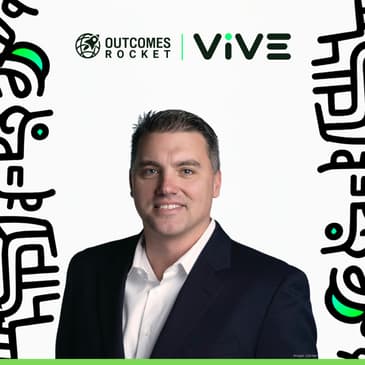
A company rebrand represents growth and a renewed commitment to solving key issues in the healthcare space with a focus on affordability, transparency, and quality.
In this episode, Travis Dalton, President and CEO of Clerativ, discusses the company’s rebrand from Multiplan, highlighting its evolution, technological investments, and expanded role in healthcare. He explains Clerativ’s mission to align payers, providers, and employers through data-driven insights and transparency. Travis also explores emerging trends like AI and cloud-based solutions, stressing the need to integrate technology with improved business processes for cost reduction and quality improvement. Lastly, he shares Clerativ’s commitment to supporting rural healthcare providers with transparency tools that enhance accessibility and sustainability.
Tune in and learn how Clerativ is paving the way for a more transparent, affordable, and equitable healthcare system!
Resources:
[00:00:01] This podcast is produced by Outcomes Rocket, your healthcare exclusive digital marketing agency. Outcomes Rocket exists to help healthcare organizations like yours to maximize their impact and accelerate growth. Visit outcomesrocket.com or text us at 312-224-9945.
[00:00:27] Hey everyone, welcome back to the Beat Podcast recorded live at Vive from Nashville, Tennessee. I've got the privilege of hosting Travis Dalton today. He is the President and CEO of Claritive. They are a healthcare technology data and insights company focused on affordability, transparency, and quality serving the entire healthcare ecosystem.
[00:01:00] Travis, thanks so much for joining us today. Yeah, thanks for your time. Thanks for having us. It's our pleasure. So look, MultiPlan, which is what the previous name made a huge announcement. What led to this decision and what does it mean for the company? Yeah, today is a exciting and fun day for us. They're not all fun days, but this is a fun one.
[00:01:20] So we've, companies had a long, proud history as MultiPlan and we're proud of the work that we've done for over four decades in terms of we have a network, we provide cost solutions in the industry, waste, fraud, and abuse, and other capabilities. But I think that our point of view, I've been here a year now and it came from the health tech space serving the broader continuum of healthcare.
[00:01:42] I think that the brand doesn't fully represent all that the company does or the future of the company and where we're ultimately going with our tools and technology. And so we felt that now, I tell the team all the time, you don't rebrand because you're, it's not a shiny lure. It's an earned thing.
[00:02:01] And we've had the opportunity to earn it. So we're making large investments in technology, data, AI. We're serving a broader set of constituents across healthcare, payers, providers, employers, brokers, consultants, government. So we felt like now was the time ultimately to launch that rebrand because we put enough, I think, sweat, equity, and hustle in and we've earned it with some investment. And so exciting day for us to relaunch this Claritive around the new set of messages that we think reflect who we are.
[00:02:30] Well, that's, that's exciting and congratulations. Yeah. Thank you. Appreciate it. It's a lot of work for the team, but I should shout out to them. Thank you to the team. They did a heck of a lot of work, which is much appreciated. Awesome. Big shout out to the Claritive team for the work that you guys have done. So let's dig in. Let's find out more here, Travis. How's your organization helping to drive change and healthcare delivery? Yeah. There's a not well understood concept sometimes in healthcare.
[00:02:56] You hear a lot, there's a lot of probably a little more vitriol in healthcare than there should be in my view. And when I think about healthcare and the reason we chose an aperture for our logo is that I think there's a mutual interest that exists. And when I think about healthcare, I served providers in health for over 20 years at Cerner and Oracle Health before I came here. And I think providers want to deliver great quality. They want access to care. They want to get a fair price. That makes sense.
[00:03:25] I think payers want to manage risk, serve employers, provide network access to care, and they want a fair price. And then ultimately employers want to drive costs down and benefits up. And when you look at those three things, that can be the same thing. And to me, the same thing is great information, great data, technology insights. And in our view, we're saying opening the aperture really to shine the light on transparency in healthcare.
[00:03:51] And we think that fits with where the current healthcare is going with where the administration is going. And we believe we're super well positioned for that. And so serving that mutual interest is, I think is well beyond having a couple products that do something inside of healthcare. So positioning the company and the brand in that way, what we're working on. Love it. Very aligned. And you're right. We all want greater care, the right information at the right time at a fair price. Well, there's a lot changing in healthcare.
[00:04:20] What emerging trends and technologies do you feel, Travis, will have the biggest impact on healthcare over the next five years? Yeah, it's an interesting moment. I said yesterday or Friday, I was talking to someone and was thinking about healthcare over the decades. And I remember vividly when I started in 2001, one of my first meetings, our CEO stood up and pulled out a pen and held it up and said, this is the most dangerous instrument in healthcare. I thought about that. I was like, oh, that's interesting.
[00:04:49] So what are we trying to do here? We're trying to take the pen out of healthcare. Fast forward a decade later, and you had a lot of data and digitization of the record. And then it became, hey, interoperability is the next thing in healthcare. What do we do with the data? And in my view, the next thing is going to be is truly around not just the word transparency, but the idea of actionable insights.
[00:05:14] And people get upset with me for saying this, but healthcare is like really good at problem admiration. I got all this data and wow, we have a problem. Okay. What are we going to do about that? Yeah. And I actually think technology has a role to play as it relates to that. So you'll see no doubt you'll see emerging technology around AI and what you can do with AI agents in terms of bringing thoughtful insights, but also in terms of automation inside of companies.
[00:05:44] So we're using it to automate business processes, how we think about that very much. So I think scale capability and technology helps take costs down. So continue the idea of cloud based solutions, scale products helps take costs down out of healthcare.
[00:05:59] So in my view, being on the front of that's important, which is why we just made a massive investment with Oracle to modernize our data infrastructure, but also create a data layer that's API enabled so we can serve as a platform, which will be very important.
[00:06:14] And then the last thing I would say about it is that you can't talk about the technology if you don't talk about business processes and everyone's fixated on the thing, but the thing changes how you do business inside your company, but also externally in the market. And my view is that companies that think deeply end to end, not just about AI, but also about how the business process improves will ultimately be winners on an end to end basis and technology, if that makes sense.
[00:06:43] Yeah, no, I love it. At the end of the day, a lot of these things are tactics, right? And if you don't have your processes and your strategy in place, they're just tactics. Yeah. And in our case, we're healthcare is there's a lot of capital in it. And there are a lot of I walked through this the floor out here today. If I was a buyer in healthcare, I'm not sure what I would buy. There's 1000 vendors out there selling something.
[00:07:10] So our view is we're not going to be everything to everybody, but we are going to be a company that can do multiple things for you at scale around affordable products, transparent insights, and then ultimately around quality and analytics. More specifically, we think we can help clients improve reimbursement rates and take costs out of their health plan with technology, lightweight, speed to value, low implementation cost, high value.
[00:07:38] We win if they win well aligned. So that's how we're thinking about it. That's great. And you made it clear in what you just said, but if you wanted to reemphasize, what is the biggest pain point that your organization is helping solve for? Yeah, I think the silos in healthcare are crazy. Data is out there, but it's in pockets everywhere. I think the thing that we can really focus on is cost. We're not an insurer. We're not a provider of care, but we can help, I think, on the cost side.
[00:08:07] And so very specifically, we're going to continue to focus on the network we provide. So we have 1.4 million providers that we work with every day that provide network access to care. We have cost products that really help look at healthcare, look at specifically out of network costs. We don't apologize for that. We think it's important and we think it matters and takes costs down for patients and members.
[00:08:31] And then as we move across the continuum, again, we're working more into those products that take publicly available data and use that data in a way that's meaningful, that gives you a very specific action. Examples would be, and maybe we'll talk about rural health in a minute and I'll save that, but we have some examples of things we're doing with rural America to really help them remain viable and open and access to care.
[00:08:57] Now that's great. Thank you for that. And is the name of the game ultimately lowering costs for employers? Yeah, in our case, yes, it is. Okay. Yeah. And I just wanted to make sure I understood. Absolutely. So as you look at a couple things. We need it. Totally. We need it. We need it big time. Yeah. And it can be done. It's not mission impossible. It's something that we can achieve. And we actually have a product, part of the rebrand, again, earning it. Yeah. We have a product called Benefit Insights. And essentially we ran that on our own health plan.
[00:09:26] Awesome. Basically what you do is you look at your health plan and you evaluate all the potential iterations of that health plan in the market against all of the network access to it and or the what's inside of your plan. And then it comes out and says, hey, we think you should do the following to take cost out or consider your network options and get more benefit in the following way. So we were able to save 14% of our cost huge and increase our benefit. That's awesome.
[00:09:52] And so we're selling that through broker channels, but we're also going to go direct to employers because I think it needs to be out there. And so that's a very tangible thing. Again, it's super lightweight. And that's not something that takes a year to implement or two years like an EMR. It's okay. I need a few data sources. I'm using publicly available data and let me run it. I'll bring you the analytic. If you don't realize the revenue maximization or the cost out, you don't have to pay me. That's a pretty compelling aligned financial model as well. So 100%. Yeah.
[00:10:21] 100%. Love that. Well, thank you for addressing that question. And let's bring up this rural health care piece. Why is addressing rural health care and health care deserts important declarative? Yeah. So it's interesting. The personal side of that is I'm from a small town. And so you work for a long time to try to get a job like I have. And one thing you do is you do get to do focus a few things that are really important to you. I love it. So I'm from rural America. I feel like I'm like an ambassador for the state of Ohio because I'm from the Midwest.
[00:10:49] But my mother worked in a rural hospital for 25 years and she did lots of jobs. They were all clerical administrative jobs. And I tell people that the rural hospital in my town, the community hospital raised me. I didn't have we didn't have daycare. So I would go there and sit in the waiting room. I probably have good immunity because of that. I was sitting there all day. But the point is, it was more than just like that's where we all got our care and we had access to care and all that.
[00:11:17] So when I came here, I started to look at our product set and I thought, look, we can do something well beyond what we're doing today with horizontal products and vertical markets. I think one of those markets could be providers. So I just called the folks at the Rural Health Association. I'd like to help. I think we can help you. And they looked at us sideways like, really? And we've heard about you guys, but not in this sense. Yeah. Well, you should just give us a shot. And so we ultimately started spending time with them.
[00:11:45] And we've launched a partnership with the National Rural Health Association and we'll be presenting with them tomorrow. Well, we'll be going out and we're actively working with them to provide them our transparency platform, which allows them to look at their charge masters lines of business and evaluate against other hospitals of like size and scale. But it also allows them to look at that versus the network agreements on offer. And so they can look at their competitive position.
[00:12:13] They also can look at how they're doing in terms of maximizing reimbursement in a fair way. And that allows them to try to improve their revenue maximization. And that's right. Yeah. The last thing I'll say about is, as I look at again, in my role, I try to think a little more macro than just you look at health care costs. Again, the idea that we have hundreds of rural hospitals that are shutting down, that's bad for access. It's bad for communities. It's bad for health care.
[00:12:40] And if you can keep one of those open, in my case, rather than trying to not getting care in Delaware, Ohio, I had to drive to Columbus, Ohio. The cost in a major metropolitan area is 10 to 20 percent higher. So it actually makes health care more expensive and less accessible. And so what we want to do is work with them really closely to keep access local, to keep people employed, to drive care quality and also to keep costs down. And that's the fundamental crux of our partnership with NRHA. That's awesome.
[00:13:10] Well, look forward to your session. And that's tomorrow, you said? Tomorrow. Yeah. Brock and I will be up there. Yep. Look forward to that. And for everybody tuning in, you're probably listening to this. That session will be recorded and we'll make sure to link it up inside of the show notes so you could check that out as well. Okay. So working with rural health care organizations, how does Clarative improve that price transparency for patients and also help with health equity?
[00:13:35] Yeah, I think like I said, for me, in terms of health equity, it's all about access. Let's meet you where you are. And people that live in those communities that have access to care in those communities and are around people that they know and receive it that way is important. So making sure that's available, it remains important.
[00:13:54] And then on the rural, not to be repetitive, but I think it's one is continuing to think about our network business and can we curate networks that work really well for rural America? And then beyond that, obviously, we the other thing that's interesting about this was that when I came to this company, I told everyone we're going to make to be simple. We're going to make more better stuff. We're going to make more better stuff. How are we going to do that? We're going to listen to what people need.
[00:14:23] We're going to listen to our clients and we're going to make things. So we're going to test that. And so I told the team, we're going to go make a product, a transparency product for the provider community. And they came back and said six months and I told them you have 90 days. Then they did it. And it's pretty darn good. And so to me, it was testing out the muscle of the company as well as the product iteration and of listening, making something, et cetera.
[00:14:51] So to me, it's been a really good partnership and trial for us. And that's the work that we're going to go do with them, competitive position and price compare. That's great, Travis. And by the way, I love the I'm a fan of the is it the Peter principle where you if you have a month or a week to get it done, you'll get it done. It's one of those principles. But I think the Peter principle might be where you're like promotes your level. Maybe that's the one. Maybe that's the one. I can't remember. It's one of the principles. It's principle centered.
[00:15:20] I'll do my homework and then I'll add the principle to the show notes as well. Well, Travis, phenomenal to hear about the rebrand, about the commitment to transparency, to reducing costs. Just an incredible opportunity for our listeners to connect with you. Where can they do that? Where can they connect with you and the team at Claritive? Yeah. So I'm going to say one thing if it's okay. Please. Yeah. And what you'll hear from me and us is that we're super proud of what we've done.
[00:15:49] And so we'll continue to use the multi-plan as a sub brand as it relates to our network and some of our products. And for me, when I say transparency, to me, it's not transparency for one, it's for all. And when you have the same information and data that's available, I think you end up with a situation where markets actually tend to make good decisions.
[00:16:08] And so you find yourself in a spot where with data insights, transparency and thoughtfulness, markets ultimately start to put themselves in a position where cost and quality improve. And that's excluding regulatory pressures, which are going to always be there. And we'll continue to be thoughtful about those. And we think regulation matters and it makes sense. But we can use that regulation around the Transparency Act and otherwise in order to create a better marketplace.
[00:16:36] And that's really a part of what we want to do for the next decade, not the next minute, which is why we kind of branded the company. You can find me on LinkedIn anytime. I'm very responsive as well. Or you can find us at claritev.com as well, where we fully refreshed our website, the brand, the messaging. We've got vibrant colors in there. So we're happy for you to come see us and give us feedback. Outstanding. We're listening. Thank you for that, Travis.
[00:17:01] And folks, make sure you check out the show notes where we'll leave all the resources and ways to get in touch with Travis Dalton, president and CEO at Claritive. Get in touch with him and his team to see how you too could bring transparency and reduce costs in health care. Thank you all for tuning in. And Travis, thanks for being with us. Thanks for your time. I appreciate it. Thank you.
[00:17:33] This podcast is produced by Outcomes Rocket, your health care exclusive digital marketing agency. Outcomes Rocket exists to help health care organizations like yours to maximize their impact and accelerate growth. Visit outcomesrocket.com or text us at 312-224-9945.