This podcast is brought to you by Outcomes Rocket, your exclusive healthcare marketing agency. Learn how to accelerate your growth by going to outcomesrocket.com
Microsoft's use of AI and technological advances to reduce nurses' documentation burdens, improve patient care, and address the challenges of AI adoption in healthcare.
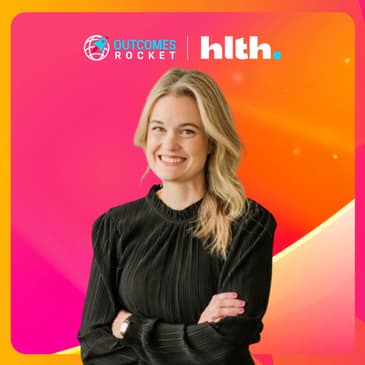
In this episode, Allison Stalla, Director of Clinical Applications at Microsoft Cloud for Healthcare, talks about Microsoft’s technological advances aimed at reducing nurses' documentation burdens and highlights AI's potential to ease their workloads. She shares insights into her healthcare technology background, the impact of AI on reducing nurse burnout, and the importance of change management and data literacy for AI adoption. Allison also emphasizes Microsoft's collaborative efforts with Nuance and their development partners, showcasing nurse-centered technologies and ambient voice technology pilots to aid bedside documentation.
Tune in and discover how AI is transforming healthcare by reducing nurses' documentation burdens and enhancing patient care.
Resources:
- Connect with and follow Allison Stalla on LinkedIn.
- Follow Microsoft on LinkedIn.
- Visit the Microsoft Cloud for Healthcare website and check out their blogs.
Fast Track Your Business Growth:
Outcomes Rocket is a full service marketing agency focused on helping healthcare organizations like yours maximize your impact and accelerate growth. Learn more at outcomesrocket.com
[00:00:01] This podcast is produced by Outcomes Rocket, your healthcare exclusive digital marketing agency. Outcomes Rocket exists to help healthcare organizations like yours to maximize their impact and accelerate growth. Visit outcomesrocket.com or text us at 312-224-9945.
[00:00:34] Hey everyone, welcome back to the Beat Podcast live in Las Vegas for HealthUSA's 2024 meeting. I'm so excited to be kicking off the podcast today with Allison Stalla. She is the Director of Clinical Applications at Microsoft Cloud for Healthcare. We're going to be covering a lot of great topics around the burdens on nursing, clinicians, and how Microsoft's making bold moves to fix those.
[00:01:02] So Allison, thanks so much for joining us. Thanks for having me. Appreciate it. It's a pleasure. So before we kick things off, just tell us about you and tell us about Microsoft Cloud for Healthcare. Absolutely. So I've been in healthcare tech for over 15 years and I've had a journey through marketing and new product development. And then most recently spent a couple of years incubating a new product for nurses and product management. And so that's when really been my focus.
[00:01:29] I've been listening to customer voice through interviews and focus groups and really bringing that customer voice to the engineering and product team so that we can build something that's purpose built for nurses and really include them in that development. So that's what I've been really excited about. And my new role at Microsoft kind of encompasses all the clinical applications that we're thinking about around health. Well, that's fantastic. So great to see you again, by the way. Yeah. We saw each other at Vive.
[00:01:57] That's right. And it's nice to be in the microphone spot. For sure. For sure. So you've been busy. You've been doing a lot of listening and you've got some things to share today. So I'm excited to dig in. What are some of the ways in which Microsoft is thinking and seeing the value of AI for nurses in the near term? Yeah, great question. So I'm really excited about the promise of AI, and I think it's going to provide a ton of opportunities for clinicians across the entire hospital.
[00:02:25] But I'm also really excited about some of the near term wins for nurses. And the biggest one is easing that documentation burden. I don't know if you're super familiar with the way that nurses document today. It's in flow sheets. It's basically like a glorified Excel spreadsheet with data entry. It's very cumbersome. You take folks that wanted to go into clinical practice care for patients, and they've become like data entry analysts. And so we see that AI has a ton of opportunity to really support that.
[00:02:52] And through that, we're going to see things like time savings and the ability for nurses to now focus on higher value clinical tasks, go back to the bedside and overall improve that nursing experience. You know, nursing burnout is a huge issue. Nursing turnover is a huge issue. And then nursing shortages are a huge issue right now. And so being able to support nurses in their journey, that's something that AI is going to be able to impact pretty immediately. The other thing you, you know, cascading from there, you asked about nurses.
[00:03:20] But I also think we're going to quickly see how this improves the patient experience through better focused patient care and then supporting better patient outcomes. And again, these aren't things that we're talking about. You know, you and I will sit down and talk about five years from now. There are things that, you know, when you and I get together next year, I think we're really going to be able to see some of those metrics and some of those outcomes. I love it. You know, and it's tackling these quick wins, the low hanging fruit and these flow sheets are it. Are these flow sheets living inside of the EHR? They are. Inside of Epic. So they're. They are.
[00:03:50] And depending upon where you are in the unit, you might be required if you're rounding on a patient every hour to go and fill out some components of that every single time. Interesting. Right. Can you imagine? It's a pain in the butt. Absolutely. It's not what anyone wants to do. Agreed. Agreed. And patients feel it. And so, you know, AI is great, but it also comes with its challenges. What do you see as the barriers to adoption for AI technology?
[00:04:16] Some of the barriers that I think I want to talk about first are some of the undercurrents I think right now in articles and online chatter is this fear that AI is going to come for jobs. It's this fear that or this understanding that maybe only younger generations are going to really take on to AI. And I think that's a misconception that's not really supported by the data or from what I'm hearing or seeing in the industry right now. There was a great McKinsey article that came out a couple of weeks ago.
[00:04:43] And one of the things that I love about it is that it shows that over 60 percent of nurses would like to see more AI and would like to see it incorporated in their work. And that's a study that also broke it down by age groups. So across, you know, 20s, 30s, 40s and beyond. And it was pretty consistent across the board. And so this idea, this really aligns with our experience at Microsoft and the partners that we're working with. Some of the more seasoned nurses, as we like to call them, they could be some of the biggest champions of AI.
[00:05:13] And when you talk, you know, when you get below that headline and you start to actually show use cases for how AI can support, there's not a ton of fear. There's a ton of excitement. That's awesome. You know, oftentimes we take those things that we hear, but we don't validate them with the data. The surveys are showing willingness and, in fact, a big desire to adopt these technologies.
[00:05:34] How should organizations be thinking about the change management and data literacy required to bring AI to their nursing workflow? Change management, data literacy. I won't say they're barriers, but these are the things that I'm more interested in seeing how organizations tackle as we bring AI to workhorses. Some of the things that I'm seeing through our partners and things that I'm hearing where change management is happening successfully, the first is leadership support.
[00:06:00] And that's beyond just nursing leadership, but you can have the CIO, the CEO, the CMO that are really in this mindset. I heard someone talk about it yesterday on a panel. It's not just about this pilot mindset. It's about really leaning into new models of care, new ways of doing things. And when you see the leadership team kind of running around it, that's a great ground for AI and for technology. The second thing is that change management is a lot easier when the tech's incorporated into their workflow.
[00:06:29] The nurse, they like to call it like the nursing tool belt, but nurses running around on floors these days, they've got tons of things that are kind of just attached to them. I did a shadow a couple of weeks ago where an organization literally have their nurses in a unit with three different cell phones. So you can imagine, there's a lot, right? There's a lot in the nursing tool belt. So you can imagine when I say that nurses don't want another tool in their tool belt. They really want the AI and these new technologies to be incorporated in whatever they're already using and already doing.
[00:06:58] The third is around accuracy and trust. And it's one thing to say it, but I think we're really focused at Microsoft on like, how do we build that trust? How do we show that work and show it rapidly? Because that's how you start to get over adoption. That's how you start to see that change management. And then finally is building tools that are actually designed for nurses. So nurses have a history of adopting technology that's really just thrown at them from other departments, from other clinicians. And we at Microsoft have been bringing them along in the journey from the start.
[00:07:27] Like I said, I've been working on this project for about three years now. I personally have nearly about 300 conversations with nurses and nursing leaders in that time. And that doesn't include all of the work that our teams have been doing from there. And so we've been including them in design. We've been including them in testing. We've got Microsoft nurses on staff. Our development partners, like there's not just one, there's nine. So really making sure that they are hand in hand with what we are working on, with what we are building.
[00:07:54] And when you hear nurses talk about how they want a seat at that table, how they want to be a part of that design process, and then they get to actually see that come to fruition with actual tools that they get to use, that makes a huge difference too. So that's on change management. I think the data literacy part is something that I'm really excited about. It's going to be the foundation for how we interpret data, how we evaluate it, how we make informed decisions about it. And I'm hearing more organizations talk about, you know, how do we build up this competency?
[00:08:23] How do we start to train nurses and nursing leaders and other leaders in the organization to understand what's coming? And I think as an industry, we're all going to learn and kind of grow on this together. Not to date myself, but when I was in college and my senior thesis, we couldn't cite the internet because we couldn't ensure that, like, who was writing these things? Was it good? And now we can go and be like, oh, this is the American Medical Journal, right? Versus this is like Saul on Reddit.
[00:08:51] And so we've learned, right? And I think, again, like six months from now, you and I will sit down and we'll have a lot more rules and rubrics for how we talk about data, how we talk about the data that's coming out of AI. And part of building up that data is going to be working with a cloud provider to really be able to manipulate that data, to work through it, to understand it. And there's just so many opportunities there. So it's coming. I love it. And to secure it, right? Absolutely. To keep it secure. Always. I love that.
[00:09:21] Super insightful. I think, you know, having seen what Microsoft has done over the years, I think you guys are definitely walking the walk, not just talking the talk. Absolutely. You hear companies saying, we're in it for the nurses. But Microsoft was one of those companies that I first saw that had a chief nursing officer. Yeah. And now you're including nurses throughout the whole process. And so your actions speak louder than your words. Absolutely. And you have to remember, too, with the acquisition of Nuance,
[00:09:51] we have that base of hundreds and thousands of physicians as well. So we really understand what it takes to bring technology to workforce and let them use it, you know, at scale. And then Microsoft, and we're using it every single day. So they've obviously got some experience, some prowess in what we're doing here, too. And it's really exciting to kind of see those companies come together and really focus it on nurses. That's fantastic. So the theme for this year's event is bold.
[00:10:19] Can you give us an example of how you and the company are being bold, taking bold moves to make healthcare better, accessible, more equitable? Absolutely. Not to reiterate what we were talking about earlier, but I think it is really bold for a company of our size to be as focused in building technology with nurses at the center. It's not something that every large company chooses to do. It's not something that's necessarily easy to do.
[00:10:47] And we've made a really intentional purpose-built journey around how are we going to build solutions that make sense, that work at the bedside, bring along nurses on the clinician front, bring along physicians, bring along radiologists. And I think there's a real boldness in especially a company of our size to continue to go back to the customer and continue to include them in our work and to think about what we're building and what it's designed for. That's great. I love that. It is certainly a bold move to do that.
[00:11:17] And we appreciate the work you guys are doing to make healthcare better. Tell us a little bit more about the technology Microsoft is currently developing for nurses at the bedside. Yeah, absolutely. We've got nine incredible development partners. Some of them have been working with us for a couple of years now. We're in what's called private preview. So it just means it's not generally available for the public yet. But we're focused on bringing ambient voice to kind of capture what nurses are doing at the bedside and then supporting that documentation burden.
[00:11:45] Much like we talked about before, we are bringing it into a workforce tool that they're already using. In this case, it's embedded in EPIC's mobile nursing application, Rover. So something they're already using today. And the nurses right now are actively using that technology with patients in med-surg units, giving us tons of feedback on it. And we're really excited to share more about it in the next year. And we've got a blog a little bit more about what we're doing and some press releases. So folks that are interested in learning more can go find them there on the Microsoft website.
[00:12:15] Amazing. Thanks for the sneak peek. Yeah, absolutely. It's certainly exciting and something for everybody that's listening to be on the lookout for. And the way you start, you go to the show notes to get access to the press release that Allison just mentioned, the blogs that they're putting out for us to all learn more. Allison, I can't thank you enough for being with us, for sharing the vision that Microsoft has for clinician-built technologies. How would you close us out today? What's a good call to action and where can people find out more? Absolutely.
[00:12:45] Well, there's a plethora of things you can learn on the website. But I think the big call to action to the industry is to be bold. Speak up to your tech providers. Ask to be included. Give feedback. And we certainly are interested in hearing that feedback. So if you've got feedback on things that we're building or you want to be a part of that work, reach out to your Microsoft partner because we certainly would like to bring you along. Love that. So take advantage of today's message, folks. Reach out. Be bold.
[00:13:11] And just, again, want to thank Allison very much for being with us. Allison Stala, Director of Clinical Applications at Microsoft Cloud for Healthcare. Thanks for being with us, Allison. Thanks for having me.
[00:13:46] This podcast is produced by Outcomes Rocket, your healthcare-exclusive digital marketing agency. Outcomes Rocket exists to help healthcare organizations like yours to maximize their impact and accelerate growth. Visit outcomesrocket.com or text us at 312-224-9945. Thank you.