
LLMs are great with text but struggle with extensive structured data and expressing insights about it.
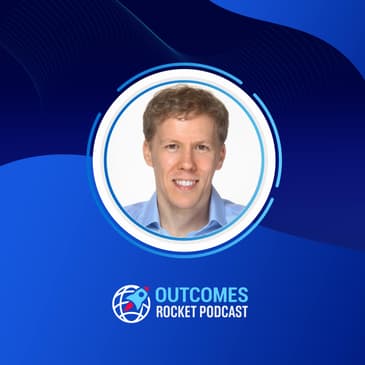
In this podcast episode, Steven Wasick, the founder and CEO of infoSentience, introduces their AI platform and how it’s already impacting healthcare by turning vast datasets into human-like narratives, thus providing valuable insights. Unlike general generative AI, infoSentience specializes in handling large structured datasets, offering a unique solution for organizations overwhelmed by data. Steven explains how infoSentience collaborates with IU Health to automate doctor bios, ensuring continuous updates for accuracy and time savings. He also shares how the platform's versatility extends to sports, with CBS Sports and the Chicago Mercantile Exchange, providing customized reports and adopting a journalistic approach as it weaves key moments into compelling stories.
Tune in to learn how infoSentience's innovative AI platform transforms data into actionable insights, revolutionizing the approach to data analysis!
Resources:
[00:00:01] This podcast is produced by Outcomes Rocket, your healthcare exclusive digital marketing agency. Outcomes Rocket exists to help healthcare organizations like yours to maximize their impact and accelerate growth. Visit outcomesrocket.com or text us at 312-224-9945.
[00:00:29] Hey everybody, Saul Marquez with the Outcomes Rocket. I want to welcome you back to the podcast. Today I have the privilege of hosting Steve Wasick with us. He is the founder and CEO of InfoSentience. It's an AI platform that builds insights and makes them available to you and your teams. Such a privilege to have you back on the podcast, Steve. Thanks for joining us. Yeah, Saul, thanks for having me back.
[00:00:55] So I wanted to just level set with the audience. Tell them a little bit about you and tell them about your company. Our company has created software that can take any data set, figure out what's interesting about it, and then write about it like good human analysts. So it's, we call it data generative AI to differentiate it from just sort of general generative AI, which tends to struggle with large data sets, right?
[00:01:23] So LLMs do great with taking text data. Now they're even doing great jobs with some visual data. I mean, they're doing amazing stuff, but they, one thing that they struggle with is taking huge amounts of structured data and then talking about it, right?
[00:01:38] So our technology fills what's currently a pretty big gap in the generative AI space, allowing people to, organizations that have a ton of data that are sort of overwhelmed with data that don't have the time to analyze it or to communicate it on an individual level with, let's say you're each single client or each single potential salesperson on a team, whatever it is, where you have a huge array of people who would love to have individual analysis of their data.
[00:02:07] That's done at a high level, right? Not just basic templates or MATLABs, right? But something that really actually goes through the data and finds the most insightful information and shares it with them. Our system is able to do that. And we've been able to do that in a few verticals, including healthcare.
[00:02:26] I've had the chance to see Steve's platform, guys. It basically takes a bunch of data and it weaves stories and it creates graphs and it helps tell the story about what's going on in the information. So I think it's a pretty impressive tool. Steve, tell us a little bit about, you know, some of the healthcare indications for your platform.
[00:02:46] Yeah. I mean, we're currently working with IU Health, which is the largest hospital group here in Indiana, which is where I'm located. And for them, what we're doing is automatic, automated doctor bios, right? So they have thousands of doctors that are in their system. And of course there's a lot of churn, right? There's a lot of people joining or leaving.
[00:03:05] Right. And then on top of that, you know, there's a lot of changes within individual doctor bios, right? They can change locations or they added a new service that they're providing. And the other thing that changes constantly is the actual reviews that they're getting from patients, right? So their ratings are changing, the types of things that people are saying are changing.
[00:03:27] And what we do is automatically adjust their biographies to take into account all those differences. And the great thing about that is that, you know, first off, it saves them the work of having to create a new bio every single time that a doctor joins, which is a lot, right? So there's, there's, there's that. But then the other thing is that once the bios are up there, they're constantly accurate, right? Because there's literally thousands of doctors otherwise that you have to keep.
[00:03:56] All their information, you know, all their information, you know, lined up with their bio. And then the other thing is that because we're constantly updating the doctor bios, it really helps with the search SEO, right? Because Google is recognizing that, hey, this is a new piece of information as opposed to, you know, somebody else's bio for another network that's just been sitting there for three years, right? With no change, right? Like we're constantly updating, adding new quotes from patients, right? Using AI to make sure that those quotes are actually good quotes, right?
[00:04:26] Right. That are not, not negative, right? So it's, so the, the bios for IU health are just substantively completely different in terms of their, their impact and ease of use from the bios of any other network. And, and is it just a set it and forget it? Like they basically give you the different data feeds and I do have a question on the data feeds and then that's it. It just does it on its own.
[00:04:52] Completely set and forget. So we just update them automatically and they never have to worry about writing a doctor bio or making sure that it's accurate ever again, because they, once they, and that's very typical for most of our clients, right? Like if they give us the source of the data, that's pretty much all we need to have in order to get rolling. And then once we have that source of data, we set up our systems to update however often people want.
[00:05:19] It's a lot of, it's a lot of, it's a lot of different clients have different use cases, right? And some of them require monthly updates, but others are literally like daily or minutes for every five minutes we need an update. And as long as we have access to the data, you know, it just, it just runs just like a, like a, like a website was, you know? You know, one of the most common problems in really directories is, is, is addresses. Does, does the system also update their address?
[00:05:47] Oh, absolutely. And anything that they have or, or, or, you know, publications, right? Like if they have new publications, I, um, I mentioned that if they, if they've added new services, right. That they didn't have before it will update to that. There's no real limit, you know? So it's, it could be anything that you have any, any piece of structured data that you have in your system that you wanted to have in the bios is something that we could add.
[00:06:08] We're, we're not currently doing things like pricing or, you know, or, um, things like awards or, or, uh, um, different, if you're parts of different groups, right? Like you're part of the American Medical Association and you either join them or you leave them, whatever it is, if it's in your system and it's, and it's relevant to your, to the users, right. Then we can put that in. What are some other ways that this type of system can be used?
[00:06:38] Yeah. One of the things that we do that's most public facing is, is in the sports realm. We work with CBS sports to do two big different products. One of them is the, our fantasy sports product, which goes out to every single fantasy football and baseball player on CBS sports. So this is a huge amount of scale, right? Because every single person gets their own individualized report, not only, you know, at the end of the week, but like previewing the week, looking at power rankings, looking at your draft, looking at the transactions, right? Like everything that you would talk about in the NFL.
[00:07:08] Right. Would be talked about in your own personal fantasy, but customized to you. And so, you know, we generate literally tens of millions of reports for, for, for users in that space. We also cover actual live sports. So we just provide recaps and previews of NFL games, European soccer games.
[00:07:28] So there's just a huge number of different games, right. That go right, right onto the CBS site. And they, they read like they were written by a human journals, right? Because it's not, it's not a template. It's not a Mad Libs, which is what a lot of our competitors do.
[00:07:41] Where, you know, you can tell within, you know, three SAS is that you're reading something that that's written by a robot, right? Our system is very different because it, it doesn't try to wedge the data into an existing template. Instead, it looks at all the data, figures out, Hey, here's the 10 most interesting things that happened. Right. And how do I actually weave those together into a story that makes sense? And that's what human beings do, right? Or a good data analyst does.
[00:08:07] Is they, they don't say, you know, if you had a data analyst that was working with a template, just filled in boxes, you know, like, Oh, here's, we're up this much. And then, uh, you know, this subcomponent was down this much. And it's just like the same things every single time you would fire that analyst because the problem with templates is that they have to be set up to always get the basic information, right? It has, it has to be set up to, to hit upon the things that will always change.
[00:08:34] But the things that are typically interesting are those things that actually happen rarely, right? Like it's the unique events that you want to read about. And if you have a template, you can't speak to those, right? So our system, you know, is by again, starting with the data first and then putting the narrative around that data. And as opposed to the opposite is able to actually surface the most compelling pieces of information. And so we do that in sports. We do that with the Chicago Mercantile Exchange, which is the largest commodity sclerk in the world.
[00:09:04] We do it helping out with people to understand what's going on in the commodity market at any given time. We have marketing clients. We have, you know, basically a lot of different verticals. Just like I said, it's basically any source of data, right? So if you have a set of structured data and you have either recording or analytical needs off of that data, then we can do it.
[00:09:25] So, and that certainly goes within the medical space as well. Like I said, we just have the one medical client right now, but we definitely think that there's a lot of space to do some really compelling and valuable things within using medical data. And is there like a minimum data requirement for this to work?
[00:09:47] Technically, no, right? Like if somebody wants to pay us a bunch of money to do an analysis of five data points, you know, we will happily do it. But from a practical standpoint, you know, people, if it's something really easy, they've already done it. Right. So I give an example about football game, let's say. And if, if you're saying, Hey, what happened in the Bears Colts game? And really all you care about is who won or lost. Right. And you just need the score.
[00:10:17] You don't need our system. Right. But if you, the, the question of what happened is actually quite complicated, right? Because the equivalent of what, what a lot of existing companies data analysis does is say, well, you know, first they ran off tackle for two yards. Then they dropped back to pass and it was incomplete. Then they completed a pass from the middle for six yards. Then there was a penalty, right? That's also not what we want when we say, Hey, what happened? Right.
[00:10:45] We want to know what were the key moments, put those moments in context, understand how it fits into a larger picture. That's what a good journalist does when they talk about, let's say, sporting event. And so in order to have that though, you need to have like, you know, you have in a game where you have a hundred different plays that happen. Those plays exist within the context of a whole season. Right. They exist within the context of, oh, these two teams that played each other 10 times in the last 12 years. Right. What, how was that factor into it? How does their,
[00:11:15] the future, you know, factor into that? Like how did this game affect their playoff chances? Right. There's a tremendous universe of information that goes on in, in a football game, for instance. And if you really want a true synthesis to know what's the most interesting things that happened here, that's where you need, you know, our technology to come in and actually, you know, uh, do that for you because trying to do that with spreadsheet is, is going to fall apart really, really fast.
[00:11:42] The other thing that we, we tend to need is, is scale, right? So we can do a really complex report, but if it's only going out, you know, once a month or quarterly, then it's probably again, not worth it. Technically we can do it, but, but typically we, we try to focus on things where, again, you might have every individual salesperson in your organization would benefit from having a daily or weekly report, you know, explain, not only talking about their sales, but sort of how that fits into the larger picture.
[00:12:10] How does that, how, how, how are their sales doing, you know, compared to other people in their region compared to, uh, the competitor crop competing products, anything like that, that would be insightful and allow them to understand what they're doing. That's the type of thing that we, we typically try to, to focus on. If you have a, uh, a small data set that with low frequency, probably not ideal, but large data set, high frequency, uh, a lot of data.
[00:12:38] This is a very interesting tool that takes data, turns it into stories that is customized up to the individual. Uh, it could be, it could be, it could be a huge, huge, uh, uh, tool in your, in your arsenal of, of, of, of things that you, that you have to serve your, your communities, your page, your patients, uh, or your, any stakeholder. Um, look, Steve, uh, I just wanted to invite you back because I remember the first time we connected, it was super interesting.
[00:13:07] And, and, uh, now with where generative AI is and the advances in it, I feel like people are more willing to take a look at platforms like this in healthcare. So I thank you for jumping back on with us. Any call to action that you leave our listeners with and where can they reach out to you if they're curious about today's topic? Yeah, they can, they can reach out to me personally at LinkedIn. It's just, my name's Steve Wasik. And, uh, we also have our website, aposentience.com.
[00:13:37] We have a game there called spot the bot that you can play where you can read some various things that have been written on the same topic by both our system and by actual human beings who write on that same topic. So, uh, see if you can see how you do, but yeah, I think, you know, please feel free to reach out. So we, just like you said, there's a lot of heat in the generative AI space, but getting actual useful pieces of, of, uh, of software out of it is, is sometimes tricky.
[00:14:07] There's a lot of people who have just started doing this because they read about it in the paper basically. And, uh, you know, we've been doing this for 12 years and have our own proprietary system that doesn't have any, uh, issues with sort of hallucinations that a lot of base typical LLMs have. Right. Or it's, it's also kind of a black box where if you get something out of it, you don't like, there's not necessarily much you can do about it. So we really have a pretty unique system that can handle challenges in, in, in sorting through data.
[00:14:36] So please feel free to reach out, uh, uh, any data set, any vertical. Amazing. Steve, thank you for that folks. We'll leave ways to get in touch with Steve in the show notes. And again, we're here to, to give you all some of the most innovative ideas and Steve and InfoSentience, his company is one of them. So, uh, thanks for tuning in and Steve, thanks for being with us. Hey, thanks again, Saul.
[00:14:59] This podcast is produced by Outcomes Rocket, your healthcare exclusive digital marketing agency. Outcomes Rocket exists to help healthcare organizations like yours to maximize their impact and accelerate growth.
[00:15:25] Visit outcomesrocket.com or text us at 312-224-9945. on That Start On on History on