
What happens when some of healthcare’s most trusted workers are still operating outside the systems that document, reimburse, and scale care?
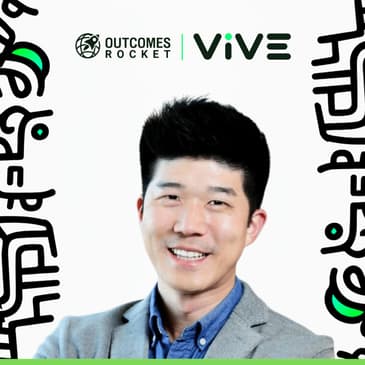
In this episode, Colby Takeda, Co-Founder & CEO of Pear Suite, joins Saul Marquez live at ViVE to explore why community health workers are becoming a more essential part of the healthcare ecosystem. Drawing from his background in senior living and public health, Colby explains how Pear Suite helps community-based providers move beyond paper and spreadsheets with tools to document care, navigate credentialing and contracting, submit claims, and get paid for the value they deliver.
The conversation also looks at Pear Suite’s broader vision for connecting community-based organizations, health plans, and providers in a more coordinated system of care. Colby shares why AI should reduce administrative burden instead of replacing trusted relationships, how co-design with frontline workers has shaped the platform, and where he sees the biggest opportunity to make community-based care more sustainable and accessible at scale.
Tune in to hear how community health workers are becoming more essential to the healthcare ecosystem, and how better infrastructure and smarter technology can make community-based care more sustainable and scalable.
Resources:
[00:00:01] Hello everyone and welcome back to the Outcomes Rocket recorded live here at Vive in Los Angeles. Today I have the pleasure of hosting Colby Takeda. He is the co-founder and CEO of Pear Suite. Colby, welcome to the podcast. Thanks for having me. It's a pleasure. So let's kick things off by telling us a little bit about you and a little bit about the company.
[00:00:22] Yeah, originally from Hawaii. I've always been in healthcare within public health and healthcare settings. I actually run a senior living facility. So I got my stint in working with older adults and understanding their challenges growing older, right? Anything from where they live, finances, what the food they can eat, their ability to get around and socially engage with others. It's always fascinating to see how different healthcare entities support the health and well-being of an individual.
[00:00:49] So I found out to Pear Suite really with this idea that there's so many organizations out there doing amazing things across the healthcare ecosystem. Whether you're a food bank, working in a library, a public housing setting, organizations, nonprofits supporting community-based care. There's this new movement called Community Health Workers that are emerging as this amazing touchpoint to help community members navigate themselves throughout the healthcare system. And we wanted to build for them. We wanted to help them with so many different things. And so that's why we built Pear Suite to really elevate and support this workhorse.
[00:01:19] I think that's great. So you left Hawaii? I did. Well, I'm always traveling now, visiting different partners. We have customers across 38 states now, so I have to be everywhere. All right. So where are you based now? I still have a place in Hawaii. You do? Mostly hotels, to be honest. The life of a founder is exciting and always on the go. It's on the go. It's tiring for sure. No, you're a dear man. So I love Hawaii. What island? Oahu. Yeah. It's an interesting place to build a company, right?
[00:01:45] You think about you have a focus energy around people, culture, family. It really supported the work we did. And there's a growing CH2B workforce in Hawaii that was really a great partner for us in the beginning stages of our company. Well, that's fantastic. And I find it very interesting that, you know, you have this background in, you know, the senior housing. It probably helped you see a lot of things firsthand. Yeah. Absolutely. Yeah. Families struggling with, you know, finances, like who's going to take care of mom? How should mom, you know, support herself?
[00:02:13] Should she live in a setting that's more institutional? Should she live at home with caregivers? There's so many social care challenges that you face. Even things like, you know, what's in the refrigerator, right? We would look in people's refrigerator and see, you know, mold and food that's rotten and not eating the most nutritious foods. How do we support people in the right ways? It's really a holistic approach. That's great, man. That's great. Well, thanks for sharing that, Colby. You know, how is Pear Suite using digital health and technology today to drive meaningful change in health care? Yeah.
[00:02:42] Like I mentioned, the CH2B workforce has been growing for decades, right? They've been emerging in different settings, both clinical and non-clinical. Community health workers, they're really skilled. They're well-resourced. They have community connections. And most importantly, they have trust. And trust in the health care system is, of course, huge, right? If they can connect with the member and help them navigate the health care system, that's going to be better than an AI phone call, a postcard in the mail, a random, you know, an individual helping at a clinic.
[00:03:11] CHWs have that trust, but necessarily weren't really involved in the health care system until recently. They were oftentimes on paper and spreadsheets documenting the care they give. And we want to change that. We want to help them incorporate into the broader health care ecosystem, have them partner with health systems and health plans, and really get them paid for what they do. That valuing their time and energy is so important. Yeah. And that's... Lots of them do it for free, right? And that's the thing. They're doing it for free. And they're so important. It's so impactful and effective.
[00:03:39] And yet, really compensated for that. Yeah. You know, I've heard a lot of talk about, you know, caregivers on the one hand. And now CHWs, as you're referring to, community health workers. What are we doing for them? Exactly. So we have to go everything from, let's give them a system that can help to document structured data, document their activities, track their time, be compliant, submit claims to a health plan, and actually get paid. So our system, our technology both starts with that.
[00:04:06] But we also recognize that CHWs just don't know how to do a lot of the credentialing and contracting work that it takes to work with a health plan. And so we provide a lot of wraparound support, not just with technology, but also with contracting claims, credentialing, clinical review, and actually helping them get paid from the health plan with RCM services. So really the whole gamut and that wraparound support is so critical to them. That's really great. And so why now? Like, why is this important now? Yeah, it's been amazing to see over the last decade. And CHWs has been around for a long time.
[00:04:36] But for the most time, like you said, oftentimes just in the community doing things for free. There was a big infusion of funding that went to training during the pandemic. So we trained a bunch of CHWs to help with case review and COVID, you know, vaccination and education. We had this great workforce, but now how do we transition then to the next phase of their incorporation to health care? We've seen a lot of new policies now that support community health workers. We're seeing some states credentialed community health workers as certified community health workers. Oh, really?
[00:05:04] We're seeing some states Medicaid programs reimbursing them on a fee-for-service basis. Now they can get paid as a provider. They have their own MPI. They can bring businesses around this. They can work with clinics. Yeah. So it's been amazing to see like the policy shifts that have supported the community health workers. And of course, now we're looking at things like rural health, right? Rural health. CHWs are huge in rural health. We're looking at more teammates care models, whole person care. CHWs are great for that. And so all these kind of policy trends are leading toward CHWs as being a great asset for that.
[00:05:32] You know, and I don't know how many folks out there listening and watching this interview know that this type of structure exists now. And that Pear Suite is doing something to help it make it even easier. Do you guys put any stuff out there, like any stories of the workers? It's truly amazing. We meet CHWs all the time. One CHW we work with was incarcerated for 20 years, learned how to be a CHW while in the prison system,
[00:05:57] and now is a release and sporting reentry for individuals that have different social needs. He's now training a team of CHWs to do this themselves. So now we're getting people jobs. We're helping people leverage the lived experience to help other people around them. And they're getting paid for this. This is something that's sustainable and helping nonprofits. So it's amazing. He had this great quote. He said, education is great, but lived experience can't be bought or taught. As a concept that these people are out there doing amazing things every single day,
[00:06:25] how do we now value them for their time and energy and empower them to be providers themselves? That's awesome. I love that. I love that, Colby. What's the most important innovation your team is focused on now? And what problem is it designed to solve? Yeah, I mean, I can't go without saying AI is going to be huge for us, right? But when you think about AI, it's not about replacing the workers, right? A lot of organizations are thinking about how we replace people. When we think about AI, we think about how do we empower and uplift the workers that are using our software, right?
[00:06:53] Their lived experience, their relationships, their trust is so huge. We can't replace that with AI. What we can do is reduce the administrative burden of CHWs for documentation, for claims, for QA. If they can be more effective and more impactful and do less work on the back end on things that are tedious and maybe not really important, we can really help them elevate their work and get more money coming to the door so they can increase their impact at scale. Well, I think what you're doing is so awesome. I know you and the team won an award.
[00:07:23] It's the TechWity Award. Tell us about that. And, you know, like, this is awesome. I want to make sure we recognize that here on today's show. Thank you. Yeah, it's been amazing. This really recognizes the work we've done with community. I think a lot of organizations will build for a specific group but not incorporate them into the process. And I think our ability to work with community health workers, have them tell us what they want out of a software system, have them build it, and then give us feedback immediately after, that co-design is so critical. And it's allowed us to be successful, I think.
[00:07:53] We have a 98% software retention rate, which is huge, right? And for a group that traditionally was on paper and spreadsheets, for them to be so successful in a system and scale with it is great. We're really proud that about half of our staff are actually either from community-based organizations or our CHWs themselves. So the ability for us to take people that actually know this workflow, know the communities, go out there and build a platform that can be adopted and used every single day is huge for us.
[00:08:19] And so that ability to co-design, that was really what we got the award for is our willingness to be on the ground, get our hands dirty, learn the workflows of CHWs. I myself still serve as a CHW out there, which learns so much, and that makes our product better. Hey, so I have to go back to the beginning, Colby, because I'm curious, right? You were at this established kind of adult living facility. You could have stayed there, grown as a leader, maybe managed many of them in the future,
[00:08:47] but you decided to do this thing that was totally different. What was the spark for you? What was the thing? I love to tell you the story. There was actually a company, a startup, that came to us and said, Hey, we want to digitize your calendar system. We want to help you make your activity tracking better. We want to help you get better data. We were doing activities manually on spreadsheets, tracking who came to which activity, bingo, exercise, what are the most popular activities? We created calendars and signage.
[00:09:16] Basically, what I was doing on paper and spreadsheets and doing with PowerPoint, they wanted to digitize that. They said, Sure, let's work together. We became one of their first customers. I gave them all my templates. They essentially built a company off of that and eventually sold. I got my face on their website as a testimonial, but nothing else. After that, I was like, Shoot, I should have done it myself. Why did I build this company? But the entrepreneurial mindset wasn't there yet.
[00:09:44] So that really sparked me to want to do it myself one day and went to grad school, learned a little bit about the entrepreneurial journey. Certainly, it was new to me, so it was a challenge, but I loved it. And here I am today. Wow, what a story. I love that. We love you, Corp. The future generation in our work as well. So we're always finding interns and students to be part of that journey to learn. And then hopefully they go out there and build their own companies as well. That's awesome, man. That's awesome.
[00:10:10] And the one thing that I want to note is that like, okay, you know, you started in lived experience. And to this day, your award is for getting out there and doing the same thing. So the consistency, your fingerprint, everything is sort of flowing through. And that recognition came in an award yesterday. Yeah, it's really great. We even have some engineers who have gone through CHW training programs to learn the workflows themselves. It's truly amazing. We are always out in the community. We work alongside our partners.
[00:10:40] What's really unique about Pear Suite is we actually are both a software company, but also a provider ourselves. So we actually do work ourselves with members and that feedback directly makes our platform better. That's great. And like on the training front, I imagine there's a lot of need there to standardize. You want to speak to that? Yeah, we've been really great to partner with lots of training entities. We're actually trying to find a way to marketplace this so that other entities can contribute their curriculum and allow our provider network to scale and grow over time.
[00:11:09] We currently support thousands of CHWs across the country on our software. Every state has a little bit different training protocols. And so we have to work with local entities to create curriculum that aligns with that state's credentialing policy. What's great about that is we can do that wraparound support on our platform without having to leave and get anything they need for credentialing, for contracting, for the compliance, the QA work. We can direct them back to our platform. They can get it in our platform at scale. So, Colby, you're going to take their templates but actually pay them for it. Really pay them?
[00:11:39] Yeah, reimburse them. I love it, man. That's awesome. That's awesome. So where do you see the biggest opportunity for your company to make the biggest impact over the next year or two? Yeah, we got really good at working with community health organizations and CHWs but recognized that they also needed to do work and they wanted to do meaningful work with the rest of the healthcare system. Of course, healthcare is challenging and there's people that might come from health plans or ER rooms that help providers and health systems.
[00:12:08] We really are sitting in the middle of that now. We're building an ecosystem around us. We got really good at the CHWs. The past year and a half, we've been working with health plans. We now are on network with about 40 health plans across the country. We're working really closely with some. Yeah, and there they have members that have needs. They are paying out the CHWs for the work. We're doing QI projects with them. So really, we're sitting between two different entities that talk very different languages and want to do work together.
[00:12:33] We are the one that's translating that language, the data, and making the referrals and sending feedback back to them to make this all possible. And then, of course, that allows a facilitation of payment. And so our next emphasis in the next year is how do we expand this network? How do we work with more providers? How do we work with more plans to make community-based care more accessible? How do we engage more CHWs to then drive more interest from payers and providers? That flywheel effect of CHWs and payers, providers is huge, and it makes our whole model work.
[00:13:02] Because let's be honest. I mean, right now, we don't have enough physicians or nurses. And if you see the charts, it gets worse. And so what a great opportunity to solve for that with your platform. Yeah, everyone wins. Yeah, everybody wins. So, you know, what's a problem that people don't know you solve? Yeah, I think it's just the idea that there's so many ways in which community helpers can support the health and well-being of an individual member, right?
[00:13:30] You think about first we started with just CHWs in the community and health plans. But provider groups, pharmacists, we didn't work with public health agencies, police departments, other social service settings, housing. CHWs really thrive in all different types of settings. And cancer treatment, navigation through specialty care. So how do we now build this ecosystem and then leverage it for different settings? I think that's the future potential of us. I mean, the data we're collecting with CHWs is so key.
[00:13:57] How do we leverage that to support research and development of new drugs and pharmaceuticals? How do we find different ways of making whole person care possible before people enter through reentry programs to the prison system? Right. This is all possible with CHWs and they're the workforce of the future that we're trying to empower and uplift. That's really cool. Well, look, I love what you guys are up to. Thank you so much for coming here to Vive on this podcast to share it with us. I know you've had a busy day.
[00:14:25] And so to close us out, just leave us with a closing thought. And then the best place that our viewers and listeners can get in touch and learn more about you happening. Yeah, absolutely. We're really excited about the future of health care. And there's so much willingness to partner. I think we're seeing other vendors want to partner. We're seeing health systems want to partner. We're seeing health plans that come to us and say, help us, teach us. You know the CHW workforce more than us. And that willingness to just share and be transparent about their unfamiliarity with this workforce is huge.
[00:14:53] I think that's allowing us to make big strides faster and iterate faster. And so we're always looking for great partners, whether you're a customer or just an industry partner. We're always looking for new ways to support each other and get us toward the big goal of saving the health care system money, but also improving health outcomes for everyone, specifically those who are underserved. We're really accessible online, parasuite.com. I'm active on LinkedIn. We're always available to connect. We're all the industry events like Vive and Health. And so thanks for having us again.
[00:15:23] And we're excited for the next event. Yeah, no, Colby, such a pleasure. I really appreciate you coming to share your story. And for everybody with us, thank you for tuning in to another episode of The Beat here at Vive in Los Angeles. Colby Takeda, co-founder and CEO of Pairsuite with us. In the show notes, you're going to find all the things that Colby talked about, including ways to get in touch with him, ways to get in touch with the company. Make sure you check it out and share it with your friends, share it with your colleagues.
[00:15:50] That's how we spread the word on great work like the one that Pairsuite is doing. Thank you all for tuning in. And Colby, thanks for being with us.