
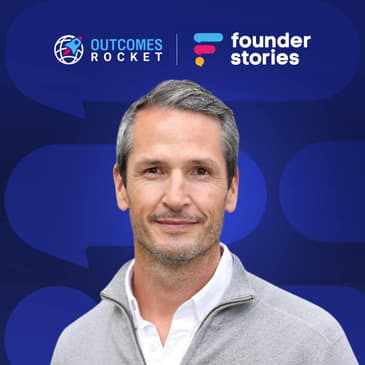
Brightside Health is tackling the toughest cases in mental health, expanding access to care for underserved populations, and innovating with technology to improve outcomes.
In this episode, Brad Kittredge, CEO and co-founder of Brightside Health, discusses his company's mission to deliver life-saving mental healthcare to individuals experiencing depression, anxiety, and other mood disorders, including those with elevated suicide risks. He explains how Brightside Health prioritizes underserved populations, expanding access to remote mental healthcare for Medicare recipients, teenagers, and individuals with substance abuse disorders. The company's comprehensive care model includes a national suicide prevention program based on the CAMHS framework, virtual intensive outpatient programs for substance use disorder through their acquisition of Lionrock Recovery, and a commitment to precision prescribing. Brightside Health’s differentiated approach addresses the high demand and limited in-network supply of mental health services by focusing on high-severity cases, aligning clinical and financial incentives, and providing comprehensive, virtual care.
Tune in and learn how Brightside Health is transforming mental healthcare delivery and improving access for those who need it most!
Resources:
[00:00:02] Hey everyone, welcome back to another episode of the Outcomes Rocket Founder Stories. I'm so excited to have Brad Kittredge on the pade. He's a mover and a shaker in the mental health space. He's the CEO and co-founder of Brightside Health, which delivers life-saving mental health care to people with mild to severe clinical depression, anxiety, and other mood disorders,
[00:00:31] including those with elevated suicide risks. He has spent over a decade pioneering evidence-based and consumer-driven health care solutions at innovative health tech companies like 23andMe and Lantern, and just an incredible innovator serving at Jawbone and other innovative companies. So really just pumped to have Brad on the podcast with us to talk to us about the latest that Brightside is up to. So Brad, so great to be with you again.
[00:00:58] Saul, thanks for having me. Always a good conversation. Agreed, agreed. So look, definitely excited to dig in, but just to kick things off here for folks that maybe don't know you as well as I do, help share why health care and why mental health care and why entrepreneurship?
[00:01:18] It's a long story for me and I'm sure for many entrepreneurs. The short version is that I got interested in healthcare and digital health specifically, first and foremost, as a frustrated patient. When I first had to use the healthcare system in a deeper way than I had previously, I hit a lot of barriers. And not only were those extremely challenging in finding the right care for me, getting the right data about my care, but also I just felt really unempowered and frankly scared.
[00:01:45] And so I tried to do what I had control over and to drive my own way. And I found myself looking for tools that weren't there. Fortunately, I found a lot of other people who wanted to help in things like chat rooms. But what I really found were millions of other people like me. And it really catalyzed a mission for me to want to spend my career building tools to help people better manage their health and healthcare and really introduce elements of consumerism into healthcare.
[00:02:08] So that was about 15 years ago now that I first had that experience and that epiphany. And in many ways, we're fortunate that there have been some really exciting trends moving quickly in healthcare, like the empowered patient and the idea of consumerism really being quickly embraced by pretty much all parts of healthcare, although there's still work to do to really manifest that. As well as a lot of frustrating things that haven't made as much progress as we would think and hope across that spectrum. So it's really been a labor of love trying to dive into it. And that led me to specifically mental healthcare.
[00:02:38] And really that's because of our family's experience. My father has managed depression my whole life. And like everybody with depression has had a lot of challenges and struggles and a lot of life impact from that. And notable about his experience was that when he finally sought care as an adult, from his first encounter to when he finally got care that was effective for him was over 10 years.
[00:02:58] He got caught in the last 10 years. He got caught in the last 10 years. He got caught in the swirl, the lost referrals, the failed medication trials, the providers moving out of insurance networks, all of the things that can happen, happened to him. And I saw that the need is so great and the impact is so huge that it was a problem as I learned more and more about it that I couldn't not try to solve.
[00:03:19] I love it, Brad. I really appreciate you sharing that. And we're not alone, right? Like this is such a common challenge, mental health from simple cases to the most severe. Brightside Health is really known for taking on some of those hardest cases in mental health.
[00:03:37] In 2024, you issued several announcements around expanding telemental health care for even more underserved populations like Medicare to teens, to those with substance abuse disorders. Can you speak on why these populations are a priority for Brightside Health and your decision to expand into these markets? Yeah, one, first and foremost, it's just part of our mission. It's what we care about, where we think the need is greatest and the hardest work to be done is.
[00:04:06] And that's just who we are and the team we've built and the problems we are really motivated to try to solve. But to get a little bit more intellectual about it, as I look at the market, I believe that the mental health care system has been in gridlock for many decades. And the symptom of that is really poor access, right? The way we can see that market's broken is there's a lot more demand than supply inside of the payer networks. Now, you've got lots of supply outside of the networks of providers accepting cash for their services.
[00:04:35] But the market can't find balance with payers essentially increasing rates to pull providers back into networks because payers don't see an ROI to mental health care or historically they haven't. And when I look at that market and ask myself why, and when we look around and know that there are evidence-based approaches that have shown to be effective in mental health care and tons of studies showing the cost efficacy of mental health care on lowering total costs of care, we've got to ask why those aren't adding up.
[00:05:03] And to me, it's because in many ways we need to raise the bar on care delivery and the quality of care, the reliability, transparency, measurability of care and its impact. But it's also that there is a highly disproportionate distribution of cost and risk within this patient population. About 10% of people drive about 70% of costs across total health care claims. And of those 10% of people, about 70% have a mental health diagnosis.
[00:05:30] And so if you want to help unblock that market gridlock and align incentives with payers and providers, you can't move the needle without addressing these hard cases. This is where there is an alignment between clinical and financial incentives that has the potential to really change the way mental health care is delivered, change that investment in mental health care delivery, and break that gridlock that's held us back for so many decades now. Yeah, I appreciate that. And yeah, these tough ones, those, you look at chronic conditions, right?
[00:05:59] Huge driver of cost. And so Brightside Health is addressing this big issue where demand is severely outweighing supply. And I like what you said, Brad, about supply within the network, right? Because there's a lot of supply outside of the network. Talk to us about what Brightside Health is doing with technology to treat those with high severity needs and also improving that access within network. Yeah, that means that we have to be really great at serving multiple customers.
[00:06:29] Our customers are our patients, of course. They're our providers. And they really are our payer partners as well. That we've got to deliver a care model that can align the clinical needs and the financial realities of making that all work and work well in a highly reliable way at scale. So we've built an extensive technology stack to enable us to deliver great care efficiently and reliably at scale with a great provider experience. And we're using data to demonstrate the impact of that to our payer partners.
[00:06:55] And so the way we started was aggregating the data that we, our treatment data on the platform, pulling that together for payers and saying, look at the impact we're having among your members, that we are focused on the measurability of our impact among your members and an ROI for you. And I think it's okay to talk about payers wanting an ROI. They are financial actors. They, we assume that they have the right intentions and incentives, but they've got constraints they're working under as well.
[00:07:21] And so our goal is to show how our care delivers great financial impact for them in addition to the clinical impact that's our primary focus. And so by doing that, we can help get them aligned in building an efficient clinical delivery model with our, our platform. We allow providers to have almost zero min time. They have zero billing time. And so they can really focus on care delivery. They can really be engaged in encounters. They can actually support their members between encounters and be highly involved in the entire care journey.
[00:07:51] Of those they're supporting. And so by using technology, we can make that care available within networks and very broadly to all the people who need it. Thanks, Brad. And quick question on that. So you guys have providers, right? Providers working for Brightside. And do you also partner with other providers? Meaning like, are you guys forming a network here that also can leverage the technology that you guys have built? Yeah, well, we are a provider.
[00:08:18] So Brightside is a little different than some other companies approaches to the industry where they may be a little bit more like platforms that are providing services to independent providers. And those tend to be things like billing, credentialing, contracting style services. We are a provider. So think of us a little bit more like you would think of one medical, but specifically focused on mental health care only and virtual. So all of our providers are selected, trained, and supervised by our clinical leadership team.
[00:08:44] They all have standardized training tools that they can access and resources to support their care delivery aligned with a specific and distinct clinical protocol with measured outcomes. So you can have harmony and consistency with reliable, high-quality care across a network.
[00:09:01] And so in order to make that work, we've got so many interdependencies of the technology and the processes that we've built that is really constrained inside the Brightside ecosystem rather than offering that sort of outside to additional delivery networks today. Thanks for clarifying that. I think it's a point that needs to be cemented and very good to know here. So appreciate that. And so there's a lot more that you guys are working on.
[00:09:27] Can you share more about Brightside Health's suicide prevention program? Yeah, we are really proud to have this national program to deliver evidence-based care using an approach called CAMHS framework to individuals with elevated suicide risk. So this is an evidence-based approach that's shown to be effective for people that specifically are at risk of following through with suicidal ideation or suicidal intentions and includes proven elements like safety planning.
[00:09:55] And so there's a structured approach that patients go through together with their therapist to be able to reduce the likelihood of harm. As they reduce that ideation and the level of risk, then they can step back down into outpatient care. So that's been really important for us as an investment, again, at that higher end of severity and acuity.
[00:10:14] And it aligns with our investment in substance use treatment and using the IOP program to be able to treat the kind of individuals who are typical of showing up at the emergency room with mental health challenges. And so, again, back to that idea of leaning into the hard cases to treat the expensive, higher risk individuals.
[00:10:35] We know that when we partner with health systems in order to help solve and alleviate the challenges they're having with mental health increasing as a share of individuals at the emergency department and having a harder time discharging those individuals back out into community care, having a high 30-day readmission rate, that they need a partner who can help take the hard cases on referral and discharge and make sure that they don't come back in 30 days.
[00:10:57] And so our suicide prevention program, our substance use treatment program, and our ability to treat across the whole spectrum of mood and anxiety disorders at all severities allows us to be that partner that helps solve that really intractable problem of follow-up at both at emergency room, but also in patient psychiatry and other settings. Yeah, you guys are putting really a wide net and patching a lot of holes that exist today.
[00:11:23] And you guys recently also acquired Lion Rock Recovery this year. You guys are looking at really virtual intensive outpatient programs for substance use disorder. In what ways does virtual IOP support individuals with a substance use disorder? Yeah, for those who are not familiar, IOP are intensive outpatient programs.
[00:11:46] So if you imagine a routine course of mental health care where somebody may have therapy once a week for, in some cases, many months and or using medication with a psychiatrist in parallel. Well, an intensive outpatient program is for individuals who have a higher severity and acuity, a higher life impact of their current situation, and really need to invest in a more intensive program in a shorter period of time to try to get things back on track.
[00:12:12] And so it's a clinical and a billing convention that are matched up that includes 10 hours of care per week or more. That includes a mix of group therapy as well as individual therapy, and in many cases, medication-assisted therapy, whether it's medication to support substance use treatment or mental health in parallel. And so on our platform, we're able to bring those all together in a way that allows for that care to happen in a virtual model.
[00:12:38] So as you can imagine, if you're going for 10 hours of care per week in person, and you're somebody who has children or has a job and these kinds of things, it's really hard to make that care fit into your life. It's really hard to stick with it, and it's really hard to complete programs like that.
[00:12:54] And so we're able to deliver substance use treatment through the IOP model as part of our acquisition of LionRock and our build-out of those tools and resources on the Brightside platform so that we can offer that great value proposition to effectively and cost-effectively treat individuals to be able to reduce and eliminate their substance use and to keep them out of higher-cost settings of care. Again, which is better for the patient, better for providers, better for the payers. That's great, Brad.
[00:13:24] And so right now, is most of this type of care happening in person? Traditionally, yes. IOP traditionally happens in person, often offered sometimes by treatment centers that have a residential offering. They'll also often have an offering called PHP, which is a partial hospitalization where you may be there for even longer during the week, but in some cases sleep at home. And traditionally, this industry has grown up with this in-person model of inpatient PHP and IOP.
[00:13:51] But we're seeing virtual offerings be able to do more and more of the work and the hard work in this industry to reduce those barriers of care for patients to get care, to change sort of the nature of communication, of program delivery and engagement within these programs, and improve and really boost the measurability of outcomes to demonstrate the impact and reliability that these programs can have. So I expect that we're going to see more and more IOP moving to virtual care models
[00:14:18] and to really raise the bar on the quality of care and the impact that it can have in the industry. Thanks, Brad. So I guess this really does differentiate Brightside Health in this space. This is not being done in a widespread way. Yeah, I would say that we have built the most comprehensive and most rigorous care model in the industry. Our focus on care at every level of severity, again, up through the highest levels of severity and acuity that you can treat in an outpatient setting.
[00:14:46] With our full national geographic coverage and with our broad payer coverage, which we didn't mention, we have about 135 million covered lives under contract. That's across commercial Medicare, Medicaid, and the ACA exchange that's support for teens as well as adults. We've got the right care for everybody who needs it in almost every case. And so that allows us to partner with, again, payers in health systems where they've had these longstanding intractable problems
[00:15:15] and haven't been able to find a partner to solve those for them. So, yeah, we believe we're differentiated. We've been working hard at this for seven years now with that singular mission, really with that clear quality North Star that we're unwilling to compromise on and that vision for how mental health care can perform better for everybody who needs it. That's great, Brad. Well, congratulations on really just incredible progress. Did you say 150 million lives? Well, about 135 today, but I think you're going to see it soon.
[00:15:46] I love that. And look, just like from an entrepreneurial perspective, seven years ago when you guys were starting this, did you see where you're at today? Did you feel like you'd be farther? How does it compare? Oh, great question. The hard thing about entrepreneurship is you just never know. You have to be irrationally optimistic. When you're pitching to investors, you've got to tell that clear and obvious story on how you're going to be a success case.
[00:16:16] But every day you ask yourself, like, how the heck am I going to do that? Like, we got to go one step at a time. My approach was just to take it one goal at a time, set the next goal and the next goal and the next goal. And so for a while, we had to work really hard to get to our first 100 patients, to our first 1,000 patients, 10,000 patients, to get to our first major payer contract. And so we really just focus one milestone at a time. We focus on the measures that indicate that we're building quality care for the people we're serving
[00:16:45] and then ask ourselves, how can we serve more and more of those people? And what I've known all along is that the demand, the need in this market and the unmet need among people with mental health challenges for great, effective, and timely care is seemingly endless. Unfortunately, we just have so many people struggling with mental health challenges and struggling to find good mental health care in the U.S. We know the market is huge. And if we can deliver great care that works seamlessly with your benefit,
[00:17:12] that's connected with the other places that you're getting care, and that treats you like a human, not a patient, we know there's potential to build a big company there. So we're letting our mission lead the way. That's awesome, man. I appreciate you showing the way. What would you say is next for Brightside Health? Well, you're going to continue to see us do more of what we've been doing. I think we'll keep doubling down on the programs we have, on the uses of technology and data to inform and facilitate faster,
[00:17:40] better decision-making, driving measurably better outcomes. That'll continue to push our efforts to really lead the market around precision prescribing and our focus on using data and clinical decision support to help our providers select the right medication the first time for more of our patients to break this convention of guess-and-check prescribing in the industry. You need to see us invest in the seamless delivery of comprehensive care for people who need multiple
[00:18:07] types of care at once to really get to the root of these more complex and more pervasive and more chronic challenges in mental health care. And you'll continue to see us partner with payers and health systems to make sure that we can deliver that seamlessly to their member populations in a way that, again, aligns clinical and financial incentives. Well, we definitely need what you guys are doing, Brad. So really just big kudos to you and the team for thinking big and getting after the tough problems.
[00:18:36] I want to keep going with this interview, unfortunately, at time. So we're going to have to do a part two to this if you're game. All right. It's a deal. Yeah, we're going to have a lot more to talk about. The next couple of months, I look forward to the catch up. Yeah, likewise. And look, just to wrap things up here, what's the best way for the audience to learn more, get in touch with you, find out more about partnerships and the like? Well, you can always find us at brightside.com. And we have a partner page on there that you can get in touch with our commercial team.
[00:19:06] I am on LinkedIn and check it somewhat regularly. And so if you want to reach out, please do. We'd love to hear from you. And we're always looking for collaborators who share a similar vision and passion and want to solve the hard problems here. Brad, thank you so much. Really appreciate you jumping on the podcast for these updates. And folks, make sure you check out the show notes because we have all the things you need there, ways to get in touch with Brad, CEO and co-founder of Brightside Health, and all the solutions that they're up to.
[00:19:36] So thank you all for tuning in. And Brad, thanks for being with us. Thanks so much, Saul. Appreciate you.