Collaboration is crucial for transforming healthcare and achieving better patient outcomes.
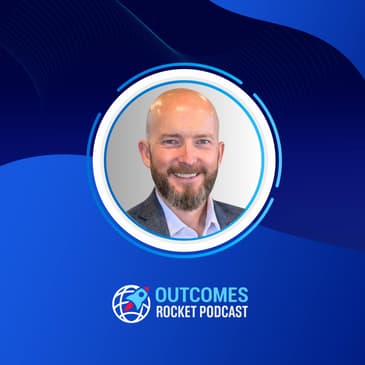
In this episode, Dan Nardi, CEO of Reimagine Care, discusses the urgent need for collaboration among healthcare stakeholders to improve care delivery. He highlights Reimagine Care's innovative approach to on-demand cancer care, leveraging technology and a skilled clinical team to provide patients with high-quality care in the comfort of their homes. Dan explains how their AI-powered virtual assistant, Remi, handles the majority of patient interactions, freeing up clinical staff to focus on complex cases and work at the top of their license. He also emphasizes the importance of strong provider relationships in ensuring optimal patient outcomes. Finally, Dan touches upon the growing supply and demand gap in cancer care, the need for upskilling and optimizing clinical staff utilization, and the challenges and lessons learned in product-market fit.
Tune in and learn how technology, combined with a human-centric approach, can revolutionize cancer care and improve patient experiences!
Resources:
[00:00:02] Hey everyone, welcome back to the Outcomes Rocket. So excited that you joined us today. Today I have the privilege of hosting Dan Nardi. He is a proven executive leader with 24 plus years of experience in rapidly growing digital health companies, currently serving as a CEO of Reimagine Care. Prior to joining Reimagine Care, Dan was the COO at Carum Health, a company focused on value-based care.
[00:00:30] And before that, he helped grow and scale Livongo as VP Operations from 13 employees to IPO. In addition to his significant leadership and operational expertise, he also remains an active board member and advisor for several nonprofits and startups. Dan, such a pleasure to be here with you. Absolutely. Thank you for having me, Saul.
[00:00:51] Hey, it's my pleasure. And, you know, I love just connecting with folks that care. I know that you care deeply about the work that you do and the impact that you've had thus far and the impact that you're going to have with what you guys are doing at Reimagine is inspiring. So to kick us off, tell us a little bit about you and about Reimagine Care and what inspired it all.
[00:01:13] Yeah, absolutely. Well, on the personal front, I lucked into healthcare and I'm very thankful that I did. Some of the companies you mentioned and the relationships I built and the opportunity to impact patient lives has been really amazing over my career. And I think that was one of the things, you know, having more of an engineering, math, computer science background, but then, like I said, kind of lucking into the digital health space.
[00:01:37] And once I started, I realized the impact we could have. And obviously we're all users of the healthcare system at some point in our lives and some more than others. And so being able to make an impact and improving our healthcare delivery system here in this country is really what kind of drives me continuously, what got me into it and what continues to drive it.
[00:01:54] And on the Reimagine Care side, you know, our primary goal, we fundamentally believe that all patients going through their cancer treatment deserve access to the highest quality care in the comfort of their own home and with care being able to meet them where they're at in the moment. And I think that's just truly, truly important. And that's what drives us every single day.
[00:02:14] I love it. And cancer care is one of those areas that really needs this type of attention with just really not enough supply to meet the demand. Talk to us about how Reimagine Care is adding value to the ecosystem and changing things up. Yeah, that's a really great point. And the supply and demand in healthcare in general is dividing rapidly.
[00:02:39] But in the cancer space, it's even more so, right? We have patients being diagnosed earlier in life at younger ages. Treatments have gotten so much better, thankfully. So patients are living longer on treatment. But all of this combines to mean we have such an increase in the demand of cancer care. While on the supply side, you know, we have burnout. You know, 93% of all oncologists have admitted to having to work off hours just to keep up,
[00:03:03] which in the so-called pajama time, that's a lot, is leading to burnout. RNs, MAs, APPs are leaving the workforce in droves as well. And so, you know, you have this growing divide and it's just so important for us as, you know, the healthcare providers to find ways to bridge these gaps. And so here at Reimagine Care, we have combined technology with services to really help rethink that ability to extend the care outside of the clinic.
[00:03:31] You know, oncologists are wonderful when patients are there in the clinic with them, but like a lot of healthcare, tend to lose touch, lose the ability to give them that high touch support when they leave. And so, you know, we have at Reimagine Care built this on-demand cancer care platform that combines AI-based virtual assistant and a personalization engine that's constantly running in the background. And then we combine that with our team of oncology trained MAs and RNs and APPs,
[00:03:57] and it really helps support the patients in the moment, within minutes, and getting them the right answers for whatever questions or whatever symptoms they might be having, you know, whatever medication concerns they might be having for their oral chemotherapies, mental health, financial health, all of these things. It's that whole platform that we built to support that. Yeah, that's great. And, you know, you mentioned some of the critical staff that support the process, the MAs, the APPs.
[00:04:24] How much of what we need to do in healthcare, and I'm just going to zoom out for a bit, oncology included, how much do we need to upskill the people that are available? Yeah, it's a really interesting question. I think in some regards, we have opportunities to continue to upskill. Well, I think another way of thinking of this is we have a bunch of really talented clinicians that are at all those different levels that you listed, but we're not always allowing them to work at the top of their license.
[00:04:54] And I think that's what has really kind of built this bogging down in the system, if you will, right? We're asking RNs to staff 24-7 triage labs. And a lot of those questions that come in, yes, some of them are related to symptoms that really allows them to kind of flex their training and their expertise, but some of them just might be around like rescheduling an appointment. And so that's where we say it's not just upskilling, but also really bringing in technology
[00:05:20] at the right times to free up the existing clinical team members to be focusing and working, you know, so-called top of license. It's certainly a term that's been around for a while and gaining more and more traction. But that's what we mean by that is really allowing these talented team members to be working, you know, at their highest level of their education and experience and not be doing more trivial tasks that technology could be doing or that other levels within a clinical support team could be doing. Well said, Dan.
[00:05:49] No, I really appreciate that. And that's a really great point is that why have somebody with that licensure answer the phone on an appointment change if that could be done and the consumer could still have a seamless experience, right? In fact, maybe better. Absolutely. I mean, and that's where I mentioned earlier, sorry, AI-based virtual assistant. So we have named this Remy. And so Remy is there 24-7, right? Right? 365 in the moment. That's our digital front door.
[00:06:18] And so anytime patients are interacting with reimagined care proactively or reactively, we're using Remy to handle the vast majority of these interactions and patients love it. Actually, we have very high engagement rates. You know, over 80%, even six months out, which is really impressive. So patients are able to interact, want to interact, you know, all different demographics and age brackets, et cetera. But Remy is also successful, right? So over 50% of all of our interactions every month, thousands of interactions every month,
[00:06:48] over 50% of them fully resolved by Remy. And so that is, you know, thousands of interactions that we don't need to put on the plate of an existing clinical team member. And so that's the type of combination that helps us, you know, really support that top of license work. And Dan, you know, and to expand on this further too, is sort of like curious about your philosophy on these tools, right? They're very useful.
[00:07:13] 50% gets done by Remy, 80% retention or approval with the tool. Do you tell people it's a bot? So like the philosophy there, like, do you let them know up front? How does that work for you and the team? Yeah, so it is part of that onboarding. So and when a patient is first onboarded into the program, it's part of their treatment pathway. So we partner with our clients.
[00:07:39] So health systems, community practices, cancer clinics across the country, we partner with them so that this is part of their workflow. So as a patient is being onboarded into their treatment plan, they're introduced to Remy and told that they have access to this program 24-7. And it is upfront, you know, that part of that education lets them know that they have that in the moment and that it is not directly human right away, right? It is that virtual assistant.
[00:08:05] But within minutes, we can escalate it up to one of our clinical team members, you know, as they're interacting and as we're building those real-time acuity models, if we determine that they need additional support, it is handed off within minutes. And so if you think about it across, you know, all of our patients, so now we've supported over 5,000 patients and you've got an average response time of 13 minutes across 24-7, that's really impactful, right? Because that's something that the existing, you know, we talked about supply and demand
[00:08:34] and triage lines and, you know, or having to page an oncologist in the evening at 2 a.m., being able to say that we can actually be supporting patients on average within minutes is extremely impactful. And that's where patients love that, right? And so they're not necessarily, they don't care that it's a virtual assistant versus a human because they know that they can get a human within minutes if needed. And then that's the comfort that is really built with this type of solution. That's great, Dan.
[00:09:01] It reminds me, I was in a Waymo, one of these driverless cars. I was in Phoenix for a conference. And as I'm taking it, we end up in an alley and they're unloading a bunch of stuff out of a truck. So we press the button for assistance and somebody came in, a human, right? And said, okay, I see you're stuck. No problem. The car will recalibrate. The human reassured us that we were in a good spot. And then the car did its thing and got us out, right?
[00:09:29] Like, and so what I'm hearing you say is that humans always in the loop. You educate the patient on the journey and they get the quick responses that they need. And then it's quickly escalated if they get into a bind. And that's that important part that kind of, like I said, it is closing that loop with confidence every single time. And again, it starts that initial handoff. So if one of our clinical team members takes over that conversation, we'll just continue. So we've chosen SMS text, by the way, as our medium for communication, right?
[00:09:59] Lowest barrier to entry. We don't have to worry about passwords or versions or any of the stuff that comes to apps. And so we can take over that conversation in real time. Say, hello, this is Brittany from our virtual care team. And then if we need to, we can transition that to a phone call or video visit. It goes back to the point of meeting the patient where they're at in the moment, giving them the optionality of like, how can we best support you right now? And that also continues to build that confidence. So similar to your experience with the Waymo. Yeah, that's interesting, Dan.
[00:10:26] Appreciate you sharing how it works and the ease of text, removing all friction, meeting patients where they are. What would you say is different or better than what's out there already when what you guys are doing in Reimagine Care and maybe even unmatched? Yeah. So I think there are a lot of talented organizations in digital health broadly that are helping patients. And especially in the cancer care space as well. There's a lot of great organizations. And I'm a fan of all of these because we're helping patients right at the end of the day,
[00:10:55] helping deliver a better patient experience. We might be going about it different ways and I think that's totally okay. Like I think what really sets us apart at Reimagine Care is those deep relationships we have with the providers and the patients and how we've gone with our initial phase of growth. Like we become that trusted partner for the providers and the patients at the point of care. And some others are more partnered with the payers or to employers. And that's all great. Again, you're still helping patients.
[00:11:25] But I think what differentiates us and our approach initially is that we have really focused on those deep provider relationships, which allows us to make an impact when it comes like the outcomes for avoidable ED visits and patient stays, allowing patients, because we're getting them answers like within minutes, allowing them the comfort and the triage to be able to stay on treatment longer, which lead to better outcomes for these patients, which we're tracking longitudinally. And so that's what I think has really differentiated and set us apart right from the beginning. That's great. Very clear.
[00:11:54] That differentiation is very clear. So I appreciate you highlighting that for us. Let's talk about setbacks. You know, we learn a lot more from those as business leaders and entrepreneurs, oftentimes even more than the wins. So anything stick out to you in the last year and a half? That's been a big learning for you and that's made you guys better. Really great question. We are at Reimagine Care have a big focus on a learning culture, right? A growth mindset, you know, is part of what we built as we revamped our values. And so I really appreciate the question.
[00:12:23] I think that's an important one. Anyone that you talk to in the organization really helps embrace this as well, right? We're going to make mistakes along the way and that's okay. But it's how we learn from them that's extremely important. And so baking that into the DNA of a company is super, super important right from day one. So if I think I'm going to go back a little bit further, maybe a year and a half ago, and I would say like the original premise of Reimagine Care was to bring treatment into the home. To actually be moving chemotherapy into the home for patients.
[00:12:51] And that's a very noble cause and still something that we've got our eye on because it's a much better patient experience. I think there are numerous challenges in being able to like build a business that is focused just on that, right? Reimbursement of regulatory reasons and hurdles. They make it hard to actually, you know, build a business and make money doing that even though it is a better patient experience. So some of those hurdles will change in the years to come, hopefully, and we'll be set up for that.
[00:13:17] But I think the lesson we learned and what we took from that is we didn't just say, oh my God, that was wasted work, right? We actually tied it up, put a bow on it. It's sitting on a shelf and we're ready to roll that out. I think that's exciting. But during that, we learned that there is a gap in these services, right? We talked about the supply and demand gap, but there's also this kind of concept. And what we've now built is this on-demand cancer care platform to help support the patients. And it goes back to the supply and demand again.
[00:13:45] So really being able to say like, this is what we found while doing all the great work to build out the treatment at home. We determined that this is actually the biggest gap that we could fill right now and actually make the most impact for patients and providers right now at this state. And that's what we've really been ramping up over the last year and a half to two years. Product market fit is truly setting in and we've made some really great strides. And, you know, sign some really amazing partners that are along for this journey. That's great. Appreciate you sharing that, Dan.
[00:14:12] The product market fit thing, especially when you have to shift, is challenging. What advice would you give to leaders listening to this podcast that might be in that situation or maybe in the future or maybe in that situation? What advice would you give them? Yeah, I'd say a couple of things. One, there's no sacred cows. I think that's, you just got to have to be able to say like, look at everything with really clear eyes and be willing to make difficult decisions.
[00:14:39] I think it's very, very easy for companies at early stages to get caught up in shiny object syndrome, to end up trying to do too many things, to be all things to all people. It will never work, right? And so I think just be super, super focused and be really great at one or two things and then come back to the other stuff later. But I think spreading yourselves too thin, you know, the vast majority of startups, we all know this stat, is like they run out of money. It's not because it wasn't a great idea. It's because they run out of money.
[00:15:08] And so, you know, if you want to be super laser focused and going back to my original point, like no sacred cows, like even if it was the original intent of the company, if it's not going to be successful, you have to be willing to set it off to the side and focus on what will be. So whether that's a slight pivot or a completely like overhaul of like the industry you're in, be willing to make the difficult decisions because that's what's going to help you and the team and the business be successful in the long run. And it's easier said than done.
[00:15:38] A hundred percent. You know, but I think it's a sobering reality though, you know, and I think a North Star that we should all keep in mind, there are no sacred cows and that practicality that we need to have as founders and as leaders of businesses transforming lives. I think the onus is on all of us to have that perspective that Dan has shared. Dan, what about transformers? Are you a transformer fan?
[00:16:07] I see a couple on your shelf there. We are, we are as a family or a transformer fans and also probably even more so Lego fans. Oh, yes. We have, yes. My son is 12 and loves his Legos. So we, we like to partake. Same man. My son's crazy about his Legos too. Well, love it. Look, closing thought here. What would you leave our listeners with and viewers with? What should they be thinking about?
[00:16:34] And if they're interested in following up with you and learning more, where can they reach out? All right. So re-imagine care, just like it sounds. Re-imagine care.com is our website. So pretty straightforward, obviously on LinkedIn as well. And team does a really great job of sharing the highlights, the impacts, patient stories, provider stories, and the outcomes are driving. So all of that's out there.
[00:16:57] I would say from like a lasting thoughts is, and I've started kind of posting this challenge, you know, this past conference season, we were talking a little bit earlier about conferences. Like as a healthcare system here in the United States, we have some incumbents, we have some very large players, silos, if you will.
[00:17:15] And, you know, I know deep down everyone is trying to build a really great system for patients, but sometimes we end up letting the bottom line, the dollar, the revenue drive some decisions. And so my challenge to all of us that are in this industry, because none of us are getting any younger, my challenge is how do we work together?
[00:17:35] How do we be willing to take some of our own revenue and put it off the side and say like, no, I'm actually going to find the right groups to go build this together with? Because we're not going to be able to do it on our own. I don't care how talented of a health system or, you know, health plan or whatever you might be. We're not going to be able to make a real impact alone.
[00:17:57] And so find the right partners that are aligned with your North Star and like, let's go actually make an impact in care delivery over the next five, 10 years and not just keep with the same status quo. So that's my challenge. I love it. Well said, Dan. Collaboration is the best currency, especially in healthcare. And I love that you left us with that. Folks, make sure you check out Dan Nardi.
[00:18:22] In the show notes, you'll find ways to get in touch with him and his company, Reimagine Care. Just an incredible opportunity to transform cancer care for all of us and our loved ones. Dan, really appreciate you being with us. This was a real treat. Always a pleasure, Saul. Thanks for having me.