
This podcast is brought to you by Outcomes Rocket, your exclusive healthcare marketing agency. Learn how to accelerate your growth by going to outcomesrocket.com
The 988 crisis lifeline must integrate into a broader mental health network through partnerships, technology, and strategic expansion to tackle the root causes of crises effectively.
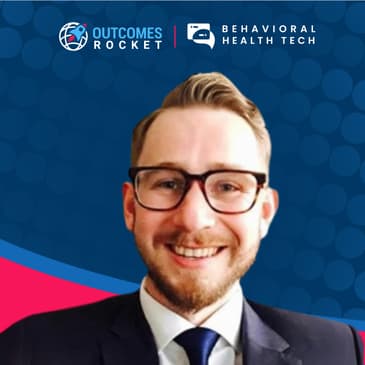
In this episode, Pawel Walczuk, Managing Director at Accenture, discusses the transformative potential of 988, the national mental health crisis line. He highlights how it can evolve to address broader behavioral health needs and the importance of connecting the crisis line to a broader care ecosystem. Pawel also talks about addressing workforce shortages through technology and leveraging partnerships across startups, governments, and larger organizations to scale solutions effectively.
Tune in to explore how 988 can evolve into a cornerstone for comprehensive mental health care!
Resources:
- Connect with and follow Pawel Walczuk on LinkedIn.
- Follow Accenture on LinkedIn and explore the website.
Fast Track Your Business Growth:
Outcomes Rocket is a full-service marketing agency focused on helping healthcare organizations like yours maximize your impact and accelerate growth. Learn more at outcomesrocket.com
[00:00:01] This podcast is produced by Outcomes Rocket, your healthcare exclusive digital marketing agency. Outcomes Rocket exists to help healthcare organizations like yours to maximize their impact and accelerate growth. Visit outcomesrocket.com or text us at 312-224-9945.
[00:00:25] Hey everyone, welcome back to another episode of Expanding Access filmed here at the Behavioral Health Tech Conference in Arizona. Today I have the privilege of hosting Pawel Walczuk. He is the Managing Director at Accenture. Pawel, thanks for joining us. Thanks for having me.
[00:00:51] It's a pleasure. Look, there's a lot of really interesting things happening here at the conference, but what brings you here? So over the past several years, I've been working with a variety of clients across the U.S. on rollout of 988. For those who don't know, 988 is a crisis access lifeline. It's 9-1-1, but for mental health. And I want to say it's probably the most revolutionary thing that has happened in mental health on a public level since the 60s.
[00:01:17] And there are just incredible lessons to be learned from that experience and to be shared. We were actually on a panel discussing how we can bring this ecosystem into the 988 crisis lifeline. Well, I love it. Definitely interesting discussion here, Pawel. And it's about expanding the crisis continuum, right? Beyond 988. Can you expand on what that could possibly look like?
[00:01:42] Yeah. If you think about it, if you call 988, that call is not going to resolve the underlying conditions that probably led you to that call to begin with. Right. Right. So you are going to need all kinds of other services down the line, right? You might need therapy, you might need substance use treatment, all kinds of other things.
[00:02:04] And when you're here at a conference at BHT, there's so many solutions trying to address some of those. Now, those are not in any way currently connected to the lifeline, right? So on the panel with CTO of Vibrant Emotional Health, that's the national administrator of 988, as well as a couple of VCs, one from Pair Capital and Flare Capital, a couple of other startups, Charlie Health and NEMA Health.
[00:02:31] We talked about what are the ways in which we can together bring those solutions to 988. And there's obviously a lot of work to be done, both on the regulatory level, on technological level, but there's such a massive potential, right?
[00:02:46] Think about it. 11 million people have called the crisis lifeline since its launch. That's 11 million prospective customers for those who are here, who are looking to provide services. And that's 11 million people who need those services. Yeah. Yeah. No, I think that's such an interesting perspective. You have this line which can offer maybe some stabilization, but everything underlying is there.
[00:03:15] And inside of the expo here, you have all the solutions that could help. How do we connect the dots? What do you think is the key to connecting those dots? I wish I had attended the panel. There's so many different aspects of that, right? I think on one level is what can governments, what the government do, right? And setting the right standards in funding, quite frankly, vibrant and vibrant emotional health and 988 to find ways to connect those services to the lifeline.
[00:03:45] But also that's at the national level, at the federal level, if you will. There is a lot that states are doing as well. A lot of them build their own hubs, their own subsacrescent air traffic control models that are trying to do the navigation and connection. I think there's a lot of opportunity for startups to tap into that state and local level first. And I think actually one of the presenters shared that lesson from 9-1-1, right?
[00:04:13] There's a lot of emergency services solutions out there. They're selling to 9-1-1, right? To 9-1-1 organizations across the country. What's unique about 9-8-8 is that it is a lot more centralized than 9-1-1-1. 9-1-1 is very decentralized and done at local level, but it has the same kind of some of the components. So you can still do it at the regional or state level while the regulatory and the capability at the federal level takes place and shape. I think that's the longer pathway.
[00:04:43] Yeah, no, I love it. That's super interesting. The thing about the centralized, it's an opportunity, but also the one that I think requires some work to actually pave the path. Sure. Yeah, I love the comparison. I hadn't connected those dots before, so I really appreciate your understanding of it and helping us better understand the 9-8-8, the opportunity with 9-8-8 and how it works. Workforce shortages are also a theme at the conference.
[00:05:08] And at the same time, scalability and getting some of these companies that are in the expo to the enterprise level. Give us some of your thoughts around those two items. Fabulous question. We just actually published a research on workforce shortages. And the need is so massive. There's just simply not enough trained professionals. And if you look at the pipeline of trained clinicians, there's just not going to be enough to meet the demand. So you have to look at some innovative solutions.
[00:05:36] And what I commend a lot of the startups here for doing is actually trying, right? Trying to make a difference, trying to fill that need. So I think one of the things that I'm hopeful for in bridging that gap is finding ways. What we were talking about connecting 9-8-8 to those startups is one. But another one is not everybody's calling 9-8-8, even though there's 11 million calls there.
[00:06:00] I think the position that I'm in, leading behavioral health practice at Accenture, we work with the majority of Fortune 500 companies, right? And I think there's also opportunity for us to bring and scale those startups inside some of these organizations, which is something I'm really looking forward to doing in the coming months and years. Hey, that's really interesting. So it's taking a look at the bigger players in the space and saying, what role do they have as strategics to mobilize?
[00:06:29] Yeah, 100%. Yeah. And a lot of times, large organizations will have a very different risk profile, right? And I think one thing that we as Accenture, we can do is bring level of credibility and stability in delivery of some of the services that the startups can offer. That's really great. And look, tech is a big part of what's been talked here as the solution to scalability. You guys are very well known as a technology firm that knows how to scale these types of things.
[00:06:59] Anything else come to mind as the people watching and listening this that couldn't be here that they should be thinking about? That's a great question. Look, I think at the very personal level, we all can be thinking about ways in which organizations we belong to. What can we do to make them better for our colleagues, for our friends, for our families?
[00:07:18] At a personal level, I think if you are leading an organization and you're in a position to offer services, figuring out how you fit into that ecosystem, where you can plug in. I think that's the question I'll be asking myself. Sure. Understand the ecosystem. Yeah. And have a firm understanding of the landscape so that you know exactly how you're going to play your role, right? Yeah. And who did partner with that ecosystem? Yeah. Nothing is done alone, right?
[00:07:46] A lot of the success that one sees is when we collaborate, right? That's why I was thinking about vibrant emotional health. The startups, VCs, governments coming together and trying to set some of those standards or put some of those initiatives in place. That's fantastic. Certainly a very stimulating discussion with you, Pavel. What call to action would you leave for everyone that's watching and listening? And what's the best place for them to get in touch with you and the organization to learn more?
[00:08:16] I think the first thing I would do, yeah, think about how you can partner with this ecosystem that we just talked about. Reach out to someone like myself and we'll be more than happy to be our thought partner in figuring out where you can scale, where you can be plugged in. We have a huge opportunity in front of us. I think the number of startups we've seen, the challenges that we discussed, it's tremendous.
[00:08:40] I think if you want to really make an impact in your community, in your state, in your company, I think reach out to us and let's think about how we can bring that scale and implement those services and make a real impact. I think that's great, Pavel. And folks, for everybody out there thinking about ways to bridge those gaps that we outlined, the opportunity is huge.
[00:09:03] The team at Accenture is going to do an awesome job of helping you map that out, figure out the landscape and find ways for you to get big wins to help our entire country move forward on this topic of behavioral and mental health. So in the show notes, make sure you check out ways to get in touch with Pavel and his team. We'll provide those there for you. And Pavel, thanks for being with us. Thanks so much. Appreciate it.
[00:09:36] This podcast is produced by Outcomes Rocket, your healthcare exclusive digital marketing agency. Outcomes Rocket exists to help healthcare organizations like yours to maximize their impact and accelerate growth. Visit outcomesrocket.com or text us at 312-224-9945. Thank you.