
Most medtech startups don’t fail because of bad technology; they fail because no one built the market for it.
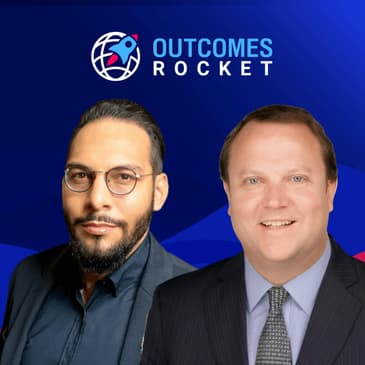
In this episode, Ken Nelson, Partner and Founder at Nelson Jennings Ventures, and Omar Khateeb, CEO of MarketCraft, share how judging at MedTech Innovator sharpens their perspectives as investors, operators, and mentors by exposing them to diverse expert insights across regulatory, reimbursement, and commercialization. They emphasize that medtech success today requires far more than a great product; founders must actively build market demand and prioritize commercialization early. A major mistake many startups make is assuming acquisition will come easily after FDA approval without demonstrating real market pull and adoption. Ultimately, the best founders balance conviction with coachability while leveraging ecosystems like MedTech Innovator to accelerate growth and de-risk their path.
If you’re building, investing in, or advising medtech companies, this conversation will challenge how you think about commercialization, growth, and what actually drives valuation!
Resources:
[00:00:02] Hello everyone, welcome back to the Outcomes Rocketet Podcast, recording live here from MedTech Innovator Radar Forum. I'm excited to be with two outstanding guests. First, I want to introduce you to Omar Khateeb. Omar, give your intro, man. Sure, absolutely. So I'm the CEO of MarketCraft. We're a market engineering agency, so we help companies craft a narrative and engineer their markets. Most people probably know me for when I pop up on their news feed is the State of MedTech Podcast, where we interview investors, CEOs, founders. I mean, it's kind of like the Joe Rogan show.
[00:00:32] So the MedTech industry, I mean, we interview all kinds of interesting people on stories and stuff. And so that's a little bit about me. That's an awesome podcast. We'll link it up in the show notes for sure. Ken Nelson, tell me a little bit about you. Ken Nelson with Nelson Jennings Ventures and Star 51 Capital and previously commercialized three different startups. One, which went through MedTech Innovator called Barty Diagnostics, which was acquired by Hillrom and Baxter.
[00:00:57] That's awesome. Well, two outstanding leaders in the industry. And what I wanted to cover today is really more so the judging side of MedTech Innovator. How's that experience been for you guys? Honestly, I think in terms of what is done for me developmentally, it's made me a better investor.
[00:01:15] It's made me a better mentor. It's made me a better board member. And so I highly recommend this to many people that I know that are either strategics or VCs or people that are new or even experienced board members just to get others' opinions. Because when you're in that room, you've got people from the FDA, people from CMS. In this particular case, we've got the head of the FDA here. We've got the head of the TAP program from the FDA here.
[00:01:43] We've got leadership from CMS. You've got venture capital groups. You've got major strategics. So you get different perspectives from them. Plus people like Omar and I, who are experts in different parts of the startup ecosystem. You've got reimbursement experts. You've got marketing and commercialization experts like us. And it's just really great. And I feel like I learned so much every time I've done that.
[00:02:07] I would say like selfishly, like in terms of what I get out of it, exactly what Ken says, because, you know, the roundtapers are really great. Like having to go from one company to another. And then I'm always sitting with people who are very different from me, but with a very different lens. And I feel like we're all looking at a glass of water and I'm looking at it from one angle and somebody on the other side might notice something. And the way they're able to dive in and really prod and poke about certain things makes me a lot better, not only as a business owner, but as again, like somebody who, you know, I'm starting to get more into investing and also working with funds.
[00:02:37] And so being able to understand like some basic language, you know, I'm able to share that from the commercial lens as well. So I really love that aspect of it. And I think the other side of it is it makes me get even more sharp and dive deeper into my areas of expertise, because I don't usually talk to this many startups on like on a daily basis. And for us at MarketCraft, you know, we have a dot AI for a reason. We train a lot of AI models. And so I use some of the AI models just to get me ready for this about some potential questions I might ask or get asked by the audience.
[00:03:06] And I was like, oh, yeah, you know, there's certain areas that I have to sort of exploit and go into because some of these companies are like pre-seed. And so there are questions and considerations I never thought of for those kind of companies that allow me to get better to provide more value to the ecosystem. Because I think at the end of the day, we want to impart on them like really good advice so that they can go and take actions on it now that will help materialize later versus a lot of times these startups will go and sort of improvise as they go.
[00:03:34] And by that time they get to somebody like yourself or me or self, things have gone by so long. It's like, man, I wish I talked to you like a year ago and just giving you better advice. I feel like we're after you've done it a number of times, we become better judges because at first you're like, we made all the mistakes, too. And we screwed up so many times. So it's like, hey, I've seen this movie before. I don't recommend going through that door. You hear what the reimbursement consultants say and then you hear what the regulatory consultants say.
[00:04:03] Then you see the trending where these startups grew up on a consistent basis. I think the other thing that I love, and again, this is like, it's very unique to this ecosystem here at MedTech Innovator, is it really, one, again, gives you different perspectives. But it makes you also really appreciate how hard this game is of MedTech compared to so many other industries, like all the different places that can fail and everything. And if they, you know, make it through the impact they can have. So it also makes you, it makes you feel really good.
[00:04:31] And I got to be honest with you, like seeing all the different founders and service providers, like it's a lot of fun. It's a really great community. I want to commend Paul Grant and like his team for like orchestrating this kind of an event in this environment. It's not easy to do that. I said, we were talking earlier and I said, you look at what Paul has done with MedTech Innovator. You look at what Scott Pantel has done with LSI and combined the impact that they've had on the MedTech and digital health startup ecosystem is just incredible.
[00:05:00] And what's nice is that there's this progression through these different ecosystems and everything. And what I really love is like seeing early stage companies share a MedTech Innovator, then maybe like later on there at LSI or something. And when they go to raise money. Oh, yeah, yeah. You know, so it's really nice. And so I always think about like a world where a MedTech Innovator does not exist. Like it would be a huge tragedy or an LSI. And so I think it's very difficult to put on these kind of events and more importantly to build this kind of an ecosystem. And what I love about MedTech Innovator is that it's like a year long thing.
[00:05:27] Like we have this now, the admin later and everything. And so it's really fantastic. When you think about one thing that it's a total death nail for a startup, this is something I've learned from going to these for the last six, seven years. If the founder is not coachable or whoever's doing the pitch is not coachable, the chances of them getting into the accelerator program are so low. Even if it's a great company.
[00:05:52] I feel like there's this weird like catch 22 situation where if you look at historically, you know, like a lot of startups, like not just MedTech, the greatest founders were very stubborn, not coachable and everything. But like there's got to be a little bit of a give and take because like not everybody's going to be Steve Jobs or Elon Musk. But there's some level where like you want to see a little bit of conviction from the founder, but there's got to be some side where like, okay, they have some serious conviction.
[00:06:18] But they have some awareness as to like, oh, they may not know this area and they should be listening in this area and know where they should dig their eels in and not. Because there's some founders like they're too coachable. And then I start questioning. I'm like, do they believe in what they're doing? Because I don't know if they do or not. It just feels like they're just taking advice from anybody who will give it. It's a balance. So not everybody could be here. Right. And so part of the reason we're doing these is to help folks that haven't had the chance to be here to get some value out of it.
[00:06:44] What's risen to the top for you guys as judges from the different founders you've had a chance to speak with? There's one that's, it's a huge stick. I love hearing these. Historically in this industry, it used to be that, hey, you know, you can get a really good device, go through FDA, get some clinical adoption going, you know, hire some sales team. And then you're done, you sell it, you're good. We don't live in that world anymore. And there's too many founders that have been brainwashed somehow to say like, oh, we have a really good technology. Once you get through FDA, we do a few clinical studies.
[00:07:12] And then, you know, like a strategic will buy us because they have the sales team scale. Like these strategics, no offense to them. They're lazy. They don't want to build a market. They want to buy something. We're like, hey, great. Like we know that there's market pull here. We're going to buy it. We're going to put it into our portfolio. And it's, yeah. And it's going to start making money for us. And like, it's going to make some sort of impact to our bottom line, which takes hundreds of millions of dollars to do. Sometimes not even that.
[00:07:38] So too many founders make this assumption that like, oh, like if the product is good and it works and it's, you know, like I'll rely on a strategic to do the selling the market. That's the hard part. But that's, I think, also where the value creation is, where you can get a much larger valuation and sell for a large valuation. We are already commercialized and you've got a couple million, like you said. Even before you commercialize too, I think there's ways to develop the market and to demonstrate that with conviction to a strategic and say, hey, look, you can either invest or acquire us now.
[00:08:07] Or if not, we'll raise money. We'll go to market with this. And there's already market pull. And you can look at our pipeline, et cetera. And like, we're going to raise money to just service all of this, you know? I think not making commercialization a priority is a huge mistake. And thinking you're going to get acquired before you have to commercialize is the worst mistake. It can happen. But let's say God spoke to you and said, you're going to be acquired before commercialization. If it happened to me, but like, wouldn't you want that to happen?
[00:08:32] But wouldn't you want the extra leverage of saying, hey, like we've also done some market engineering. There's some market pull. We have some pipeline. We're growing it. And we haven't been commercialized. Like, you want as much leverage as possible because strategics who are friends of mine, I like them and everything. When they're coming to the table with their lawyers, they're not coming and saying, hey, let's make this a great outcome for this founder. They're thinking, how can we like nickel and dime this person as much as possible? Because they're all publicly traded companies.
[00:08:57] Shareholders are going to be like, oh, thank you for like giving this founder a few extra 10, 50, 100 mil. You know, like you want leverage in these conversations. You are when you have FDA clearance or you are on the brink of getting FDA clearance and you know it's going to happen. Your number one priority, in my opinion, and I say this over and over and over again, and I really believe it, is raising awareness and driving adoption. And you have to have everybody on board with that. Ken, I want to give your take on this.
[00:09:26] For all the regulatory people are loving for this. Because one thing I did realize as a theme is one of the biggest risks in our industry is like, if you don't have the regulatory and clinical stuff like figured out or have some roadmap for it, like you're done. Right. And so some of these founders didn't have meaningful or even persuasive answers when it comes to like, hey, like, how are you thinking about your regulatory pathway for this? And like, that's a huge right thought because it's like table stakes at this point. And it's OK to not have all the answers. You can't be good at everything. Right.
[00:09:56] You might be an engineer by nature. If you've been doing it for a few years, you should have a good amount of the answers. Yes. But as a startup founder, most of the time it's their first startup. You know, sure, sure. Yeah. I've been fortunate enough to have been involved with a couple. So by the second and third, you get more. I'm wondering, because you even on both sides of it as an investor and as a commercial leader, what's your take on some of the founders? Because I feel like so many of them are just like white knuckling the equity like it is worth something right now.
[00:10:25] And there's a part where I'm like, hey, like you need to give some of that equity up because like, you know, like, you know. You significantly de-risk certain areas and can significantly accelerate your path to commercialization by going through, in my opinion, multiple accelerators. Earlier stage, you go in more regional or local ones. Because when you're, and I know they have earlier stage ones that go to MedTech Innovator.
[00:10:50] But in particular, if you're close to commercializing or early commercialization, I think there's absolutely no better accelerator than MedTech Innovator. Just think about the ecosystem and how much faster you'd, like if I had known about this at iRhythm, I feel like we would commercialize that much faster. Well, this is fantastic, guys. And I love the passion that both Omar and Ken bring to this. And a lot of the conversations we're having here are this level of passion and expertise.
[00:11:20] If you guys want to leave our viewers and listeners with one takeaway and the best place to find you, please go for it. Best place to find me is going to be on LinkedIn. We're both very active there. But again, highly recommend you try to get into MedTech Innovator. If you've gotten rejected, there are 2,000 plus startups around the world that apply every year. Don't feel bad. It's really difficult to get in. Keep applying year after year until you get in. I'm telling you, they don't take equity. It's all upside.
[00:11:49] And it's the best decision you're going to make career-wise. That's great. That's great. I'm going to second that. And I think the other side of it is that if you don't get in, like, there are other ways. Like, I don't know if it's possible. Like, if you didn't get accepted here, can you attend as an attendee? Could you technically know you can't do that? Well, consume all the content that Saul's putting out, you know, on this. And I think there's also ways where you can go online, watch YouTube videos, talk to former MedTech Innovator alumni and get it from them. Like, don't take no's and answer to get access to that information. And in terms of finding me, like Ken says, I'm very active on LinkedIn.
[00:12:19] You can look up the podcast State of MedTech. And then I'm going to put something out as a call to action for the MedTech community, including you guys, that I think part of us to market our industry more to a broader audience, more capital, people with a lot of money who would love to throw money into this industry. And we see this on the fringe with, like, BCI, which is kind of like MedTech, but also getting more on the tech side. But we got more active on X. X, I feel like there's a huge VC community on X. So the smartest people I know, they're all on X.
[00:12:47] I think for our communities to start having more day-to-day conversations on X alongside LinkedIn would be really great. So Fanyam, X, and LinkedIn, Omar, M, Khateeb on both. As an uninvited guest, how did you get into MedTech Innovator? You know, that is for the next podcast. You know, I saw, they lectured me out, man, if Ken's there, they'll let anybody do this thing. Well, that's fantastic, guys. I really appreciate your insights and your perspective.
[00:13:17] The levity. Folks, check out the show notes for all the ways to get in touch with Omar Khateeb, as well as Ken Nelson. Just two phenomenal leaders in the industry. And by all means, make sure that you share this episode with your friends if it made an impact for you. Because that's why we do this, to get the insights out and to move MedTech forward. Thanks for tuning in. And check out both their podcasts. Call to action. Subscribe to the show. It's great. Give it five stars. And he has one of the best newsletters. I got to say, I love their newsletter. Our team loves it.
[00:13:47] So be sure to subscribe to Outcomes Rock. Thanks, brother. Appreciate that. And appreciate both of you. Thanks for joining the podcast. Thanks, Saul. Bye-bye. Bye-bye. Bye-bye.