Provider data may sit behind the scenes, but when it is fragmented or outdated, it creates friction across the entire healthcare system.
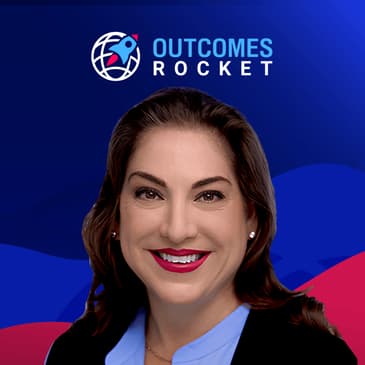
In this episode, Sarah Ahmad, CEO of CAQH, shares how three decades of experience across payers, care delivery, data, and innovation prepared her to lead a critical healthcare data infrastructure organization. She explains how CAQH supports healthcare administration through provider and member data, enabling smoother care delivery and more accurate reimbursement. Sarah also discusses CAQH’s transition to a for-profit model owned by 12 health plans, highlighting how it strengthens the mission while enabling growth and innovation. She reflects on how career setbacks shaped her leadership and outlines a vision for giving providers greater control over their data.
Tune in to learn how better provider data management can reduce friction, improve efficiency, and help build a more connected healthcare ecosystem.
Resources:
[00:00:03] Hello everyone and welcome back to the Outcomes Rocket. I'm so excited you tuned in because today we have the privilege of hosting the outstanding Sarah Ahmad. She's the Chief Executive Officer at CAQH.
[00:00:19] There's no secret CAQH is a leader in the industry and I'm so excited to talk to her about all things health insurance, care delivery, data and technology. So Sarah, thank you so much for joining us today. Thank you Saul. Thanks for having me.
[00:00:37] Of course, of course. My pleasure. Well, you've been busy. There's been a lot going on. To begin with, I just wanted to ask you for the folks to get to know you a little bit better about your background and what got you into healthcare. Sure, sure. So I have been in healthcare for, I think it's 30 years now. I feel like I kind of grew up in healthcare. My father was a vascular surgeon.
[00:01:03] He actually emigrated here from Pakistan and set up his practice in, of all places, Louisville, Kentucky. And so I grew up in Louisville and I grew up listening to his stories of his everyday work, saving lives as a vascular surgeon.
[00:01:18] And it truly inspired me to get into healthcare and to be part of transforming healthcare, but mainly to focus on how do we make it easier for people like my father to deliver care to the people, to the patients that need it every day. And so I am inspired every day to make it easier for people who deliver care from a physical therapist, to a surgeon, to a dentist, anybody that's delivering care.
[00:01:45] Let's make it easier for them so they can do the amazing job that they've set out to do as care delivery providers. Well, I think that's great. And what a great story, Sarah, to hear about your parents coming here and just you continuing that legacy in healthcare. Because provider data could be a mess. And so it's a huge opportunity for us. For people that don't know, I mean, they might be living under a rock if they don't know, but let's level set on CAQH.
[00:02:13] What do you guys do and how do you add value to the ecosystem? Sure, sure. So we've been around for 25 years now. The company was originally formed by a number of big health insurance plans back in the 90s. They really set out to do some good in healthcare, make it easier for providers, reduce some cost in healthcare administration. And so they set forth a number of big problems to solve, one being the problem of provider data management.
[00:02:39] And so CAQH was really founded on improving the way that provider data management flows and is managed every day within payers in the health system. We also have a member data business as well. That's all about our member eligibility data that we collect from all the payers in order to do coordination of benefits to help with payment integrity across the payers. So we have provider data and we have member data.
[00:03:05] And both of these are fueling and powering the data of healthcare today. It's pretty exciting to be in the middle of this, to be part of the healthcare administration in the United States, and to ensure that the data that we're collecting from providers, from payers, is being used for good within healthcare and make it easier for providers to deliver care and for payers to make sure claims get paid correctly.
[00:03:31] So it's pretty exciting to look at all the value that we've created over 25 years across provider data and member data, and then to look at what we can do more of to continue to build our products, to modernize our products, to enhance those products so that we can do more of what this company was set out to do at the very beginning. And it was to improve healthcare administration across the whole ecosystem. Well, I think that's fantastic.
[00:03:56] And thanks for walking us through the different segments from member to the payer side and the purpose. And you guys have been in the news recently, making big news, leading health plans, becoming owners. Talk to us about that latest. Sure. So as of September 30th of last year, we did convert from a mutual benefits not-for-profit organization
[00:04:22] to a for-profit organization that is now owned by 12 health plans. So pretty intense moment to get that done. I don't think there's very many companies in the United States today that are structured in the way that we are, but we are so lucky to be structured in this way because we do have amazing owners now across those 12 health plans that are active with us, that are engaged with us, that are also our customers as well.
[00:04:50] And so they're helping us decide what is most important to transform in the healthcare industry today across healthcare administration. So to have this type of partnership with these organizations is truly amazing. I couldn't ask for anything better. After the 30 years I've been in healthcare and worked at a number of payers and worked in the care delivery system, to have this type of organization structured this way,
[00:05:15] all set up to do good in healthcare and to ensure we are improving some of the cost structure and making it easier. Yeah, no, I think that's brilliant. And almost getting back to the legacy roots of how you guys started, right? Yeah. So having these payer organizations be close to us is the way that we started in the original form of the company. And to have them now as these owners of CAQH, it doesn't change the mission at all. It actually enhances it.
[00:05:44] It allows us to do more. It's given us great optionality with regards to the future of the company. Before we were doing great things. We were reducing costs. We were helping companies manage their provider data and their member data. We have more that we can do. We are at the center of the healthcare ecosystem, given the amount of data that we're collecting and the powering of the healthcare administration that we do today.
[00:06:08] So it's great that we have the structure that we can now look at the different options from investment to M&A to other things that we may want to set out to do as an organization. So it's really been helpful to have the structure set up this way. Totally. And there's a lot of conversations. So first of all, congratulations, right? Like this is awesome. Really thrilled for you and the team and where this takes the platform. And so a lot of conversations out there on provider data management.
[00:06:38] What is it that differentiates CAQH? And maybe tell us the story about as you were building kind of to where you guys are at today, any setbacks that made you or the team better? So provider data management, I mean, you say that and everybody goes, what do you mean? What does that mean? It is very complicated. It is.
[00:06:59] It is all about collecting the data from all the many providers in the U.S. that are eventually part of a health insurance network. So they become part of the network and eventually get paid by that payer when they render care, when a patient comes to see them.
[00:07:18] So all of that data for that provider from where they did their fellowship or residency to where they're privileged at what hospital, all of that data has to be collected. It has to be verified. It has to be verified. And then it gets used for the purposes of getting in a directory, being reimbursed for the care that you provide. So all along the way, we are helping companies manage that data.
[00:07:43] And what we're known for is that front end, that provider data front end, where we have upwards of 4 million providers across the United States coming to our front door, providing us all that data about them as providers. And then we verify that data. We are a CVO. We do primary source verification. So we then validate that that data is correct. So it then can be used by the insurance companies. So that's pretty exciting to be in the middle of that.
[00:08:12] And the volume of data is what makes us so special. And the fact that so many providers in the U.S. are used to coming to us, whether that's because an insurance carrier says, please come to us or we're mandated in many states or required to use our centralized credentialing application. Providers come to us because they know that we do this work on behalf of them and bridge that gap between their data and then moving that over to the insurance entities.
[00:08:38] And then the other question you asked was about the biggest setback, the biggest learning. Is that right? Would you like to know that from my own career or from a company standpoint? Whatever route you want to take. I think I'll take that from more of a personal and a career standpoint. Yeah, I'd love to hear your story. I've been at a couple different companies. I've learned a lot. I will tell you that sometimes you go into new roles and new opportunities and you have just the absolute skill set that meets what they're looking for.
[00:09:08] And you can go in and you could do that job with your eyes closed. I mean, you just know it. You have the expertise. You have the experience. And other times you take on roles that are really a challenge for you with your skill set. Maybe you've never done it before. And I've done that in my career. I've taken on some roles that I just had not done that actual work before. I had the skill set, probably had the capability, but I didn't have experience. And so, you know, the learning that I have going into roles like that, that sometimes you do fail.
[00:09:36] Sometimes, you know, it's a little harder than you think it's going to be to get up to speed on that subject matter and to truly understand it and to be able to deliver on that role. And so I've had some of those moments in my career. And I'm not afraid to say that I learned from it. I do think it really helps to have that deep subject matter expertise. It also really helps just to have the will and the wanting to do it and to learn and grow. So I've had a couple setbacks like that, but it's only made me stronger.
[00:10:03] The really great point of all this is that this role that I'm in right now as a CEO of CAQH is the perfect role for me. I've done this work at a very detailed level at many of the health plans that I've worked at. So it's kind of I've come all the way around to something that I know well, that I know I can do.
[00:10:19] And all the learnings that I've had along the way, all the failures, all the successes, it's really set me up to lead this organization, to lead the amazing talent and leadership that we have at CHH and to continue to deliver the value that we have for 25 years and to do more for the health care ecosystem. Yeah, thanks for that, Sarah. You know, and the future is bright with you in the seat.
[00:10:43] And I can I can to reflect on those roles where I've taken where it's really stretched me but made me better. And I'm sure our listeners can, too. And at the end of the day, it's it's like it also provides you that the thing that you don't like that when you do land in what you do like, it's like, yes, this is it. Right. Yes, absolutely. Absolutely. Sometimes you don't know what you what you don't like. So, yeah, I absolutely agree with you. That's brilliant.
[00:11:12] Look, I am really I have really enjoyed our conversation today. If you wanted to share maybe your vision on where CAQH is going, where provider data management is going, that'd be a really great way to close us off. And then if people wanted to learn more, where can they reach out to you and the team to learn more? Sure. Sure. So I am thrilled to be leading this organization through this transformation from a product standpoint.
[00:11:38] I do believe that we as a provider data front door can and will connect more directly with providers. We want to be the place where all of their data is collected and that they own it and manage it. And we are setting up the capabilities for them to do that. You know, a lot of times the provider data management is done by the office staff, the people in health care delivery administration. And we want to make sure that provider data is owned by the provider.
[00:12:07] Everything about what they've experienced going through med school and fellowships and residencies and everything in between. We want them to have that data at their fingertips. So our vision is that we offer that capability to every provider in the United States, that they know that we're the place to come to, to send their data and also manage their data. So we're excited about that coming to life this year in 2026. Again, the future is really bright for us.
[00:12:35] We are set up to continue doing really good things in health care administration. And that can only be done with a grant team. And I'm lucky to have that. That's great, Sarah. I really appreciate that. The vision is clear. And really appreciate you coming on the podcast to share it with us. Folks, just an incredible opportunity to chat with Sarah Ahmad, Chief Executive Officer at CAQH today. We hope you enjoyed the interview in the show notes.
[00:13:01] You're going to find all of the short notes and links out to learn more about the company and about Sarah. Sarah, it's just such a pleasure to have you on. Thanks. Thanks, Saul. Really appreciate it.