
This podcast is brought to you by Outcomes Rocket, your exclusive healthcare marketing agency. Learn how to accelerate your growth by going to outcomesrocket.com
As care delivery rapidly shifts beyond hospital walls, Medtronic is redefining patient monitoring and safety.
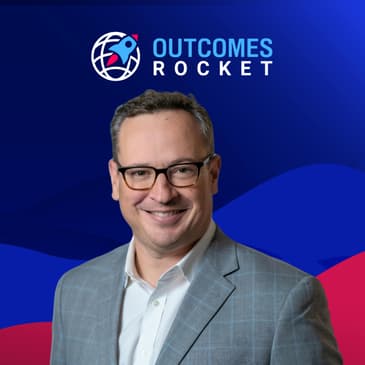
In this episode, Blake Tatum, VP US Commercial for Medtronic Acute Care and Monitoring, discussed how the division supports over 115 million U.S. patients annually with technologies for blood oxygenation, airway management, and patient monitoring. As healthcare shifts toward ambulatory surgery centers (ASCs) and hospital-to-home care, Medtronic is investing in adapting its acute care solutions to these evolving settings. Their focus is on improving patient safety, reducing complications, and increasing efficiency through technologies like BIS anesthesia monitoring and McGrath video laryngoscopes. What sets Medtronic apart is its ability to integrate seamlessly with existing systems, combined with a dedicated ASC support team and access to Medtronic’s broader portfolio. The ultimate goal is to deliver clinically proven, scalable solutions that enhance outcomes while meeting new care and reimbursement models.
Tune in to learn how Medtronic Acute Care and Monitoring is adapting to support ambulatory surgery centers and hospital-to-home care with innovative, scalable solutions!
Resources:
[00:00:01] This podcast is produced by Outcomes Rocket, your healthcare exclusive digital marketing agency. Outcomes Rocket exists to help healthcare organizations like yours to maximize their impact and accelerate growth. Visit outcomesrocket.com or text us at 312-224-9945.
[00:00:30] Hey everyone, welcome back to the podcast. Saul Marquez here with the amazing Blake Tatum. You guys have heard him on the podcast before. He is the Vice President of U.S. Commercial for Medtronic Acute Care Monitoring. Blake, such a pleasure to have you back on the podcast. Pleasure to be here, Saul. I appreciate you letting me join. Oh, of course, man. I love getting you on because you guys are up to so many great things. For those that haven't listened to your past episode, tell them a little bit about you and also about the division of Medtronic.
[00:00:58] What's the Medtronic that you're a part of? Yeah, so for us it's all in the name. So we're the Acute Care and Monitoring Division of Medtronic. So everything, blood oxygenation, so pulse oximetry, the LeBanda they put on your finger, or airway products in the OR, cerebral oximetry. If you go have a really complicated surgical procedure, we're going to monitor what's happening in your brain. We've also got laryngoscopes. A lot of things that touch every patient in every hospital.
[00:01:22] So we treat about 115 million patients a year, or touch at least, in the U.S., and that's us, acute care and monitor. It's impressive and all about keeping patients safe. It is. So critical, critical stuff that you guys have. And so healthcare is changing constantly. Mm-hmm. And with that, businesses need to change in order to meet both customers as well as patient needs. Talk to us about how Medtronic Acute Care Monitoring is evolving to meet the needs. Yeah, it's probably the question for the U.S. these days.
[00:01:52] Because traditionally we were always an acute care focused organization. So everything that we did, or even our sister divisions do, was almost exclusively acute based. So everything was in hospital procedures, everything was high acuity impact, ICU, general care floor, etc. And things are really changing in that things like, for example, Medicare reimbursement. They have really shifted in a big way where they will reimbursive procedure.
[00:02:16] For example, Medicare reimbursement is pushing a significant percentage of orthopedic and cardiac cases into that ambulatory surgery center space. So typically you would always get, say, a total hip or knee done in a hospital, or even an invasive cardiac procedure. And now reimbursement is actually reimbursing at a higher rate in that ambulatory surgery center space. Also, a lot of physicians are asking us, how can you tether post-op or critical care patient to us at home?
[00:02:44] So hospital to home or hospital at home. So those are two areas where we've really had to invest and put a lot of investment in thought, is the hospital home space and the ambulatory surgery center space. Because no matter what, where there are reimbursement pushes, that will be where the procedure goes. And we've got to get ahead of that or stay ahead of that. I think that's brilliant. And I do want to make sure to recognize a lot of the efforts that I've been able to see around health equity that the company's taking, especially around this Pulse Ox business. So none of that is easy.
[00:03:13] And I want to commend you and the team for what you do on that. Absolutely. I did want to unpack a little bit. You mentioned ambulatory surgical centers. Can you tell us a little bit more about your approach to ambulatory surgery centers? Yeah, that's a good question. So that's probably the most evolving space. So hospital homes, probably early stage. We're sort of learning with the market. You know, how do we take what you do well and take it out? Ambulatory surgery centers is a different beast. It's much more evolved in that, for example, CMS or Medicare.
[00:03:41] So Medicare reimbursement is actually pushing procedures to ASCs or ambulatory surgery centers. For example, a large percentage of orthopedic and really almost half of cardiac procedures are now being reimbursed at a higher level in that ASC space. So how do we take what we do well? So, for example, how do we take acute care level patient safety and move that to the ASC space is really what we're working on.
[00:04:07] And that's where a lot of our biz technologies or Envos technologies come in to make sure that when we're doing like a complicated cardiac procedure or a full hip and knee replacement procedure, make sure that that patient comes out of that procedure safe. And then also by the time they go home, we've got them in the most stable possible physiological state. I think that's really great. And this space, the ambulatory surgery space is oftentimes very cost conscious.
[00:04:32] Can you talk to us about maybe what the company is doing to meet them where they're at with their needs? That's a really good question. So the two areas were really three areas where we can have like a defined impact are going to be on patient throughput and minimizing complications. So, for example, we have a McGrath-MAC video laryngoscope where we can make sure you get first turn intubation every single time, avoid any early anesthesia complications. Also, there's a lot of data out there today about post-op delirium.
[00:05:02] So when you put somebody so far down that you can do a full hip and knee or a cardiac procedure, you need something like our biz depth of anesthesia monitoring to make sure that you're titrating it just enough so that that elderly patient or even just a physiologically compromised patient could come out of that procedure and wake up and have their faculties. A lot of what we're working on are outcomes and then economic benefit. So we can speed through the case. We can make sure you don't have post-op complications. We can be extremely costly and in some cases deadly.
[00:05:31] And then also our OEM integration. So everything that we in a patient monitoring space, especially everything that we do in the U.S. is fully integrated in the OEM monitoring space and the distribution space. So if it's airway supplies, if it's our monitoring tech, we can integrate all of that in an environment and connect it with our HealthCast portfolio in a way that it's automated. So Saul goes in for a cardiac procedure. We can automatically admit him.
[00:05:58] All of his data immediately shows we can plug all of our sensors into the existing OEM infrastructure and then make sure that he gets out of there healthy and quickly. So for us, it's all economic and clinical benefit focus. I think that's fantastic, Blake. And for everybody tuning in, it's so great to just have one hand to shake. If you can have one partner that integrates with distributors, with OEMs, why not? Things are too complicated out there. It sounds like you guys are here to simplify. It's what we do best. To be honest, a lot of our technologies have been around for years.
[00:06:27] They're very widely clinically studied. It's going to be first pass, most accurate every single time. And if we can make that seamless for an ambulatory surgery center where I can literally come in and apply those technologies in existing infrastructure with absolutely no distractions or no workflow disruption, it just makes it that much easier to put the right technologies on those complex patients and make sure that we can provide that clinical and economic benefit. That's really our whole focus is patient safety. That's fantastic. So, Blake, there's so much competition. There is.
[00:06:57] What makes Medtronic acute care monitoring different? So probably two things that your audience would care about. One is the breadth of Medtronic, right? So we do have a lot of the neuro technologies, the cardiac technologies that we can partner with and bring in so we can handle almost any patient in the world. But specific to our division to acute care monitoring, we've actually made the sales and marketing and clinical investments in this space. So we've built out an ASC sales and support team.
[00:07:25] We have dedicated ASC marketing team members that can help us understand reimbursement mix, patient mix. How do we stay a step ahead of this trend and make sure that we're treating the patients as they get moved into the ASC space? So we've got the dedicated resources in addition to our legacy acute resources like our health cast team, professional services team, where we can do a lot of this install, upgrade and education for you. So we've got a dedicated team to this space.
[00:07:50] We can lean on the breadth of Medtronic and we've already got sort of the market and sales resources to make sure we can prepare that ASC for what the future might look like. That's great. That dedication is really important, I think, for this space. So it's fantastic to hear that you guys are making those investments. So, Blake, first of all, I want to say thanks for jumping on the podcast. Thanks for having me. It's always a pleasure. If folks listening to us and watching us today want to know how to get in touch with you and the ASC team at Medtronic. What's the best place they could do that?
[00:08:20] So I believe we're going to leave you with a number of resources. So it's Medtronic acute care monitoring. You don't even have to look for the ASC space because the team's already fully integrated into our core team. So I believe we're going to leave you with a number of links and resources that your audience can use to reach out directly to us or call me. We'll leave all that information and how to get in touch with Blake, as well as a couple links that have all the resources that Medtronic ACM is focused on in the ambulatory surgery space.
[00:08:48] So make sure you check those out and reach out because they're a great team to partner with. Thank you all for tuning in. And Blake, thanks for being with us. Thank you, Saul. Always appreciate the time. Thanks, everyone. This podcast is produced by Outcomes Rocket, your health care exclusive digital marketing agency.
[00:09:16] Outcomes Rocket exists to help health care organizations like yours to maximize their impact and accelerate growth. Visit outcomesrocket.com or text us at 312-224-9945.