
Great medtech innovations win because patients actually use them.
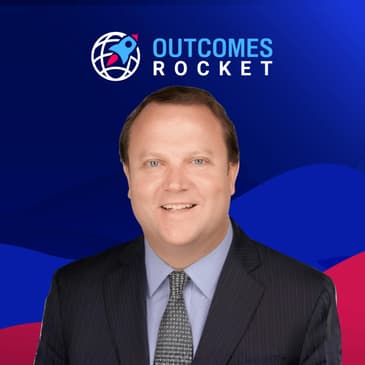
In this episode, Ken Nelson, Partner and Founder at Nelson Jennings Ventures, shares his journey from cardiac device sales at Boston Scientific to helping commercialize major players in cardiac monitoring, including iRhythm, BioTelemetry, and Bardy Diagnostics. He highlights how innovations such as wearable cardiac patches have transformed patient adoption and reshaped the monitoring market. Ken reflects on Medtech Innovator's impact in accelerating commercialization, partnerships, and investor readiness. He advises early-stage companies to leverage accelerators and industry events like Life Science Intelligence to strengthen their path to market and fundraising success.
Tune in to hear how decades of experience in cardiac monitoring and startup scaling translate into practical advice for founders navigating commercialization and growth!
Resources:
-
Connect with and follow Ken Nelson on LinkedIn.
[00:00:03] Hello, everyone. Welcome back to the Outcomes Rocket, recording live here from Medtech Innovators Radar Quorum. I am with the outstanding Ken Nelson, who's with Nelson's Jennings Ventures, as well as Star 51 Capital. Welcome to the podcast. I appreciate it, Saul. Thanks for having me. Absolutely. So tell us a little bit more about you, Ken, and the work that you do.
[00:00:24] Yeah. So I got into cardiac, you know, 20 plus years ago, first with Guidant and then Boston Scientific on the pacemaker side. And then from there, commercialized what became three of the four biggest players in the cardiac, digital health and remote patient monitoring space.
[00:00:43] The first was iRhythm, which eventually went public. Second was Biotelemetry, which was acquired by Philips. And then the third was company called Barty Diagnostics, which was acquired by Hillrom and Baxter. And that's the company where I first got to know Medtech Innovator and Paul Grand and really got interested in what Medtech Innovators do. And that was back in 2019. That's cool. So congratulations, first of all. Oh, thank you. On the track record. Yeah.
[00:01:10] What did you see, you know, as you were sort of, you saw the first one, right? Yeah. The iRhythm. Yeah. But you saw the opportunity continue. Yeah. What did you see? So with iRhythm, what Uday Kumar was the founder, he's an electrophysiologist. I'd been in the EP space, worked with a lot of EPs and was, you know, in procedures for pacemakers, ablations, defibrillators.
[00:01:35] And as far as I knew, the monitoring space was a fairly bland space. People hated to wear these monitors that had these wires on them. And so there were these 24 hour halters and people, there were 24 hour halters because people wouldn't wear them longer than that.
[00:01:52] And when I saw the iRhythm patch, I said, my gosh, that's going to completely change the market because people actually wear it. There's no wires. And Uday was right. And he completely transformed that market. You know, they're a five, six billion dollar market cap company now. Great CEO, Quentin Blackford. The CMO is an EP friend of mine, Mintu Trachia. Oh, so that was first one. Quentin was, he was a CFO at Nuvesa for a bit, right?
[00:02:21] Yeah. And Dexcom as well. When I was there. Oh, was he? Yeah, yeah, yeah. Yeah. He's awesome. I love him. I love Quentin. He's great. He's doing good things there. And then at the time, I felt there was a need for a real time patch as well.
[00:02:35] And at the time, Uday disagreed with me and the CEO of iRhythm disagreed at the time, CEO at the time. And I felt really strongly about it. And I went to CardioNet at the time, which we changed the name to Biotelemetry eventually. They were the leaders in real time cardiac monitoring. Fascinating. And I convinced the CEO to let me go find a real time patch. And we co-developed this real time patch monitor with a company called iMac out of Belgium.
[00:03:04] That became the leading product in the real time cardiac monitoring space. And that was bought by Philips for, I think, $2.8 billion. That was interesting. And then Gus Barty, he completely disrupted the space again with a really accurate non-real time monitor. And that one, Paula Violet, the ex-CEO of Boston Scientific. Yeah, yeah, yeah.
[00:03:28] Which is, you know, I started at Guyton. Boston bought us someone I really respect and consider a mentor. He recruited me to Barty. You know, I was the CCO there. And that's when I met Paul. And, man, I wish I had known about MedTech Innovator back in the iRhythm days because, you know, would have really helped us from a commercialization standpoint, strategic partnership standpoint, even from an investor standpoint.
[00:03:52] But this has been one of the most impactful decisions I've made career-wise is to, you know, to pitch MedTech Innovator, to go through the program, which was extremely helpful and impactful. And even as a judge, I've learned so much about being a better investor, a better board member. And it's just been a great experience and really the best MedTech digital health startup ecosystem in the world.
[00:04:18] That's fantastic. So for any companies out there wanting to do the best thing for their technology, for their investors, what advice would you give them? So I always tell them that when if they're anywhere earlier than multimillion dollars of commercialization, you're fit. We came through and we were already FDA cleared. They were already doing maybe a million in revenue when I got to the company.
[00:04:43] And so highly consider going through multiple accelerators, especially if you're getting ready to commercialize. This is a great thing to consider. And then when you're going to raise money, I think LSI is, you know, an industry leader in events to go to when you're raising money. So I think the two of them are experts in the domains that they both play in. Well, great, great advice. Ladies and gentlemen, here with Ken Nelson.
[00:05:11] So if people want to reach out and learn more about you and the work that you're up to, what's the best place? Reach out to me on LinkedIn. Very active and happy to connect. I'm very focused on cardiac. So if it's outside of cardiac and some neuro as well, then I'm probably not going to be as interested. But if it's cardiac related, happy to catch up. That's awesome. Well, there you have it, folks. Ken Nelson. Check out the show notes for ways to get in touch. Appreciate y'all tuning in. And Ken, thanks for being here. All right. Thanks, Saul.
[00:05:40] Appreciate it. Yeah. Yeah.