
This podcast is brought to you by Outcomes Rocket, your exclusive healthcare marketing agency. Learn how to accelerate your growth by going to outcomesrocket.com
Asynchronous therapy and telehealth expand access to mental healthcare, especially for underserved populations, through scalable, technology-driven approaches.
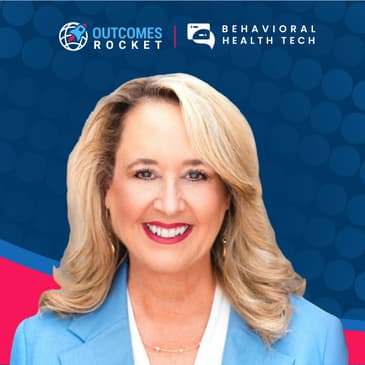
In this episode, Erin Boyd, Chief Growth Officer at Talkspace, discusses the evolving landscape of digital behavioral health. She emphasizes how innovative approaches like asynchronous therapy and telehealth are breaking barriers in mental healthcare. Erin also discusses strategies to combat stigma and expand access to underserved populations such as teens and seniors. She also explores the integration of AI to improve therapeutic outcomes.
Tune in to discover how digital health is reshaping the way we approach mental healthcare!
Resources:
- Connect with and follow Erin Boyd on LinkedIn.
- Follow Talkspace on LinkedIn and visit their website.
Fast Track Your Business Growth:
Outcomes Rocket is a full service marketing agency focused on helping healthcare organizations like yours maximize your impact and accelerate growth. Learn more at outcomesrocket.com
[00:00:01] This podcast is produced by Outcomes Rocket, your healthcare exclusive digital marketing agency. Outcomes Rocket exists to help healthcare organizations like yours to maximize their impact and accelerate growth. Visit outcomesrocket.com or text us at 312-224-9945.
[00:00:25] Hello, everyone, and welcome back to another episode of Expanding Access brought to you by Behavioral Health Tech here at the conference in Arizona. I'm so excited to be joined with Erin Boyd. She is the Chief Growth Officer at Talkspace. Erin, thanks for joining us. Erin Boyd Thank you so much for having us. So glad to be here.
[00:00:53] Aaron Boyd Oh, it's such a pleasure. And look, we were just having a chat before we started recording. But what brings you to the conference?
[00:00:59] Erin Boyd This is the place to be if you are in digital behavioral health. It has all of the players. And for us, most importantly, all of the payers are here. And we've had just incredible, great face to face conversations that are hard to get scheduled throughout the course of the year. So it gives us a one stop shop to come and convene with those whom we need to meet with. And we have some really great strategic conversations here. Last year, I was saying we had a couple that paid for the event, if you will. And I've already had two this morning that could possibly face the event. So I'm going to talk to you about this.
[00:01:29] Aaron Boyd It is all about those connections. And look, those connections are critical to solving some of the big problems we have. And so tell us about you and tell us about Talkspace. Erin Boyd So Talkspace has been around for 12 years now. We were one of the first to do telebehavioral health on a national scale. We were the first to do asynchronous therapy. So we've been a pioneer in this space for a really long time. And asynchronous care, to help better describe that as
[00:02:00] texting, basically, with your therapist. So just if you're texting with your friend, where we're going to go to dinner this weekend, they have this ongoing conversation with their therapist. And because it was new and never been done before, we spent a lot of time and resources with research and studying out, improving out the efficacy of it. And time again, and study after study, it shows it has the same outcomes as live therapy does. And it's a great way for those who might be apprehensive to start therapy, to do it in a non-threatening way. It's also great for myself, the working mom.
[00:02:29] Where to think the thought of scheduling yet another appointment somewhere in my busy day is overwhelming sometimes. So to be able to just like, when I need to talk to my therapist, I can do it. And then she can respond in her time as well. So it's a unique way to just have that ongoing conversation. We also do live sessions too. But when the company was founded, it was founded by a married couple. And the husband was in advertising. So he understood the power of a brand. Anyway, at first we were a consumer only offering.
[00:02:57] But because of his advertising background, we were the first behavioral company to do like massive widespread advertising and marketing in the behavioral health space. And then we partnered with Michael Phelps to be our brand ambassador. I don't know if you saw he was here earlier today.
[00:03:11] So he's been like just an incredible partner to help spread the word that it's okay to not be okay. Therapy is great. It can help you in a multitude of ways. But that really put us on the map. And we're now known by name in one in three households. And I think if you like mentioned Phelps with it, it's usually one in two households. Most people go, oh, yeah, I know that. I saw your ad.
[00:03:29] So since that time, back in like 2017, 2018, we started working with payers, we started selling directly into employers, shifting to a B2B model. And that has allowed for even greater access for people to get care. And so now we have a multidisciplinary virtual clinic, if you will, where people 13 and above can get therapy, and they can do it live or asynchronously. And then 18 and above, we have med management. So we have psychiatric prescribers.
[00:03:58] And then we have self-guided tools as well. So we're really meeting people in a variety of ways based on what their needs are. Sounds very comprehensive. Yes, it is. I love it. And thanks for the history. It's always interesting to hear how companies grow up and evolve. And you guys have certainly done a fantastic job in serving people in the space. In COVID, we saw the rise of telehealth, including for mental health. How have you seen the demand change these last few years?
[00:04:26] It's been extraordinary to observe. I've been in behavioral for 12 or 14 years now, something like that. And when I started in behavioral, it was very old-fashioned RKO. And so we had been trying to promote telehealth for so long.
[00:04:41] And then COVID, like I always say, one of the silver linings is it created the boom and the explosion. So we saw an immediate giant increase in utilization and so forth. And we continue to see that every year growing and growing more. Part of that is because we've added on more payers to become an in-network provider with them. Part of that has been some of our strategic partnership. But like the first half of this year, we had half a million sessions, which was 57% growth over last year. Thank you.
[00:05:11] We now cover 160 million lives. So that is everybody's finally adapted to telehealth. There was also interesting, a recent study from Tulliant Health that they saw behavioral outpatient utilization grow 43%, I think it was, last year. So just in general. So which means the stigma is finally starting to decrease. And people are wanting to get care and get care for different reasons than they might have in the past.
[00:05:36] And then behavioral for so long was like the ugly stepchild in the healthcare industry. Now we're, everybody wants to be in behavioral now. And we've seen finally in one space, we're dominating and that's in the virtual area. So when you look at all virtual utilization across the whole gamut of healthcare, behavioral is like 72% of it. So it's definitely a modality that people have accepted that yes, it works. It's easy. It makes life easier. You don't have to drive to the appointment. Yeah.
[00:06:03] So the adoption has been incredible. The growth has been incredible. I don't see it slowing down. And especially again, so much conversation around mental health and helping to take the stigma down. Half of our users ongoing, like month after month, half of our users are first time therapy users, which just means more and more people are like, yep, I can use a therapist.
[00:06:23] And they're changing why they go to therapy a lot. For years, it was you needed a diagnosable mental health condition. And now people are thinking about maybe I should just talk to a therapist about living my best life or talk about relationships or stress and just thinking of it differently versus, oh, I don't want to be seen going in the mental health clinic. You could, there's so much value in having the therapist there to help guide you through some of life's challenges and everyday things we go with.
[00:06:46] I think it's great. And this shift to normalizing, caring for your mental health is just really great and great to hear the continued adoption. What does digital behavioral health mean to you today? I think it's really simple. I think it's leveraging technology to meet people where they're at. So they might want a self-guided tool. They may want to see a therapist. They might need med management. They might just need some exercises or something.
[00:07:11] But being able to finally bring technology into the space to bring it to your kitchen table or your office, wherever it might be, and be able to do it on your computer or your laptop or your tablet or phone, it just makes it so much easier. So now the consumer has a large amount of choice. They can get in very easily and quickly, which that was a struggle for a very long time.
[00:07:32] So you can easily download an app, get matched to a provider and start being in care. If you do asynchronous, it's almost immediate. If you schedule an appointment, it's less than a week. You don't have to go searching around. So the choice piece is like really big. And it's also allowed for not just access, but affordability.
[00:07:50] So as more of providers like us are in network, people can use their insurance card to pay or EAP benefits. We have a lot of strategic partnerships where employers pay for therapy for their employees. But 60% of our members have a zero copay. So it's so much easier to get in, get seen, make it affordable. If you're in a desert area, a provider desert area, it doesn't matter anymore. All those basic things of Wytale Health is so great.
[00:08:18] I love it. And yeah, the async one is key. The asynchronous opportunity, just because that number, right? I think it's like for every 360 people, there's one provider. Yes. I don't know what the latest stat is now on that, but yeah, there's obviously a supply and demand issue is there for sure. And so the asynchronous piece does allow for therapists to see more patients and interact. It's great for the therapist too, because depending on their schedule, they can do it at night or do it on the weekends and have their own busy life and so forth.
[00:08:48] So it's another thing that's really cool about async that we always stress is that for the therapist, it's the first time that they have had real time insight into how their patient is responding to things that happen in their life. So if you think about in a traditional therapy setting, you'd schedule it out for weekly or biweekly. And so you'd sit down in the chair, you'd have to think about what happened two weeks ago or seven days ago and how it made you feel and like how you responded and so forth.
[00:09:16] So our therapists love it because it's given an insight they've never had before. So you're going from episodic to continuous. Correct. Yeah. Which gives you that insight. Yeah. I love that. Thank you for that. Appreciate the definition there. How are you helping expand access to mental health and substance use care? So the company was founded on the mission of mental health therapy for all. And I love that we have kept that as the foundation of our organization. And really, we wrap everything around that.
[00:09:45] So we have expanded into really focusing on the teen space and on seniors. So we like our bread and butter is like the working mom, basically. But now we're going into other areas that are really important. And we all know there's a mental health crisis among our adolescents now. And so this week marks the one-year anniversary of the partnership we have with New York City. The Department of Health is paying for all teenagers in the New York City metropolitan area for free therapy via talk space.
[00:10:14] So after a year, we have been able to reach into segments of the population that normally we wouldn't because it's free and because we figured out how to market to them and make them aware of it. And it's free of cost to them. And because of the asynchronous piece, we're meeting them where they're at, the kids on their phone. And so of our teens, 50% of them use asynchronous exclusively. They also have live video sessions available to them.
[00:10:41] And so the other 50 do a live video session or two a month. But being able to meet into those different pockets of different socioeconomic individuals, too, has been like incredibly rewarding in a way. Because, again, I've been in the industry for a while and that's always been like a really hard thing to do. And then we've had a huge BIPOC diversity kids coming to seek services there, too, because they can find a therapist that looks like them and understands their culture. And so it's been incredibly successful. And we're doing it with Baltimore County.
[00:11:10] There's another one coming up very soon. But we've really laid down some stakes there. And then on the senior side, on the opposite end of the spectrum, there's so much change that goes on when you retire. There's like kind of grief of your identity, maybe your career identity. You're losing friends and so forth. It's just a big change. So we laid a stake in the ground that we want to be part of that transition and help people through that transition.
[00:11:34] So we launched Medicare this year, meaning that we accept Medicare now and will be nationwide by probably January-ish. We saw a few more states trickling in. We're in United's Medicare Advantage plan and on the docket for a few others. So we want to say to seniors, this is a great way to help with that new stage in your life and finding new purpose and living your best life in the last few chapters of it. That's so great to see you and the company expand the base of people that you serve. Yeah.
[00:12:03] Again, it goes back to that original mission of ours of mental health therapy for all. That's fantastic. And so what trends and challenges or opportunities do you expect to define the space looking ahead to 2025? So AI has been the hot topic this year, and I think it will definitely continue to be next year. And we're viewing AI as a housekeeping administrative tool for our providers. That's like table stakes, right? Everybody's doing that.
[00:12:28] But because we have a research team, we have a whole AI team, we have a decade of therapeutic interaction sitting out on a server. And so when you put machine learning on top of that, how do you take that data and that machine learning and help put science and data, if you will, into the therapy room like you've never done before? So when you can gather all that data and put AI on top of it, you can help guide the therapist. We don't want to replace the therapist.
[00:12:56] Again, for the sake of the ground, I said there still needs to be people involved here. There's the therapeutic alliances between two humans, but AI can now help guide the therapist in a scientific way that's never been available before. So there's a lot. We're doing a tremendous amount of work there. I think the other big thing we'll start to see, I hope, more and more next year is integration with medical practices, where they're more comfortable in doing those annual screeners that a lot of them get reimbursed for,
[00:13:23] because they're oftentimes scared to screen for certain conditions because they don't know where to send their patient. So we are here to partner in that way as well. I also think it is like being able to put suicide risk detection in a pediatrician's office, for example, and being able to, again, say, if they come up positive, we can help you with that. So I think that's going to, we're going to see more and more of the trends of that integration piece from technology standpoint. I think AI is the big talking point. Sure.
[00:13:52] It's all over here. Oh, great to hear your stance on it. You know, you guys are leveraging it back of the house, but also as a co-pilot. Yeah, that's a great way to hit. I'm going to steal that. I love it. Listen, this has been so interesting, Erin. I'm impressed with the work that you and the Talkspace team are up to. Thank you. What closing thought would you leave our viewers and listeners with as they seek to make behavioral health more accessible?
[00:14:18] I think we all as an industry together should continue to work to bring down the walls of stigma. I know everybody's such an advocate for that. But anyway, you can do it just in your day-to-day life. And from an asynchronous standpoint, since we're one of the few that do it, we're working with other professional organizations to get a more industry-wide metric set around what good asynchronous care is.
[00:14:42] And lastly, if someone's interested in learning more about us, they can easily go to business.talkspace.com. Or if you forget that, just go to talkspace.com if you navigate through it. Outstanding. Folks, there you have it. Erin Boyd, Chief Growth Officer at Talkspace with us. Make sure you check out the show notes of today's podcast for ways to get in touch with her. Just take action on the things that you heard today. The opportunities are big. Erin, thanks for being with us. Thank you so much for having us. Appreciate it.
[00:15:25] This podcast is produced by Outcomes Rocket, your healthcare-exclusive digital marketing agency. Outcomes Rocket exists to help healthcare organizations like yours to maximize their impact and accelerate growth. Visit outcomesrocket.com or text us at 312-224-9945.