
This podcast is brought to you by Outcomes Rocket, your exclusive healthcare marketing agency. Learn how to accelerate your growth by going to outcomesrocket.com
FDA-cleared digital mental health treatments are transforming behavioral healthcare by improving access, affordability, and clinical rigor.
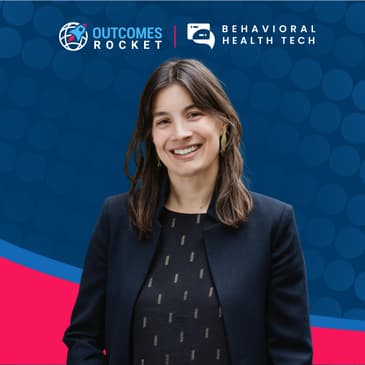
In this episode, Dr. Jenna Carl, Chief Medical Officer at Big Health, discusses the transformative potential of FDA-cleared digital mental health treatments. She explains how these evidence-based, automated programs address critical challenges like accessibility and cost in behavioral healthcare. Throughout this conversation, Dr. Carl highlights the recent CMS approval of new reimbursement codes for FDA-regulated digital mental health treatments, which has enabled greater adoption and availability of innovative solutions for conditions like insomnia and anxiety. She also explains the distinctions between these treatments and standard wellness apps, underlining their clinical rigor and cost-effectiveness.
Tune in to learn how FDA-cleared digital mental health treatments are revolutionizing behavioral healthcare!
Resources:
- Connect with and follow Dr. Jenna Carl on LinkedIn.
- Follow Big Health on LinkedIn and discover their website.
Fast Track Your Business Growth:
Outcomes Rocket is a full service marketing agency focused on helping healthcare organizations like yours maximize your impact and accelerate growth. Learn more at outcomesrocket.com
[00:00:01] This podcast is produced by Outcomes Rocket, your healthcare exclusive digital marketing agency. Outcomes Rocket exists to help healthcare organizations like yours to maximize their impact and accelerate growth. Visit outcomesrocket.com or text us at 312-224-9945.
[00:00:25] Hey everyone, welcome back to another episode of the Expanding Access Podcast, recorded live here at the Behavioral Health Tech Conference in Arizona. Today I have the privilege of hosting the amazing Dr. Jenna Carl. She is the Chief Medical Officer at Big Health. Jenna, thanks for joining us.
[00:00:52] Thank you so much for having me. And yeah, best introduction. Thank you. Thank you. So the conference is obviously buzzing. It's been a really great one. What brings you to the conference? Great question. So this is my favorite conference because it's focused on behavioral healthcare, which is what we do at Big Health. Also my clinical background, it's really where I feel like there's the best concentration of leaders trying to have an impact, like take innovative approaches.
[00:01:21] So it's great to both share what we're doing and find out whatever else is up to. You know, also it's a little bit like a high school reunion, lots of old friends to see. Get together. I love it. Yeah, I've been hearing that a lot. It's sort of like the latest and greatest, very focused on mental behavioral health. And so great to hear you echo that, that reason. Tell us a little bit about you and Big Health.
[00:01:42] Yeah, absolutely. So as I said, I'm a clinician, clinical psychologist by background and have been very focused in my career before Big Health and at Big Health, creating evidence based treatments for common health conditions like anxiety, depression, insomnia. And really one of the big problems that has persisted for decades is that there are great behavioral evidence based treatments, but people just cannot really access them.
[00:02:07] And so what I've been trying to do at Big Health for eight years now is really work on digital versions of those evidence based behavioral treatments and help make them available to people that need them. I love that. It's a big need. The shortage of care is a big problem. I think digital is the way. It's got to be a part of the solution. Yeah, definitely. And so you guys are leading the way with this. So why should health care leaders be paying attention to FDA cleared digital mental health treatments now?
[00:02:36] It's really important because FDA cleared treatments in mental health have been around for a few years, but things are changing now, which make them more relevant in a way that they hadn't been before. And what the reason is because this Friday, this past Friday, CMS, the Center for Medicaid and Medicare, finalized new reimbursement codes for digital mental health treatments that are FDA cleared.
[00:03:00] And so it's the first time that there has been Medicare reimbursement for digital mental health treatments. And it is a subset of digital mental health treatments that fall under one FDA regulatory code that includes really important clinical controls to it to make sure that the programs are safe and effective and evidence based. But this is ultimately the first time that there's been reimbursement, which has been the big blocker to providing broader access and adoption.
[00:03:27] So we are really thrilled to have an opportunity to use these codes to get our programs out there and more available to people in need. We have two programs, Sleepy OREX for Insomnia and Daylight OREX for Anxiety that both are covered under these new codes, which will be effective January 1st. Amazing. Well, that is a nice win in the sales, I would say, for these digital treatments, which oftentimes people talk about these things.
[00:03:55] There's so many like things like medications, but these are alternatives, right? Yeah, absolutely. Can you talk about that? Yeah, absolutely. So it's a little bit of a misnomer that patients with mental health conditions just want a quick fix. A lot of patients with mental health conditions do not want to take medications. And also medications are not recommended as first line treatments for insomnia, anxiety for many people. Like it's just better to try a lower risk treatment.
[00:04:22] And one that really gives people the skills to manage the condition for an ongoing way. It addresses root causes. So it's not something that like medications you have to just keep taking, but they don't really resolve the underlying issue. Yeah. So ultimately, it's just a really important option for people to have. Some people may not want it, but a lot of people are looking for other options than medication. Well, I love that you guys are doing this. I tend to not want to go the medication route personally. So it's awesome to have this.
[00:04:51] And price-wise, how does it compare? That's an interesting question. So we've done a couple of studies really looking at the comparative price. And ultimately, digital CBT, like our products, do have the highest cost effectiveness of any compared to traditional treatments, including medication, also including individual therapy. And the reason is because those treatments take longer and they're more intensive. Also, with medications, because of the side effects and risks, they have a lot of downstream high costs associated.
[00:05:21] So it's not just the cost of the actual pill, but what is the impact on your health of taking that pill? How much complexity does it create for your health condition and other downstream risks? So that is really why, like when you look at the total costs, digital programs like ours can be the most cost effective. I'm glad you went there. It's not just that medication cost, but it's actually the whole journey, right? From taking it to what are the downstream impacts of it? Exactly. Love it. What are digital mental health treatments and how do they fit into care?
[00:05:52] So it's a great question because there's a lot of confusion about what they are. And digital mental health treatments is a term that the Center for Medicaid and Medicare has formalized as part of the Medicare Physician Fee Schedule that was just released. And what's meant by that term is fully automated digital treatments, meaning they're not powered by humans or providers. They really are software-based treatments, usually providing skills-based therapies like cognitive behavioral therapy.
[00:06:20] And they are regulated under FDA. And so that means that in order to be provided to people, to patients, they do need to be reviewed and cleared or approved by FDA before they're marketed. And so it is a specific type of digital mental health treatment that is different than the kind of broader set of mental health apps or wellness apps that people might be familiar with. Yeah. So they're more vetted. They're more evidence-based. Would you say those statements are fair?
[00:06:49] That's fair. Yeah, that's really the point is to have a bar for evidence and safety and quality that doesn't necessarily exist for other areas of digital care that is not regulated. Got it. Thank you for sharing that with us. In this evolving space, it's super important to understand these nuances. And Jenna's really helping us do that in a big way. How is this different than other health apps? Like, I know we kind of touched on it a little bit, but let's unpack it a little bit more. Yeah, absolutely.
[00:07:17] So people complain that there are thousands of apps in the app store that all offer different ways of helping with mental health. And ultimately, a very, very tiny number of those have any sort of regulations or controls around them. And so you just don't really know what is happening in those programs. And not that some of them can be helpful, but there has been research showing that some of them are actually also harmful.
[00:07:44] They may say they're providing a type of therapy, but no one's checking that they're actually providing that type of therapy. They also may not have evidence to show that their program is actually effective. And so I think it's just like for end users or patients or for providers who are looking for digital supports for their patients.
[00:08:00] It's very important to understand that there's a difference between quote unquote wellness apps versus this new category of FDA regulated programs, which, you know, you still need providers should still look at the evidence for those programs. It's a very different bar for showing quality. And they also FDA also looks at cybersecurity and privacy. And so there's things that patients and providers are really concerned with.
[00:08:30] And so you would just want to make sure that people are getting the appropriate kind of controls in place for anything that they're using to support their mental health. That's fantastic. Not really great to understand those distinctions. And so we talk a lot about the future here at behavioral health tech. Everybody here is ahead of the game. There's still a lot of work to be done. Where do you see this space in the next five years? Yeah, it's a really exciting time.
[00:08:54] So I think in the past few years, we've seen a tremendous growth in different care delivery models. And so really just doing a better job of pulling together networks of, you know, the right set of clinicians to support behavioral health. That didn't exist 10 years ago. Yeah. And so there is a lot better access to care networks. And those care networks have better oversights of care and clinical protocols.
[00:09:20] I think what's the next phase, though, is looking at how to expand upon that model. And that's where what we're doing at Big Health comes in. We've never tried to be the whole solution. But what's clear is, like, just powering mental health care with humans alone or medications alone doesn't cut it from both an access and a patient preferences standpoint.
[00:09:40] And so we're really excited to partner with those care delivery providers, you know, health systems, provider organizations, to give their providers additional tools for their patients that can help. So, you know, expand what providers are able to cover from a clinical condition standpoint. For example, lots of therapists are trained in providing cognitive behavioral therapy for insomnia. And that's OK. But we can empower them with a digital treatment for insomnia that they can use alongside their practice, as an example.
[00:10:08] So ultimately, this next phase, I think, is really about partnering across the behavioral health care sector and making sure that we are really using all the tools we have at our disposal to provide a very comprehensive and effective care option, which would include digital treatments within it. That's awesome. So a lot of progress has been made. There's huge opportunities for continued integration overall. Absolutely. Yeah, collaboration, integration, thinking beyond traditional care to more innovative.
[00:10:38] Virtual care and really brick and mortar and virtual care integrated, really just much more integrated, to your point. I love that. So, folks, you're hearing things straight from the conference here. Dr. Jenna Carl, she's the chief medical officer at Big Health. The rest is up to you. While you can't be here, how are you going to partner? And so with that, I want to give Jenna the opportunity to give us a closing thought and the best place that the listeners and viewers can reach out to you and the team. Absolutely.
[00:11:07] Well, if you are at the conference, we've got a puppy book, which is very popular. I'm going to have to stop by. Yes. You can easily find us there. But in general, we are myself and the other team at Big Health are very easy to access via LinkedIn or our names at bighealth.com. And we are really excited about partnering with different groups, providing great behavioral health care.
[00:11:33] And so if you are a part of an organization providing behavioral health care, we would love to talk to you and we'd love to see how we could partner. Amazing. So make sure you check them out in the show notes. You'll see all the ways to get in touch with the team. Thank you all for tuning in. And Jenna, thanks for being with us. Thank you.
[00:11:51] This podcast is produced by Outcomes Rocket, your health care exclusive digital marketing agency. Outcomes Rocket exists to help health care organizations like yours to maximize their impact and accelerate growth.
[00:12:20] Visit outcomesrocket.com or text us at 312-224-9945. Outcomes Rocket.