
Misinformation in health decisions can have life-threatening consequences, underscoring the critical importance of accuracy in guiding life-changing choices.
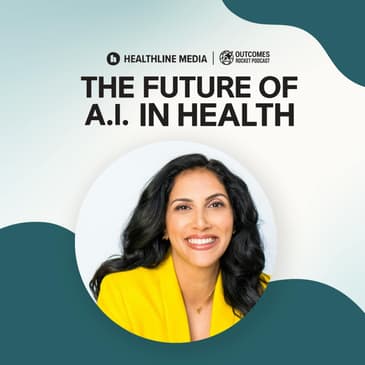
In the third episode of "The Future of AI in Health" podcast series, hosts Dr. Jenny Yu and Saul Marquez interview Dr. Geeta Nayyar, author of Dead Wrong, about how misinformation affects public health and the steps leaders can take to combat it. Dr. G highlights the urgency of addressing misinformation, especially in the context of a post-pandemic world where mistrust in healthcare establishments remains high. Throughout the conversation, she sheds light on the urgency of addressing these challenges through better communication strategies and technology. From leveraging AI and social media for good to acknowledging the historical mistrust in healthcare, Dr. G offers a profound insight into how technology and human insight must align to improve health communication and regain public trust.
Tune in, navigate the complexities of health misinformation, and discover actionable strategies for healthcare leaders and consumers alike to foster a more informed public.
Resources:
[00:00:02] Hey everyone, welcome back to this Outcomes Rocket and Healthline Media series on the future of AI in healthcare.
[00:00:09] I'm your co-host Dr. Jenny Yu, Chief Health Officer for Healthline Media here with Saul Marquez.
[00:00:16] Saul, it's great to be with you here again.
[00:00:18] Yeah, great to be with you Jenny. Excited for today's episode.
[00:00:21] Well, let's get to our intro right away. We have Dr. G who really does not need an introduction, a physician and a health care tech leader
[00:00:29] who's written a book recently called Dead Wrong. So happy to have you on this episode with us today.
[00:00:35] Thanks for having me. Thanks for having me guys.
[00:00:37] Let's get to our first question. What is the impact of misinformation and communication on public health?
[00:00:43] Do you think we've underinvested in communicating and supporting a public health voice?
[00:00:50] Jenny, I think first of all, thank you so much for having me.
[00:00:53] And I think in a post pandemic world, it's a very astounding and resounding yes.
[00:00:58] Right. For the first time ever during the pandemic, the surgeon general actually put out a mis and disinformation warming.
[00:01:05] So I think that tells you where we are in history.
[00:01:08] That said, misinformation are not new.
[00:01:11] It's these issues have been with us since the plague.
[00:01:14] What has changed is the technology.
[00:01:17] We're in a space now when we think about social media, if we think about what we're learning about artificial intelligence,
[00:01:23] we're living in an era where misinformation travels six times faster than the facts.
[00:01:28] So there is a resounding effect on public health.
[00:01:31] And we really saw it firsthand during the pandemic and the stakes just couldn't be higher, right?
[00:01:36] We are talking about people's lives.
[00:01:38] Yeah, that's so true.
[00:01:40] And sometimes this information kind of catches on wildfire and you're right with technology.
[00:01:46] We need better sort of channels for how this information gets out.
[00:01:50] Yeah, totally agree with you guys there.
[00:01:52] And from the angle of digital transformation strategies that leaders could use,
[00:01:58] particularly health leaders listening to us through AI, social media partnerships and influencers.
[00:02:05] How can we make it more digestible for consumers?
[00:02:08] First of all, I think as healthcare leaders, really if you look at my book,
[00:02:12] the call to action in the book is to say that this is healthcare's problem to solve.
[00:02:17] And too often, I go around speaking around the country or in the world.
[00:02:20] And when I ask who's in charge of patient engagement, consumer experience, value based care,
[00:02:26] tens of people's hands go up from the chief marketing officer to the chief medical officer
[00:02:31] to the chief information officer.
[00:02:33] But when I ask who is in charge of the organization's mis and disinformation strategy,
[00:02:38] no one's hand goes up, right?
[00:02:41] And one of the best quotes I think from the book is this idea that
[00:02:44] mis and disinformation grow in the dark.
[00:02:47] In other words, healthcare has kind of accepted it as part of the environment that we practice within.
[00:02:51] But we've never really said, man, we should handle this, right?
[00:02:55] This is our issue to lead in.
[00:02:57] And so really the call to action is to say that living in an era where every other word
[00:03:02] is consumer experience, patient engagement, how are you going to utilize AI?
[00:03:06] The same technologies that are using to spread this information
[00:03:10] and to spread the use of all kinds of tricks and trades can be used for the facts, right?
[00:03:15] It can be used to inspire people to get their mammogram.
[00:03:18] And as a business leader and a healthcare leader, it can drive revenue into your organization, right?
[00:03:23] Ultimately, it can lead to patient acquisition, retention, brand loyalty.
[00:03:29] So it's really the same technologies, but it's taking a position on it, owning the issue.
[00:03:34] But using the same technologies for good and now for evil to simplify it.
[00:03:39] Totally.
[00:03:40] Totally.
[00:03:40] I love that.
[00:03:41] And by the way, great to see you again.
[00:03:43] And we had an opportunity to connect with you and actually Dr.
[00:03:47] You as well at Hymns and a lot of the themes that came up during that conference
[00:03:52] are sort of resonating here again.
[00:03:54] So love that angle that you have on using AI for good rather than bad.
[00:03:59] Definitely.
[00:03:59] And there's a whole chapter in the book actually going through a use case at the Cleveland Clinic
[00:04:04] where the Cleveland Clinic actually partners with YouTube,
[00:04:08] partners with their clinicians from all walks, from all races, from all genders
[00:04:13] really highlights those voices to relate to those communities, particularly in the
[00:04:17] underserved black and brown communities, but really takes the bull by the horns
[00:04:21] and says, not only are we going to get the facts out there,
[00:04:24] but we're going to showcase our talent.
[00:04:26] And we're also accountable.
[00:04:28] So if we tell you this is what you should do with your calcium,
[00:04:30] this is what you should do about your hemoglobin,
[00:04:32] if something doesn't pan out, something doesn't work out, come see us.
[00:04:35] Come see us.
[00:04:36] And you might like us and find that we're actually relatable because we have the
[00:04:40] same color here or the same gender, right?
[00:04:43] Ultimately, what we always forget in healthcare, what we always forget in
[00:04:45] technology is that health is human.
[00:04:49] It is always going to be the human factor that inspires or motivates
[00:04:53] someone to do something with their care because they find the trust
[00:04:56] that wherever the trust is found, which is why so many people have
[00:05:00] been so successful at disinformation, which is the intentional manipulation
[00:05:04] of the masses for some sort of gain or profit.
[00:05:07] It is inspiring when you watch some of these influencers on TikToks
[00:05:11] with amazing dance moves who are only selling you a supplement for 10.99.
[00:05:16] But they're so inspiring and healthcare is so not inspiring.
[00:05:20] Right?
[00:05:21] And it's so confusing if we think about the price points.
[00:05:23] And when we think about just even doctors thinking about social media,
[00:05:26] Jenny, like there's kind of a taboo to marketing.
[00:05:28] We've traditionally thought of marketing as just a nice to have, not a must have.
[00:05:33] The reality is marketing is patient education.
[00:05:35] It is actually health literacy.
[00:05:37] And that is where the consumer is at.
[00:05:40] So it is healthcare's miss not to meet the consumer where they're at.
[00:05:43] But more than this, people are profiting off of our patients.
[00:05:47] People are profiting off of our patients and where their
[00:05:50] co-pay might get them a mammogram for 30 bucks.
[00:05:52] They're instead spending that 30 bucks on a supplement or some
[00:05:56] other snake oil that they think is keeping them healthy.
[00:06:01] When in fact, it could be doing nothing or worse, actually setting them back.
[00:06:04] And so that's really the biggest myth is that we as healthcare leaders
[00:06:07] are not actually taking the lead on this and instead are in this passive mode
[00:06:12] where we're watching this happen right in front of us.
[00:06:15] Yeah.
[00:06:15] And you're so right in which you talk about consumerism in the healthcare space.
[00:06:20] And when I watch these TikTok or Instagram influencers, I mean, hey,
[00:06:25] they get me also.
[00:06:26] And so easy to think about how I can lose weight with a compounded GLP one
[00:06:32] for $99, and it just seems everything just seems so easy and relatable.
[00:06:37] Like you mentioned, and we talk about that patient experience
[00:06:40] and that consumer experience.
[00:06:42] And people want to know what is the truth in healthcare?
[00:06:45] What where do I find the facts?
[00:06:48] And how do we help then those patients who are in those channels,
[00:06:52] whether they're in social or elsewhere, to really then separate from the myths
[00:06:57] and the facts in this day and age?
[00:06:59] Sure.
[00:07:00] Number one, if you are a healthcare leader, put your hat in the ring, right?
[00:07:03] Create some of those apertures own that narrative.
[00:07:07] But number two for consumers, yes, this has to be a conversation
[00:07:10] you're having in the examining room or the virtual examining room
[00:07:13] to say, well, check the source cross reference.
[00:07:16] The source is this the only person in the world saying that X, Y
[00:07:20] and Z leads to B being mindful of that.
[00:07:23] I call it the spidey sense if something feels like the headlines
[00:07:26] are a little bit too provocative and somebody's selling you something
[00:07:30] at the end of this video, there are just those intangibles where it's
[00:07:34] like, I'm not sure.
[00:07:36] And also ideally the conversation to under rheumatologists
[00:07:39] I have with patients all the time where we give some pretty scary
[00:07:41] medications is I say, look, these are the sources I follow.
[00:07:45] These are the influencers I follow, legitimate accountable rheumatologists
[00:07:49] breakdown studies for me.
[00:07:50] This is what doctors are following.
[00:07:52] And then this is what I recommend to you with my patient, the lupus
[00:07:54] foundation, the arthritis foundation.
[00:07:56] They are a world of patient advocacy out groups out there
[00:08:00] that have all of these types of apertures online resources.
[00:08:04] And I would even say to take it a step further, I just spoke
[00:08:07] at one of these patient advocacy groups and I said, you are
[00:08:10] in a position to come up with that list.
[00:08:12] This is not the last patient that's going to ask you where should
[00:08:14] I get this information?
[00:08:15] Why not give a purple star to the doctors that are actually
[00:08:20] real support patient advocacy are accountable to these things?
[00:08:24] So I think there's room and space for us to also own the narrative.
[00:08:28] Jenny, right?
[00:08:29] But really, these are the simple things.
[00:08:31] And then lastly, having a doctor before you're sick is
[00:08:34] perhaps one of the best things you can do.
[00:08:35] And having that conversation, which is to say, I want to be
[00:08:39] a part of shared decision making.
[00:08:40] And we as doctors, I know a lot of consumers don't believe
[00:08:42] this, we want you to write.
[00:08:44] Jenny, we want you to actually know about your diabetes because
[00:08:47] data tells us if you know about your diabetes, you will
[00:08:49] actually take your medications, watch your diet, because you
[00:08:52] understand the process.
[00:08:53] So doctors are the best people to ask what I should read and
[00:08:57] who I should follow.
[00:08:58] And ideally, if you can ask your doctor, can I follow you?
[00:09:01] Do you have a presence with something you do or your
[00:09:04] organization does?
[00:09:06] Because ideally, the person you're following is actually
[00:09:08] someone who is accountable for your health.
[00:09:11] That should be the only incentive, not a supplement,
[00:09:15] not snake oil, not a skin care routine.
[00:09:17] Jenny, there's one where you could just lose like 20 years off
[00:09:20] your face with this.
[00:09:21] I'm not spending too much.
[00:09:22] I'm just trying to get my...
[00:09:24] Well, this is the advice of a digital publisher working
[00:09:27] with doctors and other kind of experts in the space.
[00:09:30] We tend to aggregate the information for our readers
[00:09:33] and users and so important.
[00:09:34] And you're right.
[00:09:35] Everyone needs to throw their hat in the ring in terms
[00:09:38] of that list that you share with your patients as to
[00:09:40] trusted sources, trusted products.
[00:09:43] We're doing as a digital publisher, but those lists need
[00:09:45] to be shared widely so that people can have the
[00:09:49] information and know that's the experience to combat
[00:09:51] some of the other influencers out there just
[00:09:54] sell in snake oil, as you mentioned.
[00:09:55] Definitely.
[00:09:56] And I also want to be clear that we're not asking
[00:09:59] physicians to become marketers.
[00:10:01] Right?
[00:10:01] We've given physicians enough to do.
[00:10:03] We've seen that right in this era of burnout
[00:10:05] and shortages.
[00:10:06] What I think we're saying is let the marketers
[00:10:09] do the marketing and let the doctors do the doctoring
[00:10:12] and let the tech people do the technology stuff.
[00:10:14] Right?
[00:10:15] And ideally they're working together.
[00:10:17] And that's why I use the example of the Cleveland
[00:10:18] Clinic because they did this really beautifully where
[00:10:20] they had the chief marketing officer say, look,
[00:10:23] I'm going to make sure you look good.
[00:10:25] I'm going to make sure your hair is combed.
[00:10:27] I'm going to make sure you understand that you've got
[00:10:29] 30 to 60 seconds to make this video or whatever it
[00:10:32] might be.
[00:10:33] But doc, just talk about a colonoscopy like you do every day.
[00:10:36] That's what you do every day.
[00:10:37] I just want to highlight and amplify your voice.
[00:10:40] Leave the marketing to me.
[00:10:41] That's my role.
[00:10:42] But the science is for you to solve, right?
[00:10:45] And the technology piece to say, how do we connect
[00:10:47] all those diamonds so that whatever is on social
[00:10:49] is also what people are seeing when they check in
[00:10:52] or when they have a question at the point of care
[00:10:54] and so on and so forth.
[00:10:55] So I think the bottom line is it's a team sport.
[00:10:58] But we're always better when we let everyone
[00:11:00] lead into their own individual strengths.
[00:11:02] And we are by no means asking doctors to do this
[00:11:06] for no reimbursement.
[00:11:07] And neither are we asking them to now be marketers
[00:11:11] because this is just not a realistic ask, right?
[00:11:13] But the team sport and really the only time I at least
[00:11:16] ever saw this, Jenny, I don't know about you,
[00:11:18] so Jenny, but the only time I saw this happen
[00:11:20] was during COVID.
[00:11:21] It was the first time I personally met the chief
[00:11:22] marketing officer at Salesforce because she was
[00:11:26] responsible for communicating.
[00:11:28] Get in the office, get out of the office,
[00:11:30] get masked, don't get masked, get tested, what test.
[00:11:33] And so she knocked on my door and said, hey,
[00:11:35] Dr. G, what the heck am I saying?
[00:11:37] Why do I say this?
[00:11:37] Am I great because everyone's asking me this.
[00:11:39] Thank God if you would help me get this message out at scale,
[00:11:42] that would be great.
[00:11:43] So every day is a crisis in health care,
[00:11:46] not just during a pandemic as you guys know.
[00:11:48] So I think that team sport piece is really critical.
[00:11:51] And I think that's just it.
[00:11:52] Health care has communication problem in which
[00:11:54] it takes 17 years for studies to become guidelines.
[00:11:57] It takes guidelines then to really be known by
[00:12:00] patients and physicians all across the different
[00:12:02] specialties to really then become best practices.
[00:12:05] So you're exactly right.
[00:12:07] Let's use the marketers to get that communication.
[00:12:09] Yeah, that communication piece is so key, Jenny.
[00:12:12] And Dr. G, you always talk about this post-pandemic world,
[00:12:16] right? That's like the chalk line gets snapped there.
[00:12:19] And then we look forward because it did change a lot of things
[00:12:21] and we have lost trust.
[00:12:23] And you've given us some good examples about
[00:12:26] owning our influencers and sharing those.
[00:12:28] I'm not a physician, but for the physicians listening,
[00:12:31] who are your influencers?
[00:12:32] And are you telling your patients about them?
[00:12:34] I think this is a great example.
[00:12:36] What other things can health care leaders do
[00:12:40] to really help with this infodemic
[00:12:42] that we currently have out there?
[00:12:44] Well, we talk a lot on health equity in the industry.
[00:12:46] We talk a lot about health equity, whether you're in health care or not,
[00:12:49] I think every employer out there has deals with this, right?
[00:12:53] And so much of employer health is public health.
[00:12:55] And so one of the biggest issues in health equity is actually this, right?
[00:12:59] Because we know that the underserved populations,
[00:13:01] the black and brown communities are more susceptible to mis and disinformation,
[00:13:05] often because they don't trust the establishment of science, right?
[00:13:10] Fun fact, 92% of all Americans trust their doctor.
[00:13:14] But 52% of Americans don't trust the system.
[00:13:17] Their doctor is operating it, right?
[00:13:20] And that's something that we as an institution have to win back.
[00:13:24] Science needs a PR help and we've got to win the trust back
[00:13:29] because this all comes down to trust.
[00:13:31] And in a post-pandemic world, the consumer has gotten the message
[00:13:35] that health is wealth, a reminder rather than health is wealth.
[00:13:38] And they're willing to spend disposable income on it.
[00:13:42] Everyone's got one of these, a ring, something to track your sleep,
[00:13:47] your mood, your steps, whether or not it makes a difference,
[00:13:51] whether or not you can interpret it as a different question, right?
[00:13:53] But the consumer feels like they're taking control of their health with these things
[00:13:58] and they've gotten the wake-up call that I better remember
[00:14:01] that my health is important in a post-pandemic world.
[00:14:03] So truly healthcare's opportunity to win that trust back,
[00:14:07] to gain the patient's trust.
[00:14:10] But half of that is meeting them where they're at
[00:14:13] and understanding that disconnect.
[00:14:15] We have to be more relatable and reachable in science.
[00:14:19] It's really the pandemic is full of so many use cases.
[00:14:22] But I think the biggest one for me was the fact
[00:14:25] that we developed a world-class mRNA vaccine in nine months flat
[00:14:29] and it's 2024 and we can't get anyone to take it.
[00:14:33] It's the classic example of innovating in a lab, but not in reality.
[00:14:37] And why is that?
[00:14:38] And it's that last piece that health is human
[00:14:41] and we miss the human factor.
[00:14:42] We botched the communication.
[00:14:44] We never thought about the relatability.
[00:14:46] We never thought about trust.
[00:14:48] We never acknowledged the many reasons people don't trust.
[00:14:52] The institution of medicine, Tuskegee, Henrietta Lacks.
[00:14:57] There are things in the history of medicine we need to acknowledge.
[00:15:00] We need to acknowledge and we have to understand
[00:15:02] why those communities don't trust us.
[00:15:03] It's not that they don't want to trust us.
[00:15:06] They have very good reasons not to trust us.
[00:15:09] So we have to give them a reason to in today's world.
[00:15:12] But part of that is acknowledging our past and the transparency of that.
[00:15:15] So those are really the things that we have to walk away from.
[00:15:17] But if you want to innovate in the real world,
[00:15:20] the last mile is the human mile.
[00:15:23] And all of these technologies are terrific,
[00:15:26] but they don't actually make a difference if you're not able to reach people
[00:15:31] and understand the people factor, which is that intangible factor, right?
[00:15:35] But it's the number one question.
[00:15:37] I'm sure you get this, Jenny, when I dropped my daughter off at school,
[00:15:39] inevitably there's someone trying to get the heck out of there
[00:15:42] and someone's, Dr. G, do you know a female cardiologist?
[00:15:47] Do you know a female gastroenterologist?
[00:15:50] Why is that?
[00:15:51] Because there is an assumption that if I see a woman, I'm a woman
[00:15:54] and I would like to see a woman because there's an assumption
[00:15:57] that I could trust that person.
[00:15:58] I could relate to that person.
[00:16:00] Right? So we forget that in medicine, though.
[00:16:03] We're like, well, this is black and white.
[00:16:05] It's not health is human.
[00:16:08] Medicine is all about humanity.
[00:16:09] When we forget that it's when we always screw up.
[00:16:12] And the vaccine is a great example of that.
[00:16:14] We got the science down, we got the innovation down, we nerded out.
[00:16:17] It was super cool.
[00:16:19] But guess what?
[00:16:21] We're not serving MDs and PhDs.
[00:16:23] We're serving everyday people and we forgot the human factor.
[00:16:28] Love that, Dr. G, thank you for that.
[00:16:30] And I guess the message to everybody listening to this is
[00:16:34] put on the shoes and walk that last mile.
[00:16:36] And what would they do?
[00:16:38] And that's something you should do.
[00:16:39] So I love that response to that question.
[00:16:42] Thank you so much for that, Dr. G.
[00:16:44] Yeah, and I would just like to close out by asking one last question.
[00:16:47] You mentioned about trust and transparency and the human factor.
[00:16:51] And in this age of AI now, where expert likeness could potentially be
[00:16:55] generated by technology and voice and an image.
[00:16:59] What do you think that guard rails need to be so that we are setting
[00:17:02] and committing to an industry standard in this time now?
[00:17:05] This is tough for all of us who are big believers in innovation
[00:17:09] and that lives through so much innovation and science.
[00:17:11] It's tough because innovation and regulation often have a
[00:17:14] tension relationship, right?
[00:17:16] But I think we don't actually have to look that far.
[00:17:18] If we look at the way we've handled social media regulation,
[00:17:22] if we look at some of the missteps made with the electronic health record rollout,
[00:17:26] there are a lot of lessons to be learned, which is one with electronic health records.
[00:17:31] We have to understand we need to do things with the workforce, not to the workforce.
[00:17:35] With social media, we are understanding all of the harm now
[00:17:39] that continues to be found in research and studies.
[00:17:42] And the way we've regulated that industry is largely at itself regulated
[00:17:46] by social media companies.
[00:17:48] This is not the things we can do with artificial intelligence.
[00:17:52] We have to be more mindful.
[00:17:53] We have to understand both the good, the bad and the ugly.
[00:17:56] And we have to have the appetite and willingness
[00:18:00] to understand that regulation is going to be a part of doing this innovation right.
[00:18:04] And I think social media perhaps has some of the biggest parallels
[00:18:08] to and the good things it can do, but also the bad.
[00:18:11] So I think it's very important that we continue to learn, study it.
[00:18:15] And I also think it's very important that health care leaders
[00:18:19] are weighing in every day health care leaders are weighing into how
[00:18:23] this technology is used so that we are using it in the right places at the right time.
[00:18:27] And as you mentioned to that, this is it's like science.
[00:18:30] It's dynamic. There's no black and white.
[00:18:32] And so I have to acknowledge and learn along the way
[00:18:34] and then be able to own up to the mistakes
[00:18:36] and really then hold each other accountable so that we can better stand.
[00:18:41] Absolutely. And we cannot leave it up to the companies themselves to regulate.
[00:18:45] Right. It has to be a multi stakeholder approach.
[00:18:48] And we need to do the same with social media.
[00:18:50] We're getting to that point and we're seeing other countries taking the lead
[00:18:53] in that regard. Totally agree, guys.
[00:18:55] This has been great.
[00:18:56] Dr. G, thank you for the opportunity to really spend some time with you.
[00:19:00] I've really enjoyed it. Jenny, what do our listeners?
[00:19:02] Thanks for being with us today.
[00:19:03] Thanks all and Dr. G.
[00:19:05] Remember to check the show notes for key takeaways and links to resources
[00:19:09] my intervention today on today's podcast.
[00:19:11] Thanks, Dr. G again for taking the time to be with us.
[00:19:14] And we'll see you all soon in our next episode.
[00:19:16] Thanks, everyone.