
Healthcare needs a bottom-up approach to address specific issues and build toward better solutions, alongside a top-down approach that leverages transparency and data.
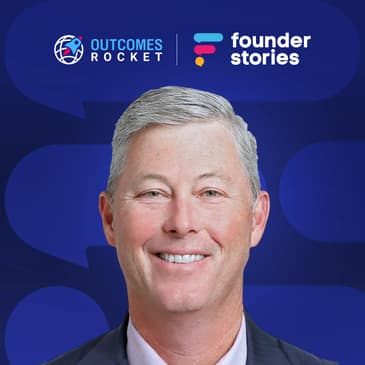
In this episode, Michael Waterbury, Founder and CEO of Goodroot, discusses his journey in healthcare, starting with his early career in managed care and his growing frustration with the unsustainable rising costs. He explains his mission to reinvent healthcare one system at a time by supporting entrepreneurs with the resources they need to bring disruptive ideas to life. Michael emphasizes the importance of patient-centric solutions, transparency in pricing, and addressing the medical debt crisis. He also touches upon the need for consumer awareness, the role of financial assistance plans, and the importance of providing employees with tools to navigate the complex healthcare system.
Tune in and learn how Goodroot tackles these challenges and strives to make healthcare more affordable and accessible for all!
Resources:
[00:00:02] Hey everyone, welcome back to another episode of the Outcomes Rocket Founder Story Series. Today, I have the privilege of hosting the amazing Michael Waterbury. He is the founder and CEO of Goodroot and they're not taking no for an answer. Healthcare needs to be better, and I'm excited to host them here. Michael, welcome to the podcast. Michael Waterbury, Founder & CEO, Goodroot & Founder & Co. Thank you so much for having me. I really appreciate the opportunity.
[00:00:29] Hey, listen, it's our pleasure for sure. And look, to kick things off, I'd love just to give you an opportunity to tell us a little bit about what inspired your founder story and why healthcare?
[00:00:42] So I started my career in healthcare a long time ago, 25 plus years ago.
[00:00:47] There was actually somewhat of a disruptive time at managed care and HMOs that were starting and there were some interesting things going on.
[00:00:55] I started my career at Oxford Health Plans. I think I got into healthcare really originally just an opportunity to start a career in a very important industry, but it was also an opportunity I felt like to kind of have meaning and purpose.
[00:01:07] I mean, I wasn't necessarily a clinician, but I had the opportunity to hopefully provide care at a affordable cost, more access. That's essentially what I really wanted to do.
[00:01:17] I think as I sort of went on in my career, I was kind of, you know, sort of get opportunities, you learn, you learn how the system works. It's a complicated system. It's not easy to learn.
[00:01:29] It takes a lot of hard work, but then you sort of get into these roles where you have to kind of just make the existing system continue to work, right?
[00:01:37] I mean, you have responsibility, let's say running a PEM, you got to drive profitability, drew more rebates or whatever the strategy is.
[00:01:45] And so, you got to think I over time got frustrated with the fact that, you know, I couldn't disrupt what I saw was like just rising costs and challenges for patients.
[00:01:55] And so, you know, I had the opportunity to start my own company about 10 years ago and then eventually found Goodroot and then help others buy, you know, say another 10 companies all focused on that mission.
[00:02:07] It was really, I mean, what drives me to do it, I think is that I just don't feel like the model that we have today is sustainable.
[00:02:14] I mean, it's like, you know, a family premium 20 years from now is going to be like $50,000.
[00:02:20] It's not sustainable.
[00:02:21] And so, I think about my kids and my friends and my employees' kids and friends and just really our country and that, you know, something needs to be done.
[00:02:29] And on top of that, you know, I've had a lot of great opportunities.
[00:02:32] And I think, you know, ultimately it's a great way to give back.
[00:02:35] And it's, I have a wide knowledge base that I want to use to help people now because it takes a while to learn enough to have an impact.
[00:02:44] So, you know, a lot of times folks that are at this point in their career are either, you know, retiring or doing something else.
[00:02:50] And they, you know, I feel like it's a great opportunity for me to give back.
[00:02:53] I've had somebody refer to me as sort of the 10th man of healthcare, you know, that 10th man on the team that's supposed to like challenge the status quo,
[00:03:01] challenge the plan and sort of make sure that we're really looking at how we're doing things that can we do them better.
[00:03:08] Hey, that's great, Michael.
[00:03:09] Really appreciate you sharing that.
[00:03:10] And for the people that are watching and listening to us right now, help them understand what GoodRoot does.
[00:03:16] Let's get into it.
[00:03:17] Yeah, so GoodRoot, I started my first company.
[00:03:20] We had a rebate management company called Remedy One about 10 years ago.
[00:03:24] And it takes a lot to sort of, you know, the guts to go for it, right?
[00:03:27] I mean, I should talk to a lot of founders and for those stories.
[00:03:32] Absolutely.
[00:03:32] And what I've found to some extent is there was a few things that I just felt like in healthcare,
[00:03:37] and probably applies to any industry that we're challenging.
[00:03:39] One, it was definitely hard to find support.
[00:03:43] Like you end up working on so many things that aren't your idea, right?
[00:03:46] And like legal structure, tax structure, website, servers, all this stuff, right?
[00:03:51] And in reality, if you work in a corporate setting, like you really don't do any of that.
[00:03:55] So you don't really know what you're doing.
[00:03:56] So then you try to find help and you can't, you either like that big fish in a small pond
[00:04:02] and you're getting someone who's inexperienced or, you know, small fish in a big pond and
[00:04:06] they don't really care that much about you.
[00:04:08] And so you're really stuck without the right support.
[00:04:10] So, you know, I felt like that was one issue that I experienced.
[00:04:14] The second issue was money.
[00:04:16] Like where do you get your money?
[00:04:17] How much time do you spend raising money?
[00:04:19] How much time do you spend updating people who gave you money?
[00:04:21] That just seemed to be a challenge overall in terms of driving success of an entrepreneur
[00:04:26] or a new idea.
[00:04:27] And then I think in healthcare, maybe it applies to all industries that come down to sales.
[00:04:31] Like how they distribute your idea to prove that it actually works.
[00:04:34] I saw a lot of people that could maybe like sell one or two customers, but then how they
[00:04:38] distribute it.
[00:04:39] So I started another company with somebody who just came to me with an idea and said,
[00:04:43] Hey, I want to do what you're doing.
[00:04:44] And we applied some of those concepts and had success.
[00:04:47] And so I was like, you know, maybe there is a way to create a platform where more people
[00:04:52] can bring their ideas in life, especially in an industry like healthcare that's so raw
[00:04:55] with an efficiency challenge.
[00:04:57] It was, you know, the people that are working in it know what needs to be done.
[00:05:01] They just either don't feel like they have a platform to make it happen.
[00:05:05] So we created Goodroom, really focused on those three things.
[00:05:07] We've got a great corporate team that does all that stuff for the founder, you know,
[00:05:13] in terms of legal and finance and IT and marketing and sales.
[00:05:17] So that takes that pressure off and they get, not only do they get a great solution,
[00:05:21] we don't necessarily overcharge them early so that they don't have all that financial
[00:05:26] pressure.
[00:05:27] We invest and we invest in companies that we've strategically aligned.
[00:05:30] So yeah, we talk about how things are going, but it's more of a collab.
[00:05:34] Like we're not wasting anyone's time talking about things that are important to the business
[00:05:39] or align strategically.
[00:05:40] And then we sell.
[00:05:41] We have a great sales team, great relationships, improvement results.
[00:05:45] So we're able to sort of supercharge the distribution piece.
[00:05:47] So you do those three things, you know, and we found that you can, you know, minimize the
[00:05:52] risk and minimize the failures.
[00:05:54] And so we've had great results by just really analyzing what the challenges are, addressing
[00:06:01] them and then creating a platform that, you know, makes it work.
[00:06:05] That's great.
[00:06:05] And when you think about healthcare in particular, what does Goodroot do to add value for healthcare
[00:06:13] and how is it different or maybe even unmatched to what else is out there?
[00:06:18] It's a good question, Saul.
[00:06:19] I mean, I think first and foremost of it, our mission of sort of reinventing healthcare
[00:06:23] one system at a time is focused on actually how I think it needs to be done.
[00:06:27] There's no big bang approach.
[00:06:28] You have to like address specific issues and then sort of go towards a better solution
[00:06:33] no matter what you're dealing with drug pricing, navigating services, technology, whatever
[00:06:39] the case may be.
[00:06:40] And so that mission, I think sort of sets us apart.
[00:06:43] I mean, I think it's important.
[00:06:45] I think anybody, you know, we're not a non-profit.
[00:06:47] You have to balance money and mission.
[00:06:50] I mean, we need the capital necessary to do these things.
[00:06:52] And so we work on that every day.
[00:06:54] Like we struggle through that.
[00:06:55] What's mission versus, you know, sort of profitability and how to find that balance.
[00:07:00] I think we do a good job of that.
[00:07:02] But, you know, I think ultimately in healthcare, we put the patient first and all the decisions
[00:07:08] we make, like is this game for the patient?
[00:07:10] And it sounds simple, but that's why we, and if it's not getting to the patient, you
[00:07:17] should at least think twice about doing it.
[00:07:18] Right.
[00:07:19] I mean, if you're promoting a higher cost drug, then someone's not going to be able to
[00:07:22] afford to care for their diabetes.
[00:07:24] Like why are you doing that?
[00:07:25] Right.
[00:07:25] So we really focus on that.
[00:07:28] And I think that differentiates us.
[00:07:29] I mean, I, I think a lot of folks would say they do that, but reality is like, you
[00:07:33] have to be committed to that.
[00:07:34] And that's something that we do when we build solutions, especially now that we think are
[00:07:39] necessary in the marketplace to help create access at an affordable price.
[00:07:44] That's great.
[00:07:45] And look, there's a lot of ways, as you know, to effect change in the market.
[00:07:50] Are you doing it through providers?
[00:07:52] Are you doing it through brokers?
[00:07:54] What are your channels and how are you making what you've made available today available
[00:07:58] to the masses?
[00:07:59] It's interesting.
[00:08:00] It's a good question.
[00:08:00] I think ultimately, like, you know, we create solutions and we distribute it to pretty much
[00:08:05] across the entire spectrum, an employer, broker, or third-party administrator, a health
[00:08:10] plan, a PDM directly to consumers as well.
[00:08:13] So we, at the micro level, we're solving those issues.
[00:08:16] Like we're reducing drug pricing for an employer, right?
[00:08:19] At a macro level, it's much harder, right?
[00:08:21] It's like, how do you have enough leverage and scale to have a real impact, right?
[00:08:25] And I think some of the work we did with the original company, where we went on the rebate
[00:08:29] side, we provided a lot of transparency, better pricing.
[00:08:33] We passed on most of the money to the customer.
[00:08:35] And we had a real impact.
[00:08:36] I think the challenge I saw at Sal was like, it was like, the big players in that space
[00:08:41] kind of doubled down and strategically created other ways to sort of be less transparent,
[00:08:47] which, you know, weren't the direct reason they did that.
[00:08:50] But I felt like we were some of the reason why they did that.
[00:08:52] It was frustrating because it's almost like we made it worse, right?
[00:08:56] And so, you know, I challenged myself and there's no one else challenged me to hold myself
[00:09:01] accountable to these things I'm saying.
[00:09:02] And I think there's really three ways to make change.
[00:09:05] Like if you think about the cigarette industry, right?
[00:09:07] It's either, you know, the court of public opinion, right?
[00:09:10] Consumers sort of rise up and say, I want something different.
[00:09:13] Hopefully that could happen in healthcare, but it's hard, right?
[00:09:16] Because you have a doctor involved, there's lack of information, it's your health.
[00:09:19] You're not like a, we need to be more savvy consumers, that's for sure.
[00:09:23] The other way is regulation.
[00:09:25] I mean, I think we don't really want to overregulate anything these days.
[00:09:29] It's just that it's cost complexity, but it doesn't work.
[00:09:32] But then it's really the legal system, which is also not great, right?
[00:09:36] I mean, think about how the cigarette industry kind of change.
[00:09:38] That was probably the area there.
[00:09:39] But also, I think the way we look at it is we create services.
[00:09:43] We try to provide a better solution.
[00:09:44] We build leverage by having a lot of people buy those solutions.
[00:09:48] That's kind of the bottom-up approach.
[00:09:50] But the top-down approach is like transparency and data and information and holding people
[00:09:57] accountable.
[00:09:57] And one of the ways we're doing that is through really digging into this crisis in the country
[00:10:02] around medical debt and bankruptcy.
[00:10:04] You know, medical debt causing is the leading cause of bankruptcy.
[00:10:07] And trying to shed light on sort of what's causing that, how to solve it, and then really understanding
[00:10:13] those issues and holding the industry accountable to address them.
[00:10:16] Because, I mean, the patient's taking so much more of the burden and the cost.
[00:10:19] They really held.
[00:10:21] Otherwise, they just end up in bankruptcy of a champagne of bills.
[00:10:24] Yeah, and it's a huge problem.
[00:10:26] And those stats always, I mean, they keep getting worse.
[00:10:29] And the sad part is such a big percentage of those bankruptcies, they had insurance.
[00:10:35] Yes, I mean, that's really what's happened over the last 10 to 15 years as we looked at
[00:10:40] like, you know, deductibles, coinsurance, high-dustible plans.
[00:10:44] I mean, you can take like a company like Starbucks that talks a lot about giving benefits
[00:10:49] to their employees, which is awesome, right?
[00:10:50] Like, that's phenomenal.
[00:10:51] But, I mean, you can look at their benefits online.
[00:10:53] They can just, your AI doc can tell you what they offer if you ask them.
[00:10:57] But like, their typical benefits are like a $10,000 reduction.
[00:11:00] So, I don't know, like if you're a barista at Starbucks and get in an accident, like that
[00:11:06] certainly looks like a financial challenge to that individual that they're not going to
[00:11:10] hope, you know, maybe not be prepared for.
[00:11:12] And so, how do we help them with that?
[00:11:14] I mean, one of the things, Saul, that we have a company called Breeze Health, which focuses
[00:11:18] on financial assistance plans.
[00:11:20] People don't know what they are.
[00:11:21] What's that one called?
[00:11:22] Breeze.
[00:11:23] Oh, Breeze.
[00:11:24] Yeah.
[00:11:24] Okay.
[00:11:25] And so, you know, I try to promote financial assistance wherever I get a chance because
[00:11:29] people don't understand that at a nonprofit hospital, you can get financial assistance
[00:11:34] usually if you're 200% of the federal poverty level.
[00:11:38] You know, a lot of people like immediately go, wait, I'm not at the federal poverty level
[00:11:41] and I'm not sure I really want to go to a nonprofit.
[00:11:44] It's like, listen, there's 2,500 nonprofits in the country.
[00:11:47] They're really good hospitals.
[00:11:49] You definitely want to go there, most of them.
[00:11:50] And 200% of the federal poverty level, family of four is like $120,000.
[00:11:56] And so, if you apply, you can get relief.
[00:11:59] And the reason why is because these nonprofit hospitals don't pay taxes, right?
[00:12:03] So, they have to provide the support of the community.
[00:12:05] So, they quite like our company and, you know, hopefully continue to, not just us, but like
[00:12:09] make it easy to understand, put it on your phone, make it promoted, get people using
[00:12:14] it because like that alone exists today for a very thoughtful reason.
[00:12:18] It's just that it's not widely used because of lack of knowledge and lack of access.
[00:12:26] And that's definitely something I think we should address in the short term that would
[00:12:29] really help me with that.
[00:12:30] Yeah, what a great example, Michael.
[00:12:32] I love that.
[00:12:33] Let's get back to the entrepreneurial journey here.
[00:12:36] We learn more about setbacks than successes many of the times.
[00:12:41] Can you share any setback that you've had where maybe your biggest lesson that's really maybe
[00:12:48] even shaped who you are today or where the company has gone?
[00:12:51] I think failure is definitely the best learning opportunity.
[00:12:55] That's for sure.
[00:12:56] So, there's been a few of those along the way.
[00:12:58] I think you definitely have to learn how to trust people and communicate effectively and
[00:13:03] delegate effectively if you're going to be effective, right?
[00:13:06] I mean, you have to be able to do that.
[00:13:08] But I think the same thing that I described where it was like, I felt like if I could just
[00:13:12] create solutions that worked, sell it to a lot of people, create leverage through capital
[00:13:17] and lives and people, I could have an impact.
[00:13:20] And I think it was definitely surprising to me to watch the industry kind of double down
[00:13:25] and sort of protect itself and then like sort of create more problems.
[00:13:28] And like it's been a really interesting process to sort of challenge yourself and say like,
[00:13:33] if I'm going to have a big impact, how do I do it?
[00:13:36] Because the way I started, the way I saw it, I could have a big impact.
[00:13:39] Did not.
[00:13:40] I mean, it helped our customers.
[00:13:41] I mean, for sure.
[00:13:42] But like at a macro level, it had like sort of the adverse impact and it was very challenging.
[00:13:49] So, it's definitely a lesson I've learned.
[00:13:51] I mean, there's a ton.
[00:13:52] It's all around people, right?
[00:13:54] Like people are complicated.
[00:13:56] I mean, when I first started with Remedy One, I was the anti-corporate.
[00:13:59] I didn't want anything corporate, right?
[00:14:00] I wanted the five-minute meetings and no counterpoints that Jeff Bezos stopped.
[00:14:05] And I wanted efficient decision-making.
[00:14:08] And I didn't want to use like sentences that didn't make any sense, right?
[00:14:10] We did a lot of that.
[00:14:11] We were very effective.
[00:14:13] One of the things that's been interesting now that we have six companies really,
[00:14:16] ultimately we have created 10 companies and 120 employees.
[00:14:20] I think it's been a real realization that a lot of things in corporate America aren't necessary.
[00:14:24] It's just you have to have like a desire to do them right and have the employees best interests in that art as well as employers and find the right balance.
[00:14:33] I think a lot of the things I thought were like anti-employee or corporate's bad or frustrating.
[00:14:40] Like as long as you focus on what's right, a lot of those things are necessary to be exact.
[00:14:44] That was also a pretty big lesson for me.
[00:14:46] Yeah, that's interesting, right?
[00:14:47] You go from not wanting to do certain things to you're like, oh my gosh, I actually need these things in my business.
[00:14:54] I was like no HR, no HR ever.
[00:14:57] And now I look on HR all the time.
[00:14:59] It's like I need to train people.
[00:15:01] I need to find the right people.
[00:15:02] I need to create the right organizational diet.
[00:15:04] I definitely need to create the right incentives.
[00:15:06] I mean, if you don't do those things well, you're stuck.
[00:15:09] So just do it right and care about the people and you'll be fine if you have the right culture, the right mission.
[00:15:16] You can sort of set that tone and figure that out.
[00:15:19] Yeah, that's great, Michael.
[00:15:20] I love that.
[00:15:21] Great message for everyone listening.
[00:15:22] Whether you're with an established organization and probably not in your head right now or you're an entrepreneur at the beginning of it thinking, oh man, is this real?
[00:15:32] Well, it's real, guys and gals.
[00:15:34] It's real.
[00:15:35] And I appreciate Michael sharing it with us.
[00:15:37] And I guess, you know, to your point there, Michael, I guess you've made a difference, but you feel like, man, like at the macro level, you wish you could make an even bigger impact.
[00:15:47] But there's been this kind of like Newton's law, right?
[00:15:50] Like you get after it and then it just comes right back to you.
[00:15:53] Yeah, I mean, it's true.
[00:15:54] I mean, I think we're struggling with that a little bit in our country today, just so the inefficiencies and health care is right in the center of it, right?
[00:16:00] So, you know, you got to keep striving to like have that impact.
[00:16:04] You know, I mean, I think in our world in the pharmacy space, I think Mark Cuban has been a voice that's been heard and I applaud what he's doing.
[00:16:11] I mean, I think he says the right things.
[00:16:12] I mean, it's complicated.
[00:16:13] People have trouble understanding it.
[00:16:15] But, you know, he's doing it for the right reason.
[00:16:17] He wants to make health care affordable for his kids.
[00:16:21] So I think it's like fine.
[00:16:22] Eventually, we'll keep working at it and I'll find the right voice, the right platform.
[00:16:26] I mean, the opportunity to speak to you and your audience is great.
[00:16:29] But just, you know, like be committed to the mission and continue to learn and explore ways to get there.
[00:16:36] I mean, we're definitely onto something around medical debt and helping the patients.
[00:16:41] I mean, that's just an area that everyone can get aligned on.
[00:16:44] And I think data and transparency, we can definitely find a way to hold the industry accountable to what's causing it and start to try to address it.
[00:16:53] I mean, I think as an employer, we have to give employees the tools they need to manage their exposures and its costs.
[00:17:02] Otherwise, they're going to get in trouble or get upside down.
[00:17:05] So you need to help them with tools that help them navigate, negotiate bills, apply for financial assistance.
[00:17:11] Because if you're sending, you know, I have 120 employees I think that we spent this year.
[00:17:16] We're going to spend about a million and a half in health care.
[00:17:18] It's a staggering number.
[00:17:19] Would I spend another $50,000 to help make sure that million and a half made people healthy and productive?
[00:17:26] I mean, it's a good investment.
[00:17:27] It's just hard because people are always looking to cut a cause and you need to get people engaged and use these tools.
[00:17:33] But I think that's a key area where we just need to help patients who are struggling with the current system, gather the information, shed transparency and then start to do something about the bigger issues.
[00:17:44] That's great, Michael.
[00:17:45] Well said.
[00:17:45] Well said.
[00:17:46] You're already spending $1.5, $50,000 to guide it.
[00:17:50] And if your people have bad financial stuff going on, it affects the company.
[00:17:55] Absolutely.
[00:17:55] And you're already investing so much money in them.
[00:17:59] Exactly.
[00:18:00] Like to give them the tools they need to use it, understand the benefits and then use them more effectively is, to me, a great investment.
[00:18:09] It's something we're working at.
[00:18:10] Our company, Emory Health and Par are both two solutions that we think are great in terms of being able to get people engaged, educate them about their benefits and navigate the supply system.
[00:18:21] And so, you know, we think those are areas where employers should really be looking into those solutions so that they get the most value out of their healthcare dollar.
[00:18:28] I would call that the last mile, Michael.
[00:18:30] That's right.
[00:18:31] That's the last mile.
[00:18:33] It's likely back to the patient, right?
[00:18:34] Like, I got to be able to help that.
[00:18:36] Like, I see people in my own community or my friends and family.
[00:18:39] Hey, you got to help me with this.
[00:18:40] And from my first companies, I couldn't really help the individual.
[00:18:43] And now we definitely, Jack, and it's an exciting time for us.
[00:18:47] That's awesome.
[00:18:48] Well, Michael, look, I really appreciate you coming on to the Outcomes Rocket and sharing your story.
[00:18:52] Where can people learn more about you as well as Good Root?
[00:18:56] You can definitely follow Good Root on LinkedIn and me as well.
[00:19:00] I mean, obviously, our website, www.giveroo.com is a great place to get information.
[00:19:06] We're really active on social media.
[00:19:09] We got a lot going on.
[00:19:10] So a lot of studies, a lot of surveys, a lot of information.
[00:19:13] So reach out to us.
[00:19:14] And then, you know, listen, if you're an entrepreneur that's interested in exploring Good Root, you can do that as well.
[00:19:19] I mean, we're always evaluating new opportunities and new solutions.
[00:19:22] So that's where you can find us.
[00:19:24] Outstanding.
[00:19:25] Michael, thank you so much.
[00:19:26] And ladies and gentlemen, thanks for tuning in to another episode of the Outcomes Rocket.
[00:19:32] So excited that you joined us today with Michael Waterbury, founder and CEO of Good Root.
[00:19:37] Make sure you check out the show notes for ways to get in touch with him and find out what Good Root is up to to make health care more affordable for all of us.
[00:19:45] Michael, thanks for being here.
[00:19:47] Thank you, Saul.
[00:19:47] I appreciate it.