
AI has the potential to significantly improve prior authorization, payment structures, and patient navigation.
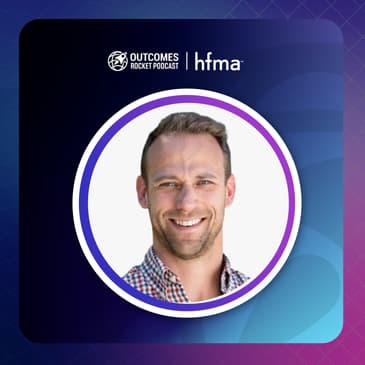
In this episode, Brian Urban, Director of Innovations and Emerging Markets at FinThrive, talks about why understanding and utilizing non-clinical data is crucial for addressing social health needs effectively. He explains how FinThrive, a leading revenue cycle management company, is addressing issues like payment integrity, care coordination, and social health needs. Brian emphasizes the importance of AI in reducing remittances and friction and improving provider-payer relations. He also discusses the importance of social determinants of health data and why he believes intrapreneurship within organizations can drive significant advancements in the healthcare sector, underscoring the importance of data literacy for creating a sustainable healthcare system.
Tune in and learn how AI and innovation are set to revolutionize the healthcare industry, making it more efficient and equitable!
Resources:
[00:00:02] Hey everybody and welcome back to the Outcomes Rocket. I'm so excited to be doing this HFMA 2024 National Meeting Insights Series. I've had a chance to meet a ton of thought leaders and one of them that I want to introduce you to today, his name is Brian Urban. He is the Director of Innovations and Emerging Markets at FinThrive, but he's a thought leader in the space, a podcaster, and has held many different roles in leadership and really doing incredible things.
[00:00:32] He's in the payer space and pharmacy, just an incredible background, very well-rounded person in the space and I'm thrilled to have him here. We had a chance to connect live. We had both been kind of watching each other digitally and finally got a chance to meet at HFMA. So Brian, it's such a pleasure to finally meet you and have you here on the podcast.
[00:00:52] Thank you, Saul. It's interesting because we've definitely made direct eye contact at several conferences and then yes, virtually. So it's so cool to be on your podcast and see how you do it and just be a part of your voice as well. So this is cool.
[00:01:07] Thanks, man. And hey, before we dive in, I really want to recognize you because within a year span, you went from doing a couple to doing over 100 podcasts with some of the most impressive thought leaders in the space, authors. What was the inspiration and what's been a big takeaway for you? Because obviously, we are big podcast promoters, so share that.
[00:01:30] Good question to kick off this conversation, Saul. The idea of the Healthcare Rethink podcast was really just that. It was to help the new brand at the time, FinThrive, get traction in the most authentic way with very thoughtful and impactful doers in the space, not just figureheads or those that are kind of on their twilight end of their career and done a lot, but really cool storytellers that can influence other people to do something good.
[00:02:01] And I pitched it to our leadership at FinThrive. And they said, that's a great idea. You're going to do it. And I was taken aback by saying, no, no, no, I think other leaders should do it. I'm just the idea guy. And I had no choice in it. So I took it on and learned quickly the interconnected relationships, the interconnected work and how the ecosystem really is all strung together in most regards.
[00:02:28] And it's been a beautiful experience throughout the last now going on two years here with all the voices that we've had on the show.
[00:02:37] Awesome, man. Well, hey, congratulations on the insights you've derived, the steps forward you've made for FinThrive for yourself and over 100 podcasts. So folks, we'll link up the podcast that Brian runs in the show notes.
[00:02:50] So you, I mean, you don't want to miss it. Like you're getting value out of this one. If you got another few reps on your workouts or maybe 10 more minutes in your run, like make this happen or another hour in your drive, check it out. Look at the show notes, hit it.
[00:03:03] Brian, so let's shift, right? Like talk to us about what exactly you're doing at FinThrive and what is FinThrive all about?
[00:03:10] Yes. So FinThrive is now going on two and a half, two and three quarter year old brand. And right now I'd say in the space, we are the leading revenue cycle management company.
[00:03:24] And not only that, but we have a lot of backend analytics, data and insights that we derive from thousands of sources and put it out into the healthcare ecosystem.
[00:03:35] So for us, our bread and butter is revenue management. And we have well over 3000 contracts, so many different hospitals, health systems that we help.
[00:03:46] And now the evolution of what I'm doing as a part of FinThrive is helping take our emerging space and really how to being the next generation of our growth and our impact in the ecosystem.
[00:04:00] So direct provider work is what we've always done, but working with health plans, IDNs, health tech startups, CROs, even policy government, it's newer.
[00:04:12] It's definitely emerging. There's a lot of cracks that need to be filled to help the ecosystem move along in terms of payment integrity, care coordination, benefit coordination, and also addressing social health needs as well from a data perspective and care management workflows.
[00:04:28] So it's a ton of work and oversight that I have and just being creative and taking a lot of risks is what I've been given, thankfully, from our leadership to test and try different things.
[00:04:40] And I think FinThrive will continue to evolve over that time span now.
[00:04:44] And it's not just about the customer growth, but how we're actually starting to change the healthcare economy as well.
[00:04:50] I know a lot of people say that all the time, but there's incremental progressions that we've started to make, especially with equitable billing collections processes that we've done through our data humanity lab and a lot of other research that we've put out there with HIMS and HFMA as well.
[00:05:07] So it's a ton of work that we're spinning up and we're very different.
[00:05:11] I think when you look across other RCM vendors that have been in the space for decades.
[00:05:16] So it's a pretty cool place to be right now.
[00:05:19] Yeah, no, that's awesome, man.
[00:05:20] And, you know, the rebrand, the solidification of the business space, the platform.
[00:05:26] And then once you sort of scale that business, you got to look at adjacent markets.
[00:05:31] And when you have a solid platform and a good playbook, you start tackling those.
[00:05:36] And it sounds like you're after those new growth areas.
[00:05:38] So that's certainly very exciting.
[00:05:40] Oh, yeah, it's exciting because it's some of the newer adventures in healthcare tech that just have not been invested into wholly with talent and money.
[00:05:49] I think you can always build a company and sell the idea, but really the talent and growing the impact is really where the story is now.
[00:05:56] And that's pretty exciting.
[00:05:57] We're in the forefront.
[00:05:58] For sure.
[00:05:59] Hey, look, you know, we were at the conference.
[00:06:02] There was a ton of buzz around AI.
[00:06:05] There's so many different things that are getting covered from, hey, prior authorization, the entire cycle.
[00:06:11] What is one insight that sort of rose to the top for you, Brian, as something that our listeners that couldn't be there need to know about?
[00:06:19] I think it's the combination of a few things.
[00:06:21] Security was a big part of the conversation in spurts as well.
[00:06:26] AI in terms of how can we go beyond where we are now with robotic process automation.
[00:06:32] So there's a lot of bots inside RCM vendors that are taking care of really meticulous admin tasks that are very, very helpful.
[00:06:41] There's a true return there on the application of that technology.
[00:06:47] But AI in terms of how else we can go beyond payment and not only reduce remittance, reduce friction, improve provider and payer relations in the same sentence.
[00:06:58] But also, how can we start to make the navigation for patient members much, much better?
[00:07:04] And that in terms of how Medicare star ratings will be calculated and are starting to be calculated now.
[00:07:11] Payment structure related to health equity index.
[00:07:15] These are critical things that AI can help ease for health plans that they just don't have on the whole.
[00:07:21] The sophistication, the teams, the resources to do right now, because health plans are based on actual science, underwriting risk management, getting a solid network to have quality outcomes and reducing total medical costs.
[00:07:38] But improving the experience and having health plans be looked at as more than just a parity value with utility companies.
[00:07:48] We think about NPS across the industries.
[00:07:50] This is their opportunity to live up to their missions.
[00:07:53] And I think health care is going to lead the way and health plans will jump on that.
[00:07:57] So AI doing more than just the payment side of our ecosystem.
[00:08:02] That was really exciting for me.
[00:08:04] The second other thing is non-clinical data or social health insights that can be derived not only from clinical encounters and claims, but what's happening outside of that.
[00:08:16] So right now the industry is kind of in this limbo phase of doing a lot of SDOH screenings.
[00:08:21] There's good data there, but that data turns dusty because you have to maintain it.
[00:08:25] That's a point in time capture that it feels very unauthentic.
[00:08:30] Physicians are bought into it, at least some of the younger generations and maybe those in the middle of their career.
[00:08:35] But the way that we can start to capture real needs is through behavioral and some credit bureau based data.
[00:08:42] Not everything should come from them, but there's a lot of really impactful data out there that can supplement questions that can help prioritize questions.
[00:08:50] So you're not stuck in this limbo screening space that we are now.
[00:08:54] So those are two really cool things that I heard from some of the health care finance folks that I wouldn't have thought it would traditionally have spoke on.
[00:09:02] Yeah. And thank you, Brian. I appreciate you sharing those.
[00:09:05] Yeah, for sure. It's that connection to how can AI help the clinical delivery sides of things.
[00:09:12] Your prediction is that providers will adopt faster and then payers will follow.
[00:09:18] That's my feeling right now.
[00:09:20] Wow. I mean, health plans historically, they've had the power not only from a lobbying perspective of Capitol Hill, but also from contracting perspective, reimbursement methodology.
[00:09:30] I mean, heck, we've been talking about value based care since the 80s and we had lump sum payments that burn physicians in the early 90s.
[00:09:40] And then it took Obama two terms to put in place 50-90 rule that only some private health plans really adopted in a kind of half effort manner.
[00:09:52] And we're still not even straddling the whole ecosystem, a pay for performance, fee for service methodology.
[00:09:59] So we've just pushed this along so long and health plans still have the power.
[00:10:05] So health care right now in terms of recovering margins and getting back to a somewhat normal space economically,
[00:10:11] they'll start to take these creative risks to help them help their workforce and help build more patient trust and more revenue opportunities.
[00:10:19] And then I think health plans will jump on board.
[00:10:22] I think IDNs will show a lot of that, maybe academic medical centers too.
[00:10:26] But I think the larger health plans, private side, and even larger Blue Cross Blue Shield licensees,
[00:10:33] they'll be louder to adopt unless they have some newer generation leadership that's willing to take on these types of partnerships to help them adopt things like this earlier.
[00:10:42] I love it, man.
[00:10:43] No, it's a great insight.
[00:10:44] And you're right, right?
[00:10:45] When you peel back the onion, you know, it's those necessity, right?
[00:10:50] Necessity is the mother of innovation is the bottom line.
[00:10:52] So sustainability was a big theme.
[00:10:55] And Jordan on the stage basically said they did a big survey and the majority of CFOs said health care is not sustainable.
[00:11:05] It was like 96%.
[00:11:08] So when you're pushed up against the wall like that, innovation is your key to get out of it.
[00:11:14] So I love your prediction, Brian.
[00:11:16] I think you're right.
[00:11:17] We'll see it play out.
[00:11:18] Okay.
[00:11:19] So these are short and sweet, Brian.
[00:11:20] These are insights from HFMA.
[00:11:22] For the people that are watching and listening to us today, what call to action would you give them?
[00:11:28] And what's the best place for them to get to know you, know more about FinDrive?
[00:11:33] Thank you, Saul.
[00:11:33] So call to action, wherever you sit in health care, you're delivering health care, you're on the tech side, IT side, innovation side, contracting side, whatever it is.
[00:11:44] Start to think outside of what you normally do.
[00:11:47] That's a pretty easy thing to hear these days.
[00:11:50] But start to really do homework that's outside of your job scope.
[00:11:54] I can say 98% of the jobs I've had in my little career, I've never done the job that I was hired to do.
[00:12:01] I started to do extracurricular activities that added value because I was just an oddball and I'm still an oddball.
[00:12:07] So do things that aren't fast to you.
[00:12:11] And that way you're going to actually learn and be a part of the ecosystem.
[00:12:14] You're actually contributing toward new growth or new ideas.
[00:12:18] If you just sit back and do what you're hired for, that's good.
[00:12:21] You should definitely do that.
[00:12:22] But you have to start to do things that are pushing your comfort zone that could contribute something better.
[00:12:29] Like for me, data.
[00:12:31] The last four years, I've become more data literate outside of our clinical walls in the ecosystem here.
[00:12:37] And I think that's contributing greatly toward others starting to adopt and take risks.
[00:12:41] So how do we look at social determinants of health in terms of an individual and family?
[00:12:46] And what does that community look like?
[00:12:48] What does the whole living, breathing community look like when we don't specifically look at their clinical encounters and their interactions in a hospital or healthcare center?
[00:12:57] So that's just an example.
[00:12:59] And if you're interested in learning more, the Healthcare Rethink podcast, it's on Apple and Spotify.
[00:13:05] And of course, I'm one of a few Brian Urbans on LinkedIn.
[00:13:09] There's some weirdo Brian Urbans out there.
[00:13:11] I'm more of the fun variety.
[00:13:14] So you can find me there too.
[00:13:16] That's awesome, Brian.
[00:13:18] Yeah, we'll link up your LinkedIn bio, the company, the podcast, all in the show notes.
[00:13:22] So folks, you know where to go for all that stuff.
[00:13:24] The summary, check it out, but not while you're driving.
[00:13:28] Make sure you're not driving.
[00:13:29] And make sure you take advantage of the insights we discussed with Brian today.
[00:13:33] Now's the time to make that impact.
[00:13:36] Check out that podcast.
[00:13:37] Get educated on some of these conversations.
[00:13:40] And you know, last thought here, Brian is a great example of top-notch intrapreneurship.
[00:13:46] And if organizations are going to move forward, you need thinkers like Brian that are going to shake things up a little bit,
[00:13:54] that are going to help you push the envelope and not just say yes to everything.
[00:13:59] So definitely want to give Brian recognition.
[00:14:02] But also for all the people out there building careers, intrapreneurship is real.
[00:14:07] And the more you do it, the more value you add to the company, the better your career is.
[00:14:12] So Brian, thanks for being a great example.
[00:14:14] And thanks for joining us.
[00:14:15] Amen.
[00:14:15] Thank you, Saul.
[00:14:17] Thank you, Saul.