
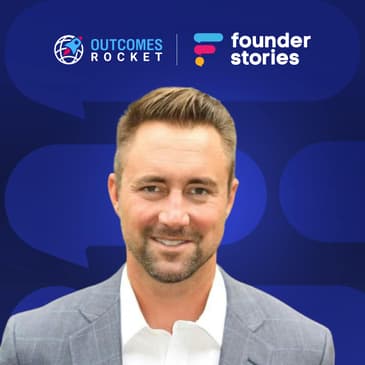
Clear Blue Smiles offers high-quality orthodontic care for under $5,000, less than traditional treatments.
In this episode, Kevin Dillard, co-founder and CEO of Clear Blue Smiles, shares his journey into the healthcare industry and how he and his team are revolutionizing orthodontic care. Throughout his career, Kevin witnessed the struggle between low-cost orthodontics and the need for proper diagnostics, prompting him to collaborate on a hybrid treatment model that combines technology and traditional orthodontics and offers lower prices while maintaining professional integrity and ensuring thorough patient diagnostics. He also explains how Clear Blue Smiles requires comprehensive checks, including X-rays and 3D scans, to prevent damage and ensure proper treatment. Positioned in the middle of the market, Kevin underscores that the company offers high-quality care for under $5,000 and maintains doctor-patient relationships.
Despite initial misunderstandings, the company now provides a platform for patients and doctors to connect easily. Tune in and learn how innovation is transforming orthodontic care!
Resources:
[00:00:02] [SPEAKER_00]: Hey, everybody.
[00:00:03] [SPEAKER_00]: Welcome back to another episode of Outcomes Rocket Founder Stories.
[00:00:09] [SPEAKER_00]: I'm so excited to be with Kevin Dillard today.
[00:00:14] [SPEAKER_00]: Kevin is the co-founder and CEO of Clear Blue Smiles.
[00:00:19] [SPEAKER_00]: And for over two decades, he has been an orthodontic industry legal thought
[00:00:25] [SPEAKER_00]: leader, just an innovator in the space.
[00:00:27] [SPEAKER_00]: And this experience and inside view to the industry led him to do what he's doing.
[00:00:32] [SPEAKER_00]: He's been in this space as a legal and thought leader in the orthodontic
[00:00:37] [SPEAKER_00]: industry for the past two decades.
[00:00:39] [SPEAKER_00]: And nearly 18 years of that experience was as an executive at the
[00:00:43] [SPEAKER_00]: American Association of Orthodontists.
[00:00:45] [SPEAKER_00]: So I'm so excited to have him here on the podcast, Kevin, thank
[00:00:49] [SPEAKER_00]: you so much for joining us.
[00:00:50] [SPEAKER_00]: Thank you, Saul.
[00:00:51] [SPEAKER_00]: Looking forward to it.
[00:00:52] [SPEAKER_00]: Thanks for having me.
[00:00:54] [SPEAKER_00]: Of course, man.
[00:00:54] [SPEAKER_00]: And how are things in the bright, sunny city of St.
[00:00:58] [SPEAKER_00]: Louis?
[00:00:59] [SPEAKER_00]: It's hot.
[00:00:59] [SPEAKER_01]: It's a hot summer.
[00:01:00] [SPEAKER_01]: We're avoiding some of the more extreme weather that's happening down South,
[00:01:04] [SPEAKER_01]: but it's typical St.
[00:01:04] [SPEAKER_00]: Louis summer.
[00:01:05] [SPEAKER_00]: Love it, man.
[00:01:06] [SPEAKER_00]: Love it.
[00:01:07] [SPEAKER_00]: I love it.
[00:01:07] [SPEAKER_00]: Lake of the Ozarks and just a lot of really great things to do out there.
[00:01:11] [SPEAKER_00]: So look, man, excited to have you on here on a podcast.
[00:01:14] [SPEAKER_00]: We're covering founder stories and we're covering healthcare innovations.
[00:01:18] [SPEAKER_00]: So help us understand what got you into the business of
[00:01:21] [SPEAKER_00]: healthcare to begin with.
[00:01:22] [SPEAKER_00]: It's like a coincidental story.
[00:01:24] [SPEAKER_00]: I moved to St.
[00:01:25] [SPEAKER_01]: Louis, which was where I was born and grew up nearby and got a job in
[00:01:30] [SPEAKER_01]: government relations with the American Association of Orthodontists in 2001,
[00:01:33] [SPEAKER_01]: like you mentioned, and eventually became their general counsel, worked
[00:01:36] [SPEAKER_01]: there for almost two decades and had the benefit of orthodontics in my own youth.
[00:01:42] [SPEAKER_01]: And then seeing the other side of it, seeing the professional side of
[00:01:45] [SPEAKER_01]: it and the orthodontic side of it.
[00:01:46] [SPEAKER_01]: And what they can provide to patients is so many times life changing
[00:01:52] [SPEAKER_01]: treatment for patients and the, the attitude that many of these doctors
[00:01:56] [SPEAKER_01]: come into it with really having a motivation of helping people get better
[00:02:00] [SPEAKER_01]: and build more confidence was just a, it's a fascinating industry.
[00:02:04] [SPEAKER_01]: I love it.
[00:02:05] [SPEAKER_01]: I'm behind these doctors.
[00:02:07] [SPEAKER_01]: I just couldn't support more than what they do.
[00:02:10] [SPEAKER_00]: That's awesome, man.
[00:02:11] [SPEAKER_00]: Yeah.
[00:02:11] [SPEAKER_00]: Hey, by the way, I too had braces growing up, man, my teeth were so crooked.
[00:02:16] [SPEAKER_00]: It's crazy, man.
[00:02:18] [SPEAKER_00]: Like, thank God the procedure exists.
[00:02:21] [SPEAKER_00]: And so what inspired you to make the move, take the jump?
[00:02:25] [SPEAKER_00]: A lot of people out there want to do it, but it's those select few that actually do.
[00:02:30] [SPEAKER_00]: What made you make the jump and start your own thing?
[00:02:33] [SPEAKER_00]: It's a great question.
[00:02:34] [SPEAKER_01]: And probably for the last three or four or five years that I was at the AO, most
[00:02:39] [SPEAKER_01]: of my emotional energy there was spent devising strategies about how to protect
[00:02:45] [SPEAKER_01]: the integrity of the healthcare provider in the orthodontic service.
[00:02:49] [SPEAKER_01]: And what I mean by that's a failed way of saying the AO is it's, it was in the news
[00:02:54] [SPEAKER_01]: at the time we were doing battle probably is a little bit too violent of a word to
[00:02:59] [SPEAKER_01]: use, but I mean, it's probably appropriate with Smile Direct Club.
[00:03:01] [SPEAKER_01]: Smile Direct Club was the first big company to come in and say, no, you
[00:03:05] [SPEAKER_01]: don't need to see an orthodontist.
[00:03:06] [SPEAKER_01]: You don't need to see a dentist.
[00:03:08] [SPEAKER_01]: Just we'll mail you an impression kit, do an impression on yourself.
[00:03:11] [SPEAKER_01]: And then some dentist or orthodontist that you'll never see or probably never
[00:03:15] [SPEAKER_01]: talk to somewhere else in some other city in some other state is going to
[00:03:18] [SPEAKER_01]: prescribe you acidic clear liners and then send to you to straighten your teeth.
[00:03:22] [SPEAKER_01]: And they did have a point.
[00:03:24] [SPEAKER_01]: And the point that they made was that people there's an appetite
[00:03:26] [SPEAKER_01]: for lower cost orthodontics.
[00:03:29] [SPEAKER_01]: And there's also a room for technology and some remote monitoring to be able to
[00:03:35] [SPEAKER_01]: cut down on the chair time of the dentist or orthodontist.
[00:03:39] [SPEAKER_01]: What they got wrong was the lack of diagnostics on the front end.
[00:03:45] [SPEAKER_01]: And so I saw this battle from the inside.
[00:03:47] [SPEAKER_01]: I saw the market changes.
[00:03:50] [SPEAKER_01]: And I also saw, quite frankly, with all due respect to some of my orthodontic
[00:03:53] [SPEAKER_01]: friends, I saw a reticence on that side of what I would call traditional
[00:03:58] [SPEAKER_01]: practice to adopt any of those kind of innovations.
[00:04:03] [SPEAKER_01]: So I thought I got with a couple of orthodontists that I had known for some
[00:04:06] [SPEAKER_01]: time who were innovative thinkers and who were forward thinkers, doctors, Bill
[00:04:11] [SPEAKER_01]: Crutchfield and Brian Goodrell.
[00:04:12] [SPEAKER_01]: And we said there's a way to make a hybrid treatment model here and take the
[00:04:16] [SPEAKER_01]: best of the technology and the remote monitoring and take the best of
[00:04:21] [SPEAKER_01]: traditional orthodontics, put them together and give patients a lower price
[00:04:25] [SPEAKER_01]: while maintaining the integrity of the professional in the process and making
[00:04:30] [SPEAKER_01]: sure that there is a doctor patient established connection.
[00:04:34] [SPEAKER_01]: So that's what we did.
[00:04:34] [SPEAKER_01]: And I think what we have done is we've created a system where it takes away all
[00:04:38] [SPEAKER_01]: of the pain points and preserves the expertise of professional and their
[00:04:41] [SPEAKER_01]: involvement and brings the patient a lower price while maintaining a
[00:04:46] [SPEAKER_01]: fantastic outcome.
[00:04:48] [SPEAKER_00]: That's cool, Kevin.
[00:04:48] [SPEAKER_00]: Thanks for sharing that.
[00:04:49] [SPEAKER_00]: And really you saw the market dynamics playing out.
[00:04:53] [SPEAKER_00]: You saw the call for, yeah, we need something more accessible, but you saw a
[00:04:57] [SPEAKER_00]: gap in the lower price model where there needed to be some more like diagnostics
[00:05:01] [SPEAKER_00]: there.
[00:05:02] [SPEAKER_00]: You're like, I can't just sit here and see this.
[00:05:05] [SPEAKER_00]: Like I gotta do something about this.
[00:05:07] [SPEAKER_00]: Right.
[00:05:08] [SPEAKER_00]: And Clear Blue Smiles was born.
[00:05:10] [SPEAKER_01]: And some of the times it's something probably I've seen this quite a lot
[00:05:13] [SPEAKER_01]: talking to founders where some companies have been born from something that like a
[00:05:18] [SPEAKER_01]: couple of years after they become successful, you look back at it and say,
[00:05:20] [SPEAKER_01]: how in the world were they the first ones to realize this problem and solve it?
[00:05:24] [SPEAKER_01]: And I think that's what we've done.
[00:05:26] [SPEAKER_01]: We came into this, to this system and thought, well, there are some like two or
[00:05:29] [SPEAKER_01]: three very obvious pain points when it comes to clear aligner therapy for the
[00:05:34] [SPEAKER_01]: doctors and the patients.
[00:05:35] [SPEAKER_01]: And if we systemize it and package it up and create a solution for both, we can
[00:05:40] [SPEAKER_00]: have success doing that.
[00:05:41] [SPEAKER_00]: That's awesome.
[00:05:42] [SPEAKER_00]: Look, you've been featured on BuzzFeed News, the Detroit Free Press, LA Times,
[00:05:48] [SPEAKER_00]: Fast Company, CBS News, Tech Crunch.
[00:05:51] [SPEAKER_00]: I could keep going on and on.
[00:05:52] [SPEAKER_00]: So you guys are obviously making a splash.
[00:05:55] [SPEAKER_00]: Talk to us about how you and the company are really adding value.
[00:06:01] [SPEAKER_00]: Those gaps that you mentioned, help us understand what they are and how you're
[00:06:04] [SPEAKER_00]: doing them much better than anybody else.
[00:06:07] [SPEAKER_01]: Yeah.
[00:06:07] [SPEAKER_01]: We're connecting with dentists and orthodontists and we're only contracting
[00:06:10] [SPEAKER_01]: with doctors and bringing them into our network.
[00:06:12] [SPEAKER_01]: If they are willing to agree with us that every single patient that comes into
[00:06:17] [SPEAKER_01]: orthodontic therapy needs comprehensive diagnostics, that is a founding principle
[00:06:20] [SPEAKER_01]: of ours, that is something that I've been saying for 10 years when we were, when
[00:06:24] [SPEAKER_01]: I was a spokesperson for the AO talking about why SmileDirectClub was
[00:06:27] [SPEAKER_01]: inadvisable, and by the way, there are some DTC companies still hanging around
[00:06:31] [SPEAKER_01]: today, even in the wake of SmileDirect's bankruptcy last year, even though that
[00:06:35] [SPEAKER_01]: model is becoming rapidly declared illegal in an increasing number of
[00:06:40] [SPEAKER_01]: states, I think Illinois, Nevada, Florida have all basically said the
[00:06:43] [SPEAKER_01]: model is either illegal or impractical.
[00:06:46] [SPEAKER_01]: So we are presenting the patient with a lower price under $5,000 for
[00:06:52] [SPEAKER_01]: clear liner therapy and showing them that can be done still under the
[00:06:57] [SPEAKER_01]: supervision of an expert orthodontist or dentist and maintaining that local
[00:07:02] [SPEAKER_01]: connection that they can download our app after they begin treatment and
[00:07:05] [SPEAKER_01]: communicate back and forth with their dentist and send them pictures, videos,
[00:07:09] [SPEAKER_01]: questions about their treatment.
[00:07:11] [SPEAKER_01]: Meanwhile, that dentist can message or talk or video call with our expert
[00:07:15] [SPEAKER_01]: orthodontists who are on staff to be able to work through any clinical
[00:07:19] [SPEAKER_01]: questions they might have.
[00:07:21] [SPEAKER_01]: So really, like I mentioned, we've married the best of both worlds here and
[00:07:24] [SPEAKER_01]: created the system that even the most traditional conservative orthodontists
[00:07:28] [SPEAKER_01]: can get behind, or at the very least look at us and say, you know what, you guys
[00:07:32] [SPEAKER_01]: are doing this the right way.
[00:07:33] [SPEAKER_01]: And that was our goal from the beginning.
[00:07:34] [SPEAKER_00]: And I think that's what we created.
[00:07:36] [SPEAKER_00]: That's great.
[00:07:37] [SPEAKER_00]: And help me understand or help us understand more on the diagnostics.
[00:07:41] [SPEAKER_00]: What exactly is happening there?
[00:07:43] [SPEAKER_01]: So to position us between the D to C model where they would treat off of
[00:07:46] [SPEAKER_01]: nothing more than just one of those sticky gooey molds that a lot of us had
[00:07:51] [SPEAKER_01]: as when we first went to orthodontics, as opposed to treating on just that, which
[00:07:55] [SPEAKER_01]: is just wildly inadvisable, I would say, I'm not a doctor, I'm a lawyer, but I
[00:07:59] [SPEAKER_01]: would say from a risk management perspective, that is extremely
[00:08:02] [SPEAKER_01]: inadvisable for any doctor to treat off that alone.
[00:08:04] [SPEAKER_01]: For a patient, it's you're probably not going to get a very good outcome.
[00:08:08] [SPEAKER_01]: You're only looking at that.
[00:08:10] [SPEAKER_01]: As a matter of fact, you can do damage.
[00:08:11] [SPEAKER_01]: So we require on every single patient, x-rays or radiographs to make sure
[00:08:16] [SPEAKER_01]: that the roots are healthy and healthy enough to support bone and tooth movement.
[00:08:21] [SPEAKER_01]: We require a 3D scan, of course, for just the precision of creating the
[00:08:26] [SPEAKER_01]: aligners in the treatment plan, require a periodontal check, which many
[00:08:30] [SPEAKER_01]: traditional orthodontists don't even perform in their practice to make sure
[00:08:34] [SPEAKER_01]: that the gum is healthy enough to support tooth movement, along with photos
[00:08:38] [SPEAKER_01]: to make sure the aesthetics goes along with the art and science of orthodontics
[00:08:42] [SPEAKER_01]: that we get the aesthetics.
[00:08:44] [SPEAKER_01]: And then just a general dental check to make sure that the teeth and the
[00:08:47] [SPEAKER_01]: structure and everything is just there's not decay or something like that's going
[00:08:50] [SPEAKER_01]: to make the tooth movement harmful to the patient.
[00:08:53] [SPEAKER_01]: So every single patient goes through all of those diagnostics, which I would
[00:08:57] [SPEAKER_01]: submit that probably quite a few orthodontists don't do all of those
[00:09:01] [SPEAKER_01]: diagnostics.
[00:09:02] [SPEAKER_00]: Hey, I love that.
[00:09:03] [SPEAKER_00]: And thanks for laying them out for us to really understand the diagnostics,
[00:09:07] [SPEAKER_00]: because gosh, why wouldn't you do all those things?
[00:09:11] [SPEAKER_00]: Right.
[00:09:11] [SPEAKER_00]: And so you're telling me, Kevin, that you're doing all of these things and it
[00:09:15] [SPEAKER_00]: always stays five at 5k like the five.
[00:09:18] [SPEAKER_00]: That's the price.
[00:09:19] [SPEAKER_00]: It's never more than $5,000.
[00:09:21] [SPEAKER_01]: Now it actually, our top of the line price is 4,880.
[00:09:23] [SPEAKER_01]: So it's 4,880 or below.
[00:09:26] [SPEAKER_01]: Correct.
[00:09:27] [SPEAKER_01]: And to put that in perspective, the Smile Direct Club, the Bites, they're at around
[00:09:31] [SPEAKER_01]: $2,000, but they can get to that price point because they basically eliminate any
[00:09:36] [SPEAKER_01]: kind of doctor time in that.
[00:09:37] [SPEAKER_01]: And the patient has to assume that risk and the doctor, by the way, has to assume
[00:09:40] [SPEAKER_01]: that risk because there's still a doctor involved.
[00:09:42] [SPEAKER_01]: If you go to a brick and mortar orthodontist and here in St.
[00:09:45] [SPEAKER_01]: Louis, we're pretty middle market.
[00:09:47] [SPEAKER_01]: We're pretty average as far as the price goes.
[00:09:50] [SPEAKER_01]: A typical brick and mortar orthodontist will prescribe Invisalign or clear liner
[00:09:55] [SPEAKER_01]: treatment that's going to be equivalent to ours, 12 to 18 month treatment.
[00:09:59] [SPEAKER_01]: And that price is going to be anywhere between 6,000 to $10,000 in some cases.
[00:10:04] [SPEAKER_01]: And we're just positioning ourselves in the middle of that to say you can get the
[00:10:07] [SPEAKER_01]: excellent doctor patient care for less than $5,000.
[00:10:11] [SPEAKER_01]: And by the way, for the doctors who created the system where they're still making a
[00:10:16] [SPEAKER_01]: typical profit that they would on each case while maintaining that doctor patient
[00:10:22] [SPEAKER_01]: relationship that I got to say most doctors desperately want to have and they thrive on
[00:10:27] [SPEAKER_01]: having that connection with the patient because they're leaders in the community.
[00:10:32] [SPEAKER_01]: They like to be, they like to see their patients at least one time on the front end
[00:10:35] [SPEAKER_01]: and be available to answer questions because they care about that patient and they want a
[00:10:40] [SPEAKER_01]: great outcome for that patient.
[00:10:41] [SPEAKER_01]: Not only is their name on it as a doctor, but the reputations on it and just ethically
[00:10:46] [SPEAKER_01]: they want to see happy patients who have a great outcome and we're happy to help
[00:10:51] [SPEAKER_00]: facilitate that.
[00:10:53] [SPEAKER_00]: That's awesome, Kevin.
[00:10:54] [SPEAKER_00]: And look folks, we all know this.
[00:10:56] [SPEAKER_00]: We talk about healthcare at a national level that we've got national priorities,
[00:11:00] [SPEAKER_00]: but at the end of the day, it's local.
[00:11:02] [SPEAKER_00]: And the work that Kevin and his team are doing is helping that physician, that
[00:11:06] [SPEAKER_00]: dentist be have that ownership locally, that relationship and us as patients have
[00:11:12] [SPEAKER_00]: that too because we all want it.
[00:11:14] [SPEAKER_00]: This is cool, Kevin.
[00:11:15] [SPEAKER_00]: I really love what you guys have done here.
[00:11:17] [SPEAKER_00]: If you were to highlight maybe like one thing that happened as you guys were putting
[00:11:21] [SPEAKER_00]: this all together, any major setbacks that stick out that you guys overcame to make
[00:11:27] [SPEAKER_00]: the business what it is today?
[00:11:29] [SPEAKER_00]: Yeah.
[00:11:29] [SPEAKER_01]: Anytime people go out and try to innovate and do something, and I hate to use the
[00:11:34] [SPEAKER_01]: word disrupt, but a lot of people have called us disruptors.
[00:11:37] [SPEAKER_01]: We've run into a couple of things.
[00:11:39] [SPEAKER_01]: What first I would say chronologically when we first launched and first began
[00:11:43] [SPEAKER_01]: talking to dentists, I think there was a misunderstanding of what we were in a lot
[00:11:48] [SPEAKER_01]: of people.
[00:11:48] [SPEAKER_01]: And I would include like the establishment folks, some of the associations and trade
[00:11:51] [SPEAKER_01]: associations I think would refer to would have referred to us as just another DTC
[00:11:55] [SPEAKER_01]: brand when in fact we were saying, no, we are absolutely not a DTC brand.
[00:12:00] [SPEAKER_01]: We are the exact opposite of that.
[00:12:02] [SPEAKER_01]: We are the establishment response to the DTC.
[00:12:06] [SPEAKER_01]: We're the guys saying they have a point, but what they're doing is wrong.
[00:12:11] [SPEAKER_01]: We can do this a better way and protect the integrity of the doctor.
[00:12:14] [SPEAKER_01]: That was the first time I just like defining who we are and making sure that
[00:12:18] [SPEAKER_01]: we're not being lumped into a category that we're actually ironically very much
[00:12:22] [SPEAKER_01]: opposed to.
[00:12:23] [SPEAKER_01]: I think we've got over that hump.
[00:12:25] [SPEAKER_01]: I think still to this day, there you'd probably find some doctors who would say,
[00:12:29] [SPEAKER_01]: yeah, I've heard about Gribbley Smiles.
[00:12:30] [SPEAKER_01]: They're just another DTC company.
[00:12:32] [SPEAKER_01]: I hate it.
[00:12:33] [SPEAKER_01]: Yeah.
[00:12:33] [SPEAKER_01]: If there's one thing I could communicate, it would be that we are not that we are
[00:12:37] [SPEAKER_01]: anti-DTC.
[00:12:38] [SPEAKER_01]: The other thing, of course, anytime navigating corporate bureaucracies, we got
[00:12:43] [SPEAKER_01]: out.
[00:12:43] [SPEAKER_01]: I came out of the AO where there's a lot, of course, with any association that has
[00:12:48] [SPEAKER_01]: to be bylaws and just huge amounts of processes.
[00:12:53] [SPEAKER_01]: And it was so liberating to come out of that as a founder to be unshackled from all
[00:12:58] [SPEAKER_01]: of those boxes and just be able to be like, hey, we want to do something and we can
[00:13:02] [SPEAKER_01]: do something.
[00:13:03] [SPEAKER_01]: If we get together as a team or executive team, we can make a determination and do
[00:13:07] [SPEAKER_01]: it like that day.
[00:13:09] [SPEAKER_01]: We don't have to go through 14 subcommittees and run it back by a board and do this
[00:13:13] [SPEAKER_01]: and do that.
[00:13:13] [SPEAKER_01]: And by the time it's the old joke, what's a camel?
[00:13:15] [SPEAKER_01]: It's a horse drawn by a committee.
[00:13:16] [SPEAKER_01]: We can just cut through that process and do what we want to do.
[00:13:20] [SPEAKER_01]: That kind of runs up in butt's head sometimes with some of our corporate partners
[00:13:25] [SPEAKER_01]: that we deal with.
[00:13:26] [SPEAKER_01]: And we have to then run headlong into those corporate bureaucracies where you're
[00:13:30] [SPEAKER_01]: dealing sometimes where you don't know what the agendas are.
[00:13:33] [SPEAKER_01]: And you're saying like, look, we're just trying to make this better for patients and
[00:13:37] [SPEAKER_01]: better for doctors.
[00:13:38] [SPEAKER_01]: And we have a clear path to do that.
[00:13:40] [SPEAKER_01]: We have a very clear understanding of how to do that.
[00:13:42] [SPEAKER_01]: We just need your help to sell more of your product or some more of your service
[00:13:47] [SPEAKER_01]: or whatever the case may be.
[00:13:48] [SPEAKER_00]: Some great things.
[00:13:49] [SPEAKER_00]: And yeah, man, like being able to make it happen.
[00:13:52] [SPEAKER_00]: And that's why entrepreneurship is still alive because once you get large and
[00:13:57] [SPEAKER_00]: large and in charge, you start protecting your fiefdom.
[00:14:01] [SPEAKER_00]: And that's where the innovation gets stifled.
[00:14:03] [SPEAKER_00]: And that's why for everybody listening today, that's why Kevin went out there and
[00:14:07] [SPEAKER_00]: and his team, the docs, they created what they created because the opportunity is
[00:14:12] [SPEAKER_00]: there and there's sleepy markets out there in health care right now that we can
[00:14:17] [SPEAKER_00]: all take advantage of just like Kevin and his crew have done.
[00:14:20] [SPEAKER_00]: So Kevin, I love what you've done and I hope you continue to be successful with
[00:14:25] [SPEAKER_00]: this.
[00:14:25] [SPEAKER_00]: So great to have you on the podcast.
[00:14:28] [SPEAKER_00]: If anybody listening, whether it's docs listening or patients, what call to action
[00:14:33] [SPEAKER_00]: would you give them today?
[00:14:35] [SPEAKER_00]: And please let us know where we could reach to you to get more information on
[00:14:39] [SPEAKER_00]: what you guys do.
[00:14:40] [SPEAKER_01]: Yeah, website actually is our hub of activity.
[00:14:42] [SPEAKER_01]: Clearbluesmiles.com.
[00:14:43] [SPEAKER_01]: It's very easy to find for patients.
[00:14:45] [SPEAKER_01]: They can go on for absolutely no cost.
[00:14:47] [SPEAKER_01]: They can go through our, our evaluation.
[00:14:49] [SPEAKER_01]: They just go in, upload a few photos, answer a few questions and our expert
[00:14:53] [SPEAKER_01]: orthodontists again, no obligation, no cost.
[00:14:55] [SPEAKER_01]: Take a look at them and say, yeah, you're, you look like a candidate.
[00:14:58] [SPEAKER_01]: We'll link you up with a local doctor near you to start that process.
[00:15:01] [SPEAKER_01]: Or in some cases, our doctors say you look like you need some surgery or some
[00:15:06] [SPEAKER_01]: pretty significant restorative work first.
[00:15:08] [SPEAKER_01]: Here's a doctor and network.
[00:15:10] [SPEAKER_01]: You can go see to get that done for doctors.
[00:15:12] [SPEAKER_01]: They can, for the same time, they can go to our website, sign up to become a
[00:15:16] [SPEAKER_01]: provider.
[00:15:16] [SPEAKER_01]: Absolutely no cost, no obligation, no quotas, no anything.
[00:15:19] [SPEAKER_01]: They can get into our system, become a provider, and we'll talk to them, onboard
[00:15:24] [SPEAKER_01]: them and start sending them patients.
[00:15:26] [SPEAKER_01]: Or they can get patients out of their own database.
[00:15:29] [SPEAKER_01]: We make it as easy as possible for those dentists to be able to prescribe a clear
[00:15:33] [SPEAKER_01]: aligners and can keep that very high standard of care.
[00:15:36] [SPEAKER_01]: So that's a clear blue smiles.com.
[00:15:39] [SPEAKER_00]: Love it, Kevin and folks such an easy way to engage in the show notes.
[00:15:43] [SPEAKER_00]: We're going to leave all the links that you need to get in touch with clear blue
[00:15:47] [SPEAKER_00]: smiles, Kevin and his team.
[00:15:48] [SPEAKER_00]: So whether you're a physician or a patient, the times now it doesn't cost
[00:15:53] [SPEAKER_00]: you anything and you get all the benefits.
[00:15:54] [SPEAKER_00]: So take advantage of it.
[00:15:55] [SPEAKER_00]: Kevin, we really appreciate you jumping on with us.
[00:15:58] [SPEAKER_00]: This has been a lot of fun.
[00:15:59] [SPEAKER_00]: Thank you.
[00:15:59] [SPEAKER_00]: Appreciate it.