
AI plays a crucial role in creating personalized sleep medicine based on collected sleep data.
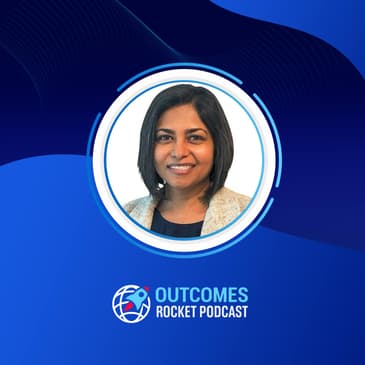
In this episode, Raj Mills, the Chief Technology Officer at Sleep Number, shares insights into the company's innovative sleep solutions, such as smart bed technology that tracks and personalizes sleep metrics. She explains how Sleep Number sets itself apart from competitors through its dedication to science and data, analyzing over 22 billion hours of sleep data and offering downloadable sleep reports for physicians. Raj stresses the impact of sleep on cardiovascular, cognitive, and metabolic health, emphasizing the importance of collaborations with health systems and leveraging AI for personalized sleep medicine. She also explores the shift towards consumer-driven healthcare, sleep apnea, fall prevention, and comfortable end-of-life options.
Tune in and learn how better sleep can enhance your health and well-being!
Resources:
[00:00:02] [SPEAKER_00]: Hey everybody, welcome back to the Outcomes Rocket. I'm so excited to welcome you back to our podcast today because I have an outstanding guest that I'm super excited to host. Her name is Raj Mills. She is the Chief Technology Officer at Sleep Number. She is an experienced technical leader with over 25 years of experience in digital strategy, connectivity, and application development.
[00:00:28] [SPEAKER_00]: She's been successful in implementing web and mobile digital platforms, enabling analytics and insight-driven decisions. We all know the importance of sleep to our overall health, and today we're going to be covering some of the things that are on Raj's mind on that topic. So Raj, so great to have you on the podcast.
[00:00:48] [SPEAKER_01]: Thank you for having me, Saul. Great to be here.
[00:00:50] [SPEAKER_00]: It's our pleasure. So Raj, before we dive into Sleep Number and the work that you guys are doing there, tell us a little bit about you. What is it that got you into the healthcare business?
[00:01:02] [SPEAKER_01]: Absolutely. So my background is in technology, and actually for the first 20 or so years of my career, and maybe not 20 years, but I worked in the aerospace industry, but really focused on health technology, health with the VA, health with even within other parts of the armed forces, how to promote health and how to establish communication within health.
[00:01:29] [SPEAKER_01]: So I've always had this, just this calling, in my opinion, to this collaboration between health and technology.
[00:01:38] [SPEAKER_01]: And then I moved very specifically into the medtech field at J&J, working on digital diabetes products. And that's when I really saw a broader opportunity and a broader movement in healthcare, where technology and health were merging, driving connections with each other, and this movement towards technology enabling consumers to take advantage of their own health.
[00:02:06] [SPEAKER_00]: I love that. What a really cool evolution of your career. And so, yeah, you know, we have wearables, we've got nearables, we've got devices, we've got technology that we're interfacing with. There's so much that does integrate into our overall health. Raj, help us learn more about Sleep Number. What does the company do? And how are you adding value to the healthcare ecosystem?
[00:02:29] [SPEAKER_01]: Absolutely. Absolutely. I'd love to know. Absolutely. I'd love to know. Absolutely. I'd love to answer that. So Sleep Number offers smart, personalized sleep solutions that can be adjusted individually and over time.
[00:02:41] [SPEAKER_01]: Every Sleep Number bed is a smart bed, which also means that each sleeper can see their nightly sleep metrics, like how long it took her to fall asleep, the level of the restlessness, metrics like heart rate, breathing rate, HRV.
[00:02:58] [SPEAKER_01]: And with that information, our sleepers can understand insights that Sleep Number provides to each sleeper to improve their health. And this improvement is even accelerated by the ability of the smart bed to adjust to each sleeper.
[00:03:15] [SPEAKER_01]: So sleepers have the ability to adjust their firmness, their head and foot. And with our Climate 360 smart bed, adjust temperature on each side of the bed. And this not only provides individuality because no two people sleep the same, and especially between couples. Couples sleep very differently in many respects.
[00:03:36] [SPEAKER_01]: But it also provides personalization on a night-to-night basis over time as we age.
[00:03:43] [SPEAKER_01]: You know, for instance, I change my firmness of my bed if my back is acting up or if I worked out a little too much one day.
[00:03:52] [SPEAKER_01]: So really having that ability to personalize your sleep experience night after night improves your overall sleep and health.
[00:04:01] [SPEAKER_00]: That's great. You know, it's really great to see how the technology is really providing that feedback, the analytics. I mean, we do it with everything else. We do it with our cars.
[00:04:11] [SPEAKER_00]: Why don't we do it with our bodies? You know, like the most important vehicle that we have.
[00:04:18] [SPEAKER_00]: So there's been a lot of talk and the theme's not new, but this idea of physical and digital, right?
[00:04:26] [SPEAKER_00]: Digital experiences. You guys are putting together those experiences for consumers.
[00:04:31] [SPEAKER_00]: And so as you put this together, what would you say is different or better about what you guys do than what's out there in the market?
[00:04:40] [SPEAKER_01]: Yeah, absolutely. And, you know, your viewers know that sleep is top of mind for so many Americans and all over the world.
[00:04:48] [SPEAKER_01]: But because of that, there's a lot of noise out there as well.
[00:04:52] [SPEAKER_01]: So it's really important for our sleepers and our customers to understand and distinguish sleep number from some of the noise as well.
[00:05:04] [SPEAKER_01]: So, you know, there are a few ways that we do differentiate and we really think about our solutions.
[00:05:10] [SPEAKER_01]: The first is a smart bed allows both sensing and adjusting capabilities, as I just mentioned.
[00:05:19] [SPEAKER_01]: There are a lot of products out there that have sensing capabilities that allow for the monitoring of sleep,
[00:05:26] [SPEAKER_01]: but lack the ability to modify the actual sleeping surface or the environment.
[00:05:31] [SPEAKER_01]: So the sense and do part in that sense and do equation, often the do part is missing.
[00:05:38] [SPEAKER_01]: And then second, the experience is effortless.
[00:05:42] [SPEAKER_01]: There's nothing to wear or charge.
[00:05:44] [SPEAKER_01]: And we know that this is important since a significant portion of the U.S. population do find wearables destructive in sleep
[00:05:53] [SPEAKER_01]: and therefore take them off before sleeping, either for charging or for comfort.
[00:05:58] [SPEAKER_01]: So for the sleep number platform, you just have to go to bed and the data starts to be collected.
[00:06:04] [SPEAKER_01]: The third differentiating factor, I would say, is our commitment to science.
[00:06:10] [SPEAKER_01]: And in fact, you know, sleep number has leveraged and learned from over 22 billion hours of sleep data gathered from over 2 billion real world sleep sessions.
[00:06:21] [SPEAKER_01]: So that's a significant amount of context that we have in order to not only analyze that data in terms of helping develop new solutions,
[00:06:34] [SPEAKER_01]: but also we're helping to inform science.
[00:06:39] [SPEAKER_01]: We have our research collaborations with Mayo Clinic, the American Cancer Society, University of Pittsburgh, Northwestern.
[00:06:48] [SPEAKER_01]: And so all of these academic institutions rely and use data from real world sleep experiences, which is often missing in the academic world.
[00:07:00] [SPEAKER_01]: And so we're able to help inform science as well as create solutions that are science based.
[00:07:08] [SPEAKER_00]: That's fantastic, Raj.
[00:07:11] [SPEAKER_00]: You know, and just kind of curious, you're doing this work.
[00:07:14] [SPEAKER_00]: And today, health care is evolving, as we all know.
[00:07:18] [SPEAKER_00]: There's more happening inside of the home from those well visits to even hospital at home.
[00:07:25] [SPEAKER_00]: Not as much, but still kind of more shift like Medicare Advantage, for example, right?
[00:07:29] [SPEAKER_00]: Those well visits are becoming more of a requirement.
[00:07:31] [SPEAKER_00]: Are you guys thinking or doing any collaborations with health systems?
[00:07:36] [SPEAKER_00]: Because that could be really interesting.
[00:07:38] [SPEAKER_01]: Yes, you know, we're always looking for ways to provide better health or provide better access to health.
[00:07:44] [SPEAKER_01]: And certainly digital platforms, COVID has accelerated that idea of telehealth and digital health.
[00:07:52] [SPEAKER_01]: And we fit perfectly in that spectrum.
[00:07:56] [SPEAKER_01]: So today we have reports that can be downloaded and taken to physicians.
[00:08:01] [SPEAKER_01]: In fact, we have gotten feedback and testimonials from so many people who've taken their reports to their physicians because they've seen, for instance, a sudden change in their heart rate or their HRV.
[00:08:15] [SPEAKER_01]: And in so many cases, our customers have come back to us to say, you know, this saved my life because when I took this to my doctor, it resulted in the discovery of a cardiovascular health outcome.
[00:08:29] [SPEAKER_01]: Right now, we're really trying to study the impacts of sleep and other comorbidities, so to speak.
[00:08:38] [SPEAKER_01]: So there's such a big correlation between sleep, cardiovascular health, cognitive health, metabolic health.
[00:08:45] [SPEAKER_01]: So the whole area of health is really starting to understand the impacts of sleep.
[00:08:52] [SPEAKER_01]: And so we feel that we will be in a perfect position to really then provide guidance for not only the consumers, but for health care in how their sleep can impact those areas.
[00:09:08] [SPEAKER_00]: Love it. It's on the radar. You guys are mindful, studying the sleep patterns and how they relate to comorbidities.
[00:09:15] [SPEAKER_00]: So great that you guys are focused here.
[00:09:17] [SPEAKER_00]: You know, I go into conferences and it's no longer a surprise when you walk into a conference and you see a consumer company such as Sleep Number or Best Buy or one of these other ones urging with what's happening in health care.
[00:09:32] [SPEAKER_00]: It makes so much sense. And it's so exciting to hear that you guys are doing that as well.
[00:09:36] [SPEAKER_00]: When you think about the things that you've done, any setbacks that come to mind that have made you better?
[00:09:42] [SPEAKER_00]: I know on the technology side, for sure. Right. You know, as the CTO, I'm sure you've seen a lot.
[00:09:47] [SPEAKER_00]: Anything that sticks out that you've seen that's made you guys better?
[00:09:50] [SPEAKER_01]: Yeah. I mean, right now, there's so much opportunity to impact health that it's really trying to figure out the pace and sequence of how we do it.
[00:10:03] [SPEAKER_01]: Right. Because sleep is at the root of so many other health factors that we can't, as a company, tackle everything at one time.
[00:10:12] [SPEAKER_01]: And so really, that's been the hardest challenge, to be honest, in deciding what to prioritize.
[00:10:19] [SPEAKER_01]: Our partnerships and our collaboration has really helped us in moving into certain directions, like the Mayo Clinic.
[00:10:28] [SPEAKER_01]: You know, our relationship there is very specific to the cardiovascular health division.
[00:10:33] [SPEAKER_01]: So most of the research has been around sleep and cardiovascular health.
[00:10:38] [SPEAKER_01]: But the sleep world, the health care world, has still a lot to learn about sleep.
[00:10:44] [SPEAKER_01]: So, you know, we're trying to help the health care world learn as we grow as well.
[00:10:51] [SPEAKER_00]: Well, that's great. Yeah. And that collaboration is the best currency in this segment.
[00:10:57] [SPEAKER_00]: There's a big opportunity. I mean, we've covered the importance of monitoring sleep for sleep apnea.
[00:11:03] [SPEAKER_00]: There's so many undiagnosed cases out there of it. The opportunities are huge.
[00:11:08] [SPEAKER_00]: So love that you guys are open for partnerships and open to ideas for everybody listening at a health system, maybe even a payer.
[00:11:17] [SPEAKER_00]: You know, Raj and her team are collecting lots of data that could really be beneficial to how we build our future in this sleep health space.
[00:11:25] [SPEAKER_00]: So super exciting.
[00:11:26] [SPEAKER_00]: You know, would you highlight any trend or technology in this space that you feel is making a difference?
[00:11:34] [SPEAKER_01]: Yeah. So, I mean, the obvious one is AI, of course. I'm sure you hear that all the time.
[00:11:40] [SPEAKER_00]: Yeah.
[00:11:40] [SPEAKER_01]: But AI, every conference I go to, AI is front and center, regardless of what the conference topic is.
[00:11:46] [SPEAKER_01]: But I think AI in health care is extremely important.
[00:11:51] [SPEAKER_01]: And it's an area where we can really take some of the data that we are starting to collect and create very personal and personalized sleep medicine.
[00:12:04] [SPEAKER_01]: So that is really a trend, of course, that is out there.
[00:12:07] [SPEAKER_01]: The other trend I'll say, and it kind of works hand in hand with AI because I think it's an enabler, is that idea that consumers, health care is moving more to the consumer.
[00:12:19] [SPEAKER_01]: Right.
[00:12:20] [SPEAKER_01]: And so that gives the whole area of health the opportunity to understand on an individual level what each person is experiencing from a health perspective and in their real world settings versus a once a year doctor's appointment or a, you know, point in time test that might be taken, you know, very infrequently.
[00:12:44] [SPEAKER_01]: You know, in the case of sleep, the sleep measurements have typically been in a lab full of probes, you know, sleeping in an unfamiliar environment, which is absolutely the converse of where, how you would want to measure sleep.
[00:13:02] [SPEAKER_01]: So the sleep number platform provides this idea of measuring sleep in an unobtrusive way in a natural environment that is actually collecting the real pattern of sleep.
[00:13:16] [SPEAKER_01]: So these are, that's just, you know, example, you've seen so many other examples of people taking control of their own health, but it leads to collecting, in my opinion, more accurate data that then can be analyzed through AI.
[00:13:32] [SPEAKER_01]: So that's certainly a trend that has been growing.
[00:13:36] [SPEAKER_01]: And really the bigger shift is that consumers want to take more control of their own health.
[00:13:42] [SPEAKER_00]: That's for sure.
[00:13:43] [SPEAKER_00]: No, such super interesting points that you made there, Raj.
[00:13:48] [SPEAKER_00]: And even thinking about, yeah, you know, as health care does get more consumer driven, some of those consumer insights can also enter the hospital.
[00:13:57] [SPEAKER_00]: I'm just thinking fall prevention and things that could be done with things like a bed.
[00:14:03] [SPEAKER_01]: Yes, absolutely.
[00:14:06] [SPEAKER_01]: There are different platforms from a hospital bed stand for it.
[00:14:10] [SPEAKER_01]: And not only hospital beds, but I'll say even there's this middle ground of people who want to age at home and want to stay at home longer before becoming a patient.
[00:14:23] [SPEAKER_01]: So people really want to stay at consumers for as long as they can before becoming patients.
[00:14:30] [SPEAKER_01]: And so the experience in the home, regardless of where they are in that stage of care, that's shifting as well.
[00:14:39] [SPEAKER_01]: Right.
[00:14:39] [SPEAKER_01]: So the idea of monitoring, the idea of fall prevention, as you say, or someone exiting the bed and not coming back.
[00:14:48] [SPEAKER_01]: You know, those are all things that can be monitored that can help in that health care process.
[00:14:54] [SPEAKER_00]: That's fantastic, Raj.
[00:14:55] [SPEAKER_00]: Yeah. And, you know, on a closing note with that one is I'm thinking about Atul Gawande's book on being mortal.
[00:15:02] [SPEAKER_00]: And, you know, there's a couple of things in there where he said there's been a huge shift from people, you know, their last days and dying at home to dying in hospitals.
[00:15:11] [SPEAKER_00]: I see a shift happening with technologies like sleep number where and by the way, like one of the recommendations in his book, he says, talk about what you want.
[00:15:21] [SPEAKER_00]: Right. And my wife and I have talked about it and I want to die at home.
[00:15:25] [SPEAKER_00]: So I love the idea of having something like sleep number in my bed, in my house where I could die at peace and not die in an institution.
[00:15:35] [SPEAKER_00]: So I love this idea, the possibility of it.
[00:15:39] [SPEAKER_01]: I agree. Absolutely.
[00:15:41] [SPEAKER_01]: It's about personal choice and enabling that and doing it in the most comfortable and seamless and natural way versus a setting that's not necessarily that natural.
[00:15:55] [SPEAKER_00]: So well said. So well said, Raj.
[00:15:57] [SPEAKER_00]: Well, look, we're here at the end of the podcast.
[00:16:00] [SPEAKER_00]: This has been such an extraordinary conversation.
[00:16:02] [SPEAKER_00]: Thank you for sharing all the insights, the work, the partnerships and things that you and the sleep number team are up to.
[00:16:10] [SPEAKER_00]: For the listeners to learn more, where can they reach out to you and what parting thought would you leave us with?
[00:16:16] [SPEAKER_01]: Sure. Well, I encourage everyone to go to sleepnumber.com or sleepnumber.com slash science.
[00:16:23] [SPEAKER_01]: Those are certainly areas where you can find out more about the entire platform.
[00:16:28] [SPEAKER_01]: And really, really happy to speak to you and encourage people to learn about their sleep and learn about options to improve their sleep.
[00:16:37] [SPEAKER_01]: Because I do believe very genuinely and that sleep is really a core part of our health.
[00:16:44] [SPEAKER_01]: That is a factor to the rest of our entire health.
[00:16:50] [SPEAKER_00]: Well said, Raj.
[00:16:51] [SPEAKER_00]: I agree 100 percent.
[00:16:53] [SPEAKER_00]: Folks, let's think about our sleep.
[00:16:55] [SPEAKER_00]: You know, oftentimes I think one third of our life.
[00:16:58] [SPEAKER_00]: What are we doing with those hours?
[00:16:59] [SPEAKER_00]: Are we maximizing them?
[00:17:01] [SPEAKER_00]: And the way to best improve is through analysis and through the numbers and through the data.
[00:17:07] [SPEAKER_00]: And Raj and her team are doing just that, giving us that data to become better.
[00:17:12] [SPEAKER_00]: Raj, thank you so much and really appreciate you being with us for this podcast.
[00:17:17] [SPEAKER_01]: My pleasure.
[00:17:18] [SPEAKER_01]: Thank you.
[00:17:18] [SPEAKER_00]: Thank you.
[00:17:19] [SPEAKER_00]: And folks, just remember, check out the show notes of today's episode with the amazing Raj Mills, Chief Technology Officer at Sleep Number.
[00:17:28] [SPEAKER_00]: You can check out the show notes where we'll leave links to get in touch with her, as well as the website to get more information on the science and the work that they're doing.
[00:17:36] [SPEAKER_00]: Thank you all for tuning in.
[00:17:38] [SPEAKER_00]: And Raj, thanks again for being with us.
[00:17:40] [SPEAKER_01]: Thank you, Saul.