
This podcast is brought to you by Outcomes Rocket, your exclusive healthcare marketing agency. Learn how to accelerate your growth by going to outcomesrocket.com
No one should have to wait weeks to get the care they desperately need because of administrative bottlenecks.
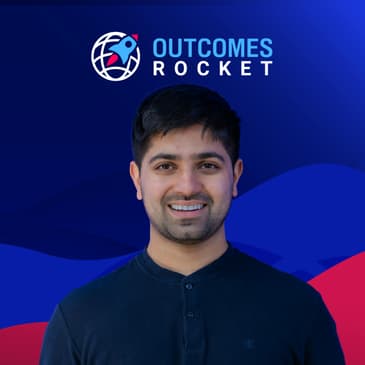
In this episode, Zain Qayyum, founder and co-CEO of Medsender, shares how AI is transforming healthcare operations by removing inefficiencies that delay patient care. He describes his journey from pre-med to tech entrepreneur after experiencing frustrations with outdated processes like faxing and data entry. Zain explains how Medsender’s AI platform automates referral intake, insurance verification, scheduling, and chart creation, cutting processing times from weeks to seconds, while highlighting the importance of agentic AI in handling critical tasks reliably. He also reflects on why specialty groups benefit most from this automation, the persistence of fax machines in healthcare, and personal lessons from Atomic Habits about how small, consistent changes lead to big results.
Tune in and learn how AI is reshaping healthcare workflows and why speed and accessibility matter more than ever!
Resources:
[00:00:02] Hello everyone and welcome back to the Outcomes Rocket podcast. I'm so excited to have you guys tune us in for another episode. Today, I've got the privilege of hosting an outstanding leader in healthcare. Zain Qayyum is the founder and co-CEO of Medsender.
[00:00:22] If you're wondering about Medsender, they're an A-powered healthcare technology company that automates time-consuming admin workflows like fax intake, referral management, patient calls, all those things. They get automated.
[00:00:37] And originally on a pre-med track, he was working as a microbiology researcher. He shifted to computer science after seeing all the inefficiencies in our industry. And along the way, he built a wearable that converts body heat into electricity and then developed Medsender's first AI models, raising capital. And here's where they're at.
[00:01:01] So we get a chance to catch Zain at this really awesome venture that he's in. And so can't really explain how grateful we are, Zain, to have you on the podcast. Appreciate you making the time. Likewise, Saul. Appreciate you making the time to meet with me and have me on the show. Excited to be here. Likewise, man. Likewise. So look, we like to get right into it. If you can, tell us about your business. What do you guys do? And how is it different than what's out there? Why does it matter?
[00:01:27] A little background about what we do, how this all started, I think is helpful. So this all started once upon a time, as you kind of talked about, I was pre-med, planning to go to medical school, through internships at hospitals, started realizing how broken healthcare operations were. And then through personal and family experiences too, having to drive between health systems, three hours apart to pick up paper copies, CDs, and medical records for my mom, wait an hour for them to type in all this data into the EHR.
[00:01:57] And before they saw her and just having to wait for authorizations, all these bottlenecks just made me realize there has to be a better way of doing all this. So ended up switching to computer science, started the company afterwards. And really what we focus on now is we've built an AI platform that automates all the admin operations for a medical group.
[00:02:22] Everything A to Z between appointments from the time a referral comes in to the time they actually get on the books that are seen by the provider. Everything in between, we are helping take off that office's plate from creating the chart, checking their insurance, answering the phone calls, getting them scheduled. Really anything else you can think of our AI is handling essentially.
[00:02:45] I know obviously pretty much everyone's using AI these days, but really we've built our AI to be skillable and accessible in a way that it's really designed to service anyone from solo provider doctor offices all the way up to enterprises with hundreds of locations throughout the US. We've built it to be very, very lean and efficient and that's how we're able to do that. So accessibility to us is really important. And that goes really into why this all matters, right?
[00:03:15] Because ultimately we're making it accessible because it's really important that we succeed because we need everyone using this so that no one ever has to wait weeks fighting their doctor, trying to get them to get around to submitting the power authorization for the care or treatment or medication that they so desperately need, right?
[00:03:38] No one should have to wait weeks to hear back from their specialist once they've been referred for something that could be very important, right? It's all happening because of this administrative bottleneck and people should be able to get the care they need when they need it. And that's what it all comes down to. This all matters. Our success is really important because we need everyone to get the care they need right when they need it,
[00:04:06] make a healthcare affordable, accessible for everyone by eliminating all these bottlenecks. That's really what it comes down to. Yeah, for sure, Zane. And I want to spend just a second here on all these things that your company does with AI. And I've been thinking a lot about this and we actually did a survey recently on the use of AI, agentic, AI in particular.
[00:04:29] So how much of what you do is agentic versus processing data more like a gen AI perspective? Good question. As the company evolves and as AI evolves, we've had AI since before LLMs and open AI was a thing, right? Yeah. We've been doing this for a while now, many years. But technology is obviously evolving quite rapidly.
[00:04:55] And more and more of our workflows are being powered by our own AI agents that we've developed and trained that are going into systems and charts and finding the information they need and automating the work that needs to be done in ways that otherwise might not be possible. So I do see a major shift happening in that direction.
[00:05:18] Obviously, there's still some things that are fed by the AI, but still hard-coded in terms of what action happens next just to ensure 100% reliability for mission-critical things. But in some areas, we definitely are expanding our use of AI agents. Cool, man. No, just curious. It's a big, big topic today that I'd ask just to help people know where it's being used because it's a big question that's coming up nowadays. Just to be clear on your end customer, who's that ultimate end customer you serve?
[00:05:48] Is it strictly the provider? And if it is, then help us understand, is it health systems? Is it smaller physician offices? What's the niche? And where are you guys focused? Yeah. Our main focus is mainly on specialty groups. We feel we can deliver the most value there. Any practice specialty that gets a high volume of referrals, we feel we can deliver the most value. We're not limited to just specialists. We do have primary care.
[00:06:16] We do have pharmacies and imaging centers and all sorts of different organizations, hospitals using the platform. But we do feel that we can deliver extraordinary value with specialty groups. So that has historically been our focus. Awesome, man. That sounds great. And it's good to have that focus to understand where you play best. What's one thing most people don't know or don't think about the problem that you solve? I think there's two things.
[00:06:44] For people that are not in healthcare, they're just shocked that basically the entire healthcare system is still running on fax. That's usually just, you talk to like an investor, for example, or whatever, right? Someone who's on the cutting edge of technology, they hear that healthcare is running on fax. They're just like, no way. That can't be true. Yeah. So I think that's probably the biggest thing for people that are not in the weeds in healthcare.
[00:07:11] But for the people that are in healthcare, people who are running these practices, for example, or medical groups, whatever it is. I think what sometimes people don't realize is even if you get rid of faxing, that doesn't mean you're getting rid of all the work that needs to be done. But I see a lot of people transitioning, for example, to direct messaging instead of fax. And they think all of a sudden, okay, fax is gone. All our problems are gone.
[00:07:39] What we're realizing, though, is they're still having our AI process, all those documents coming in, except now instead of fax, they're coming in over direct. And we still have to input the data, check it against the insurance, reach out to the patient, get them scheduled. All these things, regardless of whether it's coming in via fax or direct or whatever other method, that work still needs to be done. And I think that's something that sometimes people don't realize until they actually make the switch. That's a big one, man. And there's so much there.
[00:08:08] And you emphasize, given this specialty group focus, this AI referral piece. Break it down for us. Like, where's the value? How does that help? Help us understand kind of that value prop there. Yeah. So I'll give you an example. One of our customers, for example, it was taking them on average about 10 days to process a referral.
[00:08:31] That means from the time a referral came in, it would take 10 days for them to actually be ready to reach out to the patient and try to schedule them. So like primary care provider sends them this referral 10 days before they could actually even schedule a call with them or a visit. Yeah. And we have other customers that were taking even longer, like weeks, several weeks. But regardless of how long it used to take them from 10 days to 14 days, two, three weeks, our AI comes in. And now within seconds of the referral are arriving.
[00:09:00] They're essentially the charts created. The insurance is validated. We're making sure the visit's going to be covered. We're ready to automatically reach out to that patient any way we have to, whether it's a text message or phone call to get them on the books. And as a patient, right? If you put yourself in your shoes of a patient, when you have something that needs to be seen, whether it's a cough or something on your skin, you definitely don't want to sit around waiting.
[00:09:29] Nothing good can ever come from waiting longer to get the care you need, right? And ultimately, if you wait longer, either things are going to get worse or it just kind of goes away on its own and you kind of don't need that appointment anymore. So time is really of the essence. And I think what we're starting to see now is primary care providers who refer to maybe multiple specialists at the same time, really whoever can schedule them the fastest. I think that is where the winning is going to happen.
[00:09:59] It's the service game, right? So what you're doing, obviously, I mean, I don't want to assume you're like deeply integrated into critical EHRs, Athena, NextGen, all the main players, right? At this kind of multi-specialty level, this is kind of what I'm seeing being used.
[00:10:15] Yeah, we're integrated with dozens of different EHR systems, especially the ones that are specialty focused, especially the ones that are going after those medical groups that maybe aren't within an enterprise health system, like a hospital system, for example. It doesn't mean we don't have hospitals on the platform, but that's just historically where we've been able to build really, really deep integrations and see lots of demand. Cool, man. Thank you.
[00:10:43] Look, I like to geek out on the platforms just to kind of get more familiar. We also like to learn from entrepreneurs' best practices. What's a best practice or resource that you'd recommend to our listeners and why? That's a tough question. If I had to think of something on the spot right now, though, I would say a resource that's been really helpful has been this book I read a while back called Atomic Habits.
[00:11:07] And it's amazing how small little changes in our day-to-day life, the smallest of things, can over time compound and lead to really big lasting change, right? And I'll give an example. A while back, about a year ago now, I was on a trip, took my cousins as a graduation birthday gift to Japan. And they're watching me eat all this mochi and all these tasty Japanese desserts, lots of sugar, essentially.
[00:11:36] And eventually they're like, you know, Zane, if you stopped eating sugar, added sugar at least, you would hit your fitness goals a lot faster. And I was like, you know what? You're right. Because I go to the gym, I have a trainer and everything. So the next morning I woke up and I just went cold turkey. I stopped eating added sugars. No more sugar. No more added sugar. But I have a huge sweet tooth. It's kind of like an addiction. I couldn't, it's like weaning off of a drug or something. Like how do I do this, right? How do I build a better habit to get over this?
[00:12:06] And I thought about the book. And what I did is every time I started craving something sweet, I would go downstairs. In Japan, there's 7-Elevens everywhere. I would walk into a 7-Eleven, buy a banana and I would eat the banana. And eventually those sweet cravings started going away. And now I can eat meals without craving dessert after. And it's been amazing progress. I feel a lot better. I love it, man. Yeah. Those small habits turn into big results, whether it's personal, professional, financial.
[00:12:35] And at the end of the day, man, we do this stuff as entrepreneurs because we want better lives. And we want to be healthy. And health is that foundation for overall wealth. So kudos to you, man. Glad you got that habit kicked. You get to still enjoy it here and there, but you're doing really great for yourself. And that's awesome to hear. Zane, look, man, we're here at the end of our journey on the podcast. I'd love if you could just share with the listeners where they could find you, how they could get in touch with MedCenter, and then we could conclude.
[00:13:04] Great question. I think the best way to get in touch is feel free to connect with me on LinkedIn. It's just my name, Z-A-I-N. I'm sure Saul will have my name spelled out. I'll link it up in the show notes. Yep. Yeah. LinkedIn, you can always email. I'm just saying at MedCenter.com. Or just visit our website if you want to see how the platform works or talk to the team. It's M-E-D-S-D-N-D-E-R.com, MedCenter.com. Love it. There you have it, folks. Nice and easy. Check out Zane Quam.
[00:13:32] He's the co-CEO of MedCenter. An incredible opportunity to take that tedious facts, workflow stuff out of the hands of yourself and your employees at the office and put it on his platform so it gets done so you can take care of patients faster. That's what they're all about. Zane, thanks for sharing what you do with us and wishing you success here. Oh, and by the way, I did want to call out a big congrats. I saw that you guys were named to Inc.'s 2025 list of America's
[00:14:01] fastest growing private companies. So congratulations on that 550 spot out of a thousand. Congrats and excited that we had our time to connect today. Yeah. 550 out of 5,000 and number 50. Oh, is it 5,000? I thought it was 1,000. All right, man. 5,000, yeah. And number 58 out of the software categories. I appreciate it. Yeah. Thank you, Saul. Yeah, brother. Yeah. So keep up the awesome work. We're following you and folks get in touch with
[00:14:27] Zane. He and his team are up to some great things to help healthcare get better and help you improve your outcomes. Talk to y'all soon. And Zane, thanks for being with us. Thank you, Saul.