
This podcast is brought to you by Outcomes Rocket, your exclusive healthcare marketing agency. Learn how to accelerate your growth by going to outcomesrocket.com
Medication nonadherence in older populations is a massive problem that significantly impacts clinical outcomes and healthcare costs.
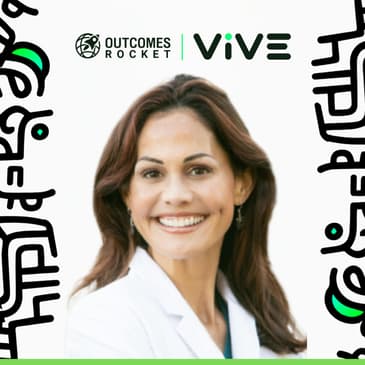
In this episode, Dr. Chandra Osborn, Chief Experience Officer of AdhereHealth, discusses how her organization improves healthcare delivery by focusing on medication adherence in Medicare Advantage populations. AdhereHealth engages non-adherent members using innovative digital channels and evidence-based behavioral science strategies. Dr. Osborn shares how her personal experience with a chronic condition inspired her dedication to improving medication adherence and addressing social determinants of health like transportation and food insecurity. She explains how the information, motivation, and behavioral skills model guides their approach, ensuring individuals understand the importance of medication, know how to take it, stay motivated, and overcome barriers.
Tune in and learn how behavioral science and technology are converging to revolutionize medication adherence!
Resources:
- Connect and follow Dr. Chandra Osborn on LinkedIn.
- Learn more about AdhereHealth on their LinkedIn and website.
Fast Track Your Business Growth:
Outcomes Rocket is a full-service marketing agency focused on helping healthcare organizations like yours maximize your impact and accelerate growth. Learn more at outcomesrocket.com
[00:00:01] This podcast is produced by Outcomes Rocket, your healthcare exclusive digital marketing agency. Outcomes Rocket exists to help healthcare organizations like yours to maximize their impact and accelerate growth. Visit outcomesrocket.com or text us at 312-224-9945.
[00:00:30] Hey everyone, welcome back to the Outcomes Rocket podcast recording live from Vive in Nashville, Tennessee. I have the privilege of hosting Dr. Chandra Osborn. She is the Chief Experience Officer of AdhereHealth. She's got over 25 years of experience as a behavioral scientist and business leader specializing in patient engagement,
[00:00:53] medication adherence, digital personalization, and behavior change strategies that drive health and business outcomes. Welcome to the podcast, Chandra. Thanks for having me, Saul. It's such a pleasure to have you on. I was looking forward to this. We had a nice chat a couple weeks ago and so glad to finally be here with you. Likewise. So tell me, how's the conference going for you? Conference has been great.
[00:01:17] Lots of connections, energy, insightful sessions, great meetups. It's been a wonderful experience. Glad to hear it. Glad to hear it. And so let's dive right in, shall we? Sounds good. Awesome. So talk to us about your organization. How are you helping drive change in healthcare delivery? AdhereHealth is a company that drives medication adherence in Medicare Advantage populations.
[00:01:44] So our customers are largely health plans. And we outreach to their non-adherent members. And we do this in a very creative, innovative way. We leverage different digital channels to do that. And we also use best practices and evidence-based strategies from behavioral science, which is really the scientific field of engaging people and changing their behaviors.
[00:02:13] Well, I think it's critical. I think it's something like 50% adherence. And we've got to do better there. So it's great that you guys are focused on this problem. What inspired your focus on behavioral science as your profession? Yeah, it actually goes back to when I was an undergrad. I was diagnosed with a chronic condition. I had to take one pill a day and had a really hard time doing it. For a variety of reasons, there were just so many barriers in the way.
[00:02:43] And so I thought to myself, well, if I just have this relatively benign chronic condition and can't take a single medication, what about people who have these multiple conditions with these very complex regimens? And so at that moment, I committed my career to addressing medication adherence in chronic disease populations and have been at this for almost 25 years. Amazing. Amazing.
[00:03:10] Thanks for sharing your experience, your lived experience. It becomes very meaningful, right? When something happens to you and you say, wow, what about the others and how can I help them? So thank you for what you do. And as you take a look at significant areas of opportunities for applying behavioral science, what do you think the biggest ones are? Yeah. So for medication adherence, it's very complex.
[00:03:37] There are so many factors and hurdles that get in the way of people's success, from things that are very simple to big, major barriers. And in order to be successful at knocking those down, moving those out of the way, you really have to take the time to build a relationship with a member, build rapport and trust, and talk through all of their different challenges to be able to effectively resolve what's in the way. Yeah.
[00:04:06] Can't imagine the amount of thinking and I guess possibilities that can happen. It's just infinite. Yes. So putting together a program that works is challenging. What would you say are some of the key behavioral science principles that you found to be most effective in helping people manage chronic conditions? Well, my training is in what's called the Information, Motivation, and Behavioral Skills Model of behavior change.
[00:04:35] This is a framework that's been applied and validated in getting people to take their medications. So we know that in order to be successful at taking your medications, you need to know that it's important to do. You need to understand how to do it. You need to be motivated to do it. And you need to have the skills to navigate and overcome whatever might get in the way. So we apply that framework at Adhere Health.
[00:05:01] We also recognize that there are other factors that are pretty big, sizable challenges, like social determinants of health challenges. You could understand how to take your medicines and be motivated to do it. But if you don't have a ride to the pharmacy, you're not going to do it. Right. So we really have to take a holistic approach, which is what we do. So we connect a member with transportation services. If they're focused on they're not eating, so they're definitely not going to be taking their meds,
[00:05:30] we connect them with a food pantry. So we really use an individualized but also account for their social context and some of the bigger things that might be driving what it is that they're doing. Yeah, that's great. Thanks for sharing that. And thinking through being here at Vive and an innovative role like yours, you see a lot of trends. And so which trends and technologies that you've seen do you believe will have the biggest impact on health care?
[00:06:00] I love the momentum around AI. It's being included in a lot of conversations and it's almost being a little bit taken for granted. It's a little almost played out because people are talking about it so much. But I've seen the potential in my last role prior to joining the AdHere Health team, where we were using behavioral science and AI to personalize how we engage and activate people.
[00:06:25] I see a lot of potential in that space where you're using not only the science of personalization, but you're also using the science of what influences people's decisions and gets them to take action. And if you can marry the two together effectively, there's a lot of possibility that could be realized. Love that. Yeah, couldn't agree more. AI is here to stay. Yes. Let's use it for good.
[00:06:52] And I love that you said activate because ultimately activation is what we're looking for. Absolutely. So good. What would you say if you had to summarize it to one pain point, does your organization help solve? We help solve the massive problem of medication non-adherence in older populations. We know that that drives clinical outcomes. It drives the cost of care.
[00:07:20] And so if you're going to change your behavior, improve medication adherence. Love it. Well said. So succinctly said. And thank you for that. And for everybody listening that is looking for a solution like yours, what would you say the best way to get in touch with you and your team is? Yeah, you can find us at adherehealth.com. You can also find me on LinkedIn. So we'd love to connect. Do reach out. We're always interested in having conversations.
[00:07:50] Amazing. Well, there you have it, folks. Dr. Chandra Osborne, Chief Behavioral Officer at Adhere Health. We'll leave her LinkedIn as well as the website in the show notes for you to get in touch to learn more. Now's the opportunity. Now's the time. We appreciate you all tuning in to this episode of the Outcomes Rocket at Vive. And Dr. Chandra Osborne, thank you very much for being with us. Thanks for having me.
[00:08:26] This podcast is produced by Outcomes Rocket, your healthcare-exclusive digital marketing agency. Outcomes Rocket exists to help healthcare organizations like yours to maximize their impact and accelerate growth. Visit OutcomesRocket.com or text us at 312-224-9945.