
Health systems need to compete on experience, not just brand prestige.
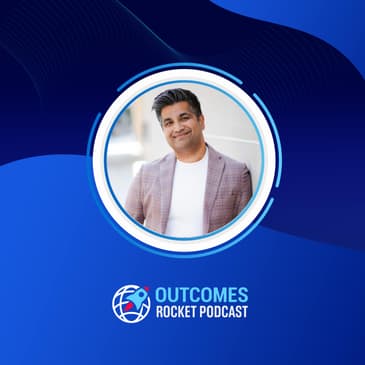
In this episode, Dr. Aasim Saeed, the CEO and Founder of Amenities Health, discusses his mission of improving the healthcare experience by providing a digital front door and patient loyalty platform for health systems. Dr. Saeed highlights the challenges health systems face, including the competition from retail giants entering the healthcare space, such as Amazon and Walmart. Driven by the belief that health systems should offer amenities comparable to those in hospitality, he explains how Amenities Health aims to help health systems enhance patient experience. Dr. Saeed also stresses that healthcare organizations’ primary goal should be the convenience and loyalty of their customers and urges them to compete on these matters, as they are crucial to transforming healthcare.
Tune in and learn how health systems can stay ahead in the evolving healthcare landscape by prioritizing patient experience and convenience!
Resources:
[00:00:01] This podcast is produced by Outcomes Rocket, your healthcare exclusive digital marketing agency. Outcomes Rocket exists to help healthcare organizations like yours to maximize their impact and accelerate growth. Visit outcomesrocket.com or text us at 312-224-9945.
[00:00:29] Hey everybody, Saul Marquez with the Outcomes Rocket. I want to welcome you back to our podcast. Thanks so much for tuning back in. Today, I have the pleasure of hosting Aasim Saeed on the podcast. He is the CEO and Founder of Amenities Health. Dr. Saeed went to Duke Medical School and earned his Master's in Public Administration from the Harvard Kennedy School. Before launching this company, he also worked at McKinsey developing corporate strategies for hospitals
[00:00:59] and then launched a fintech startup acquired by a Fortune 500 company, all prior to launching Amenities Health. Just an extraordinary person, a phenomenal entrepreneur, and super excited to have him here on the podcast with us today. Awesome. Thanks so much for joining us. Yeah, it's a pleasure. Thanks for having me. It's so nice to be in the introduction. Hey, well, you've done a lot of great things and certainly excited for our discussion today.
[00:01:25] But before we do jump into the work that your company does at Amenities Health, I'd like to learn about you. What is it that got you interested in the healthcare space? Well, I think that journey started before I was even born. So I have two physician parents and I am disappointing them actively every day when I do medicine. But that's something I've come to accept and live with. Hopefully they will one day as well. One of the things that you didn't mention, so prior to Amenities, I actually also worked inside of a large healthcare system.
[00:01:56] And so I feel like with everything that you described and with that work as an executive, I'm like the biggest healthcare insider that you could ever imagine for the last decade plus. But I feel like maybe what's a little bit different that inspires me is just I'm also a consumer and I'm just generally outraged at how awful healthcare is. And that's one thing that I feel like often like my colleagues forgive a lot. They're like, oh, well, this is why this is this way. And I'm like, it's just unacceptable.
[00:02:20] And so part of the way, you know, jumping into Amenities and also just kind of my life's mission, professional mission is I want a better experience in healthcare. And despite all the knowledge of what I've learned of reasons why we can't have it, I just I want to do something about that. And I know everybody listening today is like, yeah, absolutely. How do we do it? So why don't we jump in to what your company does to add value to the healthcare ecosystem? Amenities is a digital front door and patient loyalty platform.
[00:02:51] And so digital front door is a term that I think gets tossed around a lot in the industry now. So this is generally meaning apps and websites and other access points for patients to get the services they need, right? So nothing shocking there. We're at Android, iOS and web application. But the patient loyalty part is really, I think, where we differentiate to say our goal isn't just to get you there, but also to help you become a loyal patient or customer to a single health system that is our client. And so we're sort of B to B to C.
[00:03:19] And the reason that matters is obviously we need to work in a business model that works as a startup, a venture-based startup. But the idea that we're really was founding principle of amenities is there's a lot of problems in healthcare. And I'd get reasons why those are problems like cost and choice and transparency and other things. But there's a problem that we're very focused on that we think we can do something about, which is the experience of healthcare. And so what we believe is health systems currently don't compete on experience.
[00:03:47] Fundamentally, they're like, we have brand, we're like prestigious, we're this or that. But they're not like trying to get you in sooner and saying that's how we're going to win your business. We want them to compete on experience because we think that's what changes the experience on healthcare is that, well, I'm in Dallas for a word. So like you pick a Baylor Scott & White because it has an app that you can download and add your spouse and get an appointment in a day, as opposed to picking THR.
[00:04:10] And so we think memberships that we build in the patient loyalty platform are a way to get health systems excited about competing on patient experience. There is a huge opportunity to compete on experience because many don't, right? Many want to put a billboard outside on the street and get Mindshare that way. I think making it easy, as easy as you get an Amazon package, as easy as you get your Frappuccinos is what we're looking for.
[00:04:40] And so talk to us a little bit about how you guys are enabling that and how what you do is different than many point solutions out there already. We are super focused and committed on solving those minor inconveniences, first and foremost. And that means you got to do two things really well. One is you got to be deeply integrated with Epic. And for better or worse, this industry, especially digital front doors in this vertical, have really struggled with that. And there's reasons behind that.
[00:05:10] But that is hard. And we don't have that problem. So again, I mentioned a lot of experience inside of a health system and deeply familiar with Epic. And so, you know, our application starts by registering you into Epic. It is fully integrated. You never have to sign in again to a different thing, a MyChart button that does something else. And that all of your records are in one place. And then we're trying to add other things. So whether it's Zoom, Title Care, et cetera, we're just trying to get these frictions out. And so that's one big thing I think differentiates us in the market that we compete in. Yeah, that's big.
[00:05:39] The second one is our focus. As we mentioned, I think there's a lot of things that are trying to digitize health care. And by the way, again, I was the former customer of many of these during my role at Baylor, Scott & White. And we would have tons of apps being like, oh, we could customize remote patient monitor. We could customize this. We are not trying to solve the worlds of problems in this. We are trying to be very focused on helping health systems acquire new users, new patients, convert them, help them get an appointment, which is what the patient's trying to do. And then lock those people up in memberships because they want to.
[00:06:10] Like they want to give you loyalty because you've exchanged something of value for that. And that's all we focus on. So if you ask us, great, we'd like to do a diabetes program. Great, we don't do that. But we can recommend partners. Oh, you want to do a medication adherence program? Great, we don't do that. But I know exactly which partners to integrate into our platform. We are focused on getting those mechanics out, which is like, I can't like right now, 9 out of 10 health systems literally have a digital front door and app that you can't register for. Like you can't use it.
[00:06:37] They have, like you said, they put up a billboard, they're advertising, they're sponsoring their local football team. But the earliest appointment is only on the website and only eight months away. What's the point of even advertising? We're trying to help solve that problem before we AI something. At the end of the day, you're focused on helping health systems provide extraordinary experiences by getting rid of some of those inconveniences. And those inconveniences are small, but they're big. Not being able to get that appointment you mentioned is something that drives all of us crazy.
[00:07:06] How is it that you guys are able to accommodate that? You know, really kind of from a physician standpoint. Talk to us a little bit more about that. There's a health system in the country that doesn't believe they have an access problem. You know, all of them will say, oh, but our doctors are full. I don't know how we're going to be consumer-centric when you can't get an appointment. If you have more than 100 doctors in your health system, you have 10 appointments available today and tomorrow. And I know that because, again, Bailish Gunn-White said the same thing. Oh, we don't have availability. It's all right. But here's what's crazy.
[00:07:36] BSWHealth.com is the only website in the country today, I think, that you can go there. And when you type in family medicine or primary care, all of the doctors come back sorted by next available appointment. Compare that to the status quo, which every other website you go through, you're just like, okay, here's every doctor alphabetized A through Z. And you're just guessing, well, okay. It's like calling every pizza hut in the area that you live in and being like, do you guys have pepperoni this week? Yeah. And it's insane.
[00:08:04] Like, you just need to either know it's there or you need to sort by the ones that are going to have the earliest delivery time kind of stuff. So, at the end of the day, there are small things that, again, we're just focused on that are not massive AI challenges. It's like, no, we need to organize the data by next available appointment. And we make sure that happens before they do wayfinding, before they do upgrades with content or blogs or recipes or other things.
[00:08:30] We just think, like, getting the core friction out of healthcare and organizing the information so patients can do it self-serve is paramount. What can you tell us about maybe things that you guys run into, maybe a setback that has proven to be a great learning for the way you guys do things? Well, there are numerous setbacks when you live the kind of entrepreneurial life.
[00:08:49] But I think the two biggest that came to me right away was as I was getting started and leaving Baylor Scott & White, which was a wonderful job, wonderful team, and frankly, just a great position in terms of the industry. I set out to do amenities and almost immediately I had lost my first major customer. We had, you know, verbal agreement, but then leadership change changed that answer. I'd lost a co-founder along the way who ended up deciding to stay in the curveball. Those were gut checks. I mean, this is the entrepreneur journey, right?
[00:09:18] I don't like to sugarcoat these types of things. And the question was, what am I doing this for? And am I okay personally if I fail at doing something ambitious versus stay the course and have a great professional career that was on track? And for me personally, that gut check kind of reinforced. And I'm very fortunate. It's always a privilege to be able to be in a position to take a chance like an entrepreneurial endeavor. You have to have family support, financial support, emotional support, all this good stuff. And fortunately, I had all of those things.
[00:09:46] But at the end of the day, for me personally, it was just, is it worth taking a shot at fixing some big part of health care? You mentioned my background. Like, I didn't do all those things to try to make incremental changes. This is about trying to fix something in this health care system. And a big shot on goal is the majority of care is going to be delivered in this country by large health systems. The experience is awful, but I think we can do something about that. And so that's where we're really focused. And that was worth the gut check. And I've been an entrepreneur before, and it's a lonely gig.
[00:10:13] So not for being a solo founder, it was something that I didn't tread into lightly. A guest on the podcast not too long ago, he was talking to us about a book that he's launching. It's called You Can't Tame a Mongoose. And it's this idea that when entrepreneurs get into it, there's nothing you could do to stop them when the successful entrepreneurs get there. Like these gut punches that you mentioned only made you stronger and more committed to the cause and made you clearer about what you've got going on. So that's super inspiring. Really appreciate you sharing that.
[00:10:43] And so now as people listen to this, right, the health systems that are thinking, man, how can I get from negative to back to my single digit profits? What is it that you want to leave them with as they're thinking about ideas and things that they could do to make a difference in their business? One giant trend that we're all seeing is retailers are coming into this market. So Walmart, CVS, Amazon, Costco is the latest entry, right? And that's going to continue.
[00:11:13] If Kmart was still around, they'd have a Kmart clinic, personally. But the idea here is, of course, these folks don't know nearly as much about health care. But they know way more about consumer delight and customer loyalty. And they are not shackled with the barriers of like, oh, Dr. So-and-so said we can't open the schedule. Or Epic is a challenge for integrating X, Y, or Z. Like these are things that they do not worry about because they're starting on the other end. Like what's the delightful consumer experience?
[00:11:40] And we'll fill in as much health care as is necessary type of thing. And that's your competition. And you mentioned earlier. So, I mean, I want them to know that that's the thing you're up against. And for whatever reason, we see some health care systems very attuned to that and say, hey, that's our new competition. Not, you know, so-and-so across the street, other hospital system. But others are kind of like head in the sand that say, and I've had health system CEOs say this to me. Like they don't do what we do. We'll be fine. And I just don't love that answer, man.
[00:12:08] At the end of the day, I think that urgency needs to be there. Because when you realize that the world is at an inflection point, it's too late kind of thing. So you need to assume either you're going to bet on this or not. And then you'd mentioned that the other example I tried to offer them when I described, like, what is loyalty in health care? Because often what we hear from health systems is, well, nobody wants their third surgery for free. So we can't do loyalty. Or Medicare inducement prevents us from doing anything of cash value. Can't do loyalty. And I think we've just been entirely uncreative. I think about my life.
[00:12:37] There was a time, and I'm not every shopper, but I think I'm a lot of shoppers. There was a time where I shopped at Walmart way more than I did Amazon. And what shifted that was two things. Two-day shipping and free returns. Those were the mental blocks of e-commerce that made it way easier. Now it's like once to twice a year I'll step foot in Walmart. And it's probably every week we have an order from Amazon, right? And think about, like, that mental shift and how the world changed. Again, it's clearly not just me.
[00:13:06] And it was locked in a membership. And so that's what we're really committed to is figuring out what's the two-day shipping and free returns of health care that unlocks this idea of a patient to be like, oh, I have to interact with health care again. And to, oh, man, this is so easy. I do this nonstop, and it's a part of my life. And that doesn't mean we want to drive over utilization. But there's a lot of touch points that we all could have to be healthier, better. And instead, we're doing things like, oh, we'll give them a gym membership.
[00:13:34] No health system in the country has the brand permission to give you a gym membership. So, like, these are the types of things where I think amenities, our goal is to help figure out that answer. And it's different by market. So we test it locally. But that's really what we're setting out to do is not just ask for loyalty and wish it happens, but rather figure out what's going to delight a user and do that for a health system with their brand to really ignite that opportunity to shift a mental shift like we did with e-commerce. We moved to Puerto Rico about five months ago.
[00:14:03] And I'll tell you that free shipping and returns doesn't exist here because it's very inconvenient. Two-day shipping. You never realize how much you were missing it until you don't have it. And now I don't buy from Amazon. It's fascinating. And when you're telling me this example, I'm like spot on, you know? And what are those things? So, folks, the challenge here for you to think about is what are those two things? That you could be doing to delight your customers.
[00:14:34] There's a big opportunity. And I also love the way that you named the company amenities, right? The amenities are the things that you love and you look forward to. The pool, the gym, right? Exactly. That's exactly right. Think about hospitality. Like what separates one hotel from another? And it sounds a bit frivolous to say it this way, but what separates one hospital from another? I know health systems would argue we have the best doctors, but the problem is everyone says that. It's not. It's going to be, that's our bet. It's going to be the amenities. The question is, what are the amenities?
[00:15:03] You're obviously not going there for the pool. Folks, definitely something to think about. So we have an opportunity to think about what those amenities will be. What will you do? Otherwise, the disruption is here. If you don't do it, the players that are coming in will. So at this point, I'd love to just give you the last word here. Awesome. What is a closing thought you'd like to leave the listeners with and the best place they could reach out to learn more? Yeah. Well, I'll start with the second one first. So they can reach out.
[00:15:31] Check out the website, amenitieshealth.com. My email is simple. It's awesome at amenitieshealth.com. And so happy to take inbound or anything on this topic, whether you're a partner, whether you're a health system, whether you're maybe even an insurer thinking about this type of stuff. You know, we'd love to engage. But the parting thought I'd give is often, this gets cited numerous times, so forgive me for being a bit cliche, but like this Kodak moment. Like how do health systems make sure they're not the Kodak of our generation?
[00:15:58] And the thing I try to remind them is Kodak is literally where the digital camera was invented. They had one of the first digital cameras. And this people, I don't remember either, but I had to look it up. They also had a photo sharing website. And so it's not like they didn't dabble. And that was the problem, or that's my lesson from it, which is they failed to realize that like sharing your photos online was the new business, not just a way to dabble to get their old business at Prince, which is what they were really doing.
[00:16:26] And the same thing I think of when I tell health systems, I think you're missing out. Convenience is the business you're in. It's not just a facet of like, can we continue to prime the pump and feed the surgeries and the ICU? Those things are going to happen. Amazon doesn't want to take away the ICUs from you or the other things. But once they own the patient, convenience is the game you're playing now. That is the new business. And you just need to figure out how to do that well. And then continue doing the stuff that you already do well, which is run the health systems, et cetera, the hospitals.
[00:16:54] So that's the kind of cautionary tale that we try to translate into health care. I want to thank you for challenging us to think more creatively today about the service and the convenience we offer patients and members. I really appreciate you taking the time to be with us. And folks, make sure you check out Amenities Health. We'll leave their contact information in the show notes. So make sure you check that out. Thank you all for tuning in to today's podcast with Dr. Asim Saeed.
[00:17:23] Asim, thanks so much for being with us. It's been a pleasure. Thank you for having me again. This podcast is produced by Outcomes Rocket, your healthcare exclusive digital marketing agency. Outcomes Rocket exists to help healthcare organizations like yours to maximize their impact and accelerate growth.
[00:17:51] Visit OutcomesRocket.com or text us at 312-224-9945.