
Mental health support is most effective when people can reach it before their hardest moments.
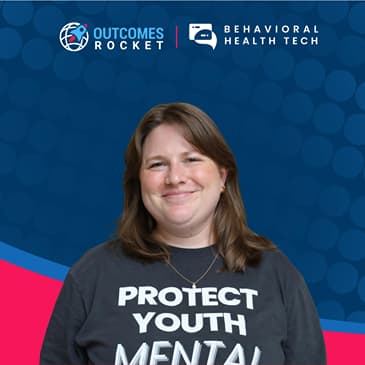
In this episode, Jana French, Public Sector Partnerships Director at Crisis Text Line, talks about how text-based support can make crisis care more accessible. She explains that people can text 741741 or 988 for more than suicidal thoughts, including anxiety, grief, relationship challenges, and other difficult moments. Jana also shares how Crisis Text Line brings together trained volunteers, clinical supervision, and technology to support people across the country, while giving volunteers valuable communication skills. She discusses the role AI can play in triage and in spotting broader trends, while emphasizing that human connection remains at the heart of crisis support.
Tune in to learn how low-barrier, human-centered crisis support can help people get care when they need it most.
Resources:
- Connect with and follow Jana French on LinkedIn.
- Explore Crisis Text Line and learn how to text 741741 for free, 24/7 mental health support.
- Learn about the 988 Suicide and Crisis Lifeline.
[00:00:01] [SPEAKER_00] Welcome to Expanding Access, a podcast by Behavioral Health Tech, where we explore the cutting edge of mental health, substance use, and autism and IDD care. Each episode features insightful conversations with industry leaders who are driving real change through technology and innovation. Whether you're a provider, payer, or just passionate about expanding access to behavioral health care, you won't want to miss these stories. Let's dive in.
[00:00:30] [SPEAKER_00] Hello, everyone. My name is Solomay Tibibubu, and I am so excited to have Jana French here with us. Thank you for joining. You've such an amazing background, and I can't wait for everyone to hear about the work that you and your team are doing. Why don't we get started with just some introductions and how you got into this space?
[00:00:50] [SPEAKER_01] Sure. Yeah, so hi, everyone. My name is Jana. I am the Public Sector Partnerships Director at Crisis Text Line. We are a national nonprofit providing free 24-7 mental health and crisis support via text here, also in Canada, the UK, Ireland, and across the Global South. It's really funny, Solomay, when you asked me how I got here, because I've been at Crisis Text Line for about seven and a half years now, but I actually started out in journalism. That was what I went to school for.
[00:01:15] [SPEAKER_01] I worked in it for a little bit up in New York City here, and pretty shortly in decided that I wanted to be doing something that could be making a difference, and started working at a regional addiction agency called Phoenix House here, really helping people understand what their treatment model is and who might be best served. And then found my way to Crisis Text Line, where I've really found a niche in being able to help people understand what crisis services are,
[00:01:40] [SPEAKER_01] what they can be used for, and kind of demystify a lot of misconceptions that people have about what can happen. We can provide so much support to people, even in moments that seem like small crises, that then are going to prevent people from having bigger ones down the line. And so I'm excited to be here.
[00:01:58] [SPEAKER_00] Amazing. And I'm just such a fan of the incredible work that the Crisis Text Line does. I mean, your team, you've just helped so many. And if you could say a little bit more, your role is unique and interesting. Public sector partnerships. What actually does that mean?
[00:02:16] [SPEAKER_01] Yeah, so it is interesting. It sometimes feels a little made up, but it's definitely something that has come up more, I would say, in the behavioral health field over the last few years, especially in the crisis field, like as funding has increased, thanks to the federal work with 988. Basically, I'm sitting at the intersection of government relations and strategic partnerships. So being able to manage what's going on at the federal level with SAMHSA, with innovation in the crisis continuum,
[00:02:45] [SPEAKER_01] while also trying to help figure out how Crisis Text Line can be supportive to these initiatives, either as providing backup text and chat, like what we do nationally for 988, or at a state level, we're the primary text and chat center for the state of Delaware, or figuring out how our research and insights can be really helpful to policymakers as they figure out how to support the mental health of their communities.
[00:03:07] [SPEAKER_01] So my work consists of a lot of meetings and conferences where I'm able to tie together what people are looking for and what they need with what Crisis Text Line is able to offer.
[00:03:20] [SPEAKER_00] Amazing. And I'm definitely going to ask you more about that. Crisis Text Line, for those who aren't familiar, has supported millions of people in moments of crises. What have you learned about barriers that are preventing people from seeking help? And basically, how can we make mental health support more accessible before someone reaches that crisis point that you mentioned earlier?
[00:03:43] [SPEAKER_01] Yeah. So, right, we had 1.5 million conversations in 2025. That is mostly through our number 741-741, which we've been operating nationwide since 2013. But then also some of that is from our work with 988. And the thing that I think was the most surprising to me when I joined Crisis Text Line a while ago was that most people are reaching out to us for things that you might consider like everyday bad days. So, I'm having anxiety because I have a big test tomorrow,
[00:04:12] [SPEAKER_01] or I'm in an argument with my boyfriend, and he's normally the person that I talk to when I'm in an argument with somebody, but I can't talk to him because he's the one I'm mad at. Who am I going to talk to? Or even things like grief. We're all going to experience grief at some point in time. It's part of the human experience. And that's what a lot of people reach out to us about. I think coming in, and I hear this a lot from people that I just talk to in the world, they think, well, you have to be thinking about suicide.
[00:04:40] [SPEAKER_01] Or you have to be thinking about something so serious or so heavy in order to ask for help. And that's not the case. Crisis Text Line, 988, other services like us, we want you to reach out to us for what might be your everyday crises. You know, if it's a crisis to you, it's a crisis to us. Because we know that if we can help you with a panic attack that you're having before a job interview, and you feel like you have somebody in your corner,
[00:05:09] [SPEAKER_01] that's going to help you, if you ever do find yourself in a more serious crisis, know that you have resources available, or prevent that panic attack from ruining the rest of your day, or having it spiral out of control. I think the other thing that we often hear a lot is like, who's answering this? And I always like to say it's people in communities. It's people like me and you who are handling these conversations. There's a lot of misconception that like, oh, as soon as you call 988, it's the same as calling 911.
[00:05:39] [SPEAKER_01] It's the police. And that's just not the case. It's going to go to a crisis center in your community or nationally, that's going to be able to help you out, either just through listening and helping you find something to help you calm down, or connecting you with services if needed. Yes, anyone could benefit, really.
[00:05:57] [SPEAKER_00] Which, can you clarify, do you support both youth and adults?
[00:06:01] [SPEAKER_01] Definitely, yeah. We have people who text us younger than the age of 13, older than 65. And we know that from a post-conversation survey, that about 20% of our texters fill out. They share with us how they think we did, how they feel now that the conversation is over, and demographic information. So we know that about 70% of our texters are under the age of 24. And that is pretty unique for a text and chat service compared to a phone service. Generally, especially with 988 having relaunched the Suicide Prevention Lifeline in 2022
[00:06:31] [SPEAKER_01] with a shorter number and adding in text. Previously, a lot of people using the Suicide Prevention Lifeline were older. They weren't very young people. They weren't in high school or college. And that was really why Crisis Text Line got started all those years ago. Our founder was working at Do Something at the time. She had founded that organization as well, and was getting young people texting back to volunteer campaigns saying, hey, actually, I need help. Can you help me?
[00:06:58] [SPEAKER_01] And they thought of Do Something as a trusted organization. So that's why our founder decided to start Crisis Text Line. And our service has always been text first. So we are very used to, like, I think a lot of people hear like, oh, well, you're not going to hear their tone of voice or hear what's going on in the background. And we're used to that. We know what it's like to just get the words and take them for what they are and also be able to understand a little bit about what might be going on behind them.
[00:07:27] [SPEAKER_01] I would say, too, that a lot of our conversations, like I mentioned, are things that when you're 15 can feel like the world is ending. Your first breakup, going to prom, college decisions, like things that, I mean, I don't know about you, but I'm getting, like, goosebumps thinking about those moments again. And those are the kinds of things that can really be detrimental to a young person if they don't have the support for those times. Or if I remember people in my life being like,
[00:07:57] [SPEAKER_01] oh, you're just a teenage girl. You'll get over it. Things feel so dramatic right now. Well, that doesn't help me because things do feel so dramatic right now. And whether I know that this is, like, a silly thing to be upset about or not, doesn't matter. I'm upset. And so that's really what we see more of than the suicide prevention lifeline really before the shift to 98 was very much about connecting to services or looking for resources in a community.
[00:08:19] [SPEAKER_00] I didn't realize about the story coming together and the founding. Just amazing. And really meeting a huge need. Jana, I'd like to ask something that I tend to ask a lot of our guests, and I think you'll relate. And that is, I understand that your model combines technology with trained human connection. So what does Crisis Text Line's experience really teach us about where tech can expand access to quality behavioral health care,
[00:08:49] [SPEAKER_00] but where does that human connection really remain essential?
[00:08:53] [SPEAKER_01] There's a couple of pieces there that I think are really interesting. The first is that we've always been a completely remote organization for our line. When I started back in 2019, we had an office in Manhattan that, like, I went to and our CFO went to. But our volunteers who are answering the conversations have always been remote, as have been the clinical supervisors overseeing those conversations. So since 2013, we've been able to use technology to really cover nationwide and help people as fast as they need it.
[00:09:23] [SPEAKER_01] Through the platform that we've built, we are able to train volunteers who can be anyone across the country. It doesn't matter their background. They just have to be 18, and they have to complete our training. The training is about 15 hours, self-paced, and it covers things like active listening, empathy, cloud of problem solving, and risk assessment. The basic kinds of communication skills that you need to help somebody in crisis, but then also that you need to be a good friend, to be a good employee,
[00:09:52] [SPEAKER_01] to be a good partner, to be a good citizen and a good community member. So we've been able to really expand through technology, teaching those skills to people, and then they take conversations on our platform and really put them into action. And why we can do that is because the platform allows our clinical supervisors to oversee the conversations in real time. So let's say a volunteer has a conversation with somebody who is in it having an active suicidal plan.
[00:10:21] [SPEAKER_01] That's going to get a much higher look from our supervisors, and they're going to be the ones to say, okay, this is how we're going to de-escalate this person, or if we're not able to de-escalate what we're going to do. It does require more expertise. Or if the volunteer is newer, and they're a little bit unsure about how to talk to this person who's maybe dealing with an eating disorder, the supervisor is right there in the conversation with them to really help them navigate. And if they get stuck, give them advice. It also has helped our volunteers connect with each other and learn from each other.
[00:10:51] [SPEAKER_01] So what we've actually found, and what we started tracking over the last few years at Crisis Text Line, is that our service, while we have been tracking that we are helping texters and people who are in crisis, we're actually helping the mental health of our volunteers as well. So not only are they able to get the skills that they need to be good communicators, they are getting help with their mental health. What we know is that we're not only just helping them
[00:11:20] [SPEAKER_01] with getting these communication skills, we are also helping their mental health. So we found that 98% of our volunteers can provide mental health support outside of volunteering. So they're helping people in their community, they're talking to friends who are going through hard times, and helping them de-escalate without needing to use Crisis Text Line, without needing to use a doctor, or anything like that. We know that 91% can de-escalate tense situations outside of volunteering, and 95% said that they spread the knowledge to help reduce the stigma
[00:11:49] [SPEAKER_01] around reaching out for mental health help. And that's all just from volunteering with us, which we're able to do, like I said, because of the platform that we built. So that's one way that we've really been using technology to make sure that mental health help doesn't always look like getting into a car and going somewhere or getting into a therapy session, but being able to rely on the people in your lives for some support as well.
[00:12:14] [SPEAKER_00] That's so great and makes me want to get involved and definitely going to be asking you about how folks in our audience can do that. But of course, I can't not ask you about AI and other tech that are really reshaping this space, but what do you think is that we need to get right to really ensure that innovation expands and gets to the people who need it while also preserving privacy and safety and trust and all these other things
[00:12:43] [SPEAKER_00] that people are concerned about when it comes to artificial intelligence?
[00:12:47] [SPEAKER_01] Yeah, I think that a day doesn't go by where somebody doesn't ask me about Crisis Text Line or thoughts on AI and just thoughts on AI in therapy and mental health in general. And I think that there are some really good uses for it. I will be the first person to say that when I'm having a spiral, sometimes I chat with Claude and he, you know, it's like, hey, you know, he sounds like you're spiraling again. Like, let's put the phone down, which may have been different than what the experience was
[00:13:16] [SPEAKER_01] when generative AI first came out. But AI is a broad umbrella of tools. I think that's something that people kind of forget about. So there's two ways that Crisis Text Line uses AI that I think are really good examples of how other services or how behavioral health systems can embrace it. The first we've been doing a long time, I want to say since 2018, we've had a triage algorithm that helps us with our queue. So people, when they text into us, they get an automated message
[00:13:45] [SPEAKER_01] that first lets them know that they've connected, it shares our terms of service, and it asks them, what's your crisis? That next message really tells us a little bit more about what's going on is run through this machine learning algorithm that we built, and it's looking for words that people use when we know that they're at most imminent risk. And so if somebody is using one of those words, they're going to go right to the top of our line if there is one, so that we can make sure that we help those folks where it's time is of the essence. If you're texting into us at a very dark moment, then we're going to make sure that we get to use as fast as we can. If you're texting us about finals, we know that that might be a little bit less of an imminent crisis
[00:14:15] [SPEAKER_01] and a minute or two doesn't feel as long as it might for somebody else. The other way that we're really using AI is through natural language processing. So we have an entire research and impact team at Crisis Text Line that looks through the conversations that we're having at 741741 to identify trends that we're seeing among different populations. So we released a report in May about how boys and men are using Crisis Text Line. And there's a lot of great information in that report, but the one
[00:14:44] [SPEAKER_01] that really stands out to me that I didn't expect was that one in three boys under the age of 14 were discussing thoughts of suicide with us. And that's high. I mean, about 20% of our conversations in general talk about suicide. And that's not, could be, they don't have a plan or somebody in their life is thinking about it. It doesn't always mean that somebody is talking to us about wanting to do that. But that's what we were noticing among the boys. And that was pretty startling for me
[00:15:13] [SPEAKER_01] even with all of the years that I've been working on this. I definitely recommend reading that report. There's a lot of good information in there about how boys and men really are reaching out to Crisis Text Line in a way that may seem different from what traditional mental health services are equipped to screen for and look for and help with. So those are two ways that, you know, when I think about AI and mental health, it can be scary if we think about where we're going to replace all the therapists in the world. I don't think anybody
[00:15:43] [SPEAKER_01] really wants to do that. And that would be terrifying because we already get at Crisis Text Line the question, you know, are you a bot? Am I talking to a real person right now? And we've been saying no for forever, but how do we bust that myth? And that's by being up front about how services use AI, how Crisis Text Line uses AI. And then one other thing that we've been able to track, our research and impact team has been able to track is the points at which people feel like we're showing genuine concern for them in our conversations.
[00:16:14] [SPEAKER_01] So genuine concern is obviously not something that an AI can have. It doesn't have concern. It doesn't have, it's not genuine in anything. But humans are. And that's where that human-to-human connection is so important because when you feel like somebody else has seen you and somebody else has provided that help to you, I mean, we get text or feedback in our post-conversation survey. People just leave, you know, comments about how they felt after the conversation was over. And when I read those and see about, hey,
[00:16:43] [SPEAKER_01] this person made me feel like no other person has made me feel before or I didn't realize that I could get help for this issue, which is some of the themes that I see a lot when I'm reading them. And it's, that's where the human-to-human connection is important and what can't, AI can't replace that.
[00:17:00] [SPEAKER_00] Such great points. And that is just an astounding statistic. Wow. Leads me to my next question, actually, which is, what can our audience do and how can we get involved with Crisis Text Line? How can we support?
[00:17:15] [SPEAKER_01] Yeah, so I think there's really a couple things you can do. I would say the first thing is making sure to save 741, 741, and 988 in your phone. We are pretty complimentary services, so both are really helpful. You never know when you're going to need it. You never know when somebody in your life is going to need it and it's just helpful to have it there. And make sure that people know that they can reach out to us really for anything. I think that that's like the biggest stigma that we need help busting as a community. Like I mentioned, anyone can be a volunteer, so you don't have to have
[00:17:45] [SPEAKER_01] a social work degree, you don't even have to have any degree. You could be in school right now. If you just are curious about helping other people and want to learn more about mental health, you can volunteer, you can sign up on our website. It's an open application, so there's not like a time frame or anything. And volunteering is done 24 hours a day, seven days a week, whenever is convenient for you. And then the third thing I would say is to always check back on our website about the research and insights that we are putting out because we don't just want to like have all these
[00:18:14] [SPEAKER_01] conversations with people in crisis and keep them in a bucket and say, okay, this is what's happening. We want to be able to look at them and say, this is what's happening in our country related to mental health. And then what can policymakers, what can communities, what can school boards, what can, you know, any group of people who wants to make a difference in their community, what can they do to support the people of color in their lives, to support the men in their lives, to support the young people in their lives?
[00:18:42] [SPEAKER_01] We have a really good report that we put out a few years ago about what young people told us they wanted from their communities when they were in crisis. And a lot of the times it was things like being able to go outside and participating in sports or after school activities or art, things that I know were really helpful for me when I was younger and that I use today as an adult, but people have less access to now. We have a report coming out in the next two weeks about how rural people, people living in rural communities, are using Crisis Text Line
[00:19:12] [SPEAKER_01] compared to people living in non-rural areas. Knowing that that's a big topic, those are huge shortage areas for mental health workers and mental health resources and then also with the Rural Health Transformation Program that was launched as part of HR1 that there's a lot of eyes right now on how can we support the living in rural communities. So I'll be sure to share that report with you when it is out.
[00:19:36] [SPEAKER_00] And yes, we're excited to include that report in the upcoming Behavioral Health Tech newsletter. Make sure you're subscribed. And yes, everyone, I really encourage you to go check out crisistechsign.org, take advantage of these incredible resources that Jana has mentioned, and meet their team at the Behavioral Health Tech Conference coming up. Really excited to have you. Thank you for that. I can't wait. Awesome. Thanks so much, Jaina. Pleasure speaking with you. Thank you.
[00:20:05] [SPEAKER_01] Likewise.
[00:20:10] [SPEAKER_00] Thanks for tuning in to Expanding Access. We hope you're feeling inspired by today's discussion. If you've enjoyed the episode, subscribe and share it with your network. For more content and opportunities to get involved in transforming care, visit behavioralhealthtech.com. Until next time, let's keep pushing boundaries and expanding access together.