Strong healthcare businesses are built on strong relationships, collaboration, and a shared commitment to advancing the industry.
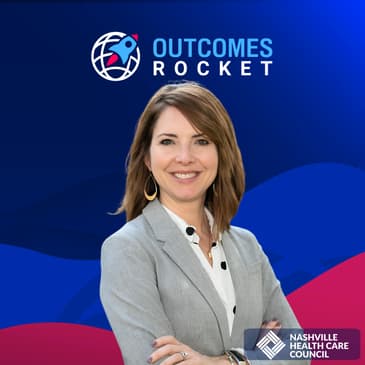
In this episode, Apryl Childs-Potter, CEO of the Nashville Health Care Council, discusses how Nashville evolved into one of the nation's leading healthcare hubs through the growth of healthcare companies, investors, and specialized service providers. She explains the Council's role in connecting industry leaders through year-round programs and its relationship-focused Sessions conference. Apryl highlights how these initiatives foster candid conversations and meaningful partnerships across the healthcare ecosystem. She also shares how bringing leaders together in trusted environments helps drive collaboration and industry-wide problem-solving.
Tune in to discover why Nashville has become the Healthcare City and a leading destination for healthcare innovation and collaboration!
Resources:
Connect with and follow Apryl Childs-Potter on LinkedIn.
Follow the Nashville Health Care Council on LinkedIn and explore their website!
Learn more about the Nashville Health Care Sessions conference at NashvilleHealthcareSessions.com.
[00:00:03] Hello everyone and welcome back to the Outcomes Rocket podcast. I'm thrilled to be spending some time today with Apryl Childs-Potter. She's the CEO at the Nashville Health Care Council. I don't know about you guys, but it just seems like in healthcare, all roads lead to Nashville. And I'm so thrilled to be chatting with Apryl because she sits at the epicenter of it with the council.
[00:00:30] And so in today's episode, we're going to dig into Apryl's role and really what the council is up to. And you guys need to know about this council because it's just amazing. So April, grateful to have you join us. I'm excited to be here and I love the intro. We do like to say Nashville has an incredibly rich history in healthcare. If you want to get the sort of origin story of the council,
[00:00:53] in the mid-90s, the council was created as a effort by the city and the Chamber of Commerce at the time. And the idea was Nashville had a really strong country music scene, which it's well known for. A really, absolutely amazing. It was even different then. It's even bigger now. And then an incredibly building tourism industry.
[00:01:14] But in terms of other industry sectors, there weren't as many strong clusters. And part of the city's first partnership economic development plan created this identity around building out a really dynamic healthcare cluster. That's because there were some strong healthcare companies here. The most notable, the founding of HCA happened, of course, in the late 60s and sort of a little known maybe, or maybe it's well known in Nashville, certainly.
[00:01:42] I think it's the class of maybe 1986. His executive team went on to found an incredible number of healthcare companies that spun out. And sort of the legend goes that HCA, instead of doing what a lot of companies do, which is, when your leaders leave to start their own companies, you throw a non-compete at them or you shun them. But HCA invested in those companies and those companies stayed in Nashville and they flourished.
[00:02:09] And so by the mid-90s, there was a clear opportunity for Nashville to really build on this sector of healthcare. The council was created and the idea was, how do we get leaders of these companies, even though some of them are competitors at the time, to come together and really talk about what is necessary to make Nashville a location of choice for more healthcare companies to operate here.
[00:02:34] And what's really incredible is that today there are more than 900 healthcare companies with millions. It's a big number. That's just what we can count. And I'll tell you, those numbers don't accurately capture all of the health tech that is here or all of the investment. So it's really those healthcare companies. And then what's also really incredible is all of the support services, the service providers that over the years developed really specialized expertise,
[00:03:00] the law firms, the accounting firms, even architecture firms, that really, because they were here in Nashville, grew with these companies. And so if you were doing a transaction, buying a hospital anywhere in the world, your attorney is likely connected back. If they're not sitting in Nashville, they probably trained at a Nashville law firm. And so that specialized expertise further grew the industry and the expertise brought incredible economic opportunity to the city.
[00:03:25] And it's really helped build the skyline that if you come to Nashville today and see is pretty incredible. The council is still around and our purpose has shifted over the years. We think that we used to say we want Nashville to be known as a healthcare capital. We think we've checked that box. We're more ambitious today. We say we want Nashville to be known just like it's known as the music city. We want it to be known as the healthcare city. For us, that means we want this to be the best backdrop in the country for healthcare companies, talent and investment to thrive.
[00:03:55] We think being an epicenter for the types of connection building and conversations that really move the industry forward makes what we do really a unique opportunity and it builds on our legacy. Yeah, that's fantastic, April. Thank you so much for that history. It's a rich history and fascinating too. And yeah, even like the infrastructure too. You guys have all these amazing conference centers. So like it's a natural place for meetings to happen. It is.
[00:04:23] I'll tell you what's incredible to me is how I think this is an excellent business city. I always say Nashville is led by the business community. Middle Tennessee is led by the business community. And so there's quite a bit of thoughtfulness that goes into setting big goals. You see that with the kinds of conferences that we're able to attract 20 years ago. We weren't hosting the kinds of conferences that we can host today, but we've built out that infrastructure. We recently announced we're going to host a Super Bowl in 2030. Yeah, I heard about that. That's insane.
[00:04:53] It's a little amazing. Just the coordination that is required to get from where the city was 15, 10, 20 years ago, 10, 15, 20 years ago to where it is today. You've got to have the right number of hotel rooms. You've got to have all of these assets. And Nashville's done a great job of building out the backdrop to be a hub for not only the kinds of events that like the big healthcare conferences that we host, but also all the ancillary fun things you can do in a city around those conferences. So it really makes it a great destination.
[00:05:24] I love it. You guys have the Sessions conference coming up. Tell us a little bit about that meeting. And in fact, I learned about you guys through a client of ours, Bo and the Evidence Care team. Talk to us about Sessions. Absolutely. Well, Bo and Evidence Care team are great. They're a vital part of our organization and a great example of companies that are growing, right? A company that's growing. Sessions is a really unique gathering.
[00:05:48] We like to say that the middle of September is the annual pilgrimage for healthcare investors, healthcare company leaders. Anybody who's doing deals or making big decisions in healthcare should come to Middle Tennessee to Nashville during this week in September every year. This is our fourth year to put the conference in the week together. We like to describe it as sort of the South by Southwest of healthcare.
[00:06:11] So the conference itself happens this year, September 13th through 15th at the Country Music Hall of Fame, which we think is an incredible venue. Love the venue. Just it's so modern and well laid out. Yeah, absolutely.
[00:06:25] It's not really the backdrop for a typical healthcare conference, but what we find is that it creates this really inspiring way of offering people opportunities to collaborate because it's got such a rich music history and it's that vibe of people getting together and figuring out a song. The same thing happens with healthcare opportunities here. People start talking about the potential of their company's partnering or the technology they're working on and how it might fit into another person's business model. It's really exciting.
[00:06:54] So the conference itself, the idea was we would bring together about 1,200 healthcare C-suite executives, decision makers, policymakers, and investors, and really put together a business, a neutral business of healthcare agenda to talk about the big things that are driving the industry. And so the conference itself has a really unique format.
[00:07:18] There are eight big stage discussions on the significant topics that we think are really driving the industry. You're hearing directly from these top-level executives in these really candid conversations about how they're thinking about all these opportunities and the partnerships. I think one of the things the council does really well across all our programming is put together panels and discussions with varying viewpoints. So you're not just hearing a sales pitch or a commercial. I love that.
[00:07:47] Not that at all. You're getting some real meaty discussion with people with different views on things. And so it's really great for the audience because they get to understand. And so those big discussions then lead into some breakout sessions as well as some really curated small group roundtable discussions and executive exchanges that give us a lot of different levels within the conference for different groups to get together and get to know each other. That's an underlying idea behind everything we do.
[00:08:16] We think that strong businesses are built on strong relationships. And so I think unlike other organizations, when you come to our conference, you don't see any vendor booths. You don't see a bunch of sales pitches or finance decks going through all the financials. It's really built to be a relationship-centric opportunity.
[00:08:33] And then our team is really tasked with making sure that the people that come into the conference who aren't already part of the council network feel that sort of what I like to call southern hospitality, that we come in and introduce people, make sure we're making people, offering them connections, and helping really curate those relationships, creating a backdrop for that. So all of that happens just within the conference walls.
[00:08:56] But what we think is really exciting, even though we're only in year four of this conference, now there are more than 30 other events that are popping up as sidecar or associated events of the conference. So you can truly spend the entire week in Nashville and get to see and meet lots of different kinds of people. Another bonus this year is that Be Tennessee, which is the state's entrepreneur partner program, also has their conference during Sessions Week.
[00:09:22] And so we have a whole other kind of level of entrepreneur and investor here. So we're quite excited about it. That's fantastic. So April, while Sessions is happening, it's somewhat like JP Morgan, right, in San Francisco, where there's all these other conferences happening around it. That's what's happening? I think that's a great model example. Absolutely. We're not a finance conference. There are some finance conferences happening alongside this conference. We're all about the relationship side of it and the problem solving.
[00:09:52] But yeah, I think that model's pretty similar. Got it. Yeah, minus the finance. Minus the finance direct. Barclays is a partner and they have been a great partner to us each of the years. So they certainly bring a finance perspective. We have lots of investors who speak. I use the South by Southwest analogy because I think there's a lot of really fun things that happen. That's right. And I like to say we have a little bit less of a traffic challenge than San Francisco. Amen to that. You have to deal with all the rain in January, right?
[00:10:21] Because that's also obtaining the budget. So first, free weather. Man, this is awesome. And help me understand this, April. So there's obviously the Nashville community. And then there's the healthcare community across the U.S. What's your view on should they attend versus not? Give me your take on that. Yeah, I think a misnomer is because we're the Nashville Healthcare Council. I think sometimes people think you have to be part of the council to be part of sessions.
[00:10:48] Sessions is for the entire healthcare community. Even within the council's membership, about 38% of our companies don't have a physical office in Nashville. They just are there's so much value in our network that they continue to participate well beyond just the sessions conference. I would say our attendance. The interesting thing about sessions is that in each of the three years, we've added members to our council network who come to sessions, get to know us and think, hey, I want to be part of this year round.
[00:11:18] So about 40%, roughly 30 to 40% of the attendees at sessions are not affiliated with our network at all. We have quite a bit of, particularly from a finance perspective or an investment perspective, lots of different people from lots of different areas of the country participating. Thank you so much for that. It's helpful contacts. And for everybody, everybody listening and watching this, check it out because listen, I didn't know. Now I do. I'm going this year.
[00:11:45] And it's certainly one that I feel like is going to be on my annual must go. And it sounds like membership goes up when the conference happens. It does. We have quite a few. I mean, we run this conference. This is our new, probably our newest large signature program, but we run over 100 programs throughout the year, including our council fellows program, which Bo Bartholomew is an alumni, as well as Amy Deaton from Evidence Care. That program has produced more than 400 alumni. Those leaders are leading companies across the country.
[00:12:13] It's a really impressive program that was started by Senator Bill Frist 15 years ago. And the intention of that program is to bring leaders from across healthcare, from across the country. They don't have to be council members. We identify about 30 of them every year to put through this fellowship program. And that's another way that people engage with us. They get to know the council through that program. And then they typically bring their company in and stick around. And you said the conference is a secret, has sort of a good secret that people are starting to find out about.
[00:12:42] I think that council falls into that category in general. We don't do any advertising, but we get people coming into the network naturally because there's such great word of mouth about our programs. April, I'm glad we're putting a megaphone on the council and the conference and everything that you guys do on today's episode. We're here at the end, but is there any call to action, any landing pages you want to send folks to as we wrap up? Absolutely. So you can learn more about the conference at NashvilleHealthcareSessions.com.
[00:13:11] And you can find out the agenda actually drops next week. So you're right on time for that timing. And then if you want to learn more about the council and our programs, you can visit HealthCareCouncil.com to learn more. There you have it, folks. It's such an incredible opportunity to speak with April today. So I hope you got major value out of it. In the show notes, we're going to have all the ways to get involved in the conference, in the council, and certainly ways to get in touch with April. Thank you all for tuning in.
[00:13:41] And April, thank you so much for doing this with us. Paul, thanks for having me.