The future of senior care is here—and it’s powered by technology, personalized support, and the strength of strategic partnerships.
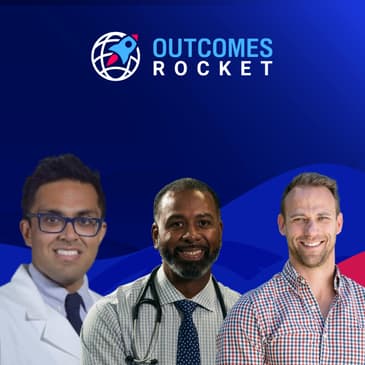
In this special episode, we’re joined by three visionary leaders transforming the way seniors receive care: Dr. Ali Khan, Chief Medical Officer for Medicare at Aetna; Dr. Marc Watkins, Chief Medical Officer at Kroger Health; and Brian Urban, Head of Commercial Strategy and Population Health at Best Buy Health. Together, they explore how technology, access to nutrition, human-centered design, and collaboration can solve some of the most pressing challenges in senior care.
Dr. Khan emphasizes building ecosystems that blend tech with human touch, from broadband infrastructure to virtual PT with language support. Dr. Watkins highlights the role of pharmacists and retailers in delivering smarter, more accessible care through food scoring systems and telehealth integration. Brian Urban explains how smart home devices, personal tech support, and AI are helping seniors live safely and independently—while reducing social isolation and hospital visits.
From personalized nutrition to AI-powered care delivery, tune in to discover how these cross-industry leaders are taking bold action to build a more connected, compassionate future for aging adults!
Resources:
[00:00:01] This podcast is produced by Outcomes Rocket, your healthcare-exclusive digital marketing agency. Outcomes Rocket exists to help healthcare organizations like yours to maximize their impact and accelerate growth. Visit outcomesrocket.com or text us at 312-224-9945.
[00:00:30] Hello, everyone, and welcome back to the Outcomes Rocket. Saul Marquez here, and I'm so excited for today's very special episode. We're going to be talking about next-generation technologies and health services that are advancing the health of the aging senior population. I've got an incredible panel of guests today, and I want to introduce you to them. First, I want to introduce Dr. Ali Khan.
[00:00:55] He serves as the chief medical officer for Medicare at Aetna, a CVS company, where he focuses on enhancing clinical outcomes for older adult members. He previously held the role of chief medical officer for value-based care at Oak Street Health, and is a faculty member at both Yale School of Medicine and also Northwestern's Kellogg School of Management. We also have Dr. Mark Watkins with us, who serves as the chief medical officer of Kroger Health.
[00:01:25] He's overseeing the strategic direction and clinical programs across more than 2,200 pharmacies and over 225 The Little Clinic locations. Before joining Kroger in 2015, he served in various physician leadership roles at Concentra Health Services and completed eight years of active duty as a senior medical officer at the U.S. Navy.
[00:01:49] And finally, Brian Urban, who is the head of commercial strategy and population health at Best Buy Health, where he leads initiatives to integrate technology into healthcare solutions. He's previously held leadership roles in the payer space, including various roles integrating technologies to enable healthcare, serving the elderly and also frail populations for aging while at home. He also teaches population health strategy at Dartmouth College School of Medicine.
[00:02:18] With that warm intro, I just want to say welcome to the podcast, gentlemen. Great to be here. I'm glad I snuck in on this one. This is great. Pleasure to have you guys. Let's kick it off. To begin with, I want to hone in on the innovations part of what is happening in senior care. And so to kick us off, Dr. Khan, talk to us about what you're up to. Aetna has been a leader in Medicare Advantage plans.
[00:02:44] How do you see next generation technologies reshaping care delivery for seniors, especially in remote monitoring and telehealth? Yeah, Saul, it's a great question. And I think we've got a really rich panel here that's probably going to dig in on more just boilerplate here. I think stepping back for a sec, we in the Medicare Advantage world, and I think across for any patient that any of us take care of, really have to be anchoring at this moment on like, what does it mean to drive clinical excellence? And particularly clinical excellence at the last mile, right?
[00:03:13] And so I think what we see now emerging from especially the last five or five to 10 years, from what we've learned from a telehealth perspective, what we've learned in remote patient monitoring, what we've learned with wearables is that it's not enough to just deploy a technology, but it really isn't around how are we connecting that into an ecosystem and making sure like really critically that we get the kind of follow through, right? So if we've done the work of implementing a remote patient monitoring system focused, let's say, on heart failure, right?
[00:03:39] And like we've picked the right partner that is and has the kind of capabilities to generate the kind of recommendations that are needed in real time about like adjusting somebody's medications because they've got a little bit too much fluid on them or that they need something else going on because their labs show like something a little bit more concerning. How are we not just like receiving that signal as a health plan or as a risk-bearing entity, but then how are we actually connecting the dots proactively to make sure that potentially the Best Buy team is there on site, right?
[00:04:07] Like figuring out with an acute care partner at home how to triage somebody if they feel they need more of a higher level of care, or if it's something a little simpler, right? How are we making sure that the dots connect back in? The simple stuff around like prescriptions getting into Kroger, but then that ecosystem emerges to make sure meds are delivered in a timely manner, that people are followed through to see if their symptoms are resolved, and that we're actually crossing those T's and dotting those I's. That's the work, I think, where people fall through the cracks a lot today. And I'm a primary care doctor on the west side of Chicago.
[00:04:35] I take care of highly structurally marginalized populations. The issue for us has been less of are people tech savvy? Do they know how to use smartphones? Can they interact with apps? But it's in and around like issues, either core issues of infrastructure, like I don't have the broadband to interact with this platform. I don't have the safe transportation to get to Kroger or a Kroger affiliate, right? I don't have a way of communicating with someone when I'm in trouble. And like, how do we address those issues in a very proactive way?
[00:05:02] So for us, I think that is really where we are spending a lot of time right now, especially as AI machine learning models and generative models from a transformer standpoint, I'll start to come into the lexicon. We are really focusing on those last mile details and where can we enable the work and the people to come through in that way. Now, that's that's really great, Dr. Khan. It's about connecting the dots. And one of those big dots is what people eat. And Dr. Watkins, Kroger Health has expanded into health care services significantly.
[00:05:32] How's Kroger leveraging its retail footprint to provide innovative health solutions for seniors? Well, I saw. Thank you for having us. One of the things that Dr. Khan really, you know, eloquently talked about there is the bottom line is access. If you don't have access to care, you don't have access to things that he mentioned like broadband or even a primary care physician, you're behind the eight ball, right?
[00:05:58] And so what we're trying to do is really leverage our footprint around access and access to healthy, nutritious foods. And we believe that, especially in the senior population, there's a huge advantage of reintroducing a healthy diet, right? So we're not going to make a fool of anyone to say, hey, that these seniors don't know that eating healthy is a great option. But how do we make it even easier for them, right? Around not only a food scoring system that we put in place, right? So it's called OptUp.
[00:06:28] And it really makes reading a food label easy. I spent 12 years in training and sometimes I look at a food label and I'm confused, right? This makes it really easy. It's a really easy system to understand what's healthy for me. And then we're in the business of personalizing that, right? And making it super easy for folks to make the right decision around food. And let me just maybe before I end, just put it into perspective.
[00:06:55] We look at the population that is 75 years and older. They account for almost more than half of medical expenditures, right? Almost if you look at it, it's probably in the 70%, meaning that it's a very costly group of people. However, I think there's a huge advantage in really doubling down on things that just make plain common sense, right?
[00:07:21] If you have a person that's suffering with diabetes or heart disease or even congestive heart failure, as Dr. Kahn put out, I just mentioned, why not leverage a healthy diet, right? We all talk about the therapies that can help someone with the fluid they may have on them, like you mentioned, right? Or there's things that we can do at the pharmacy. But there's also things we can do that are non-pharmaceutical opportunities, right?
[00:07:47] Around just making folks aware that this food is high in sodium, high in salt, right? And can make a huge difference. And so we're really pleased to be at that intersection between food and health and being able to support folks on their job. I really appreciate that, Dr. Watkins. And definitely I've had a chance to hear and see more about your program, your upcoming conference. It's clear that you guys are all in on access to healthy foods.
[00:08:13] Brian, you and Best Buy Health focus on the health technology side for care solutions. How are smart home devices and wearables helping seniors age safely at home? Yeah. And this is a good transition we've had here, talking about population that CVS Health Aetna serves. Food is much of a medically tailored program, which I think is a large part of what Dr. Watkins loves.
[00:08:40] And I think you think of him, you think of Dr. Mike, Mark Hyman, you think of all the gut bio-eaters out there, Mark's right next to them. So great comments so far. And it's interesting. So I get asked this question alongside the question of, oh, I don't know Best Buy had a health division. So we've been relatively quiet in terms of our voice since our birth in 2018, but very big in terms of our impact relative to population health.
[00:09:08] So looking into how technologies are being enabled for healthcare and care at home, to your question, there's a variety of options that we touch. And from a, I'd say, philosophy, we're at a device agnostic, vendor agnostic. So we take our partnerships very seriously. That connects them to our platform that then we integrate as best we can into the healthcare ecosystem. So we're looking at all kinds of devices that are beyond chronic care management.
[00:09:38] That's currently blood pressure monitors, weight scales, glucometers, spirometers. And then we're going into sleep ambient sensors. And the biggest challenge we see in elderly frail population today is two things. One, it is the true sandwich generation challenge we have. There's a lot of people in their 30s to 40s that have children in their toddler age going
[00:10:02] into preteen that then have aging and frail parents that are in their middle-aged enemies and older. And you have the who's pocket challenge as well. How am I going to pay for care? How am I going to be able to serve all these parties as a parent and with my partner in life? So that's really challenging. And where technology and the human service component is what I think is Geek Squad health agents.
[00:10:30] We have 5,000 across the U.S., not geographically bound to a store, but territorially aligned to where they can roam, if that's a word, territory aligned, to where they can roam and be able to serve people in the home from a literacy standpoint, from a social health surveillance standpoint, and then being able to connect the right technologies for people to understand their health, which
[00:10:56] I think is a huge leap from, if we ever remember, OpenNotes, when Geisinger did that back and then. They showed clinical notes to patients to see what physicians were talking about their health and how they're coordinating their health. Now we have technologies that can say that in real time. And they're not difficult to learn, but they're very new for elder and some frail population. So having a Geek Squad health agent in person, post-acute scenario, or if they're transitioning
[00:11:25] or if they're going to need medication for the rest of their lives, how do they manage their health medications, biometrics, and learn about that so they can maybe get off those medications or change those issues or add in a food is medicine program that will significantly help their health. So that's the human side and the technology side. It's just exploding right now. And the FDA, thankfully, is catching up to the integration curve.
[00:11:50] There's sleep pads that can order mattresses, ambient sensors, file detection, file mitigation sensors that are not just the wearables, but they're also listening temperature sound devices to wear out the home that can show if someone hasn't left a room in their normal time span. Hey, that's an alert. Someone might have fallen and can't get up and can't reach a communication device. So it's this huge myriad that the FDA is approving as quickly and thoughtfully as possible and
[00:12:19] that we're integrating into our platform and deploying for Geek Squad health agents to educate folks at home. And then we have our clinical command center to be able to monitor that and our caring team to be able to monitor that and communicate as well. So it's a ton of stuff, but being able to figure out the right population and the right literacy level is the nuance. It's very difficult and it takes time and a thoughtful approach.
[00:12:44] And that's why we have to have a human component to the technology that we're trying to deploy in the homes. So that's stuff right there. But I just get so jazzed up because we're talking all the different corners of the ecosystem here on your show, Sal. And it's a lot of stuff that we're trying to figure out as quickly as possible. Yeah, no, I really appreciate that, Brian. And just bringing it all together, being thoughtful, connecting the dots to what Dr. Khan said, giving people access to food and all the capabilities that we now have.
[00:13:14] There's a lot of nuances. And a lot of those nuances sum up a key challenge, which is social determinants and accessibility. Dr. Khan, I'd love to start with you again. By the way, I'm born and raised in Chicago. So appreciate the work that you do there in the West Side for the population there. What role does Aetna's partnership with retailers like Kroger play for improving access to health services and addressing social determinants of health care for the aging population?
[00:13:42] The real benefit of stores, obviously, like Kroger and other folks who are really making those kinds of substantive investments and say, what does it mean to extend in from an already trusted position, which is really crucial to seniors, right? People who are going to show up, people who are going to stay showing up, and people who are there day in, day out, seven days a week, providing a really important bulwark. And then like, what kinds of work can we do? So we spend time with retailers around the country, and we need to be doing more with Kroger,
[00:14:07] honestly, around saying, what does it look like to activate crucial resources like in-store pharmacists? How do we partner on the kinds of roles of stuff that we're doing with CVS Retail today around connecting folks in when they're coming in to pick up a medication or they're using their membership cards to say, hey, is it time for you to like need a specific preventive screening referral, right? Like, are you overdue for a mammogram? Are these kinds of things that we can connect you to? In certain stores, there's great examples across the health plan world of stuff that we
[00:14:37] have to be working on, actually, of embedding community health workers into those same retail facilities, right? And saying, what does it look like to exactly what Mark was talking about, of helping people walk through the aisles and make those smart meal choices themselves? And one of our partners, obviously, Oak Street Health, we spend a lot of time with Instacart, right? Doing similar things on saying, when folks have SNAP benefits or folks have access to medically tailored meals, how will we help them to address the issues of meal choice and meal selection, but also then delivery, especially if they live in places where it's hard to get
[00:15:07] to a grocery store, they live in a relative food desert. So we find we have to address all of those, right? As a 50-state national plan, we have to account for communities like the ones I serve on the west side and south side of Chicago that tend to be food deserts, and folks that are really resource-replete all at once. So the retail partnerships that we then pursue have to shape accordingly. We spend a lot of time with CVS today, obviously, and our CVS pharmacies, in and around, thinking through what does co-location look like?
[00:15:33] What's optimal from ensuring that when we aren't co-located or we aren't putting clinics and facilities together, like Minute Clinics or Oak Street Health, that we then are enabling that kind of culture of health that Mark so eloquently described. But I think as we look across the ecosystem, and Kroger becomes a huge opportunity here, especially here in Chicago, where I am, and back in my old stomping grounds in Richmond, Virginia, where that is the hub for so many and so many multi-generations. And so as we think about what it means to engage the sandwich generation in care, right?
[00:16:02] As they're caregiving for seniors, like many of our members of Zetna, but as they're also caring for themselves and their children, and we serve a lot of those members in commercial, how does a grocery store become a really crucial partner in addressing a multi-generational needs at once, particularly when we think about Black and brown populations? So that's work that we are very much in early innings on and constantly iterating. I think we've had a lot of learnings on this from partnerships that have worked and haven't worked across the industry over the last 10 years. I think now, and I think to the points Brian raised earlier, we're getting to the place
[00:16:29] from a technology perspective and an incentive alignment perspective, where we've learned how to push past kind of some of the headlines and into the actual work. And that is where those details really matter of who, how do you get to loop closure? Who are we asking to do certain elements? Is that realistic in the workflow that a retail pharmacist or somebody else has? And if that's not realistic, how do we supplement or add or combine to make sure we're actually getting the follow-through we need? Yeah, that's really great, Dr. Khan.
[00:16:55] And ultimately, it goes back to your theme of execution and connecting the dots, getting the right partners. And so Dr. Watkins, on the role of nutrition for senior health, how does Kroger, integrate food as medicine initiatives into its healthcare offerings for aging populations? One of the things that we've been really focused on, and it's not net new, right? It's been brewing for more than a decade plus, right?
[00:17:20] So we have a 50 state, 48 state telehealth, so telonutrition solution that we have poised for not only the senior population, but also for everyone. This is an opportunity for folks to connect with a registered dietitian at their time, at their pace, right? So it allows them to invite and welcome a dietitian into their life, into their home virtually.
[00:17:46] And so you think about how Brian has talked about leveraging technology and using these types of things to connect the masses. This is one of the opportunities that we have to really bring a, I'm going to say it again, a common sense approach to helping people prevent illness before it starts. Also, if you're dealing with a chronic disease, and many of our seniors are, they have not only one chronic disease, they likely have more than two.
[00:18:12] So how do we help them on that journey of leveraging the proper nutrition for them so that they can maintain a balance, right? And so we do that with a personalized approach. One of the things that we pride ourselves on is to personalize a nutrition solution, whether it's a meal plan, a medically tailored meal, whether it's a home food delivery, all of these things need to be personalized so that folks eat it. I'll share a quick story.
[00:18:38] Before my mother passed, she was 92 years old and she got some food delivery from a company, I won't name it. And she got it for her older cousin, who was 95. And when she got this food, Saul, she was so happy to get it, right? And then when she got it, she was like, I know why my cousin gave it to me. It tastes like sawdust. So here's the rub, right? We think we're doing this good deed sometimes by putting food with seniors. We're giving a service.
[00:19:08] But if it's not tailored to them that they can actually eat it and enjoy it, not only is it wasteful, it's not serving the purpose. And so I think when we're very thoughtful in making this a personalized approach so that I understand what Saul likes, I understand what your family culturally, I understand what things that you might like and enjoy. And that actually is really one of the hallmarks of medicine is it's collaboration, right?
[00:19:35] I collaborate with you around choices and getting you to a point where you're going to opt in to this care plan. If you're feeling some friction there, it's very difficult for folks to really buy in. And that's what we're trying to do is offer this as a convenient meet you where you are, but at the same time, give you choice and options around things that are healthier for you and really take the mystery out of it.
[00:20:03] Just make the, we call it internally. And Brian, you may laugh at this, right? Make the healthy choice, the easy choice. Give us a button that we can hit that is just, it lights up and it's just simple. Don't make it hard. And that's what we're doing here. I love that, Dr. Watkins. And thanks for sharing that story. That story is true for a lot of people out there. So to have leadership with that kind of lived experience, driving these type of programs through partnerships makes a big difference.
[00:20:32] I'm sure you guys listening to this have a story like that, whether it's a patient of yours or a family member, or maybe yourself. Being thoughtful about the approach is key. We've talked about nutrition. We've talked about access. There's also social isolation. It's a major issue. Brian, how's Best Buy addressing this through its technology platforms? Yeah, this is notably from Vivek Murray in the U.S. government, an epidemic.
[00:21:00] And it's not only just affecting the older population, but also everyone younger as well in different components. And to something that Mark and Ali had mentioned before, relative to cultural competency, cultures of health, I believe technology is finally at the place where it's become more friendly, usable, understandable, somewhat affordable to certain degrees, depending on certain brands, that
[00:21:29] it can cut through and be a bridge between healthcare and healthcare consumers in a lot of ways, especially when understanding numbers of your health and how that translates into being able to manage and improve or maintain health. And that's very true for social isolation as well. There's great companies out there that have a strong model of teammates, of colleagues like Papa.
[00:21:55] They have companionship that they're expanding more capabilities on across the U.S., like 30,000 contracted Papa pals that they have. That's quite interesting. And I think when you combine social isolation, the challenge, the technology and the people, it's really powerful to start to progress the challenge that social isolation has, which could be depressing. It could be cognitive decline. It could be malnutrition.
[00:22:23] It could be a lot of things that create high costs in healthcare or death or road disruption to family and close to kin in the neighborhood and community. So when we look at social isolation, obviously we leverage our caring support team. So they're connected to our personal emergency response devices. A social care advocate answers a bet and push within 10 seconds, and it's a cellular device. These things have been around for decades. They have a high return on value.
[00:22:51] It's the fault I can't get up for cell aid devices, but it's just enhanced a little bit more with connectivity and a person behind that device that's answering the calls. And a lot of our people across all three time zones, five different centers in the U.S., about a thousand people staffing this, they're encouraged to talk to their members as long as possible. We're not a quick turnaround service. If someone pushes the button and they're lonely, their utilities aren't working, they might be lost, confused, they have no food.
[00:23:21] We'll push that button and our care team can coordinate services across the ecosystem that makes sense for the alignment of the member, whether it's with their health plan, even their care team at a particular health system, or something even more local to them as well, like a community-based organization, Meals on Wheels, or an affiliate of a grocer that could deliver something in a relatively urgent manner. So we're maturing this model from the first aid, kind of a light I found I can't get up to now, it's a social health component.
[00:23:50] We understand the human condition and the challenges that come with that when you're aging at home and your family isn't with you anymore. So that's a real big deal. And a lot of our use cases are really heavy on social health, not just emergent situations like fall and I can't get up, whether I push a button. And if you look at our website, it's trying to put meaningful connections between technology and humans. And it's as simple as a button sometimes.
[00:24:16] So back to what Mark was saying, if we make it simple and accessible, then technology is no longer this very difficult thing to afford or to reach on a pedestal. It's more of an equal playing field for a lot of different cultures. We're not there yet. There's a lot more work to do and a lot more partnerships. And I think you see in this roundtable here that not one huge entity can do it by itself. A grocer or a retail, entertainment, global business, or a very large CVS, health, Aetna.
[00:24:45] It takes a lot of partnerships to fill in those gaps where we're maybe all better at this together than we are separate. That's a big answer to your question, but that's a little bit of what we're doing today. And it's making things simple from the push of a button. Now, very well said, Brian. Definitely those partnerships go a long way. Yeah, no, fantastic collaboration. And partnership is the key. Now, access, removing barriers.
[00:25:11] I want to just get you guys to participate with me here in a lightning round. Are you guys ready? You up for it? Let's do it. Oh, I love it. Love it. Bring it on. All right. Here we go. Dr. Kahn, let's keep the order going. Can you share insights on how predictive analytics and wearable devices are being used in Medicare programs to improve outcomes for seniors?
[00:25:35] So I think, again, I sound like a broken record, but we are trying to get past the hype and through to the actual through line of how this drives impact. And I think Brian said this really well. It is a combination of those kinds of tools with humans that we feel makes the most impact. Right? So from a wearables perspective, obviously, we've spent a lot of time in Adno with Apple over the years. But I think some of the most interesting work that we've done is realizing that with seniors
[00:26:02] who are thinking about, can these like virtual physical therapy tech plays like a hinge or a sword apply to me? This work that we've done actually here again, here in Chicago, again, with Oak Street, where we realized with a Mandarin Cantonese speaking population that would probably not identify first population to go deep on an English first virtual PT service. Then we were able first to deal with, obviously, like, how do we get this into threshold languages? So like, how do we make sure that the apps are able to communicate in languages that are congruent to the populations that we serve?
[00:26:30] But actually, we found that like, the simple addition of a trained technician for the first visit, right? For that first session to set up the sensors the right way, right? Make sure their LTE was working, those sorts of things. If they didn't have that devices, we give them a hotspot. Increased like the follow through of completion of that PT program by almost 100%, right? Like nearly double of what we saw for people who would go through, which actually really challenged
[00:26:57] a lot of my notions on like whether solutions that are virtual first or virtual only are really appropriate for a senior population, right? I think the last years have exemplified this. It's not that our folks are not eager to dig in from new technology wearables. It's not that they're not ripe to be identified from a multimodal predictive analytics that are identifying social and medical risk altogether. It's what we do with it, right? So if we identify the risk and we're not immediately like figuring out how to engage thoughtfully, whether it's through technology with like players like CareBridge or Thrive
[00:27:26] Health with giving phones or giving iPads that have LTE enablement built in, but also enable kind of bi-directional communication around care management questions, clinical needs, fall risk, that sort of stuff, right? If we're not really activating people in their own lives and giving them the technology to do that and then teaching them how to use it well and following through with them alongside of it with humans, we miss the point, right? But I could talk about this for a while, but I think it is that combination of saying like we've got really interesting technology.
[00:27:53] We've got increasingly novel and sophisticated analytic prowess. And when we pair that with humans, that builds the kind of trust that healthcare so often lacks. And if we can't get trust, then we're dead in the water. And so the together are still necessary to drive exactly what we're all trying to go. Thank you, Dr. Khan. Yeah, no, I love that. And great example with the Chinese, Cantonese population there. Dr. Watkins, what are the biggest challenges Kroger faces in combining retail and healthcare to meet the needs of the aging population?
[00:28:22] It's a couple of things, right? I started by saying, hey, one huge headwind that this population has is access, right? Just access to care, access to primary care. But some of the, I'm going to call it, ways that folks like Dr. Khan and Brian can address this is how do we help to remove some of the barriers advocating for common sense policies that allow, for example, telehealth to be remaining part of a Medicare opportunity that doesn't
[00:28:51] create site of origination issues, right? So that folk can stay in their home and actually get telehealth services delivered where they are, meet them where they are. One of the things that we're trying to do is simplify the process. We know it's complicated, Saul. And we don't want to put any more barriers in front of patients, especially our seniors when it comes to helping them make not only healthy choices, but having access to a expert, incredible pharmacist that is there.
[00:29:21] It's part of the fabric of the community that they're serving, right? So they get to see and experience that pharmacist up close and personal. And one of the things that we're doing and we take a lot of pride in is really creating an opportunity to close gaps in care. So when we look at this holistically and we have a senior or any patient in front of us, we're asking really personal questions. Have you had your vaccinations? Have you had your screenings?
[00:29:50] Whether it's a mammogram or a colonoscopy. And you may not expect the pharmacist to do that, but that's where I think we have a huge opportunity is just connecting the dots, right? That then gets you back engaged. And I'm going to say that if you're unable to stay in the game, you can't play in the game. It's all right. You're just behind. And so when we think about marginalized communities and we think about communities and just in
[00:30:19] general, we really need an opportunity to have a level of engagement that quite frankly, even me as a public health preventive medicine, occupational medicine doc, same with Dr. Ca, we're just thinking about how much access we could potentially give patients is in comparison to what happens at scale at the pharmacy, what happens at scale at retailers offers an opportunity
[00:30:45] for engagement at a level that primary care docs and just physicians in general aren't able to deliver, not because they don't want to, they just don't have the capacity. It's a capacity issue. And so when we're having depleted numbers of primary care doctors by 2030, it's imperative that we really leverage places like not only Kroger Pharmacy, Kroger Little Clinics, but also at CVS and the Aetna opportunities to gain access to folks.
[00:31:14] And I'm going to maybe just share something really quickly. Someone asked me on a panel that from a competitive perspective, was I happy that for sure Walmart clinics closed? So I think you may have heard that, right? Someone was like, well, yeah, I go, no, that is not good for the industry. It's not good for patients and those folks that were relying on those places for care, right?
[00:31:43] When those places closed, my mind immediately goes to, oh, now Mrs. Jones has nowhere to get her diabetes care. Mr. Jones doesn't have a place now for his mental health services. And so these are crucial assets that when they exit communities, and you can talk about your rural health hospitals exiting, right? We can talk about when a primary care physician shutters his or her location, what does that
[00:32:12] do to community? But I'll get upstream quickly and really talk about how we can begin to fill that void by repositioning some of the services that the pharmacists and the clinics can really be engaged in to connect the dots for us. And really kind of break some of the things. No, Dr. Watkins, really appreciate that. And you guys are walking the walk as well. Because when I was learning about the Nourishing Change Conference you guys are doing, you're inviting all the retailers to be there, right?
[00:32:42] Everybody cut. So you're walking the walk. Right. It really is. It really is. And it's expanding the point of care. The point of care no longer just has to be the doctor's office. It could literally be the grocery store with your pharmacist. And I love that. It's about connecting the dots. Brian, looking ahead, can't have a podcast without talking about AI. So on AI and IoT, what do you see as a game changer for that space and in particular senior health management?
[00:33:09] Yeah, I'll give you a today and a tomorrow perspective. So today, I think the other use cases that you're seeing in healthcare in particular are really at an administrative operational level. A lot of it is RPA. So how are some bots being created to be able to communicate better care coordination, claim adjudication processes, things like that. Appointment schedules, refills, some of the basics that are freeing up some of the pharmacists
[00:33:38] over the counter to be able to have longer conversations with patients. Some primary care, gerontologists, oncologists, ability to have longer conversations, more fought for therapeutic care planning with their patients and their patients' family. That's happening incrementally. And honestly, every conference, the theme is throw some AI on it. It's like everywhere. I think I have people that are like, okay, well, AI is here.
[00:34:03] So what else can we do with the use case that is so novel it's going to change the model of our current payment infrastructure or our delivery of care or additional services like food and technologies and at-home care and rehab and prehab, things like that. That's my tomorrow perspective. So I think all the work we're doing now with the thousands of Geek Squad Health agents we have,
[00:34:31] the really thoughtful suite of RPM, remote patient monitoring that we send home, that stuff is good where it is today. But I think for us to take that next tomorrow leap, it's to be able to have an AI regulator that's going to communicate the devices and the data back to analytics. So one thing today that I'm very keen on is how am I connecting the value of our personal emergency response devices to AI avoidance?
[00:35:00] So there's a lot of attributes that I can say we helped avoid a certain health plan that we work with today, 27,000 ER visits for their population across the Midwest and East Coast. That's difficult to correlate down to unit level. But with AI, it can overlook transcripts of those communications with the cellular device
[00:35:24] from a person to a care team member and assert if, hey, this was attributed to a ER avoidance. And this costs avoidance for a health plan and less patient volume for ER, maybe wait time and experience has all been changed and care was able to be sent home or the person was able to be helped remotely. That particular AI use case, I'm hunting down deeply.
[00:35:53] If there's AI that can show that, then I can start to comb over how different devices are reporting back valuable analytics. And that's just one use case. I think there's so many when you talk about a Geek Squad Health agent being in person with person that just came home from a joint replacement, like a hip or a knee. They're also diabetic. They're trying to lose weight. They're also managing medications.
[00:36:20] How can a Geek Squad Health agent do all these things when they don't even deliver care? They're just enabling technology and literacy for these devices. But if there's a sterile if needed, toilet assistance needed, there's a hygiene risk there or fall risk in certain corners of the house. How can we detect that with human and technology that AI can be the delivery mechanism of these insights to then create action? So we go beyond the headlines, like Dr. Khan is saying.
[00:36:48] So that is my tomorrow perspective. I tried to be as lightning round-esque as I could in my response. But everyone else took their time, so I took my time. No, that's great. I really appreciate it, guys. Look, the future is bright with organizations like yours, with leaders like we have here, with Dr. Khan, Dr. Watkins, and Brian. All right. So gentlemen, just leave us with your closing thoughts. What do you want to leave our listeners and viewers with? And we'll start with the same order, Dr. Khan.
[00:37:16] We will realize the promise of all of this, right? Agentec and artificial intelligence, wearables, work in the home. When we do this really well, by saying, how does this actually drive action planning and action follow-through? Move from like documentation towards actual activity. That's when we'll know we're succeeding. Thank you for that, Dr. Khan. Good way to close. Dr. Watkins. Yeah, and I agree with that.
[00:37:46] I think also that we have to take a little bit of bring back some autonomy and action for patients to begin to control their own destiny, independent sometimes of even technology. Let technology do what technology is going to do. But they need to get engaged, right? They need to have the ability to be in front of a primary care doc or a pharmacist, an advanced practice provider, being able to have those personal conversations.
[00:38:14] And those things are where leaders like us can make a difference is to facilitate technology to make that job easy, right? Make that easier for that to happen and that delivery mechanism to continue to be in place so that we can deliver the type of care that we all know that these folks deserve. Thank you, Dr. Watkins. Well said. Brian, take us home. Oh, man. This is a very biased perspective.
[00:38:40] But to everyone across the ecosystem that owns a P&L, take a creative risk in 2025 and 26, regardless of what macro forces might be changing policy or if you're in global supply chain with device or partnerships that you have that are IT, take a creative risk that will have a huge impact from a population health perspective. Those that have the highest need of care with the highest expenses do something that's
[00:39:10] that is of a collaborative agreement, whether it's technology or it's food or transportation or literacy. Take a big risk on a partnership, not a pilot, like a partnership, like a phase one, phase two, phase three, build it out and do it. Now is the time. If we don't go there, we're going home. So we got to actually put it out there and do it. And I think if you keep humans and technology together, then we'll be able to advance a lot
[00:39:38] of these solutions we've been trying to figure out for a while that have just been headlines. That's fantastic, Brian. Way to close our session out. And for everybody tuned in, and thank you for tuning in to this outstanding series on the future of senior care through innovation. Again, just a phenomenal job by Dr. Ali Khan, Chief Medical Officer for Medicare at Aetna. Also, Dr. Mark Watkins, Chief Medical Officer at Kroger Health. And Brian Urban, Head of Commercial Strategy and Population Health at Best Buy Health.
[00:40:05] Check out the show notes for all the ways to get in touch with them and their organizations. Gentlemen, thank you so much for joining us. Thank you so much. This podcast is produced by Outcomes Rocket, your healthcare exclusive digital marketing agency.
[00:40:32] Outcomes Rocket exists to help healthcare organizations like yours to maximize their impact and accelerate growth. Visit outcomesrocket.com or text us at 312-224-9945.