
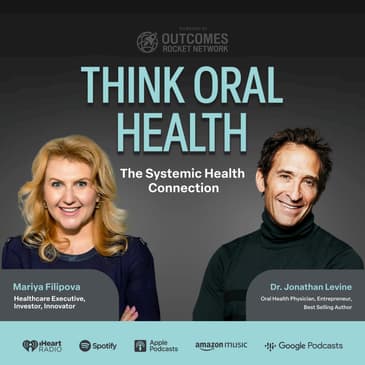
Imagine a world where a simple saliva test can transform oral health care, prevent disease, and bridge the gap between dentistry and overall wellness.
In this episode, Dr. Tina Saw and Brian Jones discuss their collaboration to improve oral health outcomes for underserved populations using salivary diagnostics. This proactive, data-driven technology has the potential to transform oral health into a broader wellness strategy by streamlining care, enhancing collaboration, and personalizing recommendations.
Tune in to learn how groundbreaking salivary diagnostics are revolutionizing oral health care and improving lives, especially for underserved populations!
Resources:
- Connect with and follow Dr. Tina Saw on LinkedIn.
- Follow Oral Genome on LinkedIn and discover their website!
- Follow Harmony Health on LinkedIn and explore their website!
- Connect with and follow Brian Jones on LinkedIn.
- Follow Avēsis on LinkedIn and visit their website!
- Follow Team Smile on Instagram and check out their website!
- Learn more about Avēsis and Harmony Health Launch Pioneering Salivary Testing Pilot for Patients with Special Healthcare Needs here!
Watch the entire episode on YouTube and get more details at Think Oral Health.
[00:00:04] Welcome to Think Oral, where we connect and connect it between oral and physical health. I'm your host, Dr. Jonathan Levine. And I'm your host, Maria Filipova. Let's get at it.
[00:00:21] Hello, everybody, and welcome to another edition to the Think Oral Health Podcast. We are fresh off the HLTH Conference experience. This is our first episode recording, not in Vegas and not on the health floor.
[00:00:39] Equally excited and at an equally momentous occasion, if you will. This is Thanksgiving week, and we have a lot to be thankful for.
[00:00:47] I am personally very thankful for the year-long partnership with Dr. Jonathan Levine and what we've been able to create together.
[00:00:55] I'm also very thankful that we've got two amazing guests today talking about a very important topic to all of us.
[00:01:04] So, welcome, everyone. And hello again, Dr. Jonathan Levine. Could you please tell us who we are having a conversation with today?
[00:01:14] Yes, thank you, Maria. And I have to tell you, it is Thanksgiving. And yes, I am tremendously grateful for our partnership.
[00:01:22] We've had a lot of fun this year, and we're just getting going.
[00:01:24] But to talk a little bit about today's episode, we have two very special people, Dr. Tina Saw and Brian Jones.
[00:01:32] Tina is a DDS. She's a dentista, as they say in Italy. She's the CEO of a brand new company that is amazing, that's really talking about and really showing, going to show the world,
[00:01:45] how Salivary Diagnostics is a new blood diagnostics. The company is called Oral Genome.
[00:01:50] She's also a board member of Harmony Health. Well, as a dentist and a mom to a child with autism,
[00:01:56] she knows firsthand the struggle that IDD patients face. And that's one of the drivers why she invented the first ever chairside Salivary test.
[00:02:06] So we're going to dive into that. Brian Jones, the chief growth officer for VCSIS, a dental and vision specialty benefits provider.
[00:02:15] Brian heads initiatives that enhance healthcare access, the outcomes for both Medicaid, Medicare, and other populations with special healthcare needs.
[00:02:26] He also serves on the board of directors for Team Smile, a not-for-profit organization, provides children in need with a life-changing Dell experience
[00:02:35] through the power of sports near and dear to my heart and all of our hearts.
[00:02:40] Well, let's kick it off, Maria.
[00:02:42] Thank you for this introduction and what an impressive lineup of accomplishments you both bring to the table.
[00:02:48] Both Jonathan and I like to talk about the fact that impact and entrepreneurship is not for the faint of the light of heart or faint of heart
[00:02:57] or those who try to follow a traditional path.
[00:03:00] Both of you seem to have a fairly non-traditional way of arriving where you are today in your impressive careers.
[00:03:08] Could we just kick it off by you telling us your personal why and what drove you and gave you that purpose to get to where you are now?
[00:03:20] And why are you doing what you are doing?
[00:03:22] Tina, let's start with you. I'm curious.
[00:03:24] My personal why is dentistry.
[00:03:26] It's such an old profession.
[00:03:28] Like, it's been out there for a long time.
[00:03:30] I think it's like the ancient Egyptians were like the first.
[00:03:33] I don't know. Don't quote me on that.
[00:03:34] To start dentistry.
[00:03:35] And they were even doing things like...
[00:03:37] It's actually Paul Revere in Boston who used to be the cobbler and was also the local town dentist.
[00:03:42] So that's what I know.
[00:03:43] But probably before him too.
[00:03:45] Yes.
[00:03:46] Yeah.
[00:03:46] And for me, it's always looking for ways.
[00:03:49] I've been...
[00:03:49] I was a private practice dentist for a really long time.
[00:03:53] Worked for a DSO.
[00:03:54] Worked for a federal qualified health centers.
[00:03:56] Lots of community clinics.
[00:03:58] And there were these problems that would just like itch inside me.
[00:04:01] I was like, why hasn't someone become...
[00:04:02] How to come up with a better solution?
[00:04:04] And it's not stuff that you can Google.
[00:04:06] And when we talk about innovating and thinking like how we can improve things,
[00:04:11] that's really important.
[00:04:12] And I think you have to be really bold and gutsy and just really push those like boundaries no matter what.
[00:04:18] And even if people say, hey, you're a little bit crazy.
[00:04:23] And you're like, you can't do...
[00:04:25] You know, somehow we're still here.
[00:04:27] And here, like now I have this company, Oral Genome.
[00:04:30] We do point of care salivary diagnostics.
[00:04:33] And nobody has really done something to the level of what we've done with so many biomarkers.
[00:04:39] So I guess my story is like, hey, I don't like to take...
[00:04:43] I just like to push forward.
[00:04:44] And I don't like to say have no as an answer.
[00:04:47] Like I'm going to do whatever it is.
[00:04:49] Let's find a solution and let's like brainstorm to make things happen.
[00:04:53] Amazing.
[00:04:54] I have a feeling we should all share that.
[00:04:56] Let's just...
[00:04:56] We don't take no for an answer.
[00:04:58] Brian, what brought you to where you are now?
[00:05:01] Boy, it's been a journey.
[00:05:02] I started my career over 20 years ago in the defense and diplomacy sector.
[00:05:06] Focused on a lot of international work.
[00:05:09] But I think that really drove me to understanding and how I want to work with really diverse populations,
[00:05:14] especially those that, while I was working in underserved countries,
[00:05:17] really drove my passion to work in underserved communities.
[00:05:21] Which when then I got exposed to some of the inequities in the health space
[00:05:26] through personal experiences with my father going through very advanced cancer treatments.
[00:05:31] And then the aftermath of what happens after somebody passes with that.
[00:05:35] And just the maze that you have to go through to get anything done in the healthcare space.
[00:05:40] I really, really drove it as a personal mission to say,
[00:05:44] how can I get into this space, streamline the processes that are there,
[00:05:48] but also from an outcomes perspective,
[00:05:52] introduce new ways where the patient experience,
[00:05:55] the provider experience, the family experience within that is much more comprehensive and easier to understand.
[00:06:02] In my role now, it's really how I've advanced our solutions as an organization to say,
[00:06:07] how are we focused on the stakeholder experience and not so much the individual claim?
[00:06:12] The claim will happen, but how do we build all of those infrastructures around it
[00:06:16] and personalize the care that much better?
[00:06:19] Amazing.
[00:06:20] And for our listeners, what brought the two of you together?
[00:06:23] Clearly very distinct individual paths,
[00:06:26] but what are you working on together that brought the two of you on that same mission, vision podcast, if you will?
[00:06:33] Sure. I'll start.
[00:06:35] When you look at just the Medicaid population in general,
[00:06:38] there's a very small portion of the population that makes up a vast majority of the cost in the sector.
[00:06:44] And that's individuals with developmental disabilities,
[00:06:47] seniors and other special healthcare needs populations.
[00:06:51] And we at Avisus decided that's the sector that we're going to tackle.
[00:06:55] A vast majority of our competitors in the space can handle the 80% of the Medicaid population fairly easily,
[00:07:01] but nobody's really taken on the hardest to serve that take up a lot of the expenditure
[00:07:06] and a lot of the time within that sector.
[00:07:08] And when we started looking for technological solutions and other things that could help drive us there,
[00:07:13] it drove us to saying, how can we put more power in the hands of the members and the providers
[00:07:19] to build a collaborative relationship there?
[00:07:21] And that really drove us to seeking out salivary screening as a core solution to that.
[00:07:27] And through a mutual colleague, Tina and I got connected together,
[00:07:30] and we started working on really what's now becoming the core of value-based solution that we're driving at Avisus.
[00:07:37] It's amazing.
[00:07:38] It's so cool to see relationships working.
[00:07:41] So let me ask you, Brian, this question first.
[00:07:44] Value-based solution here.
[00:07:47] And you connected with Tina and that great story.
[00:07:50] Where do you see this going?
[00:07:52] The notion of point of care and as a clinician,
[00:07:54] the importance of getting that information and screening with efficiency and effectiveness,
[00:08:01] where can this go?
[00:08:02] Paint the picture for the future for us.
[00:08:05] Sure.
[00:08:05] Well, at first we started with the traditional methods of evaluating oral health risk are antiquated.
[00:08:12] You have three levels that are based on really observable fact and not real science-based fact.
[00:08:18] You can understand what's going on in a person's mouth by looking at it,
[00:08:21] gauging the inflammation, looking at tooth decay, cavities, et cetera.
[00:08:26] But really, when you look at it, you're continuing to chase the problem.
[00:08:30] You put an intervention, you come back six months later, did that intervention work?
[00:08:34] Yes or no?
[00:08:34] Try something new.
[00:08:36] And we were finding that if we could find something to where we got proactive
[00:08:42] instead of reactive to what's going on in the dental chair at that time,
[00:08:46] we can not only offer better recommendations to those members for what happens in between visits,
[00:08:53] but also provide the providers a greater tool to educate the member on additional things that
[00:08:59] they can be doing, products that they could be implementing into their oral hygiene campaign,
[00:09:04] nutritional counseling, things like that.
[00:09:06] And so not only did we find it as a way that we could enhance the relationship between the member
[00:09:11] and provider, but also set them up long-term for things that they're doing in between visits.
[00:09:17] And then the value-added benefit to that for the providers is we're giving them extra potential
[00:09:22] revenue streams to be able to add on additional services like those nutritional counseling,
[00:09:27] like additional things like that, which overall help them make Medicaid and other programs like that
[00:09:32] kind of more palatable to the business models that they're operating in.
[00:09:35] This is so powerful.
[00:09:36] Could you maybe give us an example of that though?
[00:09:39] Because there's a lot of revenue streams in those, not doctors in the room.
[00:09:42] Sure.
[00:09:43] What does that look like for a diabetic patient on Medicaid?
[00:09:46] Oh, that's diabetic patients are the perfect example from that perspective.
[00:09:50] So let's focus on one scenario.
[00:09:53] So say we're in a rural population where there's not a lot of health infrastructure around
[00:09:58] and the one point of care that they go to annually or twice a year is the dentist.
[00:10:04] Well, if we can implement salivary screening in that rural practice, or maybe it's an integrated
[00:10:10] rural practice where there's actually dental and medical happening in the same facility,
[00:10:14] we can identify core attributes through the saliva using saliva glucose, things like that,
[00:10:19] to say you might be indicating towards pre-diabetic or diabetic when they might not know that.
[00:10:26] And then validate that with an A1C test down the hallway to actually look and see where that is.
[00:10:32] But as you work your way through that continuum, the integration of care, how we focus on wellness
[00:10:37] from that perspective, the systemic disease that's happening in the mouth,
[00:10:41] or just looking at things as simple as the pH of the mouth or different biomarkers
[00:10:46] that Tina will get much more deeply into,
[00:10:48] really can lead us into a much broader look at systemic issues related to other comorbidities of health,
[00:10:55] whether it's diabetes, whether it's chronic heart disease, whether it's rheumatoid arthritis.
[00:10:59] There are pre-indicators in the saliva that help us look deeper that can then work as an integration
[00:11:06] between oral health care and overall health care from an overall wellness perspective.
[00:11:09] So powerful.
[00:11:10] I want to make a point of what so many of us are talking about,
[00:11:15] which is the tip of the spear diagnostics in all of health care that can happen through dentistry.
[00:11:20] And that's what this powerful collaboration between you and Tina is showing.
[00:11:25] And so a question, I just want to toss it back to Tina,
[00:11:28] is the relationship, Brian, that she's had with you, this collaboration,
[00:11:31] and for the entrepreneurs listening,
[00:11:33] to really look at how the power of collaboration can drive development.
[00:11:38] Because you start somewhere, but it iterates and evolves
[00:11:42] because of these powerful joint efforts
[00:11:46] and seeing what the marketplace really needs
[00:11:48] and feedback loops from this kind of partnership.
[00:11:51] So, Tina, the question to you is,
[00:11:54] how has this relationship helped drive
[00:11:56] some of the decisions you made along the way
[00:11:59] on the product development of what the offering was?
[00:12:02] I would say it's driven a lot of our decisions internally.
[00:12:07] And my perspective as a dentist and our team has,
[00:12:11] we see problems that we want to get addressed,
[00:12:14] but we have that technology for groups like Avisas,
[00:12:18] who say, hey, here's the problem that we have.
[00:12:20] How do we want to get members healthier?
[00:12:22] How do we want to help our dentists also grow their practices
[00:12:25] and have society healthier in general,
[00:12:28] make the state happy, all of that stuff.
[00:12:31] We took a lot of what Brian and his team found out
[00:12:36] on things that needed to be done,
[00:12:38] implemented, okay, how can we fix that?
[00:12:40] How can we utilize oral genome to be able to tackle these problems
[00:12:44] and give something that's more objective?
[00:12:46] For us, we can talk all about oral systemic health
[00:12:50] till we're blue in the face.
[00:12:51] We talk about it all the time, literature,
[00:12:54] but for us, it's like,
[00:12:55] how do we want it to develop an objective tool?
[00:12:58] Then we want it to be able to pull even a report of,
[00:13:02] hey, this zip code of people who are males over 50
[00:13:06] have a higher risk of caries.
[00:13:10] And we're finding maybe it's because there's,
[00:13:15] okay, this is a hot topic.
[00:13:17] There's no fluoridation in the water in this zip code
[00:13:20] or whatever it is.
[00:13:21] And so we're trying to be able to utilize our tests
[00:13:26] and deliver this data and the results
[00:13:29] to be able to target interventions.
[00:13:31] And we take a lot of the feedback from Brian and his team
[00:13:35] out of Vsys and be like, okay, what next can we do?
[00:13:38] Right.
[00:13:40] Awareness, alignment, and then action.
[00:13:43] That's what you guys are doing together.
[00:13:44] And it's just such a powerful message
[00:13:47] to people building companies
[00:13:48] because I look at what oral genome is doing
[00:13:51] and really the hockey stick growth
[00:13:54] that from what I understand, that's about to happen.
[00:13:57] That only happens,
[00:13:58] we like to say that life is a team sport
[00:14:01] and so is everything else we do in our life.
[00:14:03] And I just want to highlight that to both of you
[00:14:06] because it's really a special story for people to hear.
[00:14:09] So Brian, getting back to you.
[00:14:11] So tell us a little bit about that back and forth
[00:14:15] that you and Tina have had in this iterative process.
[00:14:18] And for you, how do you get that feedback back to her
[00:14:22] and vice versa in that reinforcing Luke
[00:14:25] to get to a point where you had something really to test
[00:14:29] and then you started talking to oral genome
[00:14:32] as a screening device
[00:14:34] to then be able to take it to the next level
[00:14:36] of depth of understanding
[00:14:38] of unpacking the potential disease.
[00:14:41] Tell it, take us through that a little bit.
[00:14:43] Sure.
[00:14:44] When we started exploring
[00:14:46] kind of what these solutions might look like,
[00:14:48] I think corporately,
[00:14:49] there was some natural skepticism.
[00:14:51] It's a new technology proven by science,
[00:14:54] but not by practice yet.
[00:14:55] And what we really focused on with Tina
[00:14:58] and started funding was,
[00:15:00] let's put in place some pilot programs
[00:15:02] in some areas where oral healthcare
[00:15:05] is traditionally very bad.
[00:15:06] Rural populations,
[00:15:07] we've got pilots going on in Appalachia right now.
[00:15:10] We've got some pilots going on in some other places,
[00:15:12] really trying to discover,
[00:15:14] going to the hardest hit areas
[00:15:15] and saying,
[00:15:16] what impact can we have in the near term?
[00:15:18] And when I was looking at it
[00:15:20] from a solution perspective,
[00:15:21] it needed to be more than just a single test
[00:15:24] if we were going to really expand this
[00:15:25] and understand all of the elements
[00:15:28] that could be impacted by it.
[00:15:29] So it needed to have more than one biomarker.
[00:15:31] It needed to be accessible
[00:15:33] to a broad-based number of dentists.
[00:15:35] I could not ask dentists
[00:15:36] to spend $2,000
[00:15:38] on an expensive piece of equipment
[00:15:39] to test one thing.
[00:15:40] It needed to have an AI backbone
[00:15:42] so that when we're looking at it,
[00:15:44] we can actually provide good intelligence
[00:15:46] to the members.
[00:15:47] And as we started implementing the pilots,
[00:15:50] one of the side benefits was
[00:15:52] we were finding offices
[00:15:53] that were using the tool
[00:15:54] were actually becoming more efficient.
[00:15:56] They could find more chair time
[00:15:58] during the day
[00:15:59] because they were using this tool
[00:16:02] as a source of information
[00:16:03] to be able to streamline the process
[00:16:06] as they were working with their members on,
[00:16:08] not only recommendations
[00:16:09] that they were offering,
[00:16:11] streamlining the process
[00:16:12] of actually doing
[00:16:13] some of the other
[00:16:14] more traditional
[00:16:15] kind of oral health screening methods.
[00:16:16] We gave them an opportunity
[00:16:17] and a way to streamline that process.
[00:16:20] And so those were really
[00:16:21] a lot of the elements
[00:16:22] that we were looking at.
[00:16:23] And now we're ready
[00:16:24] to take that even broader
[00:16:25] and expand out those populations
[00:16:26] that were serving there.
[00:16:29] How long ago
[00:16:30] did you guys start the pilots?
[00:16:31] This is impressive,
[00:16:32] by the way.
[00:16:32] Congratulations.
[00:16:33] We wish we would have started
[00:16:35] much sooner than we did,
[00:16:36] but we've been working on pilots
[00:16:38] really since the end of last year
[00:16:40] is when we started putting those in.
[00:16:42] And the example I provided earlier
[00:16:44] with the rural population,
[00:16:45] oral genome and Harmony Health
[00:16:47] just released a paper
[00:16:48] on some of the initial results
[00:16:50] of the salivary screening tools
[00:16:52] that we were using
[00:16:53] in rural West Virginia,
[00:16:54] looking at what impacts
[00:16:56] those could have.
[00:16:57] And so we've really been focused
[00:16:58] this year on proving out
[00:16:59] those pilots.
[00:17:00] Yeah, could you maybe
[00:17:01] hit the highlights for us?
[00:17:02] Because I love
[00:17:03] the entrepreneurial journey,
[00:17:05] but I keep going back
[00:17:07] to that comorbid diabetic
[00:17:09] who lives in a dental desert,
[00:17:11] who can't really afford
[00:17:14] to drive the extra two hours
[00:17:16] to go see a specialist
[00:17:17] and who could afford
[00:17:20] very fast food
[00:17:21] and has a certain income.
[00:17:24] And so for that patient,
[00:17:26] what can we do
[00:17:28] with your technology
[00:17:29] and how does the technology
[00:17:31] and the oral screening
[00:17:32] and diagnostic
[00:17:33] change the course of treatment
[00:17:36] for that patient
[00:17:37] and or the cost of care as well?
[00:17:40] So give us some
[00:17:40] of those highlights of the,
[00:17:42] I mean, that's what I was asking.
[00:17:43] It sounds like you have
[00:17:44] one year worth of data
[00:17:45] or at least six months
[00:17:46] worth of data.
[00:17:47] That's hopefully enough
[00:17:48] to give us some trends.
[00:17:52] So we started on the pilot
[00:17:56] in West Virginia,
[00:17:58] really in the dental office.
[00:17:59] We picked federally qualified
[00:18:00] health centers
[00:18:01] had a medical office
[00:18:03] just right next door.
[00:18:05] So they were already in there
[00:18:07] getting their dental screening.
[00:18:09] And when we had figured out
[00:18:11] through the app
[00:18:12] that it was flagging
[00:18:13] that they were at a higher risk
[00:18:15] and possibly having diabetes,
[00:18:17] we were able to utilize
[00:18:19] the medical center
[00:18:21] right next door
[00:18:23] to be able to walk them over
[00:18:24] and then actually go
[00:18:26] and confirm a diagnosis
[00:18:27] of diabetes or pre-diabetes.
[00:18:30] When you start treatment earlier,
[00:18:32] it's less expensive
[00:18:33] for our system.
[00:18:34] And so for the people
[00:18:36] that we were able to do that,
[00:18:37] we did a pilot,
[00:18:38] I believe it was 79 patients.
[00:18:41] And we saved just,
[00:18:43] we saved $118,000
[00:18:45] just in that amount of people,
[00:18:48] just by integrating medical,
[00:18:50] dental,
[00:18:50] getting them next door
[00:18:51] to get these early care.
[00:18:53] Now, I understand
[00:18:54] a lot of times
[00:18:55] like you're saying
[00:18:56] like food is,
[00:18:57] it's something
[00:18:58] that's really important.
[00:18:59] Like fast food
[00:19:00] is not the healthiest,
[00:19:01] but there's recommendations
[00:19:03] besides that,
[00:19:05] you know,
[00:19:07] besides that,
[00:19:08] besides like the quick
[00:19:10] the diet
[00:19:11] that is really critical,
[00:19:13] that is very cost effective
[00:19:14] that you can do
[00:19:15] that can really impact
[00:19:16] and even different ways
[00:19:18] of your lifestyle
[00:19:20] that can actually really impact
[00:19:22] your overall health in general.
[00:19:24] So for us,
[00:19:25] it's like,
[00:19:25] how do we educate these members?
[00:19:27] How do we get them
[00:19:28] to do it all
[00:19:29] in a cost effective way
[00:19:31] to really help everybody
[00:19:33] in the system long-term wise
[00:19:35] in terms of reducing cost?
[00:19:37] Yeah.
[00:19:38] A lot of it is around
[00:19:39] building awareness
[00:19:40] and educating, right?
[00:19:43] And getting that wellness
[00:19:44] thinking going
[00:19:45] and not waiting
[00:19:47] till disease
[00:19:47] is going to form
[00:19:49] the sickness model
[00:19:50] that we all talk about
[00:19:51] and just taking it
[00:19:53] in that direction.
[00:19:53] For the first time
[00:19:55] as a clinician,
[00:19:56] to have a point of care,
[00:19:58] just that is a game changer
[00:20:00] when you have
[00:20:01] multiple biomarkers
[00:20:02] that you're looking at.
[00:20:03] So if you just take diabetes
[00:20:05] and you say to yourself,
[00:20:06] what happens
[00:20:06] when we get early on diabetes?
[00:20:08] What happens
[00:20:09] when we get early on
[00:20:11] is systemic inflammatory diseases,
[00:20:13] which is going to happen
[00:20:14] by diagnosing periodontal disease
[00:20:16] because we all understand
[00:20:17] what happens
[00:20:18] with chronic inflammation
[00:20:19] in the mouth
[00:20:20] and the connectivity
[00:20:21] to the rest of the body.
[00:20:22] It's,
[00:20:23] the numbers
[00:20:24] are going to be staggering
[00:20:25] once this gets
[00:20:27] into the marketplace.
[00:20:29] So let's talk about that
[00:20:30] for a second.
[00:20:30] How far along
[00:20:32] are you
[00:20:32] getting into
[00:20:33] the marketplace?
[00:20:34] Tell us
[00:20:35] exactly
[00:20:36] what's going on
[00:20:37] and what's going to happen
[00:20:38] in 25
[00:20:39] if you had a great
[00:20:41] crystal ball together
[00:20:42] and say,
[00:20:43] let's go.
[00:20:43] Who's taking it?
[00:20:45] I'll go first.
[00:20:46] So we are
[00:20:47] in the process
[00:20:47] of aligning
[00:20:49] this solution
[00:20:50] to a state-based
[00:20:51] Medicaid program
[00:20:52] to be announced
[00:20:53] hopefully here
[00:20:53] in the very near future
[00:20:54] where this is the core
[00:20:56] to,
[00:20:56] as I'd mentioned earlier,
[00:20:57] our value-based system.
[00:20:59] Bundling together
[00:21:00] the salivary screening
[00:21:01] and salivary diagnostics
[00:21:02] and a preventive model
[00:21:03] that offers incentives
[00:21:05] to providers
[00:21:06] to help us
[00:21:07] get members healthier.
[00:21:09] The other elements
[00:21:10] that we haven't
[00:21:11] or have talked around
[00:21:12] a little bit
[00:21:12] is a lot of the savings
[00:21:14] and a lot of the
[00:21:15] cost reductions
[00:21:17] or however you want
[00:21:17] to look at it
[00:21:18] happen on the medical side
[00:21:19] because of
[00:21:20] what we're screening for
[00:21:21] and what we can help
[00:21:22] prevent.
[00:21:23] And so one of the
[00:21:24] core elements
[00:21:25] of our solution
[00:21:26] is how do we surround
[00:21:27] that with
[00:21:28] community health
[00:21:29] coordinators
[00:21:30] and care navigators
[00:21:31] to make sure
[00:21:31] that the information
[00:21:33] that we're getting
[00:21:33] doesn't stop
[00:21:34] at the dental office.
[00:21:35] It works its way
[00:21:36] over to
[00:21:37] the medical offices
[00:21:38] through the Medicaid
[00:21:39] health plans,
[00:21:39] through other care
[00:21:40] collaboration,
[00:21:41] through community
[00:21:42] health networks
[00:21:43] where we're already
[00:21:44] building trust
[00:21:45] with those members.
[00:21:46] And so how are we
[00:21:47] really expanding out
[00:21:48] not to just be
[00:21:49] a dental carrier?
[00:21:50] I hate being pigeonholed
[00:21:51] into being a dental carrier.
[00:21:53] We're an oral
[00:21:54] healthcare company.
[00:21:55] We fit within
[00:21:55] the entire system
[00:21:56] and that's the spectrum
[00:21:58] that we want to live in.
[00:21:59] And so 2025
[00:22:01] is taking it
[00:22:02] and scaling it
[00:22:04] thousandfold
[00:22:05] for how we're
[00:22:06] doing this.
[00:22:06] And we focused
[00:22:08] on the limited
[00:22:08] piloting up front
[00:22:10] to really make
[00:22:11] the case
[00:22:11] and show how
[00:22:12] it can be
[00:22:12] applicable.
[00:22:13] And we're finding
[00:22:14] that no matter
[00:22:14] where you implement
[00:22:15] it, rural,
[00:22:16] suburban,
[00:22:17] urban, frontier,
[00:22:18] there's a value
[00:22:19] that far expands
[00:22:20] what we had
[00:22:21] originally I think
[00:22:22] thought of
[00:22:22] where it could go
[00:22:23] especially in the
[00:22:24] Medicaid environments.
[00:22:26] And Brent,
[00:22:27] for the business
[00:22:27] model side of it,
[00:22:29] are you looking
[00:22:30] from a business
[00:22:31] case perspective,
[00:22:32] are you looking
[00:22:33] to see return
[00:22:34] on improved
[00:22:36] quality of outcomes
[00:22:37] or reduced cost?
[00:22:39] As a business leader,
[00:22:41] why is the
[00:22:41] VCIS doing this?
[00:22:42] So all of the above.
[00:22:44] There are avenues
[00:22:45] where, you know,
[00:22:46] an outcomes-based
[00:22:47] model is very much
[00:22:48] supported by this
[00:22:49] and that's where
[00:22:49] we lean in.
[00:22:50] We know if we
[00:22:51] improve outcomes,
[00:22:52] we reduce cost
[00:22:53] over time.
[00:22:54] And implementing
[00:22:55] these strategies
[00:22:55] says we're going
[00:22:57] to make people
[00:22:57] healthier through
[00:22:58] this technology.
[00:22:59] Therefore,
[00:22:59] we're not going
[00:23:00] to have to pay
[00:23:00] for as much
[00:23:02] perio down the road.
[00:23:03] We're not going
[00:23:03] to have to pay
[00:23:03] for as many
[00:23:04] cavities.
[00:23:04] There's going
[00:23:04] to be less
[00:23:05] crowns.
[00:23:06] There's going
[00:23:06] to be less
[00:23:06] everything across
[00:23:07] the board.
[00:23:08] And there will
[00:23:09] always be
[00:23:10] those avenues
[00:23:11] that you can
[00:23:12] go down.
[00:23:12] And, you know,
[00:23:13] why we're so
[00:23:14] keen on this
[00:23:15] is if we can
[00:23:16] really intervene
[00:23:18] and have an
[00:23:19] impact when they're
[00:23:20] not in the dental
[00:23:21] chair.
[00:23:21] So how are
[00:23:22] those recommendations
[00:23:23] for oral hygiene
[00:23:24] happening in
[00:23:25] between visits?
[00:23:26] We're going to
[00:23:26] have a much
[00:23:27] more monumental
[00:23:28] impact on that.
[00:23:29] So how are we
[00:23:29] integrating that
[00:23:30] into the
[00:23:31] community through
[00:23:32] not only formal
[00:23:33] channels like
[00:23:34] community health
[00:23:34] departments or
[00:23:35] departments of
[00:23:36] health, but
[00:23:37] proliferating that
[00:23:38] through non-traditional
[00:23:39] Medicaid dentists
[00:23:40] who might see this
[00:23:41] now as an avenue
[00:23:42] to start seeing
[00:23:43] more patients.
[00:23:44] Therefore,
[00:23:45] especially in
[00:23:45] states where
[00:23:46] the dental
[00:23:47] workforce has not
[00:23:48] yet come back
[00:23:48] yet or there's
[00:23:49] still extreme
[00:23:49] hazards in that,
[00:23:50] we're introducing
[00:23:51] new practitioners
[00:23:52] into Medicaid
[00:23:53] because now
[00:23:53] we've made it
[00:23:54] affordable for
[00:23:55] them or made
[00:23:55] it a revenue
[00:23:56] stream that can
[00:23:57] actually work
[00:23:57] with them in
[00:23:58] their office
[00:23:59] practices as
[00:23:59] well.
[00:24:00] Do you see
[00:24:01] a future where
[00:24:03] the physicians
[00:24:05] would initialize
[00:24:06] this test,
[00:24:08] which would
[00:24:09] show the
[00:24:09] reciprocity of
[00:24:10] that back and
[00:24:11] forth testing
[00:24:12] where dentistry
[00:24:12] starts to
[00:24:13] understand the
[00:24:13] medical side
[00:24:14] and vice versa?
[00:24:15] Is that
[00:24:16] possible?
[00:24:18] I think yes,
[00:24:19] and that's why
[00:24:19] we first started
[00:24:20] this in
[00:24:21] integrated dental
[00:24:22] and medical
[00:24:23] clinics so
[00:24:23] that we
[00:24:24] could validate
[00:24:24] the efficacy
[00:24:25] of what's
[00:24:26] showing up
[00:24:26] in the saliva
[00:24:27] with what's
[00:24:27] showing up
[00:24:28] in the blood
[00:24:28] or other
[00:24:29] avenues.
[00:24:30] And so I
[00:24:30] think thinking
[00:24:31] about more
[00:24:31] broadly as a
[00:24:32] wellness device
[00:24:33] versus a
[00:24:33] salivary screening
[00:24:34] point-of-care
[00:24:35] dental test is
[00:24:36] where this
[00:24:37] ultimately goes.
[00:24:38] It is looking
[00:24:39] at things much
[00:24:39] more broader
[00:24:40] than just,
[00:24:40] again,
[00:24:41] one biomarker.
[00:24:41] We're trying
[00:24:42] to figure out
[00:24:42] how it affects
[00:24:43] everything
[00:24:43] systemically.
[00:24:45] What's in
[00:24:46] store in 2025
[00:24:47] for you,
[00:24:47] Tina?
[00:24:47] I think
[00:24:48] that I'm
[00:24:49] going to
[00:24:49] echo with
[00:24:50] Brian,
[00:24:50] what happened
[00:24:51] in 2024
[00:24:52] for us
[00:24:53] is when we
[00:24:53] started piloting,
[00:24:55] it was a
[00:24:55] very scary
[00:24:56] time.
[00:24:57] I was like,
[00:24:57] okay,
[00:24:57] how's this
[00:24:58] going to go
[00:24:58] for us?
[00:24:59] And we
[00:25:00] got the
[00:25:00] technology down,
[00:25:01] we got
[00:25:01] everything we
[00:25:02] needed.
[00:25:03] And so for
[00:25:04] us,
[00:25:05] 2025,
[00:25:06] and it's
[00:25:06] all happening
[00:25:07] right now,
[00:25:07] we're prepping
[00:25:08] the ways to
[00:25:08] really work
[00:25:10] on scaling
[00:25:10] up,
[00:25:11] getting more
[00:25:12] and more
[00:25:12] integrations
[00:25:13] in.
[00:25:14] And okay,
[00:25:15] what else
[00:25:15] is next?
[00:25:16] I'm always
[00:25:16] thinking,
[00:25:17] I don't
[00:25:17] ever want
[00:25:18] to drop
[00:25:19] our test
[00:25:19] into just
[00:25:21] people's
[00:25:22] hands and
[00:25:22] being like,
[00:25:23] okay,
[00:25:23] here's the
[00:25:23] report,
[00:25:24] this is what
[00:25:24] you need
[00:25:24] to do.
[00:25:25] We're
[00:25:26] always,
[00:25:26] okay,
[00:25:27] so,
[00:25:27] okay,
[00:25:27] do we
[00:25:28] need to
[00:25:28] bring in
[00:25:28] this
[00:25:29] technology?
[00:25:29] Do we
[00:25:29] need to
[00:25:30] do this
[00:25:30] so that
[00:25:30] we have
[00:25:30] a more
[00:25:31] comprehensive
[00:25:32] care system?
[00:25:33] Also on
[00:25:33] the oral
[00:25:34] genome side,
[00:25:35] we're excited
[00:25:36] that we're
[00:25:36] working with
[00:25:37] so many
[00:25:38] dental offices,
[00:25:38] we're looking
[00:25:39] to expand
[00:25:40] all that.
[00:25:41] We're working
[00:25:42] with some
[00:25:43] really,
[00:25:43] large dental
[00:25:44] groups,
[00:25:45] even also
[00:25:45] some on
[00:25:46] the medical
[00:25:46] side too.
[00:25:47] And for me,
[00:25:48] particularly,
[00:25:49] the medical
[00:25:49] is very
[00:25:50] exciting
[00:25:51] because that
[00:25:52] opens the
[00:25:52] way because
[00:25:53] they're already
[00:25:53] being like,
[00:25:54] we do see
[00:25:55] patients who
[00:25:56] have oral
[00:25:56] health issues
[00:25:57] and they're
[00:25:58] utilizing our
[00:25:59] technology to
[00:26:00] be able to
[00:26:01] actually,
[00:26:02] physicians just
[00:26:03] as much as
[00:26:03] dentists want
[00:26:04] to bridge
[00:26:04] that gap.
[00:26:05] Yeah,
[00:26:06] it's amazing.
[00:26:07] That's really
[00:26:07] the prospect
[00:26:08] of integrated
[00:26:09] care and I
[00:26:10] love that we
[00:26:10] have a payer
[00:26:12] at the
[00:26:12] table and
[00:26:13] data-driven
[00:26:14] approach to
[00:26:15] collecting the
[00:26:16] data,
[00:26:16] capturing the
[00:26:17] data,
[00:26:17] and longitudinally
[00:26:18] tracking both
[00:26:20] outcomes and
[00:26:20] cost.
[00:26:21] So thank you
[00:26:22] for all that
[00:26:23] you're doing,
[00:26:24] acknowledging that
[00:26:25] this is just
[00:26:25] the beginning
[00:26:26] and standing
[00:26:28] an open
[00:26:28] invitation for
[00:26:29] you to come
[00:26:29] back when
[00:26:30] the data is
[00:26:31] even more
[00:26:32] compelling and
[00:26:33] when you've
[00:26:33] had even
[00:26:34] longer time
[00:26:35] to run
[00:26:36] this program,
[00:26:37] not only as
[00:26:37] a pilot.
[00:26:38] Brian, I
[00:26:39] have a quick
[00:26:39] question for
[00:26:40] you.
[00:26:40] So as you
[00:26:42] are looking to
[00:26:43] scale this,
[00:26:43] and I learned
[00:26:44] this from our
[00:26:44] own Glow Good
[00:26:45] Foundation
[00:26:46] missions where
[00:26:47] we had medical
[00:26:47] and dental
[00:26:48] professionals under
[00:26:48] one roof,
[00:26:49] and then we
[00:26:50] tested this
[00:26:51] idea in a
[00:26:52] four-service
[00:26:53] business model,
[00:26:54] and it's
[00:26:55] working
[00:26:55] magnificently,
[00:26:57] how medicine
[00:26:57] and dentistry
[00:26:57] can work
[00:26:59] together.
[00:26:59] How do you
[00:27:00] see the
[00:27:01] scaling not
[00:27:02] only to level
[00:27:03] the playing
[00:27:04] field on the
[00:27:04] equality of care,
[00:27:05] but also
[00:27:06] for patients
[00:27:08] in urban,
[00:27:09] suburban,
[00:27:09] all these
[00:27:10] different areas
[00:27:10] in the
[00:27:11] different dental
[00:27:12] practices?
[00:27:13] How do you
[00:27:13] see that
[00:27:15] feedback,
[00:27:15] that screening
[00:27:16] tool working
[00:27:17] for the
[00:27:18] patients,
[00:27:19] the dental
[00:27:20] population,
[00:27:20] and the
[00:27:21] connectivity of
[00:27:22] dentistry and
[00:27:22] medicine,
[00:27:23] and the
[00:27:23] elevation of
[00:27:24] the two
[00:27:25] disciplines
[00:27:25] together for
[00:27:26] better patient
[00:27:27] outcomes?
[00:27:28] Sure.
[00:27:28] I think
[00:27:29] there's the
[00:27:30] connection.
[00:27:30] Everybody
[00:27:31] says that
[00:27:31] the mouth
[00:27:32] is connected
[00:27:32] to the
[00:27:32] body.
[00:27:33] I'm sick
[00:27:34] of hearing
[00:27:34] it,
[00:27:34] and I
[00:27:35] said,
[00:27:35] let's
[00:27:35] start doing
[00:27:35] it.
[00:27:36] Let's
[00:27:36] figure out
[00:27:37] how we
[00:27:37] connect
[00:27:37] the two.
[00:27:38] This is
[00:27:39] where
[00:27:39] genome
[00:27:39] came in
[00:27:40] to say
[00:27:41] this is
[00:27:41] how we're
[00:27:41] connecting
[00:27:42] the two.
[00:27:43] The way
[00:27:43] we're
[00:27:44] really
[00:27:44] focusing
[00:27:44] on
[00:27:45] putting
[00:27:46] those
[00:27:46] two
[00:27:46] together,
[00:27:47] not only
[00:27:47] through
[00:27:47] integrated
[00:27:48] clinics,
[00:27:48] but through
[00:27:49] the care
[00:27:49] coordination
[00:27:49] and other
[00:27:50] elements,
[00:27:51] is the
[00:27:52] AI
[00:27:52] backdrop
[00:27:52] that
[00:27:54] offers
[00:27:54] the
[00:27:54] recommendations
[00:27:55] on this
[00:27:55] can look
[00:27:56] at
[00:27:57] what's
[00:27:58] going on
[00:27:58] in the
[00:27:58] entire
[00:27:59] microbiome
[00:27:59] of the
[00:28:00] mouth
[00:28:00] and
[00:28:05] your
[00:28:05] health,
[00:28:05] which
[00:28:06] then
[00:28:06] impacts
[00:28:06] your
[00:28:07] overall
[00:28:07] health.
[00:28:08] And so
[00:28:08] recommendations
[00:28:09] on maybe
[00:28:10] fluoride
[00:28:11] toothpaste
[00:28:11] not being
[00:28:12] the best
[00:28:12] solution
[00:28:12] for you
[00:28:13] because you
[00:28:13] have a very
[00:28:14] basic diet
[00:28:14] and you
[00:28:15] should do
[00:28:15] an arginine
[00:28:16] based toothpaste
[00:28:17] in mouth rinse.
[00:28:18] That changes
[00:28:19] the entire
[00:28:19] dynamic of
[00:28:21] what we
[00:28:21] call that
[00:28:21] between
[00:28:22] visit time.
[00:28:23] Different
[00:28:23] recommendations
[00:28:24] on toothbrushes,
[00:28:25] recommendations
[00:28:26] on diet,
[00:28:27] simple little
[00:28:28] lifestyle changes
[00:28:29] that can have
[00:28:29] a huge
[00:28:30] and monumental
[00:28:30] impact because
[00:28:31] a lot of times
[00:28:32] what's going
[00:28:33] on in the
[00:28:33] mouth is
[00:28:34] then coming
[00:28:34] up from
[00:28:34] the body.
[00:28:35] And so
[00:28:36] it's really
[00:28:36] giving you
[00:28:37] a broader
[00:28:37] lens on
[00:28:39] how simple
[00:28:40] changes related
[00:28:40] to not only
[00:28:41] your oral
[00:28:41] health but
[00:28:42] how you
[00:28:42] introduce
[00:28:43] things to
[00:28:43] your body
[00:28:44] through chewing,
[00:28:45] swallowing,
[00:28:45] et cetera,
[00:28:46] can have a
[00:28:46] monumental impact
[00:28:47] to your overall
[00:28:48] health there as
[00:28:48] well.
[00:28:48] Yeah,
[00:28:48] it's so good.
[00:28:49] Maria,
[00:28:50] what do you
[00:28:50] think?
[00:28:51] I think
[00:28:52] that the
[00:28:53] proof is
[00:28:54] in the
[00:28:55] business
[00:28:55] model and
[00:28:56] in the
[00:28:57] payment structure.
[00:28:58] The proof
[00:28:58] is in the
[00:28:59] payment
[00:28:59] model.
[00:29:00] And I'm
[00:29:00] very happy
[00:29:01] to see
[00:29:02] a pair,
[00:29:03] clinical
[00:29:03] outcomes
[00:29:04] and cost.
[00:29:05] I think
[00:29:05] it's easier
[00:29:06] to do it
[00:29:06] in a
[00:29:07] Medicaid
[00:29:07] environment
[00:29:07] where
[00:29:08] there's
[00:29:09] risk-bearing
[00:29:09] contracts.
[00:29:10] It's harder
[00:29:11] to do in
[00:29:11] a fees-for-service
[00:29:12] environment.
[00:29:12] But you
[00:29:13] know me,
[00:29:13] I'm an
[00:29:14] optimist,
[00:29:15] so I
[00:29:15] think we
[00:29:15] need more
[00:29:16] pilots like
[00:29:17] this to
[00:29:17] generate
[00:29:18] the proof
[00:29:18] points.
[00:29:19] Yeah.
[00:29:20] So,
[00:29:20] very excited.
[00:29:21] I'm an
[00:29:22] optimist
[00:29:22] right there
[00:29:23] with you.
[00:29:23] I'm an
[00:29:24] optimist
[00:29:24] right there
[00:29:25] with you.
[00:29:26] All right.
[00:29:27] Thank you
[00:29:27] so much.
[00:29:28] Thank you.
[00:29:29] Thank you.
[00:29:36] Thanks for
[00:29:37] listening to
[00:29:37] the Think
[00:29:38] Oral
[00:29:38] podcast.
[00:29:39] For the
[00:29:40] show notes
[00:29:40] and resources
[00:29:41] from today's
[00:29:42] podcast,
[00:29:42] visit us
[00:29:43] at
[00:29:44] www.outcomesrocket.health
[00:29:48] slash
[00:29:48] think oral
[00:29:49] or start a
[00:29:50] conversation with
[00:29:51] us on
[00:29:52] social media.
[00:29:53] Until then,
[00:29:54] keep smiling
[00:29:55] and connecting
[00:29:55] care.