
This podcast is brought to you by Outcomes Rocket, your exclusive healthcare marketing agency. Learn how to accelerate your growth by going to outcomesrocket.com
Underserved communities need better access to mental health treatments, which means we need to develop new and different ways to deliver care.
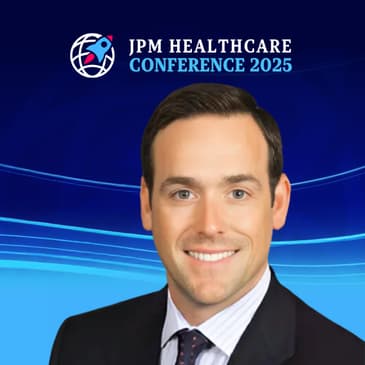
In this episode, Joseph Perekupka, CEO of Freespira, discusses the company's at-home medical device that targets PTSD and panic disorder symptoms through a non-pharmacological approach. The treatment involves a sensor, tablet, and care specialist who acts as a coach to guide patients through the 28-day program. Joe highlights the significance of visualizing breathing patterns, experiencing early action, and receiving dedicated support, with patients showing significant symptom improvements. He emphasizes that CMS's new reimbursement codes will incentivize providers to offer a more robust treatment plan. Joe also predicts a move toward action in mental health treatment in 2025, focusing on broader care access, including supporting first responders with PTSD.
Tune in and learn about the future of digital mental healthcare and innovative solutions for anxiety and PTSD!
Resources:
- Connect and follow Joseph Perekupka on LinkedIn.
- Learn more about Freespira on their LinkedIn and website.
- Email Joe directly here.
Fast Track Your Business Growth:
Outcomes Rocket is a full service marketing agency focused on helping healthcare organizations like yours maximize your impact and accelerate growth. Learn more at outcomesrocket.com
[00:00:01] This podcast is produced by Outcomes Rocket, your healthcare-exclusive digital marketing agency. Outcomes Rocket exists to help healthcare organizations like yours to maximize their impact and accelerate growth. Visit outcomesrocket.com or text us at 312-224-9945.
[00:00:29] Hey everyone, Saul Marquez with the Outcomes Rocket. So glad that you joined us again. For another JPMorgan Health Insights and Predictions 2025, today I am with the amazing Joe Perekupka. He's the CEO of Freespira and I'm so glad we're connecting here. We actually connected at Behavioral Health Tech. We did, yeah. And finally actually got a chance to talk to each other. So Joe, thanks for joining.
[00:00:54] Thank you and I appreciate the incredible opening. Thank you so much, Saul. I'm really glad to be here and I love what you're doing. So thank you for your support. Oh, thanks brother. Thanks man. Hey, so look, before we begin the insights and predictions conversation, talk to us a little bit about your company and the focus areas, what you guys do. Yeah, so at Freespira, we have an at-home medical device that has two FDA indications focused on PTSD and panic disorder symptoms. What we're able to do is we're able to deliver the product directly, the treatment directly to the patients at home.
[00:01:23] So they can use this at home in the comfort of their own home over the course of 28 days. And at the end of that 28 days, we see incredible symptom improvement. What we're really doing that's fantastic though is we've really taken MedTech and we've merged it with a high touch support system. So each individual patient is paired up with a care specialist who operates as a coach and is with them throughout the journey. I love to call them Sherpas because they're not practicing medicine, but their goal is to be there as a partner with these individuals as they go through this very important journey.
[00:01:52] On their path to wellness and what they're doing throughout the entire time is just really keeping them motivated to stay with the treatment, work through the treatment protocols and ensure they have a successful outcome. That's great, Joe. And so tell me a little bit more about the treatment. Well, so the treatment is really fascinating. And what's great about what we do at Freespira is we're taking a non-pharmacological approach and we're providing individuals who want something different to be able to utilize a product that has a digital component to it as well.
[00:02:19] So what the patient will do over the course of 28 days, we have a sensor that's connected to a tablet and there's three key components for our success. The first is the visualization piece. One of the most important things about panic disorder and PTSD is the symptoms patients experience are very physical, often driving them into the emergency department or a department of care doctor's office. They don't necessarily recognize that they have a behavioral health issue, right?
[00:02:42] So the visualization piece is amazing because what they're going to see is we're measuring exhaled CO2 level and we're measuring respiration rate. And over the course of the 28 days, the individual will use the treatment twice a day for 17 minutes a day. And the underlying issue that we see with both PTSD and panic disorder is breathing dysfunction that's being driven by CO2 hypersensitivity or anxiety. And what we're doing over the course of 20 days is we're training the individuals to stabilize that breathing component.
[00:03:11] And what the visualization piece is, the first piece, as I mentioned, being able to actually see and track how their breathing is impacting the way they're feeling that day is incredibly important. The second key piece is early onset of action. Within as little as 14 sessions, the individual patient starts to feel better. But more importantly, they can actually see on the visual screen, the tablet, that they can see their improvement, which is another engagement metric to keep them motivated. And then the third piece, as I mentioned earlier, is our care specialist.
[00:03:40] Having somebody kind of working with you as you go down this journey is really important because for a lot of mental health patients, they often feel alone. They feel like what they're feeling is unique to them. But having a buddy or a partner kind of walk you through this and be part of this journey with you is really important. And we hear from our patients at the end of the treatment program how encouraging the coaches were, how important they were, and how much they valued having that person on the other line. Wow. I really love that. Thanks for walking us through the method. Sure.
[00:04:10] Sounds very effective. We're covering insights and predictions here, Joe. What would you say is one insight that's risen to the top for you at this meeting or maybe leading up to the meeting, something that really is insightful? Well, I think for us, and I'm going to be very specific to the behavioral health, mental health space. I think what's really encouraging is in 2025, CMS approved a whole new group of codes, part of the physician fee schedule. I heard about this.
[00:04:36] Yeah, so it's really important because for the first time, we've seen CMS actually put a flag in the ground and say, we need to look at digital mental health treatments differently. We need to begin to make them available. So through this new reimbursement schedule, clinicians will be reimbursed for including digital mental health treatments in the beginning. So right as the patient's being diagnosed is part of building out a more robust treatment plan for the individual patient.
[00:05:02] And I think that's a huge start because one of the things that we're really seeing is I think patients are really at a point where they're saying, I want to have different options. Yeah. And they want to actively find a treatment pathway that meets their needs at that given point in time. And that's where I think digital health treatments can really make a big difference. Wow. Now, that's important. And when do those take effect? Wasn't it January of this year? So they recently taken effect earlier this month. Awesome.
[00:05:27] And I think we're in the early stages of understanding as they're being rolled out the role that they'll play in improving access to care for many individuals and improving the level of care many patients are going to get because of the availability of those new codes. Well, that's awesome. And I'm sure this new coverage probably means a lot of opportunity for your company, a lot of opportunity for other companies. But also, what about providers? Thinking of access points, right? Like primary care providers and other people. Tell us about that.
[00:05:57] Well, I think there's two key pieces. So for us as an organization, we're taking a wait and see approach to see whether these codes actually will be applicable for us or not at this point in time. Got it. Got it. But for the provider piece, and I think that's the more important piece. I think what this allows them to do is they can build out a better treatment plan for their individual patients and providing them a more robust opportunity to get improvement.
[00:06:20] And then talking about the incorporation of these digital mental health treatments at the onset of diagnosis, it won't be a surprise to the patient down the line. So they know that, okay, we're going to take a multifaceted approach to helping you. And incorporated in this will be these digital mental health treatments. So from the provider piece, I think it's going to be a huge opportunity for them to offer something different that they have not had access to because of reimbursement issues. And it will provide a better patient experience for them and connect them to their patients in a different way. That's awesome.
[00:06:49] I love that. Well, that's really good news. What about predictions? Joe, where do you see mental health, maybe your space in particular, going in 2025? Well, I think mental health has been a really hot topic that we've been talking about, but yet we haven't quite seen the shift in terms of from discussion to taking action. And I think that 2025 is going to be that catalyst. We're going to see a shift in terms of taking action.
[00:07:15] And I think specifically when we look at PTSD, you know, we take a step back. And I think the way we look at things at FreeSphere and what I'm really passionate about is access to care is important, especially for underserved communities. And I think we forget that a lot of times. Right now, 50% of the country lives in a mental health provider shortage area. That's a huge issue because it's not just that they have to wait a long period of time to get access to a behavioral health specialist. There may not be one in that community to actually see to help them.
[00:07:41] So I think that's where the only way we can bridge the gap is by advancing treatments like FreeSphere and these other digital mental health treatments because we can't fill the gaps that are there in terms of access to care and coverage without additional treatment modalities. And I think that's awesome. And I think that's what's going to make a big difference. The second thing is, you know, when we take a look, especially with PTSD, it is a uniquely different disorder, unfortunately. And I think we take a step back.
[00:08:05] The other thing we want to remind people is that PTSD is no longer just a combat related issue that military and veterans have experienced. If we take a look at what's going on in Los Angeles right now. Oh, man. I mean. Yeah, it's terrible. It's terrible. And the real issues start to begin post the fire. Right now, Los Angeles is focused on saving the city. Right. In terms of buildings and land and all that. What is going to be important is what do they do after this? When things settle down, the fires are contained.
[00:08:35] And then the reality of the symptoms of the trauma that these individuals just experience starts settling in. That's a great plan. That's where I think it's going to be an important step. And I think we have to start thinking about these things now. We can't wait until after because within 30 days, individuals who are suffering through trauma and have symptoms, it quickly becomes PTSD then. So what do we do now in the early stages? We have to become more proactive and we have to provide people alternatives, give them choices.
[00:09:04] And I think the key in the way I look at it is we have to stop thinking about the standard of care only and provide people with an opportunity to access care that's going to meet their needs. That's going to provide them a positive engagement experience and allow them the opportunity to grow through that experience and ask for additional help. Man, that's awesome. And you don't think about those kinds of things, right? Like these folks, these first responders, they're taking care of large issues. Yeah. And they happen all the time. Yeah.
[00:09:34] And then the issue is done, but then you don't think about the aftermath of the first responders. Well, and that's such an important part. And it's interesting, especially first responders. It's something that was actually brought to my attention over the last couple of years. It started in 2018. I think it was Governor Jay Inslee of Washington State was the first governor to sign this into law. That first responders would have the same access to PTSD benefits as veterans. I love that. Because what's in cool.
[00:10:02] What I actually found fascinating is if you're a firefighter in many of these states and these cities, you don't actually have workers' compensation associated with PTSD. And I think where I struggle is when I look at what a firefighter has to do, 90% of the time when they leave that station, they go out on a call. Well, they're encountering a traumatic event, right? And I just find it interesting. And I think it's really important.
[00:10:24] I think we just saw Oregon sign something into legislation just this week for something similar around PTSD benefits for health care workers and first-line responders. I just encourage all the states to start doing the same thing. Love that. Love that. For everybody watching and listening, what a great... I mean, first of all, thanks for the positive forward look with what's happening with reimbursement in addition to your thoughts on people are going to start taking action. I'm very excited for what that means for our country.
[00:10:54] Yeah, same here. And then secondly, thanks for the call to action for any states that could follow with such a smart change in regulation and benefits for first responders. It's incredibly important. And I think we often forget the first responders, you know, they do a lot of different things on a daily basis. We really have to make sure that we're providing them the right mental health support because what they do is so critical to keeping the society stable in many ways, right? 100%. All right. Keeping people safe.
[00:11:23] Joe, so I have enjoyed this time with you. And here we are in front of the West End in St. Francis where the meeting happens. So, last part of the discussion, I really want to cover why do you come here? You know, the JPMorgan Conference and how do you make most use of your time and how do you make sure that this meeting works the best for you and your organization? Yeah, that's a great question. And I'll tell you, I think when I first started coming here, you make the rookie mistake and you stack your days with as many appointments as possible.
[00:11:53] The issue now is the meeting's a little bit more spread out. When I first started coming here, it was very coordinated in a couple of different buildings so you could go floor to floor to floor. But when you're going from building to building throughout the city, it becomes a little more difficult to navigate. So, for me, what I'm looking at is just maintaining relationships with key investors and strategic partners, having good dialogues, and just really being targeted in who I'm going to go out to try and schedule a meeting with to maintain that.
[00:12:18] And the most important part is just managing your time efficiently because the last thing you want to do is if you schedule 15 meetings every day and you're late for 10 of them, then you're not really getting anything accomplished, right? So, leave plenty of time in between your meetings. Yeah, and also find other ways. I mean, where I find is just meeting people at these networking events. I have actually found throughout the years that has been a much better way for me to find individuals that I think are really intrigued with what we're doing. It might be a better fit and from there building relationships with them. I love it.
[00:12:48] Great tips there. So, for everybody watching and listening, take those home with you if you are here. Some tips to help make your experience better at JPMorgan Health, but also ways for you to think about how we're addressing PTSD, mental health, with the amazing Joe. So, Joe, where can people reach out to you and the team if they want to learn more? Go to our website, freespirit.com, or you can send me an email at joe at freespirit.com. We're willing to help anybody.
[00:13:15] We want to help everybody that needs help and anybody that we can have a positive impact on. We're open and willing to do that. Outstanding. Well, everyone, thank you for joining us on this Insights and Predictions episode at JPMorgan Health. And Joe, thanks for walking around San Francisco with me. Thank you, Saul, for taking me on the next. I feel healthier, too. Thank you. It was a lot of fun, brother. Thanks for doing it. Thank you so much. All right.
[00:13:48] This podcast is produced by Outcomes Rocket, your healthcare-exclusive digital marketing agency. Outcomes Rocket exists to help healthcare organizations like yours to maximize their impact and accelerate growth. Visit outcomesrocket.com or text us at 312-224-9945.