
This podcast is brought to you by Outcomes Rocket, your exclusive healthcare marketing agency. Learn how to accelerate your growth by going to outcomesrocket.com
Access to cardiology care is a critical and growing problem in the US, particularly in rural and underserved areas, highlighting the urgent need for innovative solutions like virtual-first care.
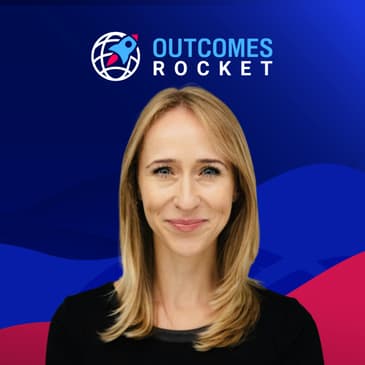
In this episode, Dr. Jana Goldberg, Chief Medical Officer at Heartbeat Health, explains how Heartbeat Health is addressing the cardiology access gap by providing remote services across all 50 states. Partnering with primary care, ACOs, and payers, the company extends specialized care to patients who may otherwise face barriers. Using a virtual-first care workflow, a network of doctors, advanced practitioners, nurses, and care coordinators assess, interpret tests, prescribe, and adjust medications to prevent hospitalizations and save lives. Dr. Goldberg highlights the importance of early detection, prevention, and personalized care pathways to transform how cardiology care is delivered.
Tune in and learn how virtual cardiology is revolutionizing patient access and improving outcomes!
Resources:
- Connect and follow Dr. Jana Goldberg on LinkedIn.
- Learn more about Heartbeat Health on their LinkedIn and website.
- Listen to Heartbeat Health’s founder, Dr. Jeff Wessler, previous interview here.
- Email the Heartbeat Health team directly here.
Fast Track Your Business Growth:
Outcomes Rocket is a full service marketing agency focused on helping healthcare organizations like yours maximize your impact and accelerate growth. Learn more at outcomesrocket.com
[00:00:01] This podcast is produced by Outcomes Rocket, your healthcare exclusive digital marketing agency. Outcomes Rocket exists to help healthcare organizations like yours to maximize their impact and accelerate growth. Visit outcomesrocket.com or text us at 312-224-9945.
[00:00:25] Hey everyone, welcome back to the Outcomes Rocket. So excited that you tuned in because we have the outstanding Dr. Jana Goldberg with us. She is the Chief Medical Officer of Heartbeat Health. They're a virtual first cardiology company.
[00:00:48] She leads clinical programs across value-based care, fee-for-service, and direct-to-consumer models, driving innovation and high standards in cardiovascular care. She was named one of the top 25 women leaders in consumer health tech and an American Heart Association Women of Impact nominee. Such a pleasure to have you here, Dr. Goldberg. So glad you could join us. Great to be here. Thanks. Of course.
[00:01:15] And I love the work that Heartbeat Health is up to and certainly excited to dive in with you. But before we get into it, what got you into the business? And I don't know if you're still practicing, but tell us a little bit about you. Yeah, absolutely. So I grew up in a cardiology household. My mom was an eventual cardiologist, so I was pretty used to her running out in the middle of the night to go take care of patients. When I was in college, my dad got really sick from coronary disease.
[00:01:43] And so I really ended up having firsthand experience of what that is like to take care of a family member with that and eventually found my way to medical school and cardiology. And I took a very kind of traditional academic route. I had trained at Penn and stayed on faculty for a few years, got really interested and involved in innovation and wearables. And what grew from there, I would say, were a lot of kind of questions, more questions than answers from my end.
[00:02:08] And I kept having patients come across my way where I couldn't help but think we could do things a bit differently and deliver care differently. And in 2019, I had crossed paths with Jeff Wessler, our founder and CEO, also a cardiologist and now service chief medical officer for Heartbeat. I've been with the company since. That's awesome. No, thanks for the background. It's always great to learn. And we had a chance to connect with Dr. Jeff Wessler, I think like half a year ago. So it's great to get an update on the company.
[00:02:35] And for those that haven't heard about it, I think it's a good chance to level set. So, Dr. Goldberg, tell us about Heartbeat Health. What do you guys do? How is it different? And why does it matter? Yeah, so Heartbeat, we are a national remote first cardiology practice. So we do clinical care. We bring services such as cardiac diagnostics and patient care into settings that need them or are trying to improve their existing options. Why does this matter?
[00:03:03] Cardiac disease is the number one cause of death for both men and women. For women above the age of 35, it takes more lives than breast and cervical cancer combined. And when you look at the last several decades in healthcare, we've made significant progress. When you actually look at death rates, actually the last few decades had come down. When you look at the last 10 years, those rates have actually plateaued.
[00:03:28] And in some areas, such as rural areas, underserved areas, people are dying at higher rates than they did a decade ago. And then on top of that, cardiac disease is one of the highest costs from our system and keeps growing. So many are focused on also how do we control for that. So essentially our practice is made up of doctors, advanced practitioners, nurses, care coordinators.
[00:03:50] And then in addition to the practice, we are also married to a product that basically serves as the back end to support virtual first care workflows. I'd like to say we're redesigning the way cardiology care is delivered by just getting a bit more organized upstream in the process. And we've been able to build out care pathways that essentially accounts for varying levels of risk of the patient and then give specialty support based on that patient need.
[00:04:19] So patients who really need a lot of care, care points, care, they can really get more frequent visits. They can get more frequent medication titration, whereas some patients really only need a lighter touch care pathway. I'd say secondly, we've really leaned into shifting diagnostics into settings that don't have them, like the primary care setting. And this has been as simple as bringing in testing into programs that need them, all the way to building out national population health programs that have been focused on early detection and prevention of problems such as heart failure.
[00:04:48] So I would say last thing I'll say is a big differentiator for us is that we are clinicians. We can assess, order, interpret testing, prescribe and titrate medical therapy that basically keeps patients out of the hospital and saves lives. So that's essentially what we're trying to do and matters given really like the scale of the problem. Yeah, no, I think that's fantastic. There's a shortage of physicians. There's not enough care available.
[00:05:15] Appointments go way too far out. So you really hit on a big opportunity that we have to really help patients see their doctor more often than they currently are. And what end customer do you serve in the healthcare ecosystem? Yeah, so basically the patient is our end customer. So we see them, we diagnose them, we take care of them either directly or indirectly, directly through virtual visits or indirectly through working with our partners to help them.
[00:05:45] Our largest channel that we work with is a primary care ACO at-risk channel that is really focused on providing high value care in our program's range. So they may be as lightweight as having a cardiologist interpret a cardiac diagnostic and then giving a care plan back to a primary care clinician so that they can better manage their patient. All the way to really focusing on their sickest population. Say a patient who has heart failure, who's been in the hospital three times over the year.
[00:06:12] These are patients who end up having more frequent visits. We'll see them every one to two weeks. We'll get them on the right medications. We'll titrate those medications. We may monitor their vital signs like their blood pressure weights daily to help drive that care and have a team that also helps, really focuses on managing, I should say coordinating their care. So making sure they're going from visit to test back to their visit again. And so ultimately the patient is our end customer and just our activation points different.
[00:06:41] So really primary care, we have a big presence in the in-home setting as well as the payer setting as well. But that patient is our end user. That's awesome. I think it's really great. And really when you take a step back and think about one problem that most people don't know about what you solve for, what would you say that is? Yeah, I mean, you sort of hinted at it earlier. I think that's what I would continue to emphasize is access is just such a huge problem.
[00:07:09] We have a really big supply demand mismatch that is only going to get worse as the population gets sicker. So I mentioned earlier how for a while people were living longer. Patients now are getting sicker. We have more cardiac disease than ever. And right now, if you think about current state versus future state, right now data came out this past year to show that 46% of U.S. counties actually don't have any cardiologists. That's the rural state.
[00:07:36] In the urban state, wait times to even make a first appointment with a cardiologist is at least 30 days. When you look at what's to come over the next few years, when surveyed, and this is really a lot from COVID. It's multifactorial. It's an entire discussion in itself. But a quarter of the cardiology workforce plans to leave over the coming years. So that is huge. So essentially, you have a growing burden of disease, patients who need to be seen by a cardiologist, a workforce that is only becoming fewer.
[00:08:06] And so it's really critical that we introduce new options for care outside of that traditional brick and mortar setting. So I'd say number one, the problem is access, and it's going to continue to be access. Yeah, that's huge. And so you guys are in all 50 states, right? All 50 states. Love that. So great that you guys have already expanded. You're available to everyone listening. Well, if you're in the UK or some of the other countries listening to us, not there.
[00:08:35] Maybe one day in the future, but certainly in the US, Heartbeat is available. And so it's great to have an option. Yesterday's models of care are no longer enough. We need the work that Heartbeat's doing. And it's really exciting to have you guys here to help spread the word. We love to learn from successful people. And I personally love that you and then also Jeff are physicians leading this company. So that's critical.
[00:09:04] And for other physicians maybe seeking to be inspired, we need more physicians in these types of seats. What would you share as a business resource or a business hack that's helped you and why? Now, I don't know if this is a hack. Maybe it's just a way of life. So it was not always like this, but essentially the last year and a half, I feel like I finally perfected my morning routine, which has essentially changed my day, changed my life.
[00:09:30] So waking up at 5 a.m., I block out the first hour and a half basically for growth. So I think of it as like personal and professional growth. So exercising the first half and then basically spending the other half reading. Because once that day starts, I'm not going to have time to do that. So typically reading a mix of both industry and scientific literature. I would say the standard industry news, I have a few favorites out there, as well as keeping up with CMS policy updates, etc. It's on the science side.
[00:10:00] Evidence and science tends to, not in all cases, precede industry trends. And so stay very close to that. New England Journal, Catalyst is one of my favorites. I think their editorial team has done an amazing job putting out science that directly impacts our industry. And then a lot of the cardiac journals, JAPS, Circulation, American Journal, Managed Care. So essentially, really knowing how the science is changing. I think a perfect example is if a drug like a GLP-1 demonstrates a new indication, essentially, like you're going to see that impact the market.
[00:10:30] So I think really focusing, I think the first hour and a half on making sure I have time to do that. And that's when I, you know, the juices start flowing. You start to make connections in places that you haven't before. And so that's been really critical. And not looking at my phone for the first hour and a half, which I don't have 100% success rate, but I'll say about 90%. So, you know, I don't know if I had an answer, but just to say, I think for anyone looking to grow in this area, I think that morning routine focused on that has really helped me personally.
[00:11:00] That's awesome. Yeah, I love that. That morning routine really sets the tone for the rest of the day. Yeah, the exercise. Hey, look, you're practicing what you preach, right? You would tell your patients to go exercise, right? So you're doing it yourself. You're helping your heart and certainly staying educated on industry as well as the medicine and science side. So I love that. What a great tip there for all of us. Those bookends matter.
[00:11:24] And look, if folks want to connect with you, what's the best place they could reach out to you to learn more? Yeah, I would say feel free to email us directly. And you can email hello at heartbehealth.com. So hello at heartbehealth.com and either direct it to me or one of my colleagues will help out. But happy to connect with folks out there. I think on multiple levels, cardiac disease, physicians looking at industry. There's just so much to talk about.
[00:11:53] So always welcome a conversation. That's outstanding. Thank you so much. And folks, in the show notes, you'll find all the short notes as well as ways to get in touch with Dr. Yana Goldberg. She's the chief medical officer at Heartbeat Health. Thank you all for tuning in. Make sure you take action on what you learned today if it resonated with you. And Yana, thanks for joining us. This has been a lot of fun. Yeah, thanks for having me.
[00:12:18] This podcast is produced by Outcomes Rocket, your healthcare exclusive digital marketing agency. Outcomes Rocket exists to help healthcare organizations like yours to maximize their impact and accelerate growth.
[00:12:45] Visit outcomesrocket.com or text us at 312-224-9945.