
Hybrid care teams, blending in-person and virtual care, are improving efficiency, patient satisfaction, and return on investment.
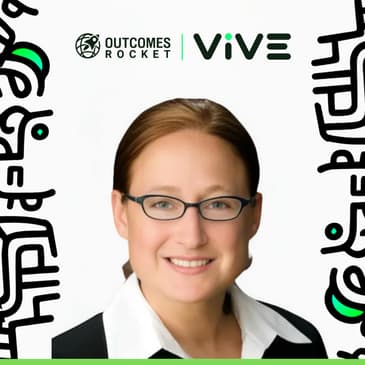
In this episode, Tammy Cress, Senior Vice President of Clinical Innovation and Solutions at Teladoc Health, discusses how Teladoc is addressing workforce challenges in healthcare by using digital solutions and hybrid care teams. Tammy explains the importance of listening to the market to design technology products that help health systems transform their care delivery models. She also highlights the use of hybrid care teams, which blend in-person and virtual care to improve efficiency, patient satisfaction, and return on investment. Additionally, Tammy shares insights from a recent market survey that indicates a significant increase in the adoption of telehealth and positive perceptions of its quality.
Tune in to learn how Teladoc Health is driving change in healthcare delivery through technology and innovative care models!
Resources:
[00:00:01] This podcast is produced by Outcomes Rocket, your healthcare exclusive digital marketing agency. Outcomes Rocket exists to help healthcare organizations like yours to maximize their impact and accelerate growth. Visit outcomesrocket.com or text us at 312-224-9945.
[00:00:35] Hello everyone and welcome to the Beat Podcast hosted live at the VIVE Conference in Nashville, Tennessee. Today I have the privilege of hosting Tammy Cress. She's the Senior Vice President of Clinical Innovation and Solutions at Teladoc. She's a nurse by background and in her role, she leads a cross-functional team to develop and evolve solutions that enable care transformation at scale,
[00:01:03] while addressing health systems most challenging problems. Tammy, welcome to the podcast. Thank you for having me here this morning. It's been a really fun conference so far. Have you? What stands out to you? What have you enjoyed the most? There is such collaboration happening about how does everybody do things differently and better together. It felt a little bit less competitive to me and that's interesting as a vendor. It was much more thought leadership and how do we all come together
[00:01:31] to make the transformation happen that needs to happen in healthcare delivery. I love that, Tammy. Yeah, I felt the same way. A lot of great collaboration. So many interesting solutions. All the right crew, the providers, the payers, the vendors. So great mix there. All right. Tell me about your role at Teladoc. How is Teladoc Health approaching the workforce issues affecting hospitals and health systems?
[00:01:54] So as you already said, I work for Teladoc Health as a clinical executive and the fun about what I get to do is have a leadership role in the longest standing and largest digital care provider in the world.
[00:02:08] And in my role and our approach, it is looking at the market trends. It's looking at clinical, technical, operational issues that hospitals and health systems are facing broadly and figuring out how we design the right products, the right solutions to help enable them to transform what it is that they need to transform.
[00:02:28] So a little bit more about me perhaps. As you noted, I worked as a bedside nurse before moving into roles, developing systems of care and developing technology programs to virtualize care. And one of the things that we find incredibly important at Teladoc Health is the role of the clinician as part of the voice of product development.
[00:02:53] So we are definitely a clinically led organization with really strong technical partners. But the thing that we're doing increasingly and I think differently is how we partner with our customers and potential customers to really listen to them more deeply about solving for their pain points. That may sound very tongue in cheek, but it's very real. Like how do you design listening sessions? How do you design product development sessions?
[00:03:23] How do you design and make sure that you're threading the needle all the way through and not doing base spoke solutions for a single organization, but rather something that the market really needs to redesign health care? Yeah, I think that's a fantastic point there, Tammy. We got to do more listening. We do. And so talk to us a little bit about how your organization's helping drive change in health care delivery. So we were just talking about listening to the market and then it makes me laugh because I'm like, oh, was my response a little bit too long?
[00:03:52] It wasn't. It was good. Okay, fantastic. So we listen to the market, as I said. So we design, we build, and we deliver technology products and solutions to enable health systems to transform their thinking and how they deliver care. And we also provide wraparound services that they need to actually help them to be successful. Change management as part of transformation is so important.
[00:04:16] And helping them to accelerate what it is that they're contemplating doing by bringing in best practices that others have achieved together with us for going fast, going far. Or we're still going to be having this conversation in 10 years. So we're really trying to accelerate the market momentum. So, as I said, we listen to the market and then we design the products to fit and to wrap around them. Well, I think that's great.
[00:04:41] And leveraging best practices from other customers, just an incredible asset that you guys offer as an organization. And I'll say, we actually, we've built entire playbooks from how do you think about it? How do you implement it? How do you pick from the list of things that are going to work for your organization culturally? Do you want to use? What don't you want to use? And so there's a lot of flexibility in it. But bringing those best practices has really been beneficial for everybody. Fantastic. Thank you, Tammy.
[00:05:11] And tell me about the workforce challenges crisis, its impact to healthcare delivery and trends that you're seeing to address this. It's interesting because I find it funny that we debate whether or not there's a workforce crisis happening. Because I will hear people say, well, no, everybody's returning back to the bedside. But in reality, that's not the case. There is an obvious supply and demand mismatch, not only in the United States, but around the world. And it's not just nursing.
[00:05:40] It's almost every single care team member, there is a supply and demand mismatch. And it's going to continue to get worse because of our aging population. And I'll acknowledge there have been some pockets where people have returned back to providing care because they've seen that bright light. They've seen the goodness that's happening with care model transformation, the insertion of telehealth, as an example,
[00:06:04] to allow people who perhaps don't want to go into a bricks and mortar facility, but still want to deliver care, want to be part of the care team, but giving them more flexibility to live where they want to live, to maybe work a different shift, to have a better work-life balance, which really became very important during the COVID pandemic. I was challenged the other day by someone saying, it makes it sound like you think technology is going to fix everything. And that is not true. It's a piece.
[00:06:32] It is a piece of everything that needs to happen to transform care teams working better together. And it's not a panacea. I do believe, though, that the right technology can enable broad care redesign models by enabling them to create hybrid care teams. Do you know what I mean by that? Because everybody has their own definition. Of hybrid care teams? Yes. I think it's worth level setting. So we should chat about it. Yeah. So for us, the way we think about it and how we talk about it with our partners is this.
[00:07:02] You have a, we'll use nursing as the example, but you could insert any discipline. Typically, they're at the bedside or in the hospital or in the room in a clinic, but they can be enabled by somebody who's virtual taking on some of the tasks and responsibilities that don't need to happen in person.
[00:07:22] And so you redesign how people work together and you recognize that somebody like me who's in the room with you, there may be tasks that I need to do. And then I could step out and somebody else can come in and add a lot more value doing the more administrative tasks of taking care of you that day. Hybrid, in other words, is a blending of in-person and virtual teams, redesigning their care roles and working very collaboratively to more effectively take care of a patient.
[00:07:52] So when I think about hybrid care teams, I want to talk about outcomes. We are seeing amazing outcomes from the redesign of care teams because they're seeing better efficiencies. They're seeing equal or better care outcomes, which is really what I think you wanted to talk about today. We're seeing improved patient and staff satisfaction. And for the people who have to pay for the investment, organizations are actually seeing positive return on investments, which is obviously a requirement.
[00:08:22] And one of the concerns that organizations have with downward financial pressures. But if you put the right technology into the hands of the organizations of people who know, number one, they need to transform, they're committed to it because it's not easy work. And they put the team in place to do the work. They're getting really great results. Yeah, I think that's fantastic. Thanks for summarizing what a hybrid care team is. It's good for us all to be on the same page.
[00:08:48] And we've been seeing a lot of entrance into the space around just virtual care, but you're always going to need the human. And so the hybrid opportunity is huge. Absolutely. So, Tammy, what emerging trends or technologies do you think will have the biggest impact on health care over the next few years? I could talk about two of those. But before I get to them, I'd like to set some context again. We just finished doing a market survey of hospitals and health systems with Becker's Healthcare.
[00:09:18] And I'd love to share a couple of those details. Yeah, we'd love to hear it. Fantastic. So 100% of the people who participated in the survey for the first time ever, and we've done this for the last eight years with Becker's, 100% of them said that they either have telehealth or will have telehealth in their healthcare ecosystem this year. So we continue to see that upward tick, the hockey stick. I'm curious what you would guess.
[00:09:44] What percentage of care do you think hospitals and health systems who are using telehealth broadly, what percent of their care delivery do you think is virtual at this point? I would say 12%. 25. 25. Okay. All right. 25% of all of their care is virtual now. And then they're having the conversation of how big will it become? 25. The third thing that I'll mention is that, I already said it, but quantifiable ROIs are absolutely happening. They're saying they're getting at least 10%.
[00:10:12] They're making their return on investment in 10% more typically. So it's paying for itself and it's becoming more standard. And lastly, they believe virtual care quality is equal to or better than in-person care. 70% of them said that. So there's continued support for investing. There's continued support for being an important part of their strategy as they move forward. So to answer your question, what emerging trends or technology will impact health outcomes?
[00:10:42] Number one, organizations are needing to move from single point solutions to enterprise solutions, from something that does a single use case or a single location to something that they can use over and over again. Start where they want, go where they want to go, solve for their pain point right now, and recognize they may have a different one or a lot different approach that they want to take in 6-12 months and having that flexibility and scalability to be able to do that.
[00:11:12] So what we've seen are that they are moving to enterprise solutions because of the capabilities inherent within it. And why is that important, do you think? For enterprise solutions versus point care? Well, just the ability to scale. You've got to be able to scale. And it ends up decreasing costs, number one, because you can flatten your tech stack. Number two, you get the same user experience, you get the same support systems, and people know that we just do care this way. Care is care.
[00:11:42] You just happen to be inserting a very similar technology along the way. So that's one trend that we are seeing a lot more of. The second trend is the incorporation of AI tools and capabilities, obviously, into reliable telehealth solutions. I believe that AI isn't a strategy in and of itself. But when it's paired with telehealth, which may or may not be a strategy in and of itself as well, there are just innate synergies that happen there.
[00:12:11] When I talk to, and I swear, like 80% of the vendors here appear to be AI vendors this year, right? When they get paired up together, the synergies there to achieve the scale that you and I were just talking about in the efficiencies, it just gets magnified. We can do a lot more together and better, more focused care for the clinician, which allows them to give better care so that the patient ends up getting better outcomes over time. So I think it's telehealth enterprise and the incorporation of AI.
[00:12:40] That's brilliant. No, I love the perspective you just shared, Tammy. And there's just so many opportunities. I was surprised by that 25% number. It's growing. And it's been so much fun to watch it over the prior years. We could talk more afterwards. But the hockey stick of every single model is proving itself out. That's fantastic. So what do you think care delivery will look like in three years as compared to now?
[00:13:08] Well, I don't know how you feel about healthcare today, but I hope it looks a lot different than what I see today as a consumer. And I find healthcare today fragmented. I find it challenging to navigate. And I'm a nurse and I know how to navigate. And it's even hard for me. And I find it scary. There's just so many opportunities for harm right now that we have got to do better. So also as a clinical executive and a telehealth technical company,
[00:13:36] I get excited at what we can do and need to do differently. So this is going to be about complete care team transformation and enabling them with the right tools so that they can get better care so that the healthcare teams not only survive, which was one of the reasons I moved into virtual roles, but I wanted to thrive. I wanted to thrive in what I was doing. And I wanted to be excited to be back in healthcare delivery. Healthcare systems, they need to stay open to serve their communities.
[00:14:05] And as I said, technology isn't going to be the panacea, but I think it has a very important part of this. And with the advances that we've seen, with the acceptance, the adoption curves, it's going to be a game changer. But this is what it would look like practically. Care teams are going to have more time to actually spend with their patients, better quality time that's enabled. We're going to lighten their cognitive load, lighten their cognitive and physical burden by leveraging technology better and differently
[00:14:32] and thinking holistically about how the care teams can partner together and collaborate. collaborate the insertion of AI to help with automation and tasks that make sense safely without losing the human touch. You said it earlier, and I'm glad you said it. It's so important to me. And I don't think it's just because I'm a nurse that not losing the human touch is an important thing. Patients want to be cared for, but you know what? They want to be cared for safely. They want to be cared for efficiently
[00:15:00] where they want to be cared for and compassionately. So let's figure that out together. And as we continue to embrace technologies, I think that's the fun of the innovation that we're all doing together. Yeah, no, I love that. Thanks for sharing your vision for what it could be like. It's promising. And so I appreciate what you bring to the table here, Tammy. If people want to learn more about you, about the work that Teladoc does, where can they reach out? Great. So I'm so excited.
[00:15:29] And if anybody wants to learn more about us, they can do it a couple of ways. If they go to the Teladoc website, there is a way to put in a request for information and we'll get back to you. But for somebody who maybe just wants to talk to me one-on-one, they're welcome to reach out to me via email. My email is tcress at teladochealth.com. And I'd be very happy to engage with you. And if I'm not the right person to answer your questions, I'll get you to the right person. That's amazing, Tammy. Thank you so much for that. And for everybody listening, thank you for tuning in.
[00:15:57] These podcasts are brought to you from the conference. Some of you were here. Some of you couldn't make it. But the point is, if something that Tammy shared today resonated with you, take the opportunity to connect. That's how change happens. And if I were you, I would love to talk to Tammy some more. So use this as the beginning conversation with her. Reach out. We'll leave everything in the show notes for you to know how to do that. And Tammy, thanks so much for being with us today.
[00:16:26] This podcast is produced by Outcomes Rocket, your healthcare exclusive digital marketing agency. Outcomes Rocket exists to help healthcare organizations like yours to maximize their impact and accelerate growth.
[00:16:55] Visit outcomesrocket.com or text us at 312-224-9945.